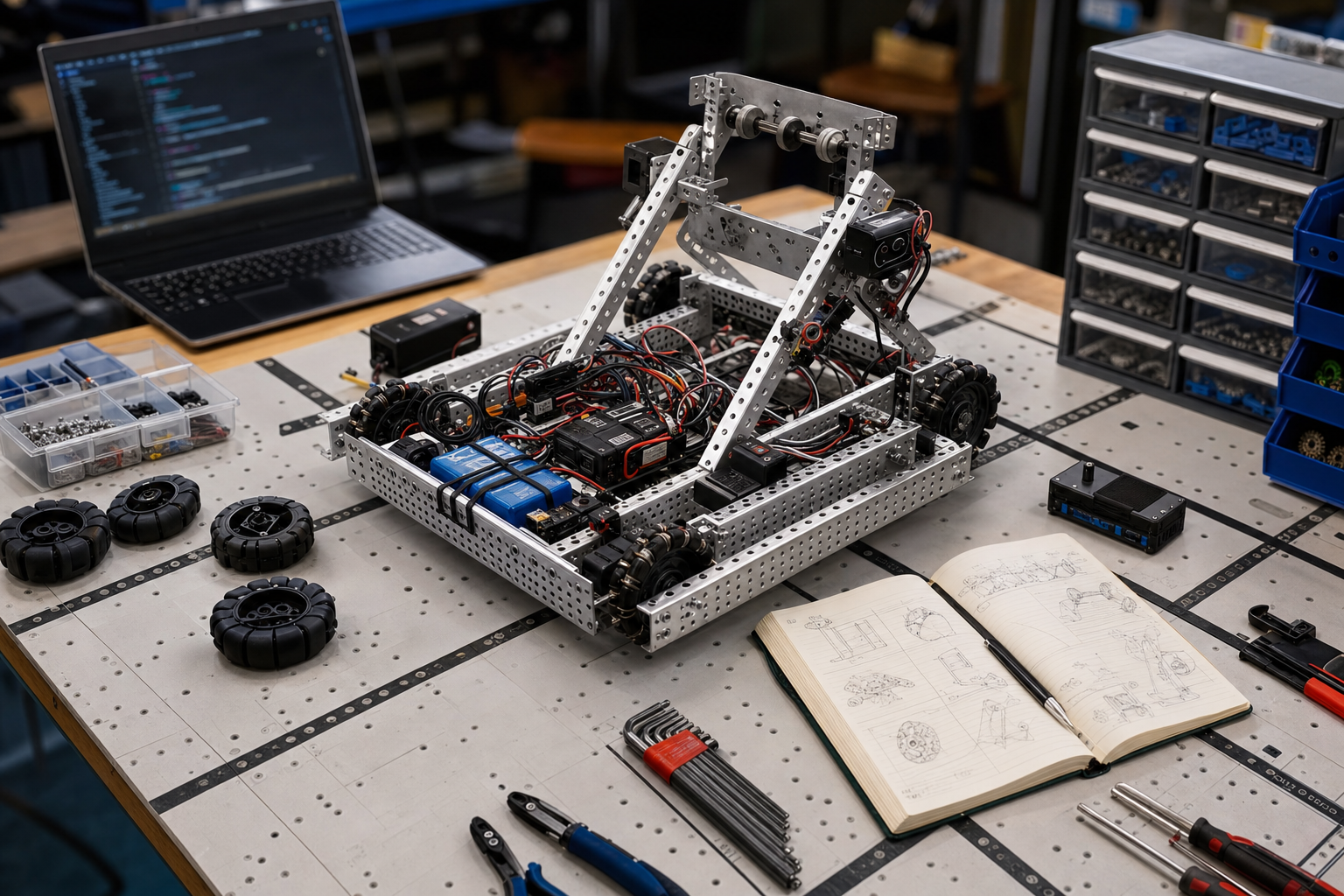
The Robotics Education & Competition Foundation has announced RECF Robotics for the 2026–2027 season, positioning the program as the foundation’s official robotics competition path while telling teams that their existing robots, field elements, robot parts, and invested practice time remain usable. For students, mentors, and school labs, that continuity is the engineering detail that matters most.
A competition rename or rules transition can easily turn into a procurement scramble. RECF’s message is different: teams should expect program evolution, but not a forced hardware reset. The organization says the robots, game elements, parts, and “countless hours” already invested remain part of the path forward. That reduces one of the biggest hidden costs in youth robotics: abandoning a working mechanical and controls ecosystem before students have learned enough from it.
Why it matters for teams
For a school robotics program, continuity is not just a budget issue. It changes how teams plan spares, teach new members, document subsystems, and carry lessons from one season to the next. If a drivetrain, arm, intake, or sensor stack can be reused, students can spend more time improving reliability instead of rebuilding the basics from zero.
The practical implication is that mentors should treat this announcement as a configuration-management moment. Teams should inventory motors, controllers, batteries, sensors, structural parts, game elements, and field hardware now. They should also record what worked last season: gear ratios, wheel choices, controller mappings, sensor placement, failure modes, and repair procedures. A robot that “still works” is less valuable than a robot whose design decisions are documented well enough for the next student group to understand.
Technical breakdown
RECF’s continuity signal is strongest when viewed through the normal lifecycle of a student robot. The expensive pieces are not only the parts on the machine. They include CAD models, wiring habits, firmware patterns, autonomous routines, driver practice, classroom storage systems, and troubleshooting knowledge. A stable competition path lets teams turn those assets into a reusable engineering base.
That does not mean teams should freeze their designs. It means they should separate reusable platform decisions from game-specific mechanisms. A drivetrain, power distribution layout, sensor bus, and code architecture can be maintained as a baseline. The scoring mechanism, intake geometry, and autonomous strategy can change around that baseline when the game is released.
Teams should also watch the official RECF and VEX Robotics channels for season manuals, inspection details, part legality, and field specifications rather than relying on screenshots or secondhand summaries. In competition robotics, a small rule wording change can matter more than a flashy new part.
Builder and STEM impact
For newer teams, the announcement is a reason to build an engineering notebook around repeatability rather than decoration. Good notes should answer: what subsystem failed, how often, under what load, what was changed, and whether the change improved match performance. That is the difference between a project scrapbook and an engineering record.
For experienced teams, the opportunity is to harden their platform. Battery retention, strain relief, connector labeling, motor temperature checks, and sensor calibration may not look exciting in highlight reels, but they often decide whether a robot survives a full event day. TVG Report has been following related student-robotics and maker-hardware angles, including Arduino’s Physical AI Challenge and the broader STEM Lab coverage area, because the same pattern keeps appearing: strong teams win by turning hardware constraints into teachable systems.
Risks and unknowns
The main unknown is how the 2026–2027 rules, event formats, and support resources will translate into day-to-day team operations. Continuity language is helpful, but teams still need to verify legal parts lists, firmware requirements, inspection procedures, and event logistics when official materials are published. A second risk is complacency. If teams hear “your parts remain usable” and stop improving documentation or reliability, they will miss the engineering advantage the transition gives them.
TVG Take
RECF Robotics looks less like a hardware reset and more like a systems-readiness test. The teams that benefit most will not be the ones that simply keep old parts in bins. They will be the ones that turn existing robots into documented platforms, preserve working code, audit spares, and teach students how to improve a machine without losing the lessons already paid for in parts, time, and failed matches.