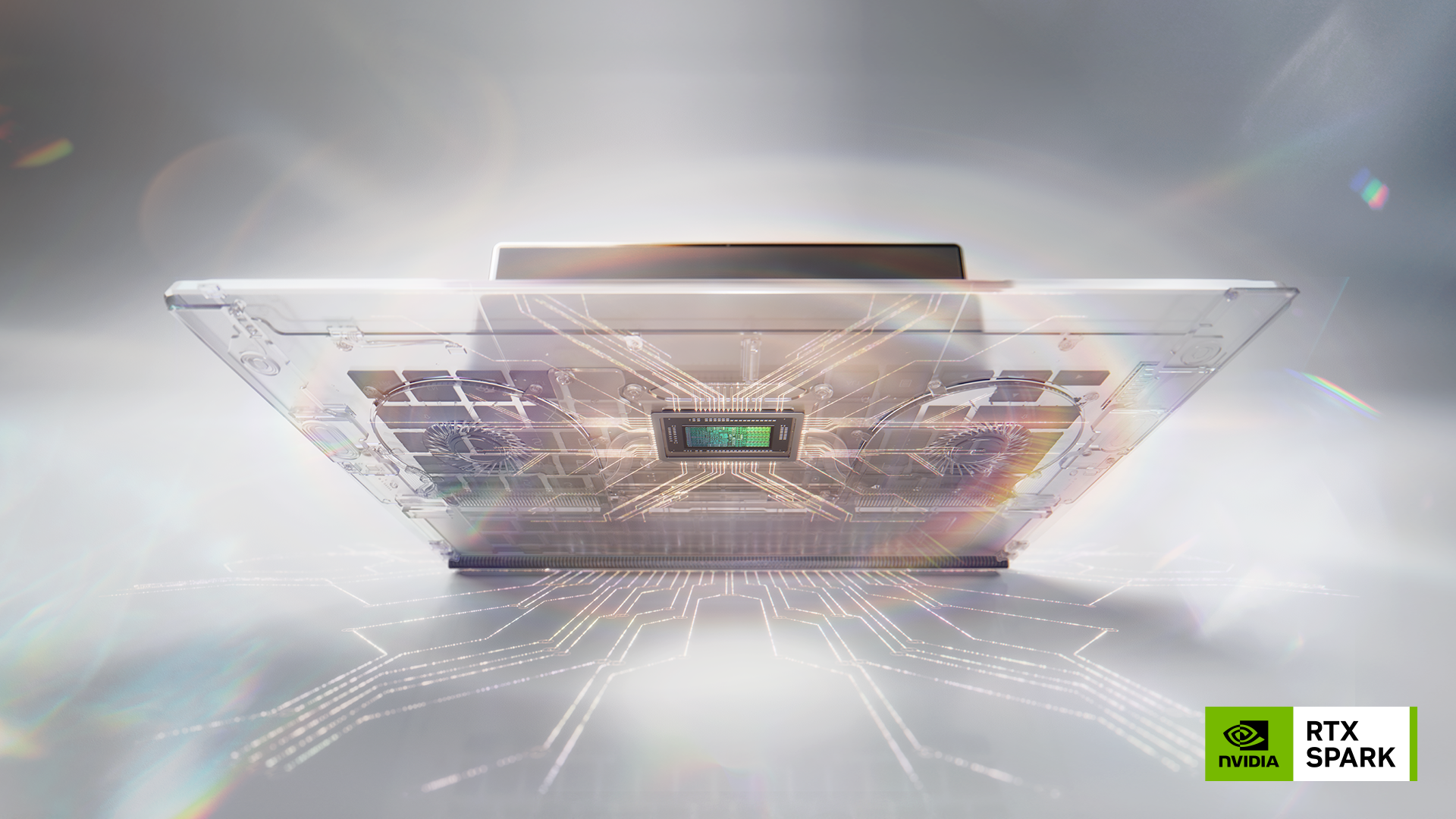
Microsoft Build and NVIDIA’s RTX Spark push are a useful signal for engineering teams: the AI PC discussion is moving from consumer assistant demos toward local development hardware stack. NVIDIA describes RTX Spark as a new superchip class for Windows PCs aimed at personal AI agents, while Microsoft is framing Surface RTX Spark Dev Box around sustained workloads such as long-running agent pipelines, local model iteration, and developer experimentation.
That matters because many small teams are now running the same loop every week: prototype an agent, send test data to a hosted model, wait for a response, adjust the tool permissions, and repeat. Cloud inference remains essential for frontier models, but not every evaluation needs a remote endpoint. A local AI workstation can be useful when the job is repeatable, data-sensitive, latency-sensitive, or too frequent to justify cloud calls on every test.
Why this is more than another AI PC announcement
The practical change is workload shape. A laptop NPU can help with small on-device tasks, but agent development often needs larger memory pools, GPU acceleration, containerized services, vector databases, browser automation, local files, and repeatable logs. Those pieces look less like a consumer feature and more like a compact lab server sitting beside the developer’s monitor.
For teams building robotics dashboards, maker-lab inventory tools, inspection workflows or school documentation systems, the budget question is direct: can a local box remove enough waiting, privacy review and cloud-meter uncertainty to pay for itself? Occasional chatbot use will not justify it; hundreds of tool-use tests against sensitive build logs, CAD notes or field images may.
There is a second advantage: failure analysis. Local agent testing lets a developer capture full traces without sending every intermediate file to a third-party service. That makes it easier to inspect why an agent deleted the wrong folder, called the wrong tool, missed a constraint, or hallucinated a state transition. TVG recently made a similar point about AI search agents and product readiness: the demo is not the product; the guardrails, logs, rollback plan, and test harness are the product.
Engineering implications
The strongest use case is not replacing every cloud model. It is building a tiered development stack. Use local models for fixture tests, document parsing, low-risk classification, prompt regression checks, and privacy-sensitive pre-processing. Escalate to cloud models for tasks that genuinely need larger reasoning capacity or richer multimodal understanding. That architecture reduces cost without pretending that a local box is magic.
Teams should also evaluate power, cooling, memory, driver stability, and container support before treating any AI PC as production hardware stack. A compact workstation can become a bottleneck if it throttles under continuous tests or if the software stack only works under one vendor’s happy path. The same discipline applies to edge devices and robot controllers: benchmark the actual workload, not the keynote label.
Risks and unknowns
The biggest risk is buying hardware before the workload is defined. “Agentic AI” can mean a tiny local assistant, a code-review pipeline, a vision inspection workflow, or a full multi-tool automation system. Those are different compute problems. Another risk is lock-in: a workstation that performs well only inside one SDK or one model format may age badly if the team later needs a different runtime.
There is also a governance issue. Moving tests local does not remove the need for permission boundaries. A local agent with file access can still damage a project. Before adding expensive hardware, teams should create test repositories, read-only mounts, fixture datasets, and rollback scripts. Local speed without local safety is just faster failure.
The purchase boundary
Windows AI dev boxes are worth watching because they make agent testing feel like an engineering hardware stack decision, not a novelty feature. For robotics, maker, and field-tech teams, the best purchase case is boring: lower iteration cost, tighter data control, and better repeatability. If those benefits are not measurable in the first month, the money is probably better spent on storage, cameras, test fixtures, or documentation discipline.
Sources
- NVIDIA Newsroom: NVIDIA and Microsoft Reinvent Windows PCs for the Age of Personal AI
- Windows Blog: Surface RTX Spark Dev Box announcement
- Microsoft Build 2026 official blog
- The Verge Build 2026 coverage for context