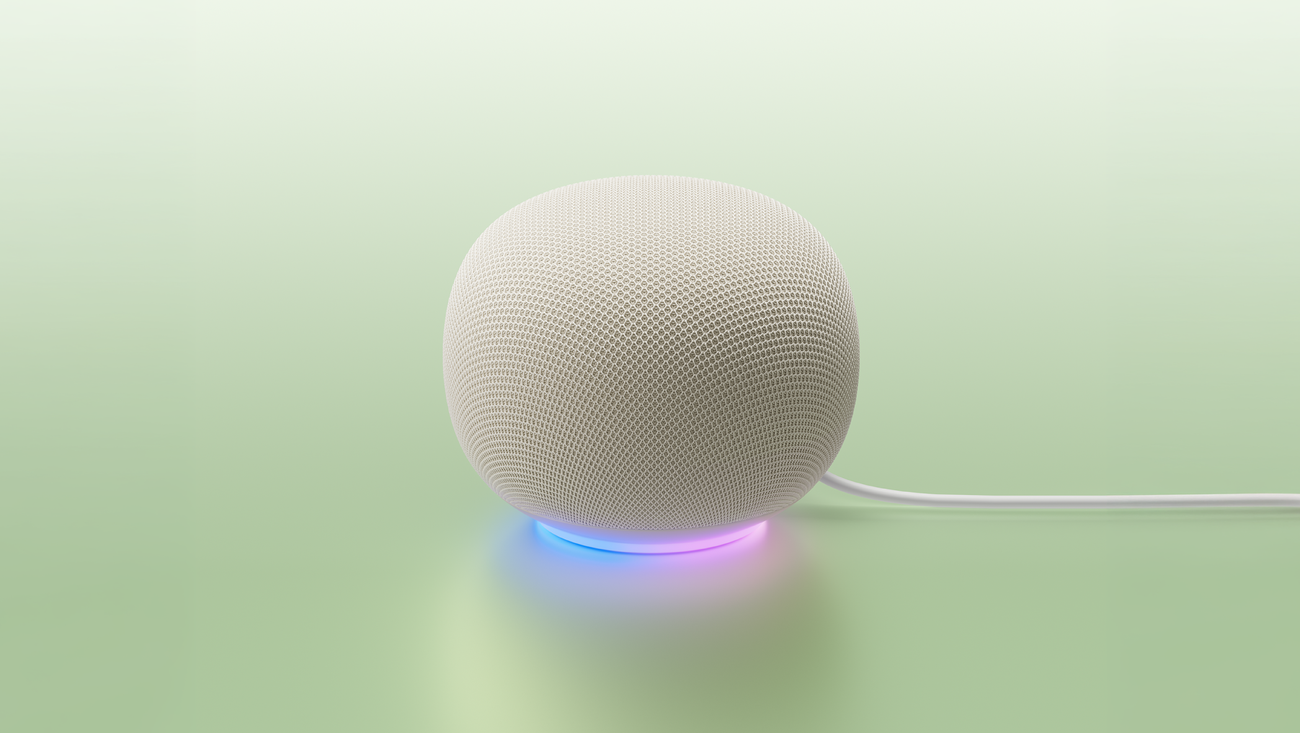
Google has opened preorders for the new Google Home Speaker, a $99.99 smart speaker built around Gemini for Home and scheduled to reach shelves June 25, according to Google’s own announcement. The product is important for more than one smart-home catalog update: it is a test of whether a voice assistant can become useful again by handling messier, more natural instructions without making the home feel less predictable.
This is a spec review and buyer evaluation, not a hands-on review. TVG has not tested the speaker, measured audio quality, or evaluated microphone performance. The useful question today is what buyers, smart-home builders, and automation-minded households should test before treating a Gemini speaker as the control point for lights, media, routines, cameras, and Matter devices.
Google says Gemini for Home understands natural speech, allows multiple commands in one request, and can handle corrections mid-sentence. Examples from Google include turning off all lights except one bedside lamp, dimming lights while starting music and a timer, or correcting a coffee-maker command as the user speaks. That is a real usability target. Rigid command phrasing has been one reason smart speakers feel brittle once a home grows beyond a few lights.
What the spec sheet suggests
The launch post frames the speaker as the first audio device built for Gemini for Home. Google says it includes 10 new natural-sounding voices, can pair two speakers with a Google TV Streamer for a home-theater setup, and is designed with privacy in mind. The Google Store listing positions the product inside a broader smart-home ecosystem that includes the redesigned Google Home app, Matter support messaging, connected cameras, speakers, thermostats, locks, and Wi-Fi products.
For TVG readers, the important part is not the word “Gemini.” It is whether the device can make mixed smart-home systems easier to operate without turning every routine into a cloud-dependent guessing game. TVG’s recent coverage of Google’s AI search agents argued that product readiness matters more than demo polish. The same standard applies inside the home, where a misunderstood command can turn into a broken routine or a privacy concern.
What we would test first
First, test command recovery. A useful assistant should handle a correction without executing the wrong state change first. If a user says, “Turn off the coffee maker — I meant turn it on,” the safe behavior depends on context, device type, and whether the appliance should be voice-controllable at all. Lights and music are low risk. Heaters, appliances, locks, and garage doors require stricter rules.
Second, test grouped commands. Google’s pitch around multiple commands is attractive, but grouped requests create debugging problems. If a single sentence changes lights, music, timers, thermostat state, and a camera routine, users need clear feedback on which actions succeeded. A household should not need to inspect five apps to know what happened.
Third, test local fallback. Google’s announcement emphasizes Gemini’s reasoning and natural language behavior, but buyers should still ask what works when the internet connection is poor, when a cloud service is down, or when a Matter device is reachable locally but the assistant layer is not. A smart-home system should degrade clearly, not mysteriously.
Fourth, test household voice behavior. Natural speech is only useful if the speaker handles accents, children, background TV audio, kitchen noise, and multiple household members without becoming overconfident. This is especially important for shared spaces where a command may be ambiguous or overheard.
Privacy and reliability questions
Google says the device brings Gemini-powered help and privacy to the home, but buyers should read the settings instead of relying on a launch phrase. The practical checklist should include microphone mute behavior, voice history settings, household-member permissions, camera-event access, and whether Gemini features require a subscription tier such as Google Home Premium for advanced camera or security functions.
Smart-home privacy is partly a settings problem and partly an architecture problem. A voice assistant that can reason over a home graph may be more convenient, but it also has more context. Buyers should separate low-sensitivity convenience commands from routines involving cameras, door locks, occupancy, children’s rooms, or visitors. TVG’s display-technology guide made a similar point in another category: the right device depends on the environment and failure mode, not the most impressive headline feature.
Who should consider it
The Google Home Speaker looks most compelling for households already invested in Google Home, Google TV Streamer, Nest devices, and Matter-compatible accessories. Those buyers may benefit from tighter app integration and a more natural assistant layer. It is less compelling for users who want maximum local control, minimal cloud dependency, or a platform-neutral automation hub that can be audited and scripted deeply.
For STEM and maker households, the speaker could be a useful interface for demos, accessibility, and routine control, but it should not be treated as a safety controller. Use it for status, timers, lights, media, and non-critical routines. Keep lab power, moving machinery, heaters, and door access behind more explicit controls.
Buyer evaluation checklist
- Try corrections mid-command and confirm the wrong action does not execute first.
- Run grouped commands and check whether every successful and failed action is reported clearly.
- Test noisy-room recognition with TV audio, fans, kitchen noise, and multiple speakers.
- Review voice history, microphone mute, camera access, and household permission settings.
- Check which Gemini for Home features require subscriptions or specific Google/Nest hardware.
- Confirm Matter devices still behave predictably when the internet connection is degraded.
- Do not connect safety-critical maker-lab devices to casual voice routines.
TVG Take
The new Google Home Speaker could make voice control feel less brittle if Gemini handles natural language without becoming vague about outcomes. The engineering test is not whether it answers a staged prompt. It is whether it executes everyday commands safely, explains partial failures, protects household context, and stays predictable when the network or device graph is imperfect.