Arduino and Robu.in are turning the current “physical AI” conversation into a hands-on challenge for students, makers, startups, and engineers in India.
Arduino announced the Arduino Physical AI Challenge India 2026 on June 10, describing a competition focused on systems that sense, think, and act in the real world. The companion Robu.in challenge page lists Arduino UNO Q boards as the foundation, says registration is live, gives a project submission deadline of July 31, 2026, and lists a winner announcement date of August 15, 2026.
Why it matters
Physical AI is a useful phrase only if it produces working systems. A challenge format pushes builders beyond prompt demos and into the harder work of combining sensors, edge inference, software, mechanical design, power, and safety. That is exactly the gap many STEM and maker programs need to close.
The Robu.in page frames the competition around physical AI, smart systems, robotics, edge AI, machine learning, and innovation. It also advertises more than ₹30L in prizes and mentorship from Qualcomm and Arduino leaders. For students and early builders, that creates a strong incentive to document the full engineering process, not just the final video.
Technical breakdown
A serious physical-AI project should be evaluated as a system. The sensor path needs to be clear: what is measured, how noisy it is, and how the system reacts when the input is missing or wrong. The inference path should identify what runs locally, what depends on a cloud service if anything, and how latency affects the actuator or user experience.
The actuation path is just as important. If a project controls motors, relays, wheels, pumps, or other physical outputs, it needs safe states, current limits, mechanical guards, and a way to stop the system quickly. Good challenge entries should include logs, test cases, and failure notes so reviewers can distinguish a reliable prototype from a lucky demo.
Builder and STEM impact
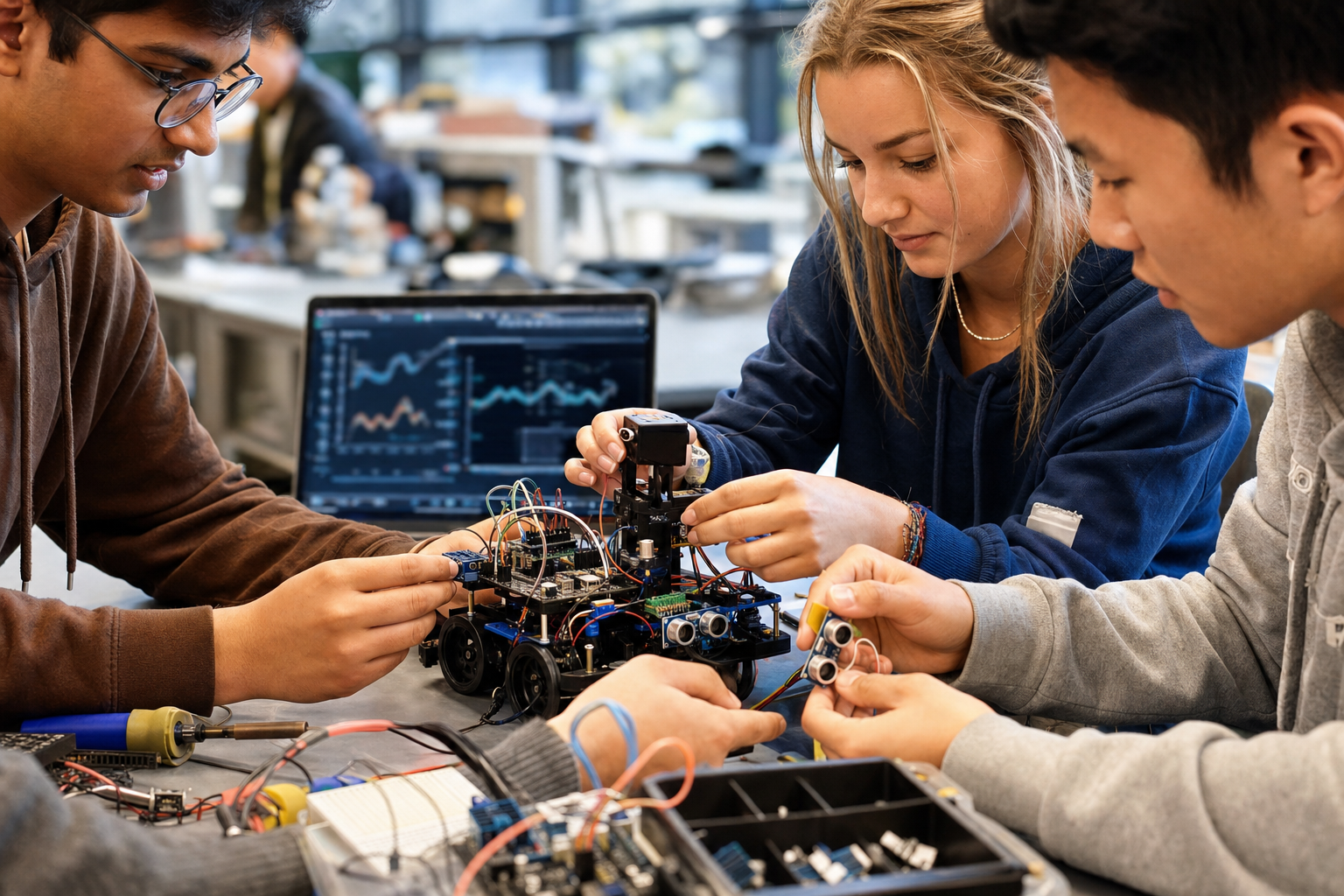
For classrooms, the competition is a ready-made capstone format. Teams can divide responsibilities across firmware, mechanical design, model integration, testing, documentation, and presentation. That mirrors real engineering work better than isolated coding assignments.
For startups and advanced makers, the value is product-readiness practice. A physical-AI prototype has to survive lighting changes, sensor noise, heat, battery sag, network outages, and user mistakes. The projects that handle those boring constraints will be the ones worth following after the prize cycle ends.
Risks and unknowns
The main risk is over-scoping. A team that tries to build a general-purpose robot assistant in one sprint is likely to produce a fragile demo. A narrower project—inspection, sorting, assistive sensing, classroom automation, lab monitoring, or a specific robotics behavior—will be easier to test and explain.
There is also a documentation risk. Competitions often reward polished presentations, but physical AI needs transparent engineering evidence: BOM, wiring, model choice, test data, known failures, and safety decisions. Those details matter more than buzzwords.
TVG Take
The Arduino Physical AI Challenge India 2026 is strongest if participants treat it as an engineering validation exercise. Build something small enough to test hard, show the sensor-to-actuator loop, document the failures, and explain why the intelligence belongs on the device. That is the difference between a flashy AI demo and a real STEM hardware project.