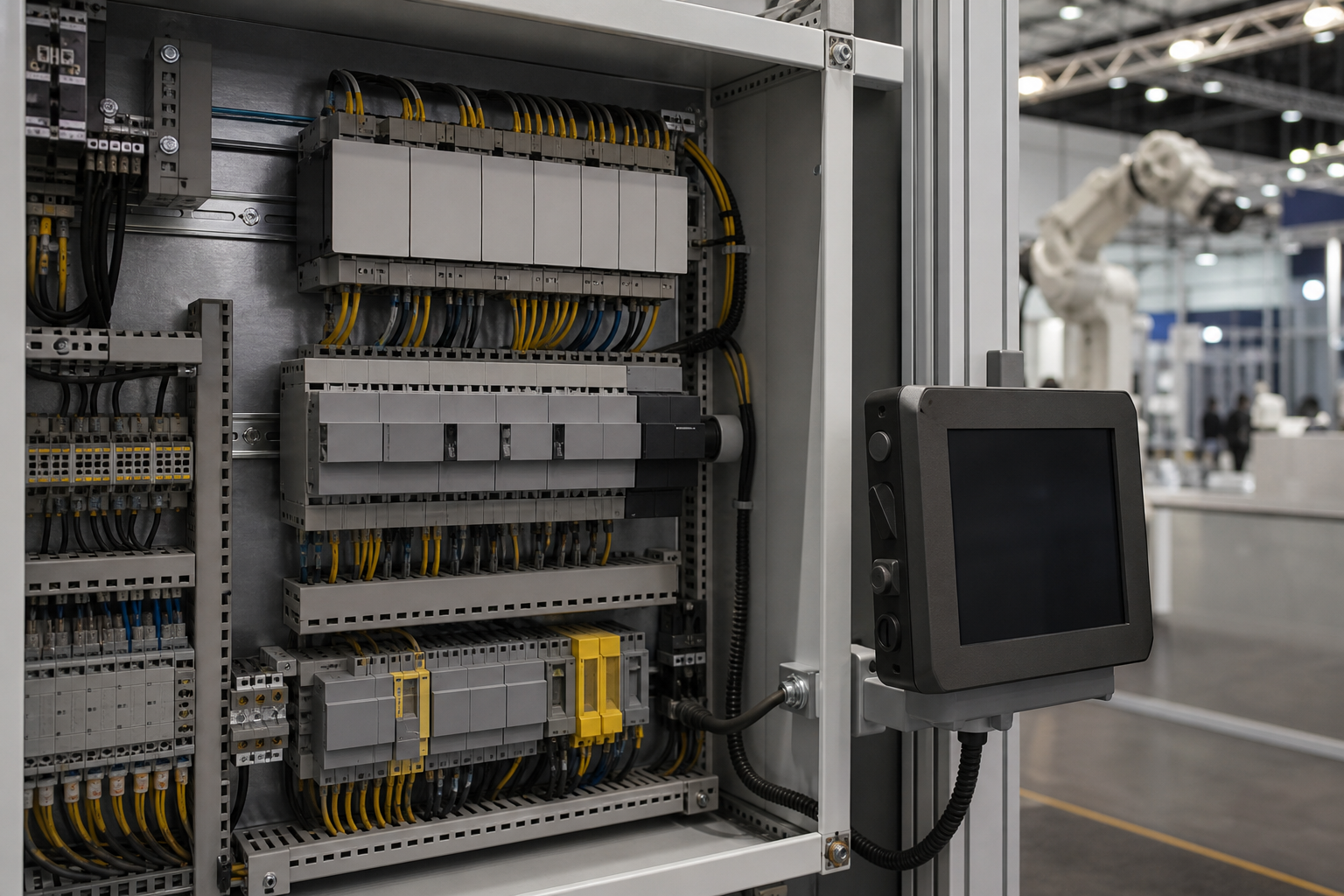
Automate 2026 is not just shaping up as a robot-arm and machine-vision showcase. CODESYS Corporation’s June exhibitor announcement points to a more fundamental factory trend: control systems are becoming more software-defined, more virtualized, and increasingly tied to AI-assisted engineering workflows.
According to Automate’s exhibitor news, CODESYS will show CODESYS Virtual Control SL, Virtual Safe Control SL, AI-supported engineering through the CODESYS Development System MCP Server, and CODESYS 4, its web-based next-generation development environment. The company is exhibiting at Automate 2026 in Chicago, June 22–25.
Why it matters
Factory automation has historically been anchored to dedicated PLC hardware, vendor-specific engineering tools, and long machine lifecycles. Virtual control does not erase those requirements, but it changes where some of the complexity lives. If more control logic can run in hardware-independent or virtualized environments, machine builders gain new options for deployment, simulation, maintenance, and fleet standardization.
That matters because Automate 2026 is expected to be a large event by any industrial benchmark. The Association for Advancing Automation says this year’s show is expected to draw more than 50,000 people, with 200+ expert speakers, 140+ conference sessions, and 1,000+ exhibitors across 450,000 square feet of exhibit space. When software-defined control is being presented in that environment, it is no longer a niche IT topic; it is part of the automation floor conversation.
Technical breakdown
The CODESYS booth focus is notable because it groups four layers of the same transition. Virtual Control SL addresses hardware independence for PLC-style control. Virtual Safe Control SL extends that virtual-control conversation into safety applications, where determinism, validation, and certification expectations are much higher. CODESYS 4 points toward browser-based engineering workflows. The MCP Server reference suggests a path for AI-assisted development tools to interact with automation engineering environments rather than sitting outside them.
The engineering opportunity is not simply “put AI in the factory.” A more realistic near-term target is making machine design, code navigation, documentation, simulation setup, and configuration review less manual while keeping hard real-time behavior, safety functions, and final commissioning under strict controls.
That distinction matters. AI-supported engineering can help a controls team search projects, generate boilerplate, explain function blocks, or inspect configuration intent. It should not be treated as an unchecked authority over safety logic, live machine states, or production changes.
Industry and builder impact
For machine builders, virtual control can make it easier to develop and test control logic before the final hardware is available. It can also support more flexible hardware sourcing when customers want similar machine behavior across different plants or controller platforms.
For integrators and advanced STEM programs, the web-based and AI-assisted pieces are especially interesting. They point to automation workflows that look more like modern software development: versioned projects, remote collaboration, richer simulation, and eventually AI-aware documentation and review. Students learning controls may need to understand networks, containers, web tools, and model-assisted workflows alongside ladder logic, structured text, sensors, drives, and safety circuits.
Risks and unknowns
The risk is overreach. Virtual PLCs and AI-supported engineering tools must prove themselves against latency, uptime, cybersecurity, change control, and safety requirements. A virtualized controller that is convenient in development still has to survive messy factory realities: network faults, update windows, cabinet constraints, operator behavior, and long-term maintainability.
There is also a skills gap. Software-defined automation asks controls engineers to understand more of the IT stack while asking software teams to respect industrial constraints. The strongest implementations will treat virtual control as a disciplined engineering tool, not as a shortcut around validation.
TVG Take
CODESYS’ Automate 2026 lineup is a useful marker for where industrial automation is heading. The most important story is not AI replacing controls engineers; it is controls engineering absorbing more software-native workflows. Virtual PLCs, web-based development, and AI-assisted project tooling will be valuable if they make systems easier to test, document, and maintain without weakening safety or commissioning discipline.