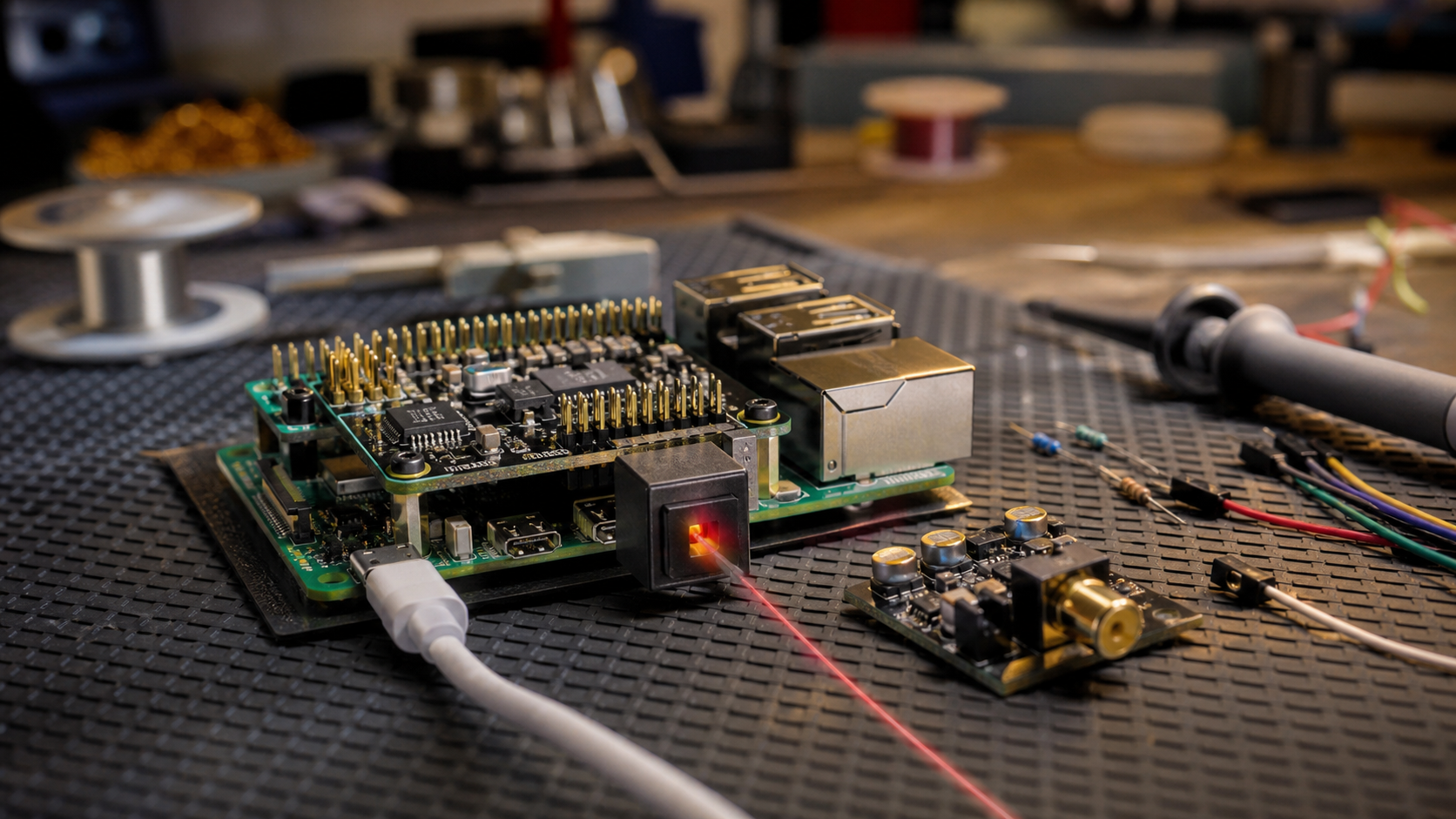
A new maker-audio project is using the Raspberry Pi 5 as more than a small Linux computer. The build, highlighted by Hackaday, presents the Pi 5 as a USB sound card and routes audio to optical SPDIF/TOSLINK hardware. The supporting code and notes are published in the RASPIAUDIO CamillaDSP prototype repository, with a related USB-to-SPDIF project available on GitHub.
For TVG readers, the news is not just that a Pi can output digital audio. It is another example of the Pi 5 moving into roles that previously required dedicated adapters, microcontroller boards, or small commercial appliances. Raspberry Pi’s own documentation describes the platform’s USB behavior and peripheral support as part of a broader Linux device stack, while ALSA remains the core Linux audio layer that many maker projects eventually have to satisfy.
What the project does
The Hackaday item points to a design where the Pi 5 can appear to a host as a USB audio device, then hand audio off toward a SPDIF path. That makes the board act like a bridge between a host computer and an optical audio output. Optical links are attractive on a bench because they can reduce ground-loop problems and provide clean galvanic separation between a noisy computer and downstream audio gear.
The public prototype notes matter because they show the work as a system problem: USB device identity, Linux audio behavior, buffering, GPIO/SPDIF timing, and practical playback expectations all have to line up. A classroom demo that plays one file is useful, but a lab tool has to survive reconnects, different host systems, sample-rate changes, and the occasional student who yanks the cable at the wrong time.
Why it matters
Maker labs increasingly use Raspberry Pi boards as glue between sensors, instruments, cameras, displays, and old equipment. Audio is another field where that glue can become valuable. A Pi-based USB sound-card bridge could support testing, digital signage, DSP experiments, or low-cost measurement setups without forcing a club or classroom to buy a stack of specialized boxes.
There is also a software-maintenance angle. A project that depends on ALSA, USB gadget configuration, kernel behavior, and user-space DSP can be powerful, but it is not the same as a sealed audio interface. Builders should expect version drift. They should record the OS image, kernel version, configuration files, and recovery steps if they want the setup to be repeatable six months later.
TVG Analysis
The practical lesson is to treat small-board audio projects like test equipment, not like novelty hacks. Before a maker lab builds lessons around a USB-to-TOSLINK Pi, it should test sample rates, host compatibility, reconnect behavior, boot time, and what happens when the board is powered from different USB supplies. If the project is used near amplifiers, lighting controllers, or long cable runs, isolation and noise checks belong in the setup notes.
This also fits TVG’s recent coverage of practical maker-lab gear. The same reliability mindset behind mobile maker-lab cable kits and Raspberry Pi fleet provisioning applies here: the clever prototype is only the first half. The second half is packaging, documentation, and recovery.
What to watch next
The public code makes the idea easier to inspect, but the durability question remains open. TVG will watch for follow-up notes on supported sample rates, host OS compatibility, latency, enclosure options, and whether the design becomes a repeatable kit or stays a strong example for advanced builders.
For now, the safest reading is that the project is promising because it exposes the entire chain. Builders can see where the Linux host, Pi 5 USB gadget configuration, DSP software, and optical output path meet. That transparency is exactly what a school or community lab needs before turning a clever weekend build into shared equipment.