What happened
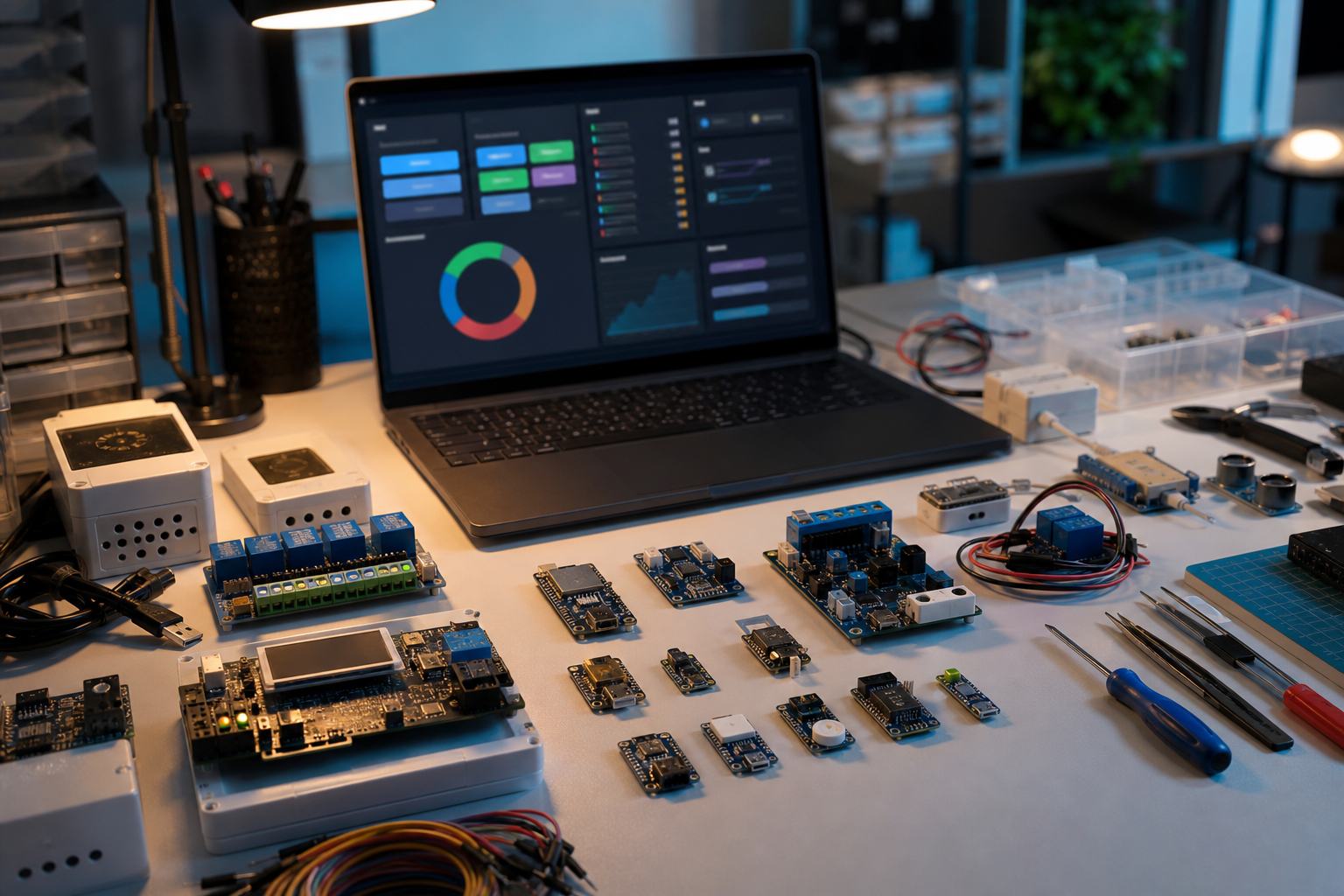
ESPHome 2026.5.0 is out, and the headline change is the public beta of the new ESPHome Device Builder. The project describes it as a from-scratch web app that replaces the legacy in-tree dashboard with a real configuration editor, firmware job queue, multi-select bulk actions, labels and areas, out-of-sync detection, cross-config search, distributed builds, and a proper settings UI.
CNX Software’s release coverage also flags the same shift: this is not just a cosmetic dashboard update, but a more operational interface for people managing many ESPHome nodes across a home, lab, classroom, or small deployment.
Why it matters
ESPHome has always been attractive because it lets builders turn low-cost microcontrollers into useful devices without writing every firmware path by hand. The problem shows up once a project grows from one board on a bench to a dozen devices installed around a house, classroom, greenhouse, workshop, or robotics lab. At that point, configuration drift, update queues, validation time, and board-specific quirks become the real workload.
The Device Builder beta points ESPHome toward a fleet-management mindset. That is useful for makers, but it is also relevant to STEM labs and small automation teams that need repeatable firmware operations without adopting a full industrial IoT platform.
Technical breakdown
The official changelog says ESPHome 2026.5.0 brings a reworked main loop, scheduler, and task watchdog, along with measured performance optimizations and memory-footprint reductions across platform and helper paths. It also adds native ESP-IDF toolchain support alongside PlatformIO, with ESP-IDF v6.0.1 readiness work.
The release also modernizes the audio stack, expands OTA platform work, improves configuration validation and CLI startup speed, and adds more radio and platform coverage. Notable items include Zigbee expansion to ESP32-H2 and ESP32-C6 plus nRF52 and Zephyr platform improvements.
For builders, the important pattern is that firmware usability and runtime efficiency are moving together. A better dashboard helps manage more devices; lower memory use and cleaner scheduling help those devices stay reliable once they are deployed.
Builder, STEM, and industry impact
For maker projects, Device Builder should make ESPHome less intimidating when a project grows beyond a single YAML file. For STEM labs, it creates a clearer teaching path: students can see configuration, firmware builds, update status, and device grouping as part of one workflow.
For light commercial automation, the release is a reminder that the hardest part of embedded systems is often lifecycle management. Flashing a prototype is easy. Keeping a set of installed nodes documented, updated, and recoverable is the professional skill.
Risks and unknowns
The Device Builder is still labeled beta, so cautious users should avoid moving critical deployments without backups and test devices. The changelog includes breaking changes and component-level updates, which means teams should read the upgrade checklist before updating production nodes. Zigbee, audio, ESP-IDF, and Zephyr improvements are promising, but mixed hardware fleets still need board-by-board validation.
TVG Take
ESPHome 2026.5.0 matters because it treats embedded firmware as an operational workflow, not just a compile-and-flash task. That is exactly where many maker and STEM projects mature: from a clever one-device build into a small fleet that needs labels, queues, validation, recovery, and predictable updates. The Device Builder beta is worth watching because it could make disciplined embedded operations accessible to builders who are not full-time firmware engineers.