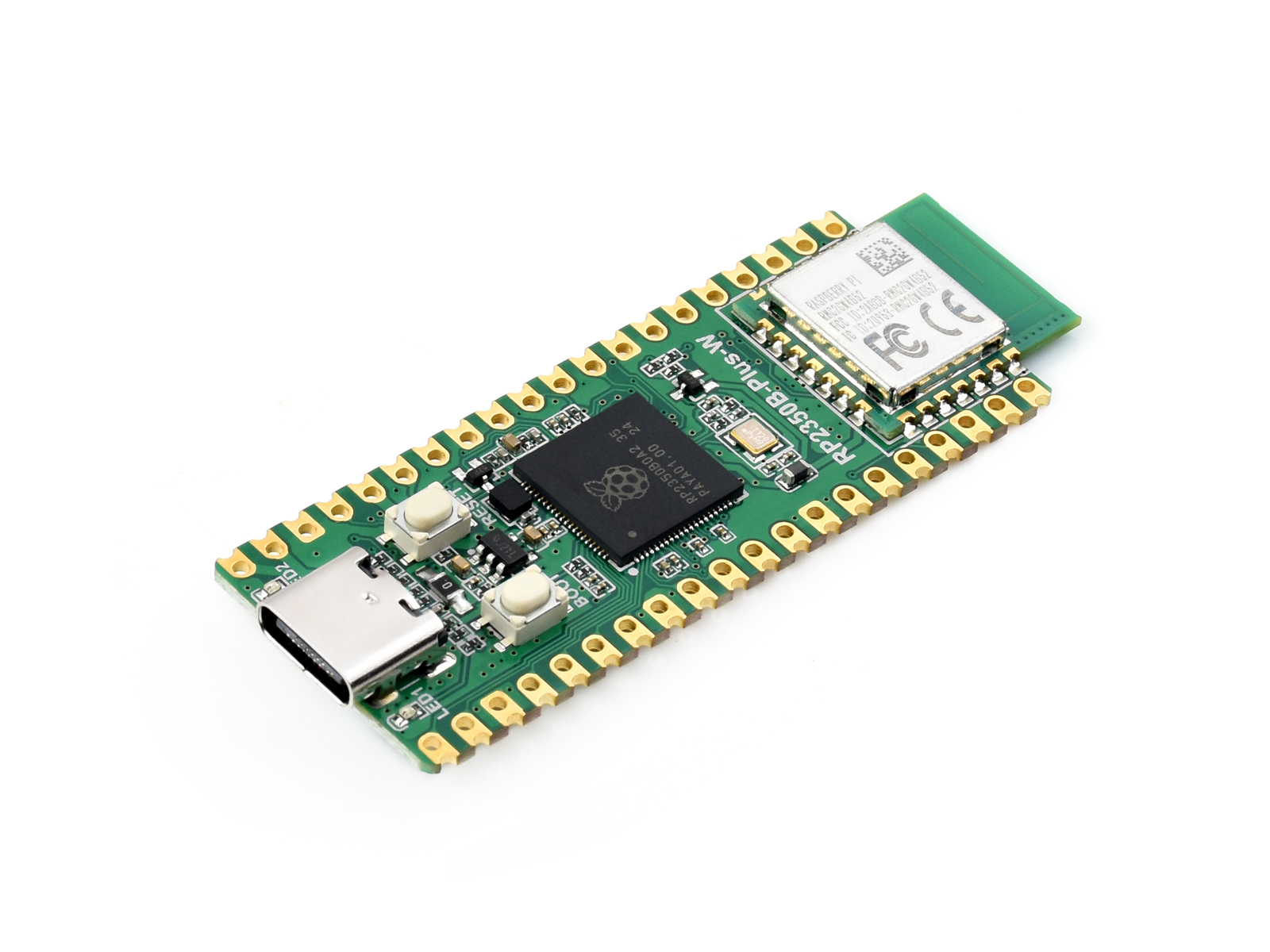
Waveshare’s RP2350B-Plus-W is a small board announcement with a practical maker lesson: once projects move beyond blinking LEDs, extra I/O can matter as much as clock speed. The board keeps a Raspberry Pi Pico 2 W-sized footprint while exposing more pins and modernizing some day-to-day hardware details.
What happened
CNX Software reported this week that the Waveshare RP2350B-Plus-W uses the RP2350B microcontroller in a Pico 2 W-sized board and offers 41 GPIOs, 16 MB of flash and a USB-C port. The article contrasts that with the official RP2350A-based Pico 2 W, which has fewer exposed GPIOs, 4 MB of flash and micro USB. Waveshare’s product page lists the RP2350B MCU, wireless connectivity and the expanded header layout for developers building around the Pico-style ecosystem.
Why it matters
Microcontroller projects often fail on boring constraints: not enough pins, awkward connectors, limited storage for firmware assets, or fragile cabling on classroom benches. A Pico-class board with more GPIO headroom gives builders more room for sensors, motor drivers, displays, keypads and debugging connections before they have to jump to a larger single-board computer.
Technical breakdown
The RP2350B package exposes more I/O than the smaller RP2350A, which is why a board designer can offer 41 GPIOs in a familiar footprint. The 16 MB flash allocation is useful for larger MicroPython/CircuitPython projects, static assets, logs or over-the-air update strategies. USB-C is not an exciting spec on paper, but in classrooms and labs it reduces cable confusion compared with older micro USB boards.
Builder, STEM and industry impact
For STEM labs, this kind of board is useful because it stays close to the Pico mental model while opening up more complex exercises: multi-sensor data logging, small robotics controllers, custom HID devices, environmental monitoring stations and machine-control panels. For embedded developers, it is a reminder that board-level ergonomics can determine whether a microcontroller is pleasant to prototype with, even when the MCU itself is already familiar.
Risks and unknowns
More pins do not automatically mean a better project board. Developers still need to check pin multiplexing, voltage levels, wireless coexistence, documentation quality, bootloader support and library compatibility. Classrooms should also test durability: USB-C connector strength, header soldering quality and how well the board survives repeated student handling matter more than a spec-sheet win.
TVG Take
The RP2350B-Plus-W is interesting because it optimizes the constraints real builders run into: I/O count, flash capacity and connector convenience. It is not a revolution, but it is the kind of incremental board design that makes more ambitious STEM and maker projects practical.