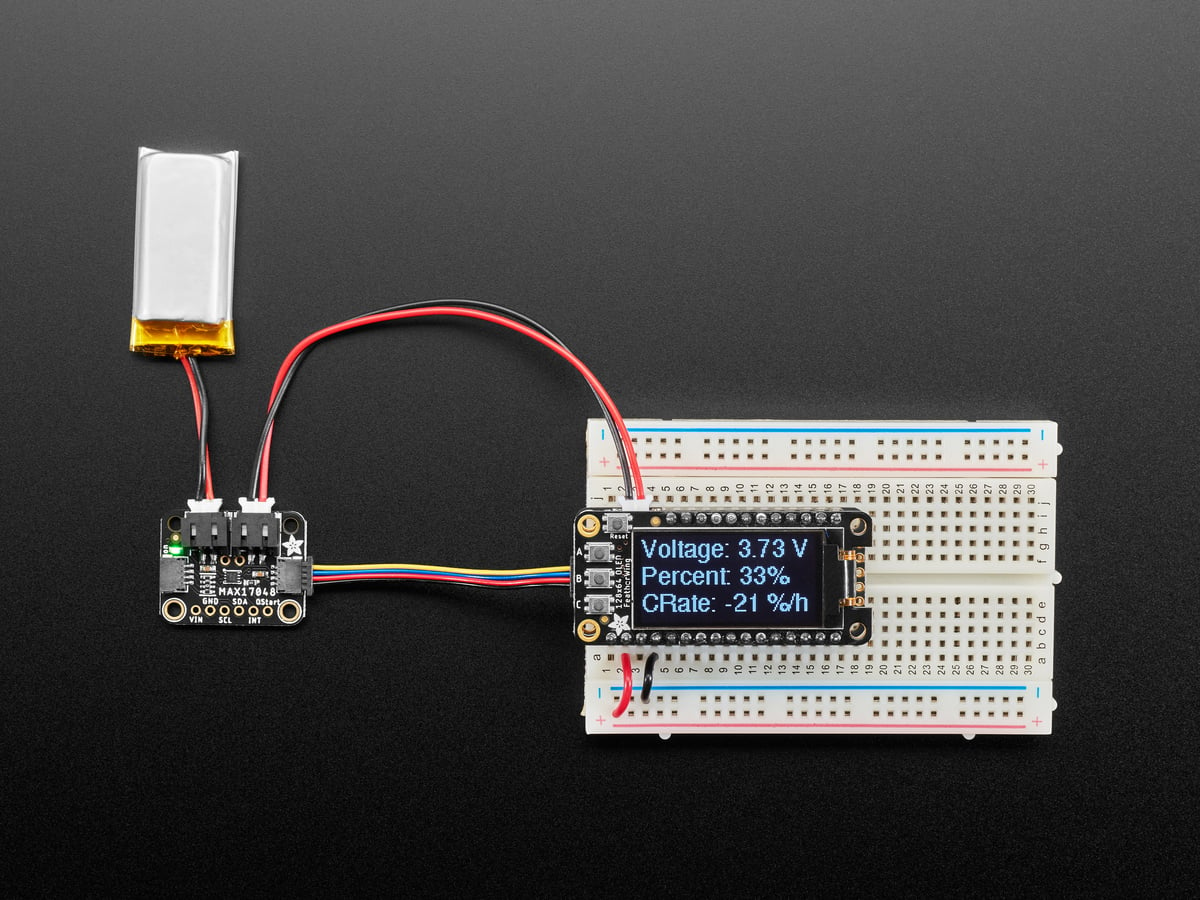
The MAX17048 estimates the state of charge of one Li-ion or Li-polymer cell without placing a sense resistor in the current path. It measures cell voltage and applies Analog Devices’ ModelGauge algorithm, so firmware receives both voltage and a percentage estimate—but not a direct current or coulomb-count reading.
That boundary makes the part useful for compact battery-powered controllers. It also prevents a common interpretation error: the reported percentage is not a linear conversion from 3.0 V to 4.2 V, and the board does not replace a charger, protection circuit or power-path manager.
VCELL and SOC answer different questions
The data sheet defines the VCELL register scale as 78.125 µV per least-significant bit. A raw value of 48,000 therefore corresponds to 3.75 V. The SOC register reports the algorithm’s state-of-charge estimate with a nominal resolution of 1/256 percentage point, although display software should avoid implying that many digits of real battery accuracy.
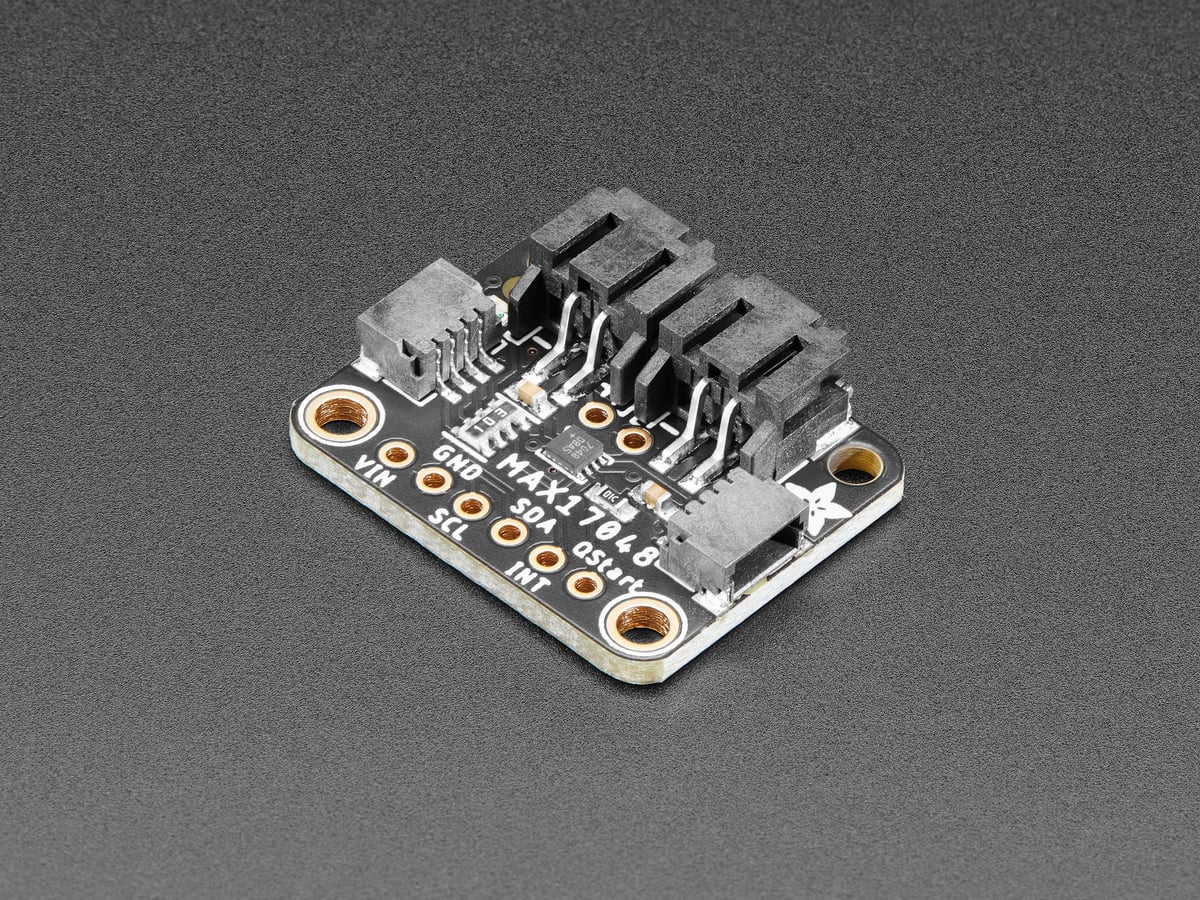
ModelGauge uses the cell’s voltage behavior rather than an external current shunt. That keeps the series resistance and board area low, but it means an application that needs instantaneous load current, energy integration or power measurement requires a separate current monitor. The MAX17048’s percentage is a model output for a supported single-cell chemistry, not a substitute for measuring every power-rail parameter.
The alert pin is active low
Adafruit’s breakout exposes the MAX17048 alert output alongside its STEMMA QT I²C connection. Firmware can set a low-state-of-charge threshold; when the condition is asserted, the alert pin pulls low. The host should configure the input with an appropriate pull-up and clear the device’s alert state after handling it, rather than treating the pin as a push-pull high-level alarm.
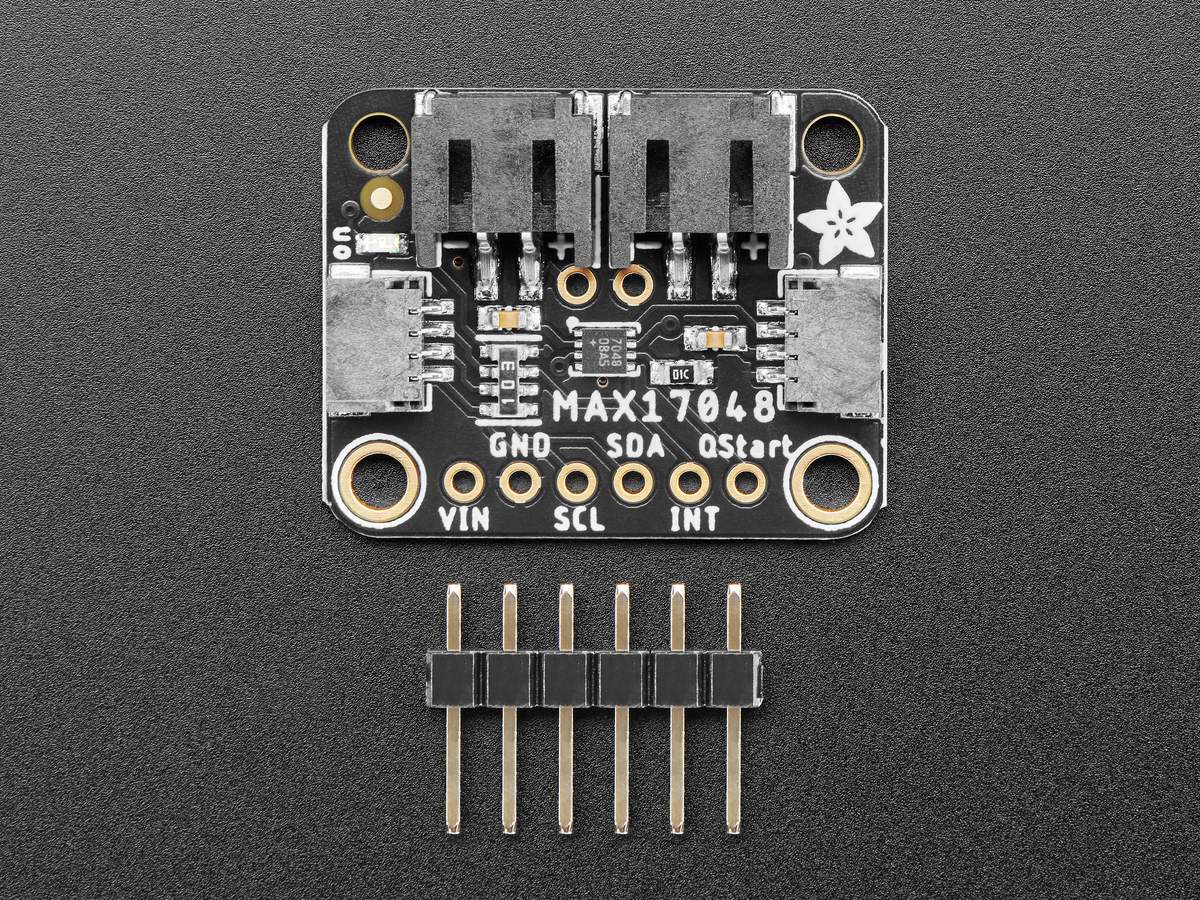
An interrupt-driven alert can let the main controller sleep instead of polling continuously. The threshold should leave enough energy for the required shutdown, data flush or radio message under the actual load. A percentage that is adequate at idle may collapse faster during a motor start or radio transmission because cell voltage sags with current and internal resistance.
Hibernate reduces gauge activity, not system load
The MAX17048 updates VCELL every 250 ms in active mode and every 45 seconds in hibernate mode, according to the data sheet. Hibernate reduces the gauge’s own activity when the cell is relaxed; it does not switch off the application or disconnect the battery. Firmware that expects sub-second voltage tracking must account for the slower hibernate update interval.
The Adafruit board accepts 3–5 V logic power and presents the battery connection separately. Code should read both cell voltage and state of charge, log resets or unexpected jumps, and validate low-battery behavior under the device’s real peak load. For fleet maintenance, that live estimate complements—not replaces—the replacement records described in TVG’s sensor battery maintenance guide.
A useful implementation keeps three responsibilities separate: the charger controls safe charging, protection hardware enforces cell limits, and the MAX17048 reports estimated remaining charge. Combining those roles in software creates false confidence around a measurement IC that was never designed to enforce battery safety.