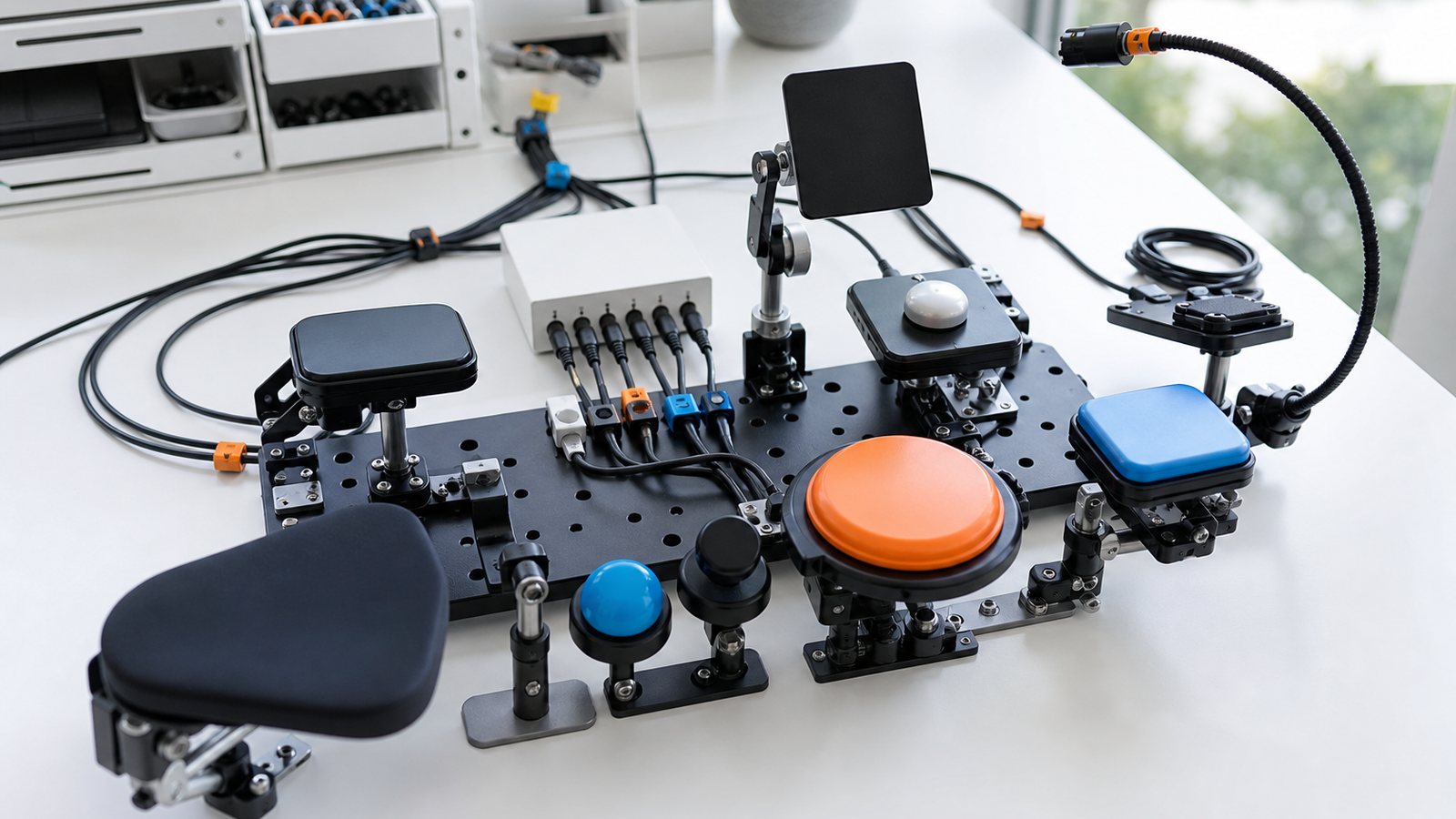
Adaptive gaming controllers are often covered as feel-good accessories. TVG sees a more useful engineering story: they are modular human-interface systems. A good setup has to match a person’s movement, mounting position, switch force, cable layout and software profile without becoming fragile.
Microsoft’s Xbox Adaptive Controller and Sony’s Access controller are two mainstream examples that show the category’s direction. Both are built around configurable inputs rather than one fixed gamepad shape. The World Wide Web Consortium’s accessibility principles also frame the larger goal: technology should support people with different ways of perceiving, operating and understanding systems.
Why this belongs in STEM labs
Accessibility hardware is a strong teaching case because it makes constraints visible. A student robot gripper, a classroom input device and an adaptive controller all have to answer the same question: can a real user repeat the action reliably under real conditions?
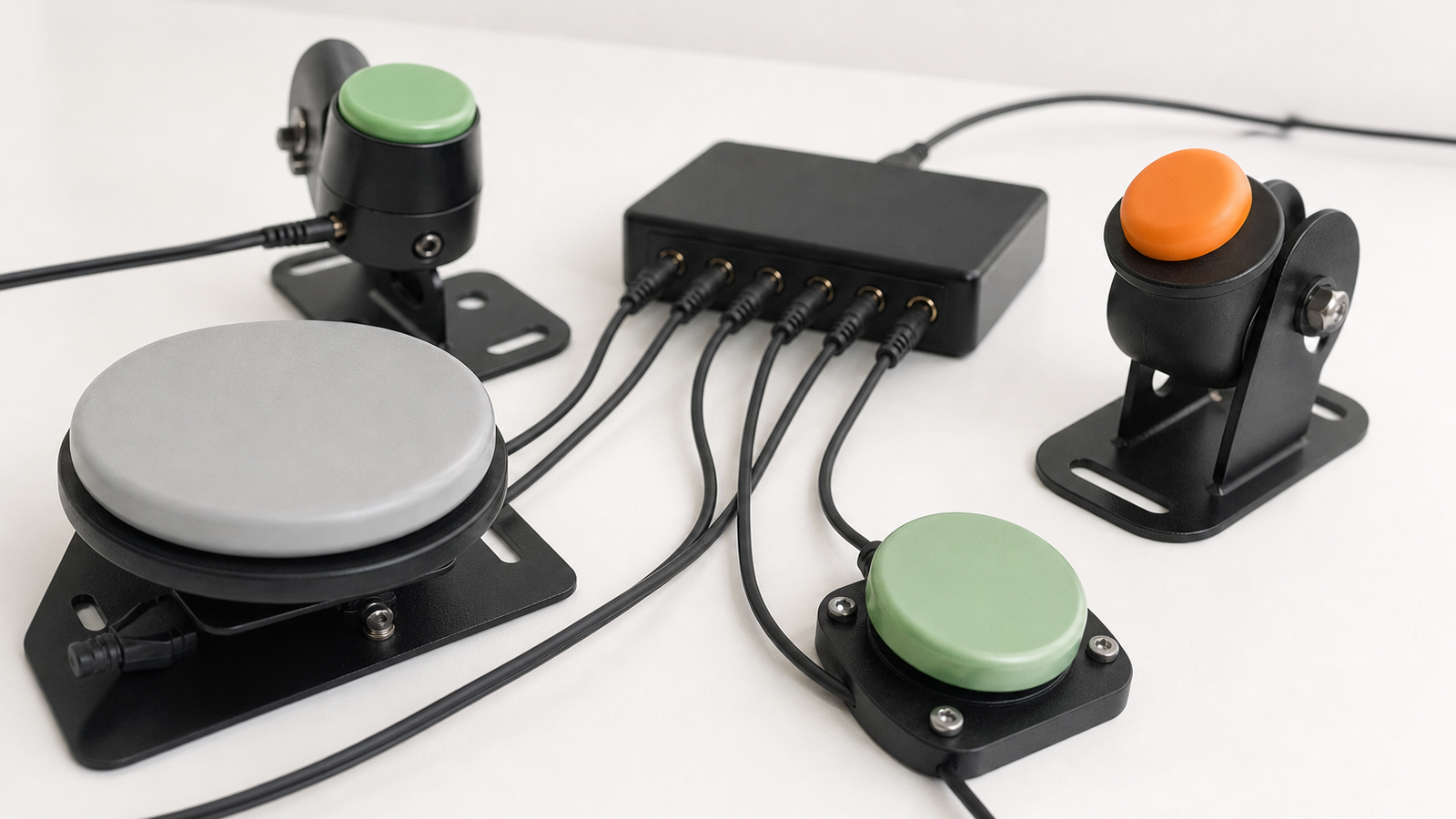
For adaptive controllers, the switch may be large, small, soft, firm, foot-operated, head-mounted or placed near a hand with limited range of motion. The mount may matter more than the electronics. If the switch moves every time it is pressed, the system fails even when the circuit works.
Engineering checklist
- Input force: match the switch to the user’s comfortable, repeatable motion.
- Mounting: test the angle and stability before judging the controller.
- Cable routing: avoid pull, strain and tangles that change the switch position.
- Profiles: document which input maps to which action so helpers can recover the setup.
- Fatigue: test a full session, not a short demo.
Modularity creates new failure modes
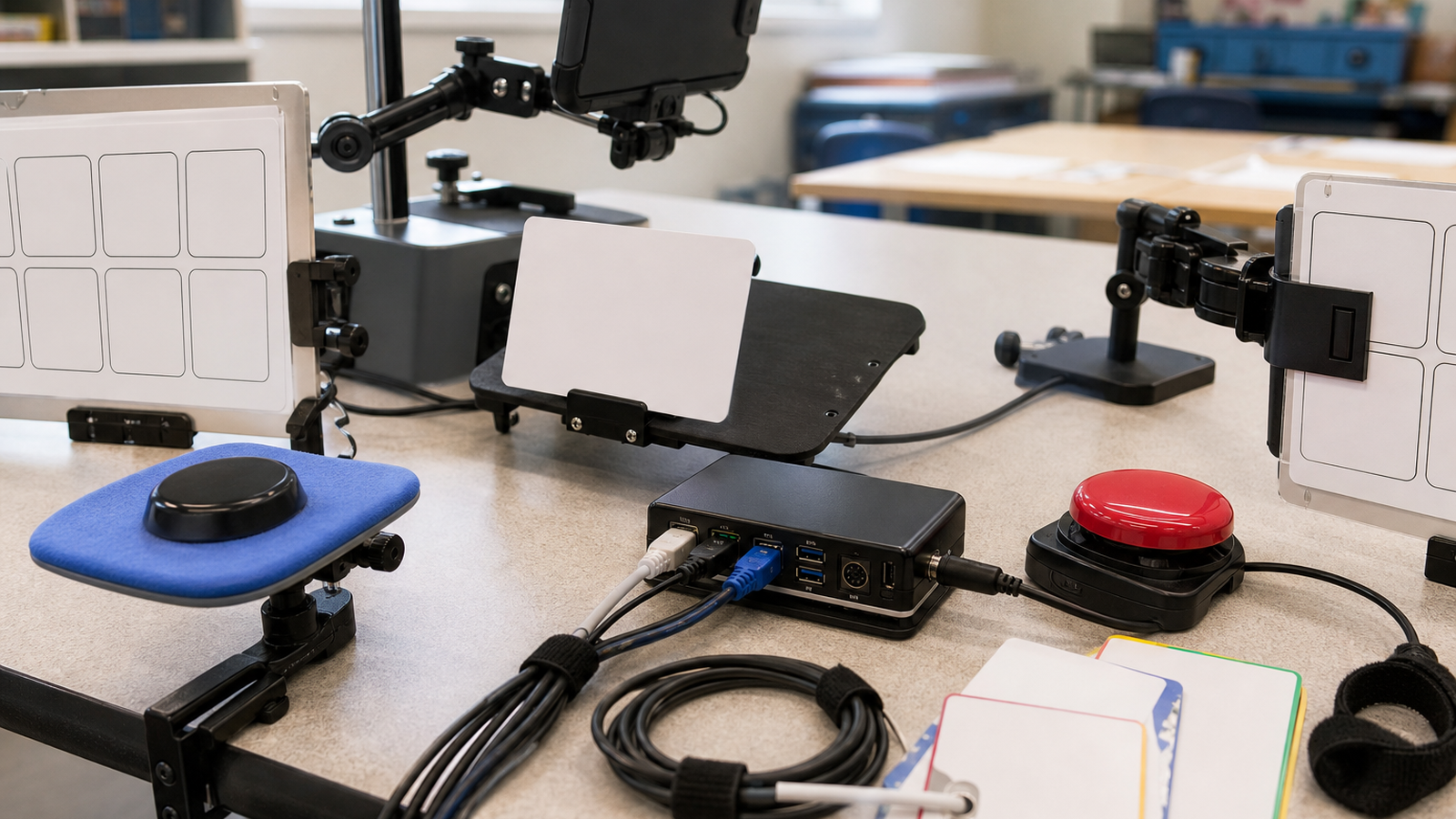
Modular input is powerful because it lets a setup adapt to the person instead of forcing the person to adapt to the controller. The engineering tradeoff is that every extra switch, mount and cable adds a point of adjustment. If a profile is not documented, a helper may not know how to restore it. If a mount is not repeatable, the user may have to relearn the motion every session.
That is why accessibility projects should be evaluated over time. A switch that works for five minutes may become tiring after an hour. A cable route that looks tidy on a table may snag on a wheelchair, chair arm or desk edge. Inclusive design is strongest when it treats the user’s comfort and setup recovery as measurable requirements, not as afterthoughts.
There is also a useful lesson for robotics teams: human input is part of the control loop. If a driver station, teaching pendant or assistive switch is uncomfortable, inconsistent or poorly labeled, the rest of the machine inherits that unreliability. Accessibility hardware makes that truth impossible to ignore because the interface must fit the user instead of hiding behind a standard gamepad assumption.
A strong classroom exercise is to have students rebuild the same setup from documentation alone. If they cannot restore switch positions, cable paths and profile mapping, the design is not yet robust.
TVG Take
The lesson from adaptive gaming is that accessibility is not a bolt-on feature. It is a systems problem that includes mechanics, electronics, firmware, software and user context. Maker and STEM teams can learn a lot by treating inclusive input devices with the same seriousness they give motors and sensors.
Related TVG reading: ROS 2 bag recording checklist for student robot teams.