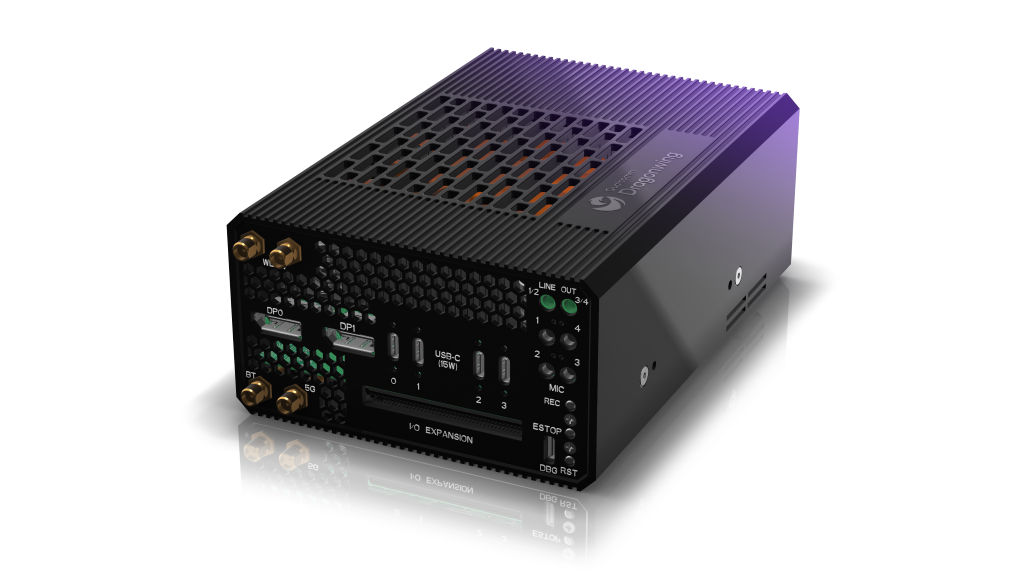
Qualcomm’s Dragonwing IQ10 Robotics Reference Design is a useful signal for robotics teams because it frames “robot AI” as a system-integration problem, not just a processor benchmark. The current public materials around the June 2026 announcement describe a reference design that packages compute, sensing, networking, and software into a deployment-oriented robotics platform.
What happened
Qualcomm’s official Dragonwing IQ10 Robotics Reference Design page and Edge AI and Vision Alliance coverage point to a full-stack robotics reference design aimed at industrial, autonomous mobile, and humanoid robot developers. Edge AI and Vision Alliance summarizes the platform as combining hardware, software, and AI tools in one deployment-ready system, and says the design is intended to deliver up to 700 TOPS of AI performance while supporting multimodal sensors and deterministic control.
Why it matters
For robotics builders, a reference design can be more important than a raw chip announcement. Mobile robots and manipulation platforms need synchronized perception, motion, networking, safety monitoring, thermal management, and field-service workflows. If a vendor supplies those pieces as a tested starting point, teams may spend less time building bring-up infrastructure and more time validating application behavior.
Technical breakdown
The important engineering claim is the packaging of a robotics stack: AI acceleration, CPU resources, sensor inputs, connectivity, and software hooks designed to work together. That matters because autonomy workloads often run as chained pipelines: camera or depth input, perception, localization, planning, control, and telemetry. Bottlenecks show up when one part of the chain is fast but another part is fragile, poorly synchronized, or difficult to deploy at the edge.
TVG would watch three areas before calling this production-ready for a specific robot: thermal behavior under sustained inference, sensor-driver maturity across real cameras and lidar modules, and deterministic behavior when perception and control workloads compete for system resources.
Builder, STEM, and industry impact
Industrial automation groups may see the biggest near-term value. A reference design can help AMR, inspection, and robotic-arm teams standardize evaluation boards, perception rigs, and software images. For university and advanced STEM labs, it also creates a clearer teaching target: students can compare integrated edge-AI robot pipelines instead of treating compute, sensing, and control as disconnected subsystems.
Risks and unknowns
Reference designs do not remove system engineering. Teams still need to validate mechanical fit, power budget, electromagnetic noise, cooling, safety requirements, sensor placement, and update management. The public material also does not replace hands-on testing for latency, real-world perception accuracy, or serviceability in dusty, hot, mobile, or vibration-heavy environments.
TVG Take
The Dragonwing IQ10 RRD is interesting because it pushes robotics vendors toward integrated platform evaluation. The question is not whether a module can claim a large AI number; it is whether the full chain from sensor to actuator can be brought up, measured, updated, and maintained without weeks of custom integration work. If Qualcomm’s ecosystem support matches the platform story, this could become a practical evaluation baseline for teams moving from prototypes to deployable robots.
What to watch next
For readers tracking the same engineering lane, these related TVG Report pieces add useful context:
- Albert Shows How Cheap Quadruped Robots Can Teach Real Robotics
- Intel’s OpenVINO Physical AI Push Shows Robotics Is Becoming a Deployment Problem
- ICRA 2026 Shows Robotics Is Becoming a Benchmark Discipline