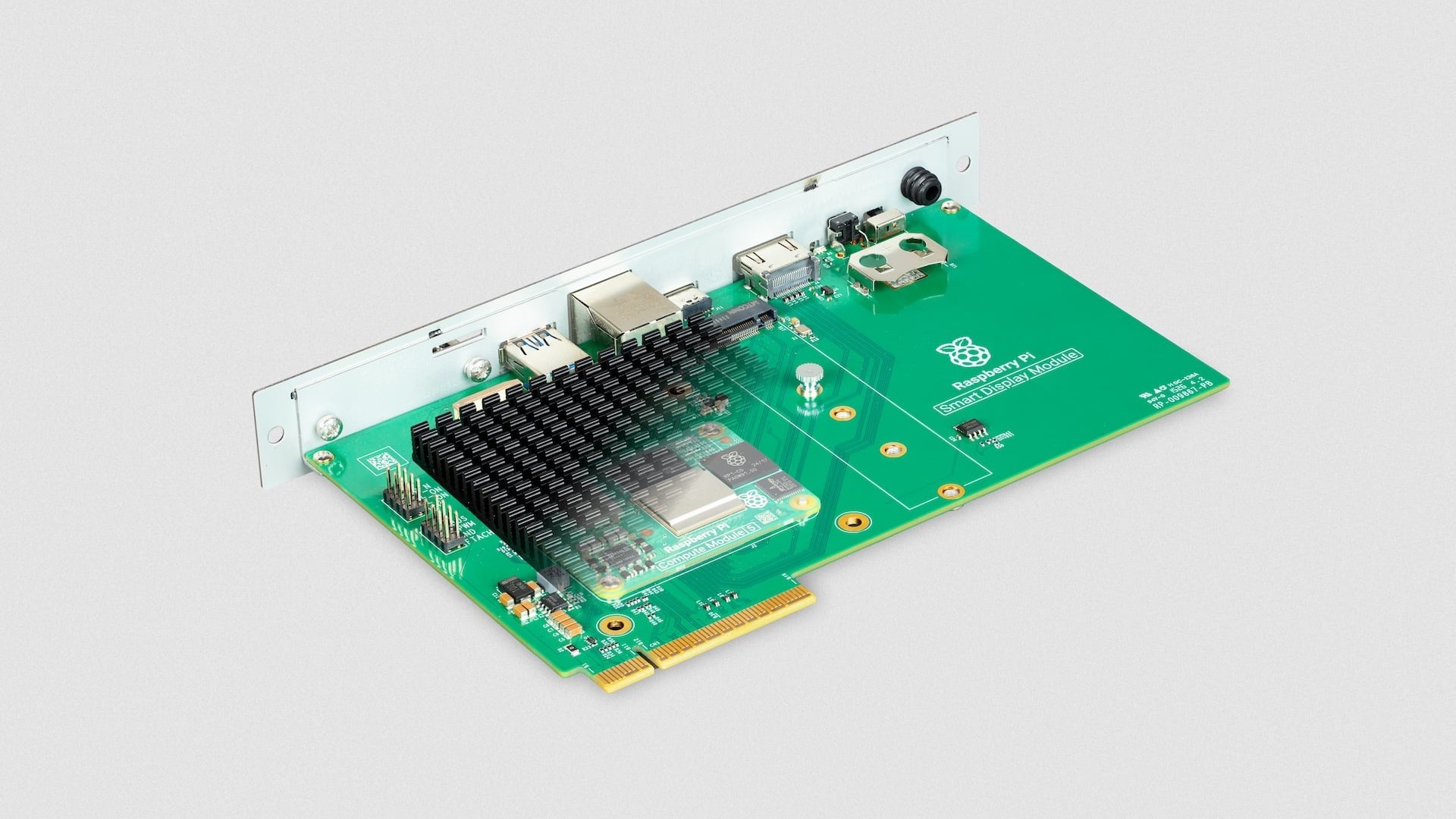
Raspberry Pi has released its Smart Display Module for $30, turning a separately purchased Compute Module 5 into a slot-in computer for displays and projectors built around Intel’s SDM standard. The board is the physical and electrical adapter; it is not a $30 complete signage player, and buyers still need a CM5 plus a compatible SDM-L host.
Raspberry Pi announced availability on September 30 after previewing the design earlier in 2026. The attraction is a cleaner installation: the module draws power through the display’s SDM slot and routes video and data through the same edge connector, avoiding an external player, power brick and visible HDMI cable.
The SDM-L slot defines compatibility
The official product brief identifies the form factor as SDM-L. Intel describes Smart Display Module as a standardized slot-in architecture for integrated displays, but SDM-L and the smaller SDM-S are different physical formats. A screen merely advertised as “smart” or “digital signage ready” is not enough; it needs a compatible Intel SDM-L slot.
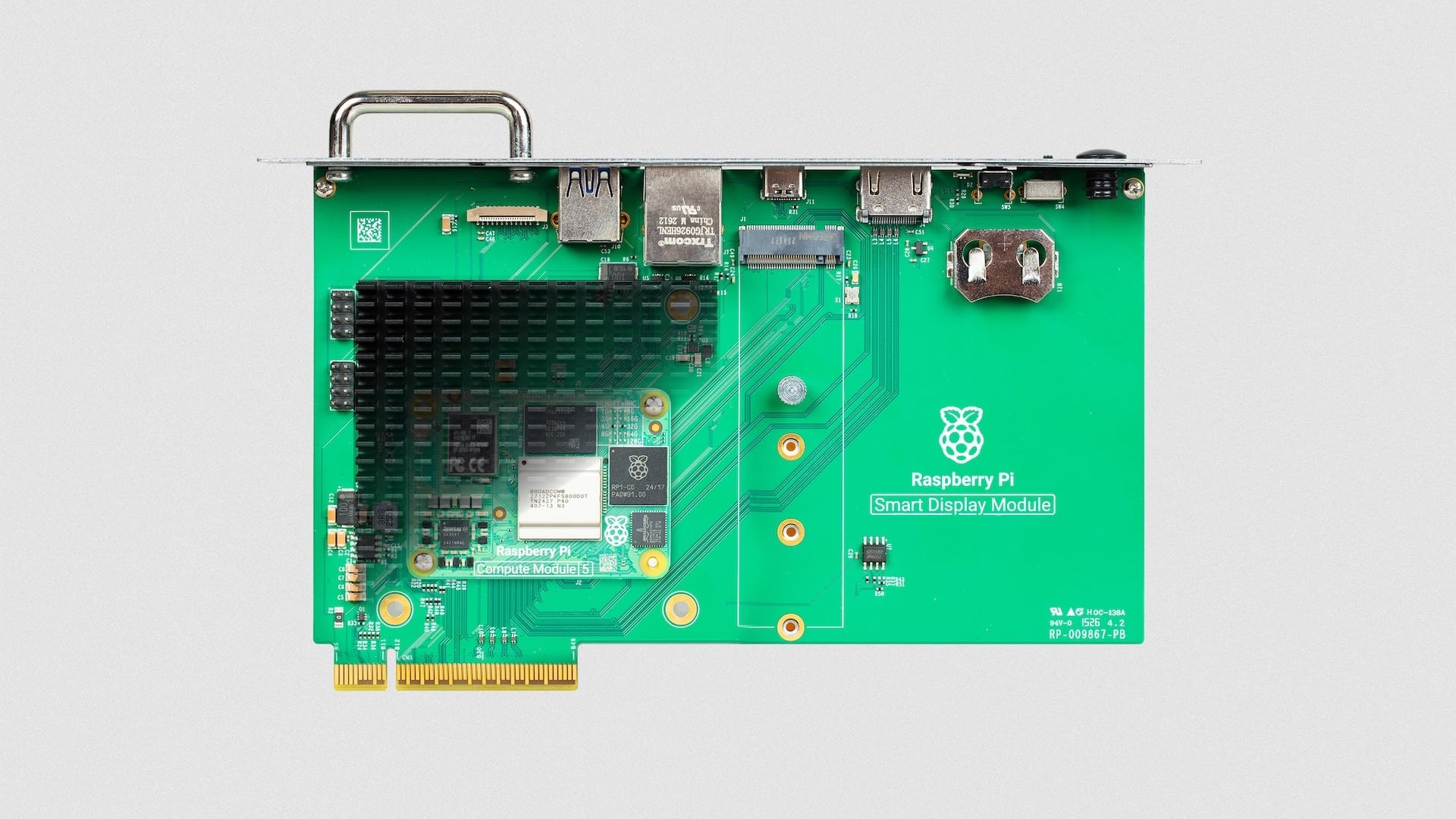
The SDM edge exposes HDMI 2.0, USB 3.0, two I²C buses, general SPI and UART. Those are host-facing connections through the slot. On the accessible bracket, the carrier adds another HDMI 2.0 output, USB 3.0 Type-A, Gigabit Ethernet and USB-C 2.0 used only to program Compute Module 5. That programming-only note matters: the Type-C connector is not specified as a general host or display port.
A second display and PCIe device can live on the module
The external HDMI port supports a second independent video stream. An M.2 M-key socket accepts 2230, 2242, 2260 and 2280 cards, giving an integrator room for NVMe storage or a PCIe accelerator within the assembly. A 22-way MIPI DSI/CSI-2 connector is also present, along with an RTC battery socket and mounting for the Raspberry Pi Antenna Kit.
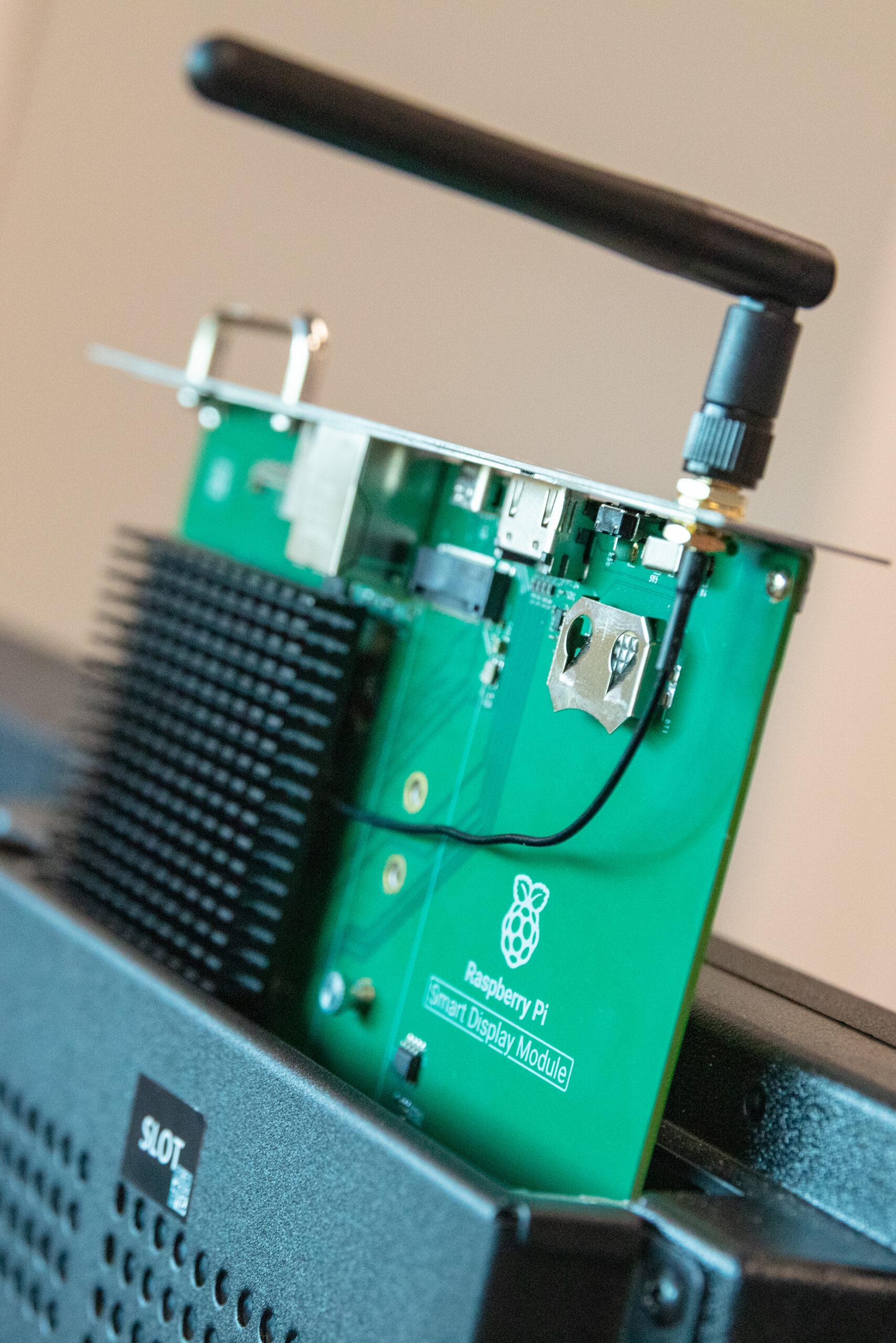
The assembled hardware measures 193 × 125 × 25 mm and weighs 225 g with a Compute Module 5 installed, according to the September 2026 product brief. Raspberry Pi supplies a passive aluminum heatsink and fastening hardware, but the CM5, M.2 device, antenna and RTC battery are separate choices.
The $30 price is only the carrier layer
The product is most compelling where an SDM display already exists and the operator wants Raspberry Pi 5 software compatibility in a serviceable internal module. It is less relevant to ordinary HDMI monitors: without an SDM-L slot, the host-powered, cable-free advantage disappears and a conventional CM5 carrier or complete Raspberry Pi is the more direct architecture.
Deployment still requires attention to the screen vendor’s slot power, cooling and certification requirements. Raspberry Pi warns that standby mode may continue powering the SDM slot and instructs users to disconnect the host from mains before removing the module. That is an installation boundary, not a hot-swap invitation.