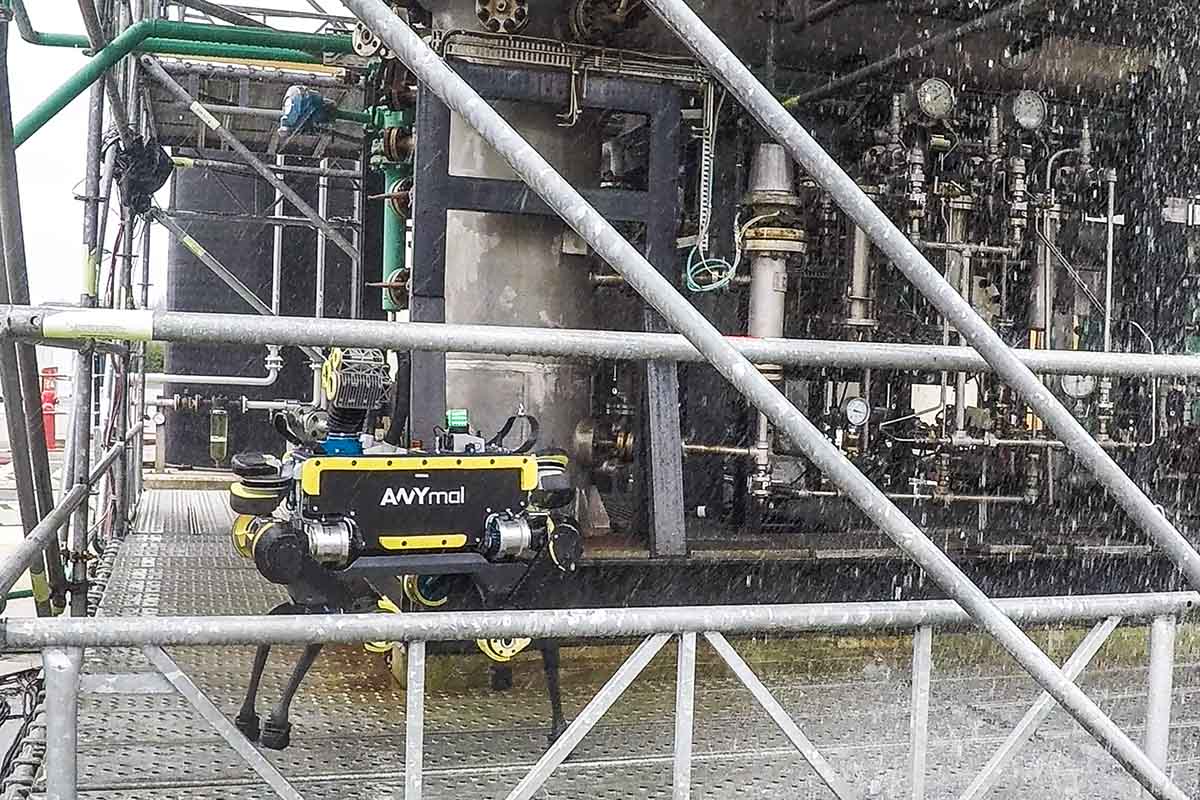
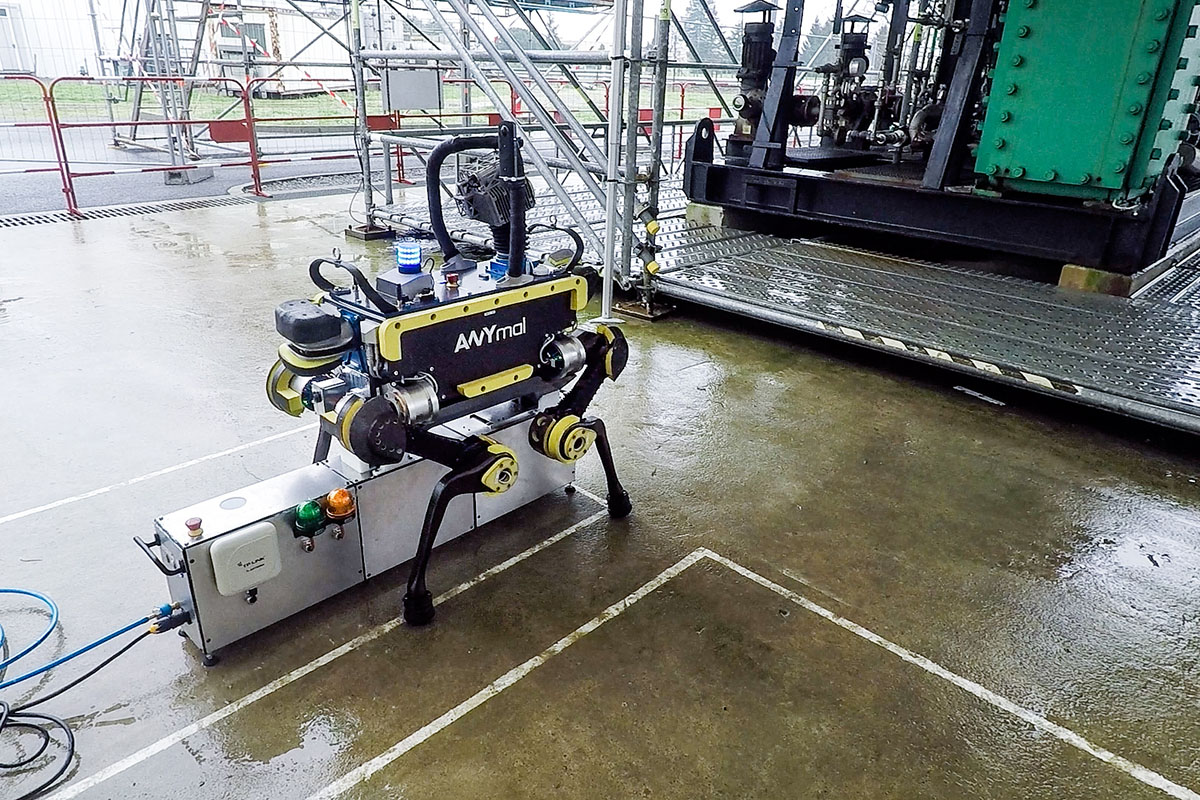
ANYbotics launched Shift on October 1 as the software layer connecting autonomous inspection missions to the maintenance systems that decide what gets repaired. The platform combines a plant model, robot-fleet control, inspection analysis and systems integration, moving the company’s product beyond individual ANYmal missions toward a site-wide operating workflow.
The release matters at the handoff points. A robot can collect thermal, acoustic, visual and gas readings, but those readings are much less useful if they arrive without the asset identity, operating condition or path into a work order. Shift is designed to keep those links intact from mission scheduling through maintenance action.
Four modules divide the workflow
ANYbotics describes four connected modules. Shift Maps holds the plant model and asset hierarchy, associating inspection targets with the identifiers already used by asset-performance and enterprise-asset systems. Shift Fleet schedules missions and monitors robot status, battery, position and live video. Shift Insight combines inspection readings with context such as motor speed, load and ambient temperature. Shift Connect moves confirmed findings into operational software.
The division is more than a menu structure. Maps answers which asset produced a reading; Fleet records when and how the robot collected it; Insight judges whether the observation is abnormal in context; Connect routes the result to the system where a reliability team can act. All four use the same asset model, so a later inspection can be compared with the same equipment’s prior history rather than treated as an isolated sensor sample.
The API runs in both directions
Shift Connect supports productized connectors and REST APIs across distributed control systems, computerized maintenance management and ERP tools, asset-performance platforms, and digital-twin or contextualization layers. ANYbotics names Yokogawa, SAP, IBM Maximo, GE Vernova APM, Cognite and Oracle as examples in those categories.
The interface is bidirectional. A DCS process threshold, work order or external application can trigger another inspection mission; Shift can then return results and alerts to the maintenance stack. That loop is the central engineering change in the launch. It reduces the need to copy a robot finding manually into a separate work-order system and gives an upstream application a defined way to request another observation.
Deployment has an IT/OT boundary
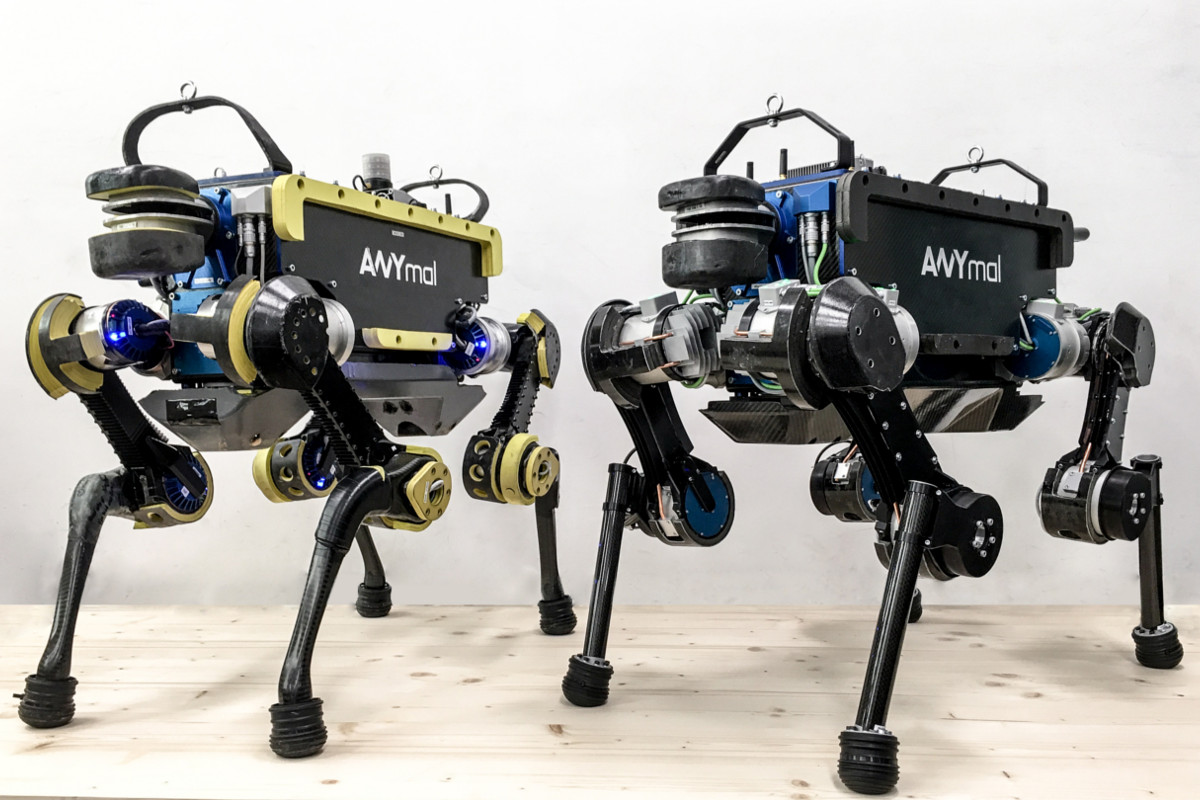
ANYbotics says the managed-cloud version supports regional hosting, including the European Union and United States. Customers with particular regulatory or IT/OT constraints can use a customer-owned cloud or an on-premise deployment. The company also says customer inspection data remains customer-owned and cites ISO 27001 certification; the robots carry CE, IP67, ATEX and IECEx certifications.
Those choices do not remove the integration work. Asset IDs still have to match the hierarchy used in the maintenance system, mission triggers need authorization boundaries, and the plant network must decide which data can cross between operational and enterprise zones. The value of the shared model depends on those identifiers and interfaces being maintained as equipment and processes change.
Scale claims and the unfinished part
ANYbotics reports that the platform is used across more than 200 robot deployments and processes hundreds of thousands of inspections each month. It cites a Vigier Cement deployment that completed more than 33,000 autonomous inspections in 16 months. These figures are company-reported operational examples, not an independent comparison with other fleet platforms.
Existing Data Navigator customers are due to move to Shift through a regular platform update with their data, configurations, integrations and custom workflows carried over. Support for third-party robotic systems is planned for the coming months, however, so the hardware-agnostic command-center claim is a roadmap item rather than a current capability. The key point to watch is whether those future integrations preserve the same asset context and bidirectional work-order loop across mixed robot fleets.