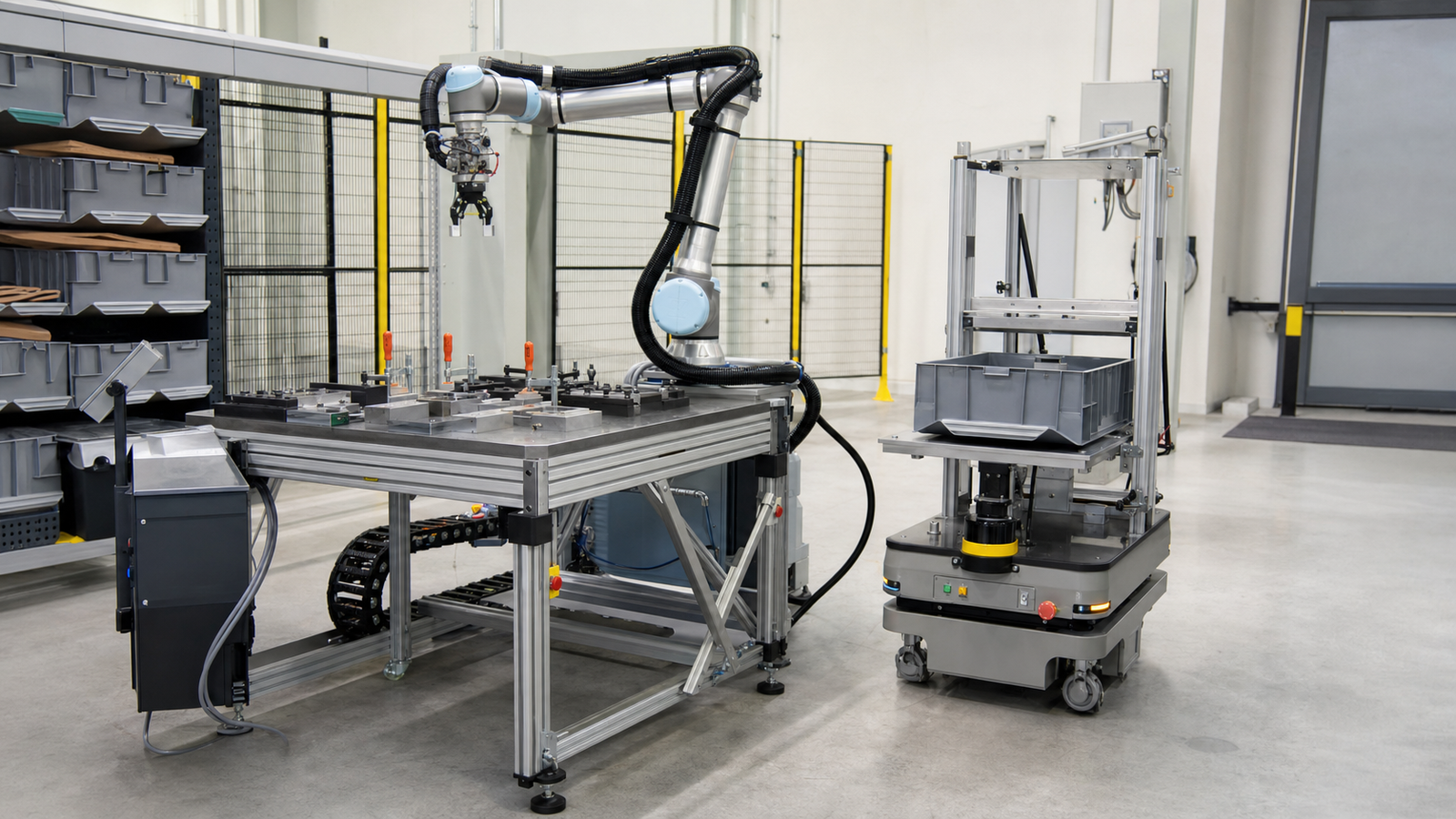
Teradyne Robotics delivered one of the cleaner industrial-automation signals of the week: buyer demand is still showing up around collaborative robots and autonomous mobile robots, even while much of the robotics conversation is being pulled toward humanoids and speculative physical-AI demos.
The Robot Report reported that Teradyne Robotics brought in $100 million in revenue during the second quarter of 2026, up 33% year over year. The unit includes Universal Robots for collaborative robot arms and MiR for autonomous mobile robots.
Why it matters
That mix matters because cobots and AMRs are the less glamorous part of the robotics market, but they are also the part many factories, warehouses, labs, and training programs can actually evaluate. A robot arm that can tend a machine or an AMR that can move material between stations has a narrower job than a general-purpose humanoid, which makes the return-on-investment question easier to test.
For TVG readers, the result is a reminder that practical automation demand is not limited to headline-grabbing form factors. Buyers still appear willing to spend on systems that fit known workflows, can be integrated with existing equipment, and have a service model behind them.
What the Q2 signal says
Teradyne Robotics is not a proxy for every robotics company, and quarterly revenue does not prove a durable market turn by itself. It does, however, point toward a practical split in automation. Buyers remain cautious, but they are not frozen. When a robot can be tied to throughput, labor availability, quality checks, or material movement, the conversation becomes operational rather than futuristic.
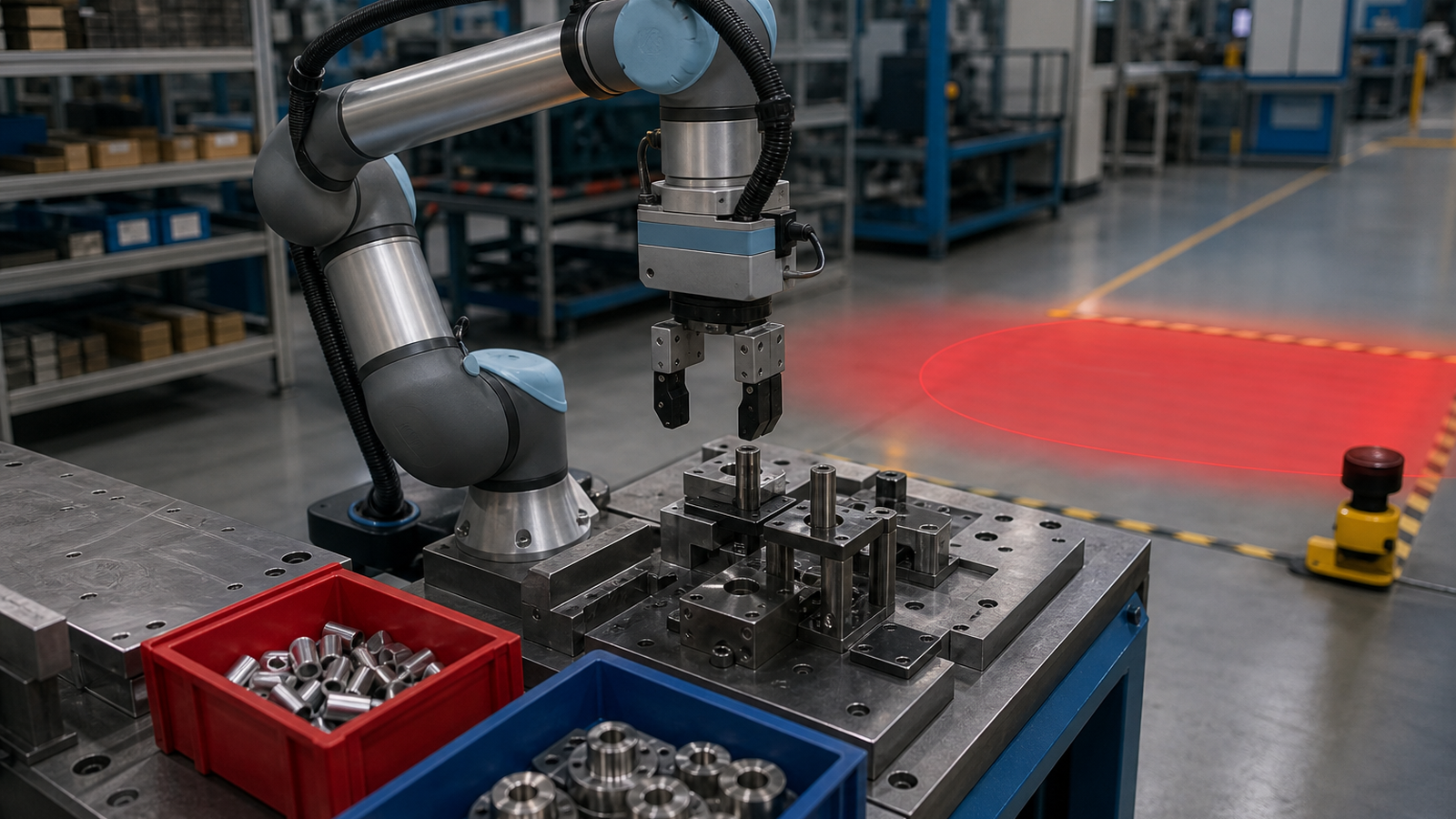
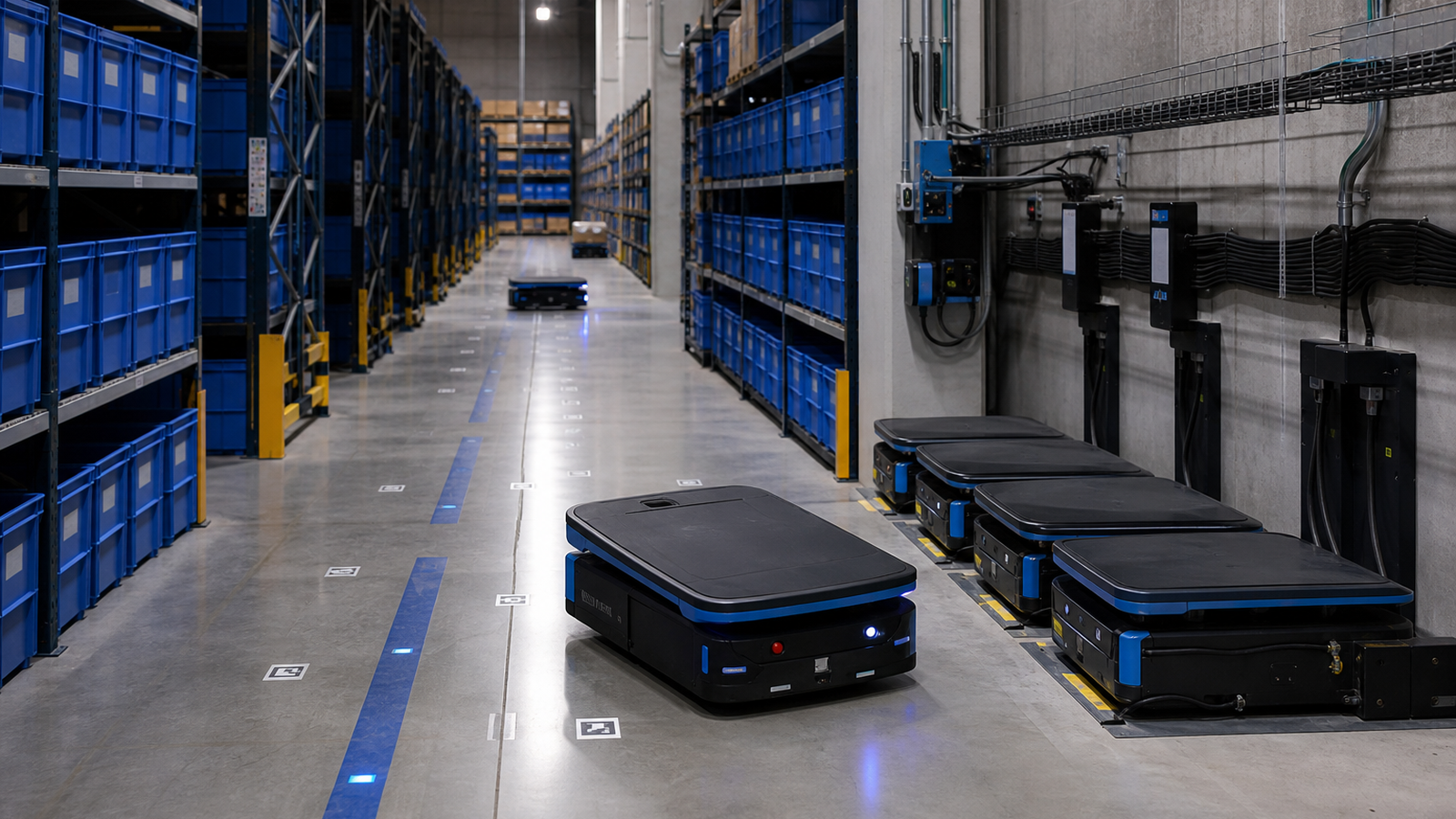
Cobots are especially relevant to small and mid-sized manufacturers because they can start with constrained jobs: screwdriving, machine tending, packaging support, inspection staging, or repetitive handling. AMRs fit a different problem: reducing human walking time and making material flow more predictable without tearing up a facility for fixed conveyors.
The engineering challenge is still integration. A cobot cell needs grippers, fixtures, sensors, risk assessment, and cycle-time measurement. An AMR needs map maintenance, traffic rules, charging behavior, fleet software, and handoff points that operators trust. In both cases, the robot is only one layer of the system.
TVG Analysis
The strongest takeaway is that robotics buyers are rewarding deployment-ready categories before they reward broad promises. If a vendor can explain the payload, reach, safety envelope, navigation behavior, maintenance burden, and software handoff, the conversation can move from demo to procurement. If it cannot, the robot remains a trade-show object.
This is also useful for STEM and maker programs. Students do not need access to a full industrial cell to understand the market. They can build scaled exercises around workholding, route planning, sensor zones, uptime logs, and handoff design. Those are the same issues that decide whether commercial automation survives contact with a real floor.
What remains unknown
The Q2 number does not answer how much demand comes from repeat buyers versus first-time deployments, how margins are changing, or how much AI-assisted programming is shortening commissioning time. It also does not show whether smaller automation integrators are seeing the same trend.
TVG will be watching whether future robotics growth is matched by clearer deployment data: average commissioning time, uptime after 90 days, safety incidents avoided, operator acceptance, and the percentage of pilots that become repeat orders.
What smaller teams can learn
The same pattern applies below the factory floor. A classroom robot, a maker automation rig, or a small packaging prototype should not start with the most general robot possible. It should start with a narrow job, a measurable baseline, and a recovery plan for the common failures. That is exactly why cobots and AMRs remain useful reference categories for TVG readers.
For a student or small shop, the useful exercise is to write down the task boundary before choosing hardware: payload, reach, travel path, human interaction, sensing, fault recovery, and how success will be measured after a week of ordinary use.
Related TVG reading
For readers building out the same technical context, these TVG Report pieces connect the hardware, software, and deployment angles without changing the original reporting.
- NVIDIA’s OpenUSD Runtime Work Shows Robot Simulation Moving Closer to Everyday Apps
- NVIDIA’s SIGGRAPH 2026 Push Makes Simulation a Robotics Development Story
- Robot Camera Calibration: Why Checkerboards Still Matter in 2026