Editorial mode: Template A: News.
NVIDIA is pushing OpenUSD deeper into the robotics and industrial software stack, with recent developer posts focused on lightweight USD runtimes and RTX sensor simulation inside existing applications. The company describes OpenUSD as a common scene-description layer for physical AI, CAD data, simulation, and digital-twin workflows.
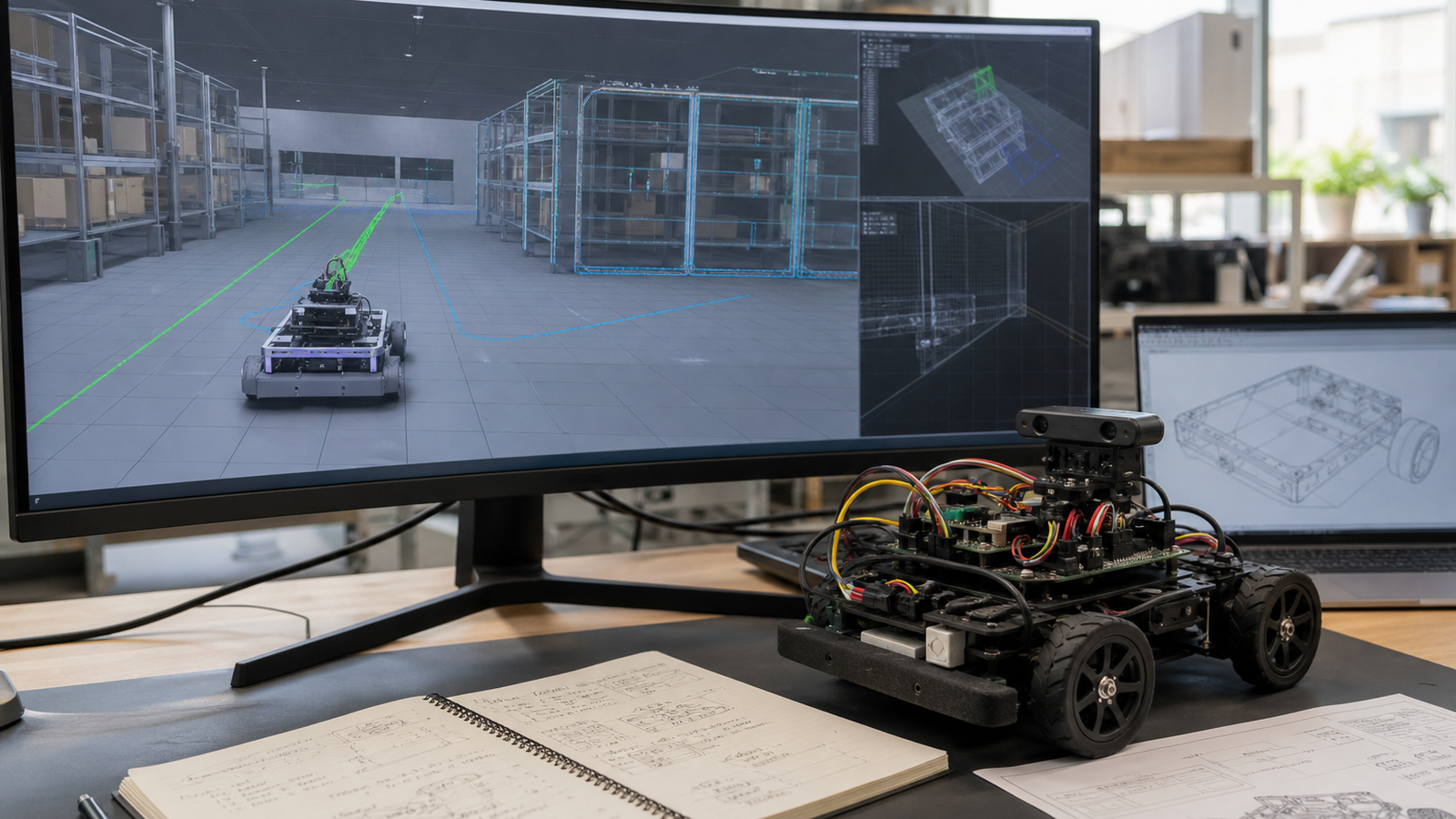
For robotics teams, the news is less about a single new robot and more about where simulation is expected to live. Instead of forcing every team into one full simulation environment, NVIDIA is showing a path where USD assets, sensor models, and scene logic can be embedded closer to the applications engineers already use.
According to NVIDIA’s technical blog, lightweight USD runtimes are meant to help developers bring scene description, robotics data, and interactive behavior into custom tools without carrying the full weight of a large content-creation stack. A separate NVIDIA post details how Omniverse RTX sensor simulation can be integrated into design, simulation, robotics, and industrial digital-twin applications.
That matters because robot development is increasingly a data-handling problem before it is a field-test problem. A mobile robot, inspection drone, or manipulator project may need CAD geometry, material properties, lighting assumptions, camera models, lidar simulation, and ground-truth data to agree before hardware ever leaves the lab.
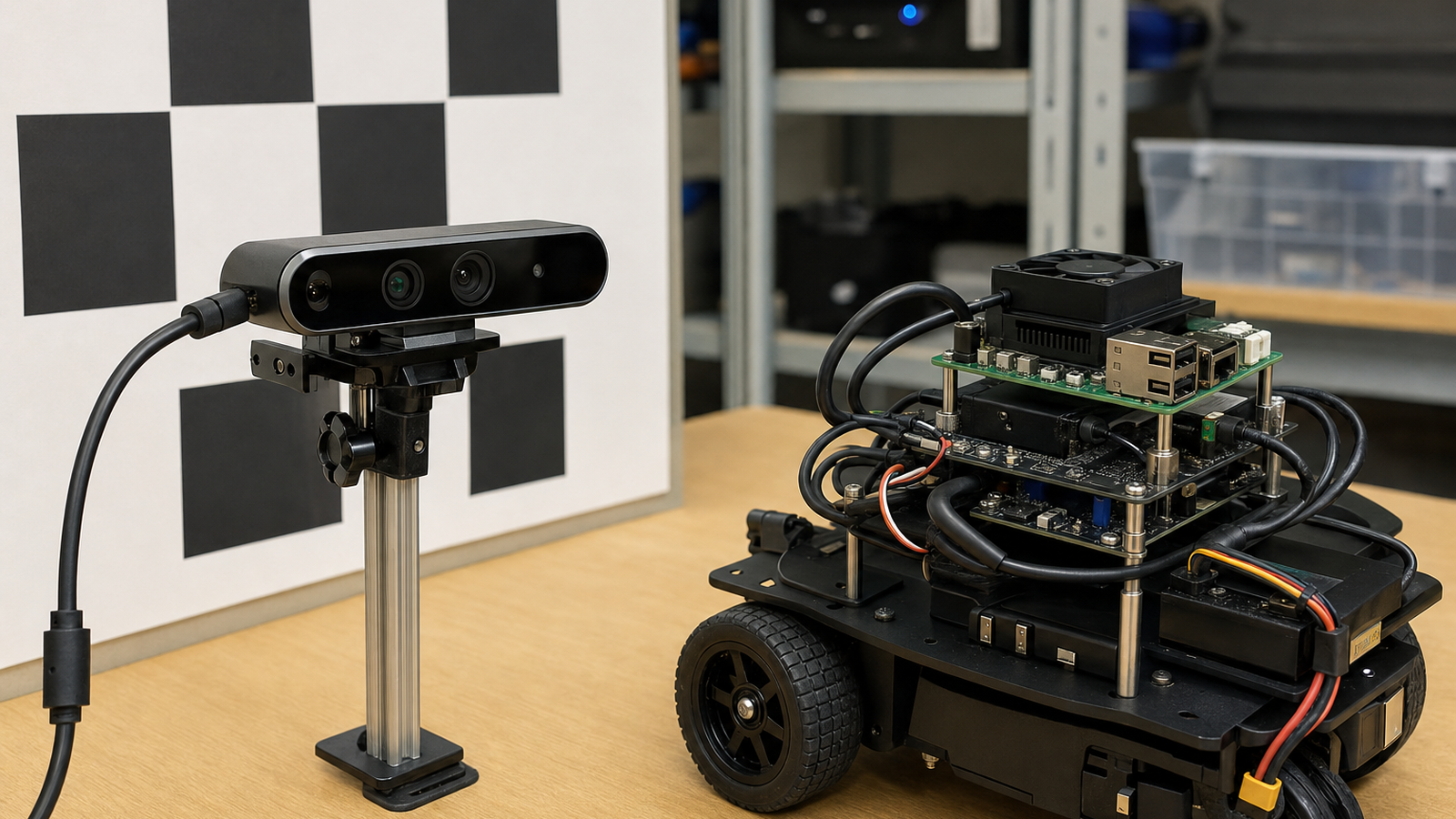
The practical promise is faster iteration. If a team can load a simplified USD scene, test sensor placement, review occlusion, and export useful synthetic data without switching contexts repeatedly, simulation becomes part of daily engineering rather than a special phase saved for late validation.
There are still limits. A lighter runtime does not automatically make synthetic data realistic, and a photoreal sensor render does not prove a perception model will survive dust, vibration, glare, bad calibration, or a bent bracket. Teams still need real-world validation and a way to track where simulation assumptions diverge from hardware.
The more interesting shift is toolchain shape. Small robotics groups, student teams, and integrators rarely have the staffing of a large autonomy program. If scene standards become easier to embed in smaller utilities, the gap between professional simulation workflows and practical shop-floor debugging can narrow.
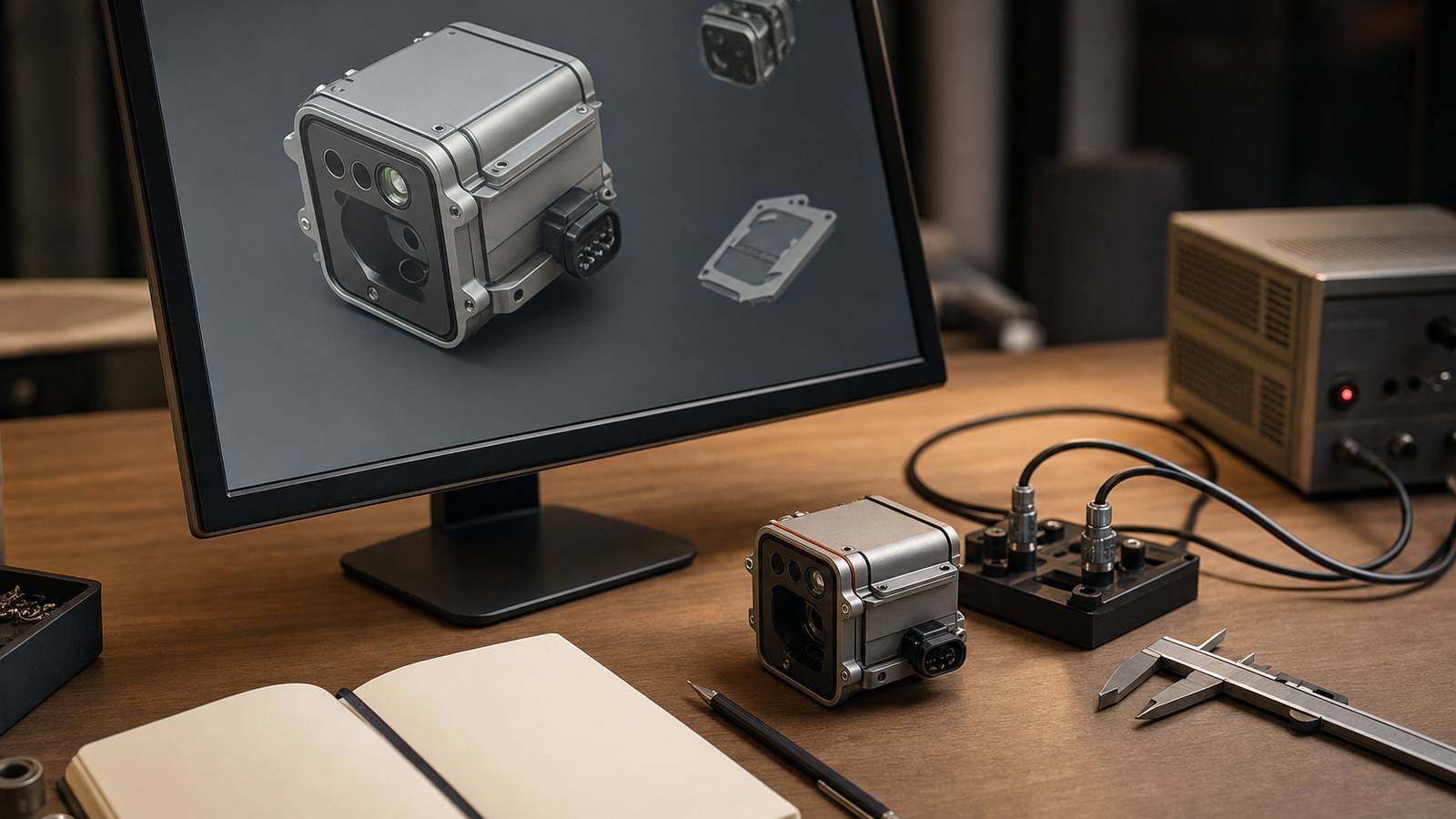
For smaller teams, the immediate checklist is modest: keep CAD naming consistent, document sensor locations, preserve coordinate frames, and store scene assets in a way that another engineer can load six months later. A runtime cannot repair a messy asset pipeline, but it can reward teams that already treat simulation files as engineering records.
Education programs may benefit if the tooling becomes lightweight enough for a normal classroom workstation. Students can learn that a robot world is not just a graphic; it is a structured set of geometry, transforms, materials, lights, sensors, and assumptions that affect how perception code behaves.
The risk is over-trusting simulation because the workflow looks polished. TVG would still want teams to record real camera exposure settings, lens distortion, mounting tolerances, wheel slip, and lighting changes before claiming a simulated test predicts field performance.
For readers following TVG’s robotics coverage, this is why a software-runtime story belongs beside robot hardware news. If scene files become easier to load, inspect, and automate, then camera placement, synthetic data review, and safety-case documentation can become repeatable engineering tasks instead of one-off demo work.
TVG Analysis: OpenUSD’s value for robotics is not just prettier digital twins. The engineering question is whether scene data, sensor models, and test cases can move cleanly between CAD, simulation, labeling, and deployment tools. NVIDIA’s latest developer direction suggests that the next phase of robot simulation will be judged by integration friction as much as rendering quality.
What remains unknown is how quickly non-NVIDIA tooling adopts the same runtime assumptions and how much of this workflow will stay accessible to small labs. TVG will be watching for examples where lightweight USD runtimes move from demos into field robotics, education, and factory applications.