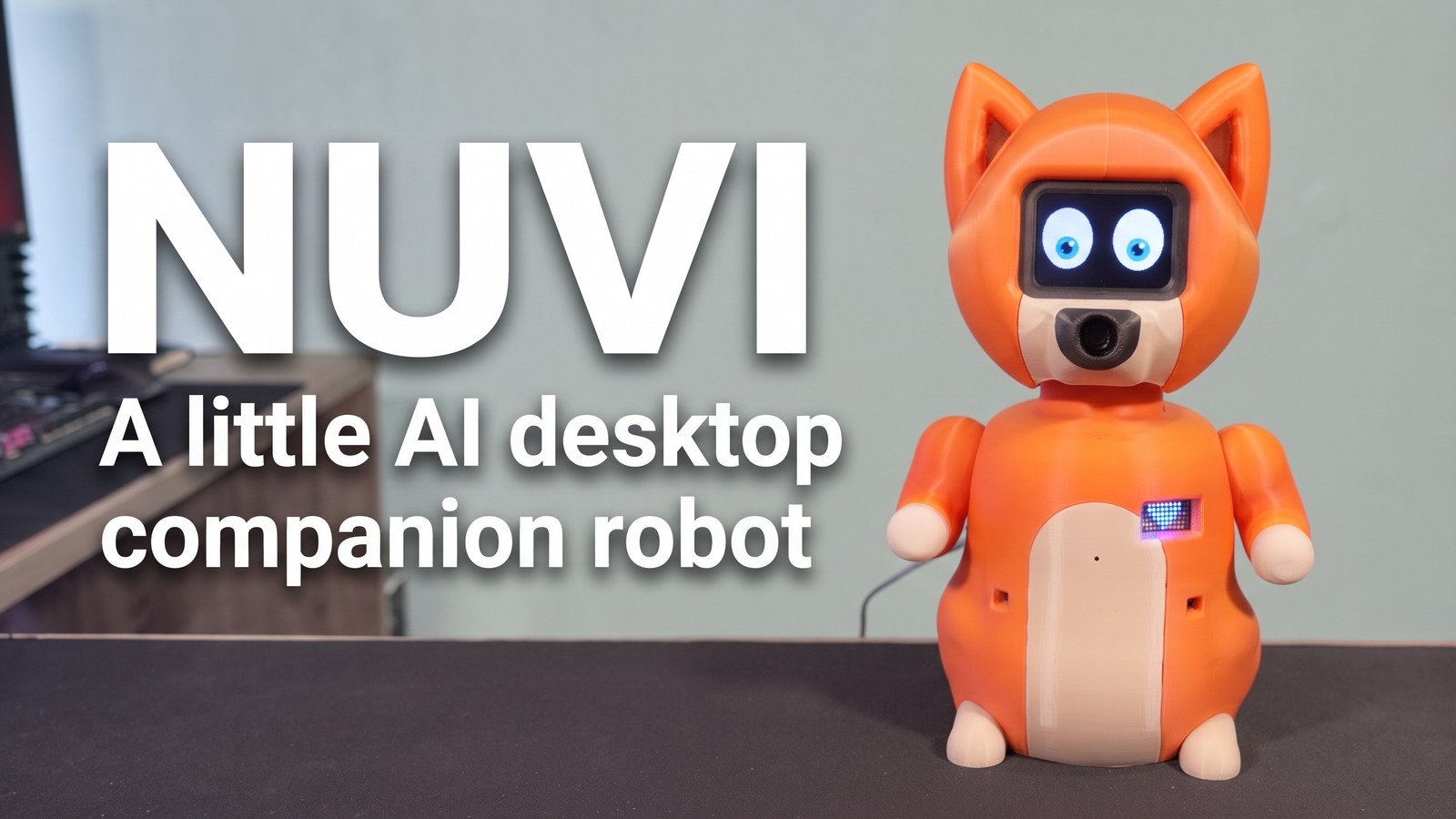
Nuvi, a new Arduino Project Hub desk robot, divides its workload across the two computing domains on Arduino UNO Q: deterministic motion and sensor handling stay with the real-time side, while language processing runs through Gemini and spoken output is generated locally with Piper. That split lets the under-30-centimeter robot move six servos, animate a display and react to proximity without pretending the entire conversation path is offline.
Featured image: Arduino Project Hub / Lucadilo.
The September 22 Arduino feature points to a published Project Hub record rather than a concept render. The build has animated eyes, moving ears and arms, touch inputs, proximity sensing and a voice loop. Its engineering value is the boundary between those functions.
Six servos and a display stay on the physical-control path
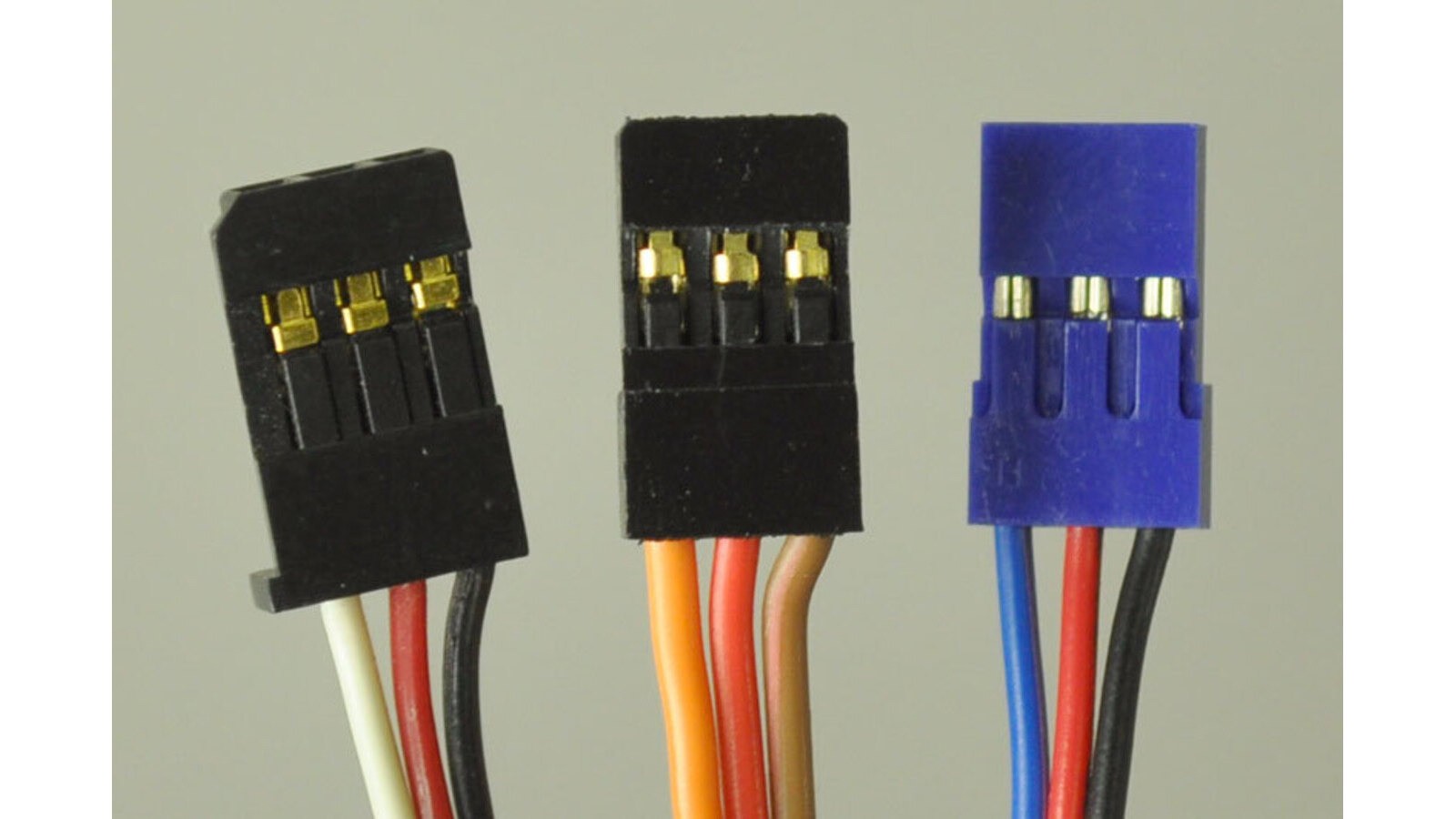
Four metal-gear servos move the arms and ears through a PCA9685 controller over I²C. Two Feetech STS3215 serial servos provide neck pan and tilt. The eyes use a 480×320 SPI display, while separate distance, temperature/humidity and touch sensors feed behavior.
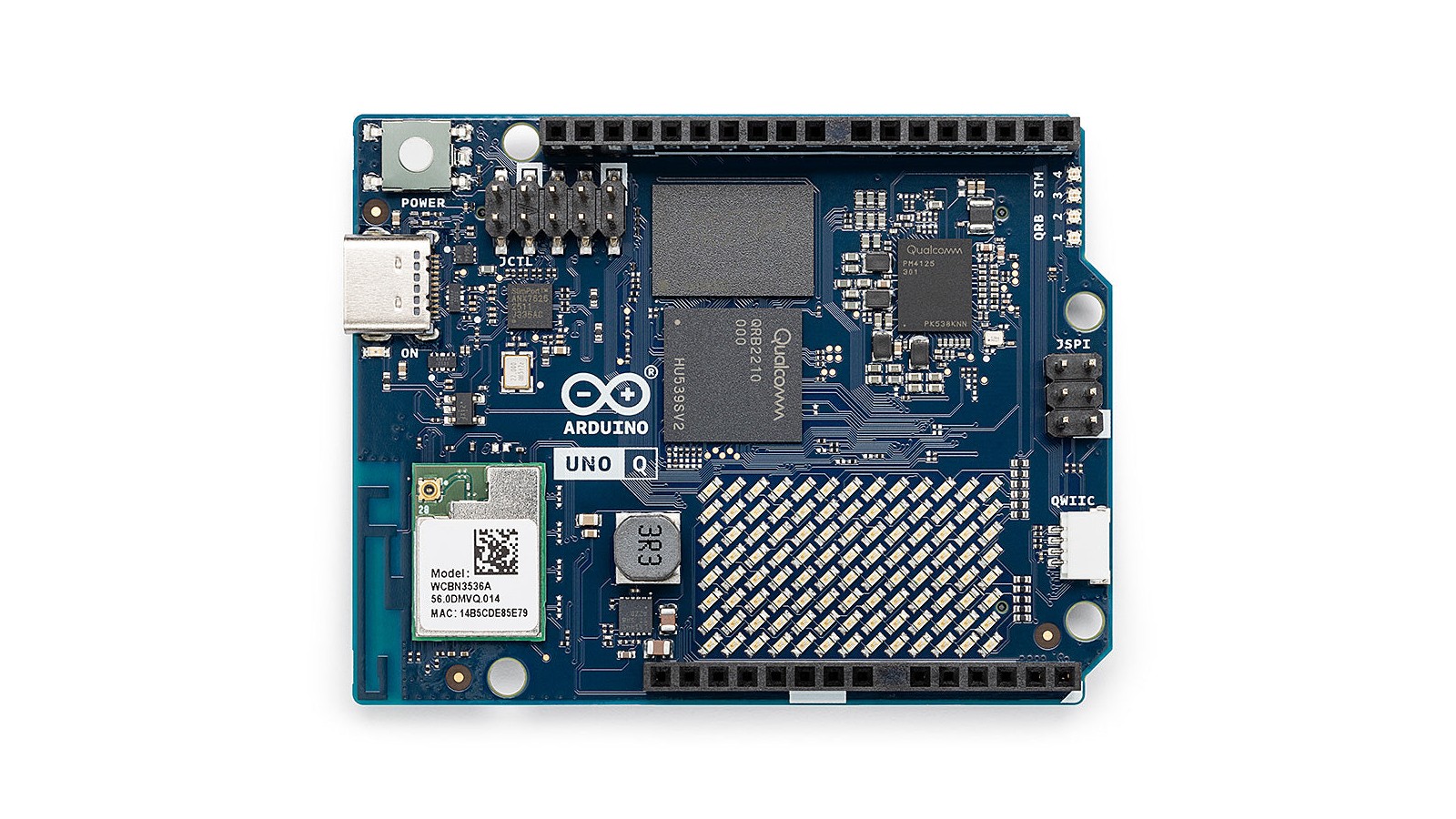
That workload fits the architecture Arduino describes for UNO Q: a Linux-capable Qualcomm Dragonwing QRB2210 processor is paired with a real-time STM32U585 microcontroller. The arrangement is similar in principle to the split in Arduino VENTUNO Q’s Linux and real-time design, but Nuvi turns it into a compact character with several concurrent actuators.
The voice loop is hybrid, not fully local
The builder says a local noise filter first isolates speech. Proximity sensing suppresses listening when nobody is near, and Nuvi stops listening while it speaks so it does not answer itself. The remaining utterance goes to Gemini, which interprets the request and produces a response. Piper then turns that response into speech on the robot.
This distinction matters: local text-to-speech reduces the final output delay, but a Gemini request still introduces a network dependency. “Local voice” here describes speech synthesis, not an offline language model. By contrast, the previously covered UNO Q analog-gauge prototype kept its MobileNet inference on the board.
The brownout is the most useful build note
Nuvi’s first power arrangement browned out when the screen, audio and motors drew current together. The builder added a step-down converter. That report does not provide a rail-current trace or converter rating, so it cannot establish the final power margin, but it identifies the failure mechanism: a combined transient load crossed the original supply path’s usable limit.
The published project is therefore evidence of a working integration pattern, not a benchmark for conversation latency or motor-control jitter. What it demonstrates clearly is a practical partition: keep reflex-like behavior and actuator timing close to real-time control, use cloud language services where they are required, and size the shared power path for the moments when motion, sound and display activity overlap.