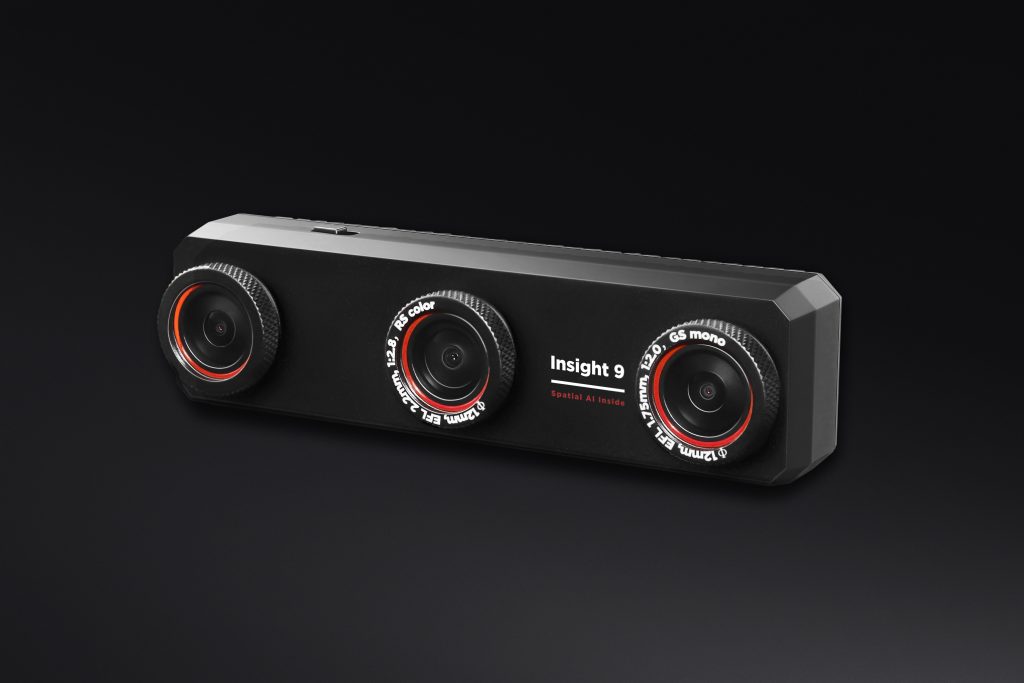
Looper Robotics’ Insight 9 is the kind of crowdfunding hardware that looks attractive to robotics builders because it combines sensors, compute, and software promises in one compact vision module. That is also why it deserves a careful backer-risk checklist rather than a simple gadget headline.
Quick answer
LooperRobotics Insight 9 is interesting for robotics builders because it combines stereo vision, V-SLAM, edge AI, and SDK claims in one spatial camera. Backers should treat those claims as test requirements: depth stability, ROS examples, latency, thermal behavior, calibration, documentation, delivery risk, and real robot integration matter more than spec-sheet density.
Key takeaways
- A robotics camera should be evaluated as a system, not only as a sensor module.
- Backers should verify software maturity, examples, mounting, cable reliability, and support before building around it.
- Crowdfunding hardware can be promising, but project-watch coverage should separate potential from deployable reliability.
The official Looper Robotics product page describes Insight 9 as a production-grade stereo vision platform with global-shutter stereo vision, hardware-accelerated depth, and a robotics-ready SDK. The company says the 100mm-baseline Insight 9 is aimed at larger robotic platforms and high-speed outdoor navigation, with a 10 TOPS NPU, 188-degree ultra-wide field of view, on-board V-SLAM, dense depth mapping, and edge processing powered by a D-Robotics Sunrise 5 system-on-chip.
Kickstarter discovery results currently describe the project as “AI Native Robotics 3D Camera: LooperRobotics Insight 9,” with claims such as native ROS support, on-board V-SLAM, 188-degree FOV, 24g high dynamic tracking, holeless AI depth maps, and plug-and-play spatial intelligence. Because Kickstarter pages can be difficult to access from automated environments and because campaign details may change, TVG is treating this as a technical preview, not a recommendation to back.
What makes the spec interesting
Many robotics teams already know the pattern: a depth camera works well in a controlled demo, then becomes harder to integrate once the robot moves outdoors, vibrates, changes lighting, or has limited host compute. Insight 9’s pitch is that more of the perception workload can happen on the camera itself. Looper says the module can run V-SLAM and dense depth mapping directly at the edge, offloading the host processor.
Independent context from CNX Software is useful here because it frames the camera against familiar robotics options. CNX reports that Insight 9 integrates a D-Robotics RDK X5 octa-core Cortex-A55 processor with a 10 TOPS AI accelerator, an 8.4MP Sony Starvis IMX415 RGB sensor, two SmartSens SG0132 global-shutter sensors for stereo depth, a passively cooled CNC aluminum chassis, and a Bosch BMI088 IMU rated for high-G tracking. Those details make the project more concrete than a vague “AI camera” listing.
For builders, the real value would be a reduction in integration burden. A robot that already has to run navigation, control loops, telemetry, safety checks, and application code benefits if perception hardware can deliver usable depth and localization data without consuming the main computer.
What TVG would test first
ROS and SDK behavior: “Native ROS” is a useful phrase only if the driver is stable, documented, versioned, and easy to recover after updates. TVG would test ROS 2 integration, topic timing, message formats, calibration files, example launch files, and whether the SDK fails clearly when something is misconfigured.
Latency and synchronization: Stereo vision is only useful if timestamps, IMU data, image frames, and depth output stay aligned under real motion. A bench demo is not enough. The module should be tested on a moving robot, a vibration table, and a stop-start navigation route.
Outdoor lighting: The product language points toward large platforms and outdoor navigation. That means bright sun, shadows, reflective surfaces, textureless walls, dusk lighting, and fast exposure changes matter more than a clean lab scene.
Thermals: A passively cooled camera with on-board AI compute needs sustained-load testing. Builders should watch for reduced frame rates, housing temperature, data dropouts, and whether performance changes after an hour of operation.
Power and cabling: A compact sensor can still create awkward integration issues if power draw, connector orientation, cable strain, or mounting options do not fit the robot. TVG would test the module on a real frame, not just on a desk.
Backer-risk checklist
- Prototype maturity: Confirm whether units shown are engineering prototypes, production-intent hardware, or renders.
- Software delivery: Ask what SDK, ROS packages, firmware updater, examples, and calibration tools ship on day one.
- Support path: Check whether Looper provides documentation, issue tracking, replacement parts, and firmware release notes.
- Mounting and environmental limits: Look for operating temperature, vibration, connector, enclosure, and mounting details.
- Actual shipping schedule: Treat any delivery date as a target, not a guarantee.
- Import and warranty terms: Budget for shipping, customs, taxes, and return complexity.
Crowdfunding is not retail. Specs, pricing, delivery dates, accessories, firmware readiness, and final quality can change before a product ships. A campaign can also meet its funding goal and still miss the needs of a robotics team that requires repeatable calibration or long-term software support.
The safest procurement posture is to separate curiosity from dependency. A lab can track Insight 9, ask technical questions, and even plan a small prototype slot without designing an entire semester, product demo, or robot architecture around hardware that has not been validated in its own environment. That discipline protects teams from both hype and excessive caution.
Where it fits in TVG’s robotics coverage
Insight 9 sits between two TVG topic clusters: physical AI perception and maker-team product readiness. It is not the same as a general 3D scanner, but it shares a similar evaluation mindset with our phone LiDAR vs. handheld 3D scanner buyer evaluation: sensor claims need workflow testing. It also connects to robot AI reference-design integration, where the hard work is getting hardware, drivers, models, and control software to behave as one system.
TVG Take
Insight 9 is interesting because it tries to make spatial perception less dependent on the robot’s main computer. That is a serious engineering goal, not a lifestyle feature. But the decision for robotics teams should come after driver testing, outdoor trials, thermal runs, and support review. Treat this as a promising project watch item with real technical questions still open, not as a finished review.
Insight 9 backer FAQ
Is this a recommendation to back the project?
No. TVG treats crowdfunding hardware as a project watch item. Backers should verify delivery history, documentation, software maturity, warranty terms, and whether the claimed robotics workflow is ready for their use case.
What matters most for a robotics camera?
Depth stability, calibration, latency, ROS support, lighting tolerance, thermals, mounting, cable strain relief, and usable SDK examples matter more than headline field-of-view or TOPS numbers alone.
Who should be cautious?
Teams that need production reliability, long-term support, safety-critical navigation, or guaranteed delivery dates should wait for independent testing and shipping evidence.
Related TVG reading
- Robot safety standards for maker machines
- Phone LiDAR vs handheld 3D scanner buyer evaluation
- AMD Ryzen AI Halo local-agent test bench