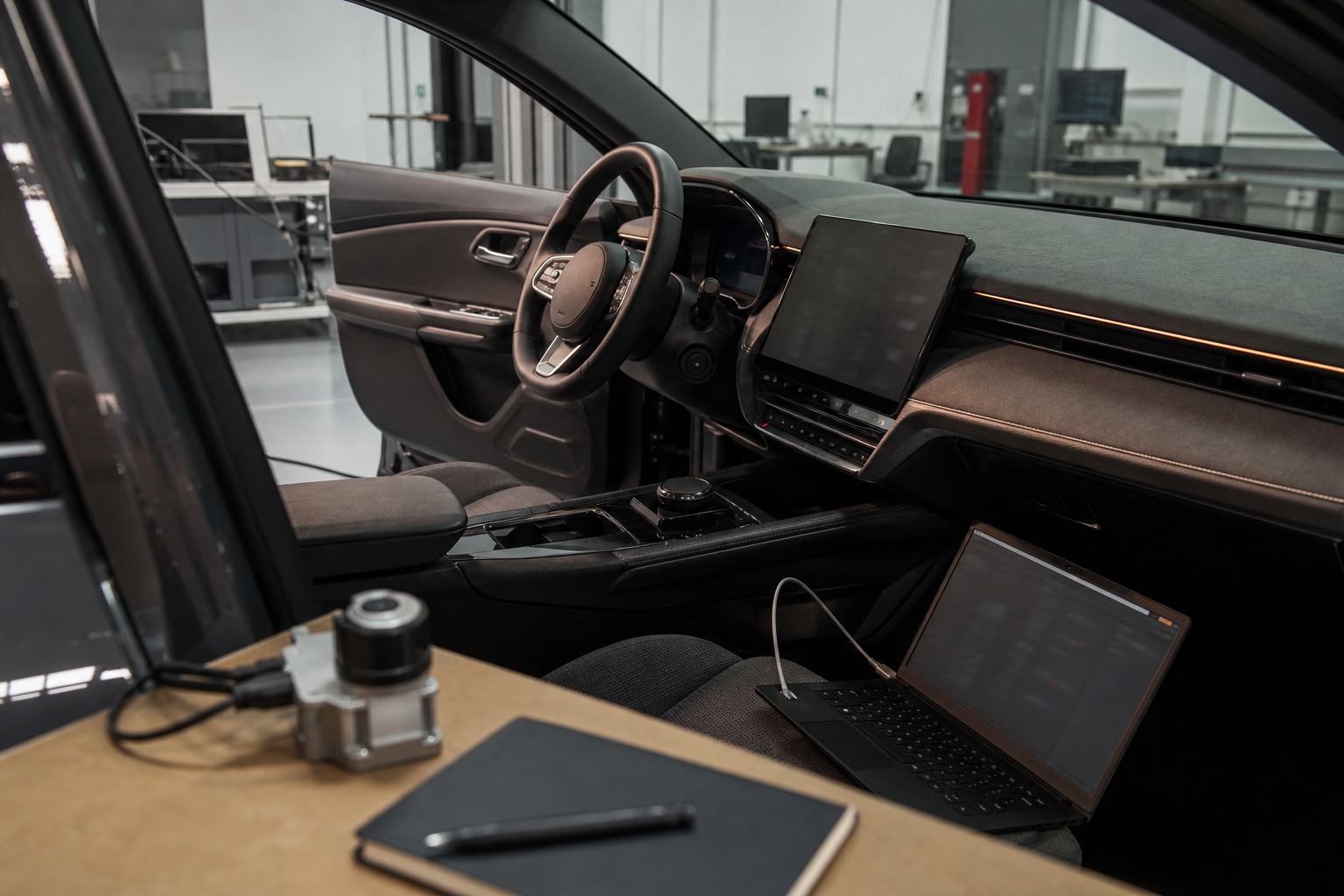
Automakers are again testing how much of the dashboard should belong to the vehicle instead of the phone. Engadget flagged the trend this week in a piece about carmakers pulling back from Android Auto, with the pressure coming from subscriptions, vehicle data, and AI-driven in-car software. That is a consumer story, but it is also an engineering-readiness story: if phone projection becomes optional or unavailable, the built-in system has to behave like critical infrastructure rather than a showroom demo.
General Motors has already said its next-generation vehicles will rely more heavily on built-in Google services and Gemini-powered experiences rather than Apple CarPlay and Android Auto. Google, meanwhile, has been moving Gemini deeper into Android Auto and cars with Google built-in. The result is a messy transition: one path keeps the phone as the familiar compute and identity layer; the other asks the vehicle platform to handle navigation, voice assistance, media, charging, maps, payments, privacy settings, and software updates over a much longer ownership cycle.
TVG has covered similar readiness questions in adjacent systems, including Gemini smart-home reliability and AI agents where product readiness matters more than demo polish. The same discipline applies inside the car.
Why the dashboard is harder than a phone app
Phone projection works because the user already trusts the phone. The app ecosystem, contacts, settings, saved locations, music services, subscriptions, and authentication state travel with the driver. When a vehicle removes that layer, it inherits the integration burden. The built-in system must handle account recovery, app availability, regional service differences, voice reliability, map updates, Bluetooth fallbacks, accessibility, driver distraction limits, and degraded network conditions.
That is not impossible. A vehicle-native platform can integrate battery state, route planning, charging stops, driver assistance displays, cabin controls, and service diagnostics more deeply than a mirrored phone interface. In an EV, the navigation system can make better charging decisions when it understands battery temperature, route grade, charger reliability, and vehicle efficiency. In fleet vehicles, built-in software can standardize logging and support policies. But those benefits only matter if the platform remains reliable after the first owner, after the warranty period, and after the original subscription bundle changes.
The engineering checks buyers should ask for
The first check is update policy. A car infotainment system should not be judged on launch-day screenshots. Buyers need to know how long maps, voice features, security patches, app integrations, and AI services will be maintained. A phone is replaced every few years; a vehicle may stay on the road for 10 to 15 years. If a manufacturer cannot explain update duration and feature continuity, the system is not ready to replace phone projection.
The second check is offline behavior. Voice assistants and generative AI features often look strong when cloud connectivity is perfect. Cars do not live in perfect networks. Navigation, climate control, media controls, emergency calling paths, charger search, and basic route guidance need graceful degradation. A dashboard assistant that becomes confused in a parking garage, rural road, or overloaded cellular area is not an engineering win.
The third check is data separation. Automakers want vehicle data because it can support diagnostics, safety analytics, personalization, insurance products, subscriptions, and future software revenue. Drivers need clear controls over what is collected, what is shared with partners, how long it is retained, and what still works if they opt out. AI assistants add another layer because voice requests, destination searches, and contextual prompts can reveal sensitive routines.
The fourth check is repair and resale. A used buyer should not inherit a half-broken dashboard because the original owner’s account expired or a service was sunset. Independent repair shops need documentation. Fleet managers need reset tools. Parents handing down a car need a clean way to remove accounts without disabling basic features. These are not glamorous AI features, but they define whether the platform is maintainable.
Implications for builders and product teams
For robotics and embedded-systems readers, the car dashboard is a useful case study in edge product design. It combines local compute, sensors, cloud services, voice interfaces, safety constraints, long service life, privacy expectations, and user trust. The strongest systems will not be the ones with the most animated assistant. They will be the ones with explicit fallback modes, testable latency, documented data flows, and a support model that survives marketing cycles.
Developer teams should also watch the app-platform boundary. If automakers move away from phone projection, small software vendors may need to support more vehicle-specific environments. That can fragment testing and certification. On the other hand, a stable vehicle-native SDK could open more context-aware tools for charging, route planning, accessibility, fleet workflows, and field operations.
Risks and unknowns
The biggest risk is lock-in disguised as safety. Automakers can make valid arguments that a deeply integrated system is better for EV routing, driver distraction control, and vehicle diagnostics. They can also use that argument to limit user choice, gather more data, and sell subscriptions for features that used to be phone-based. Buyers should separate the real engineering case from the revenue model.
Another unknown is how quickly AI assistants will improve in noisy cabins. A voice model that works in a quiet living room may struggle with road noise, multiple passengers, accents, partial connectivity, and safety-critical timing. Until manufacturers publish clearer support commitments and failure-mode behavior, the safest assumption is that AI should augment the dashboard, not become the only usable interface.
Engineering Takeaway
The Android Auto pullback should not be evaluated as a brand preference fight. It is a systems-engineering test. If automakers want the dashboard back, they need to prove that built-in AI infotainment is durable, privacy-respecting, repairable, updateable, and usable when the network is bad. Anything less is a downgrade wrapped in a smarter voice assistant.