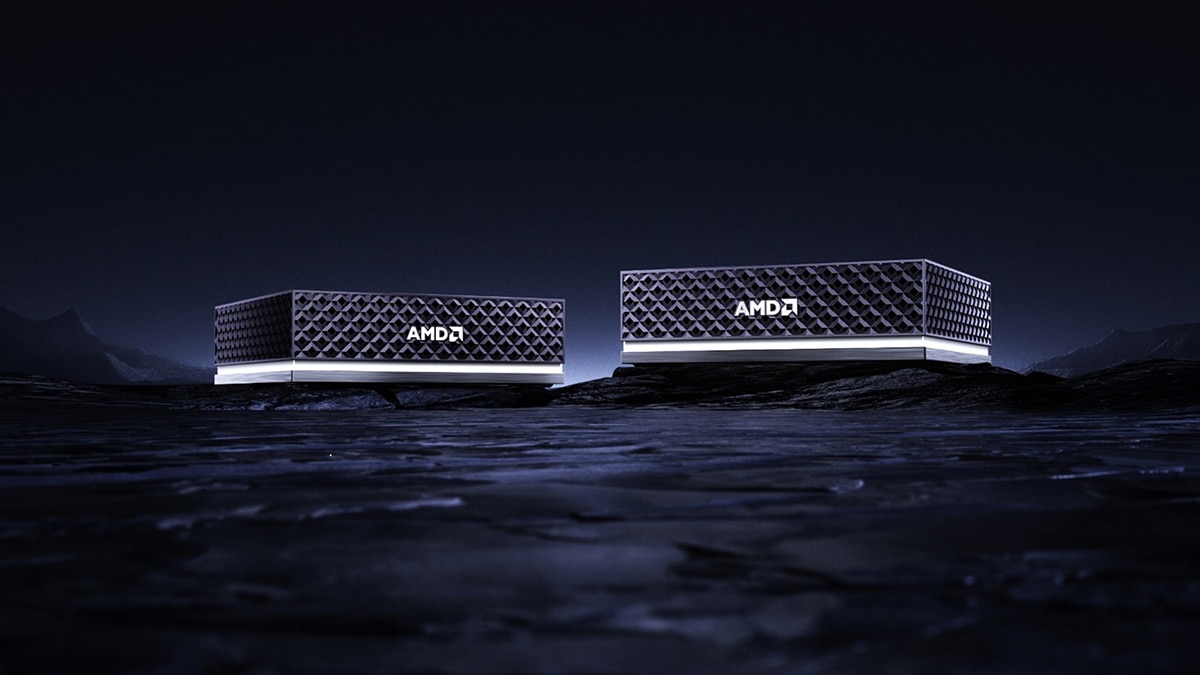
AMD is pushing the AI PC conversation toward a more practical question for developers: can a small local box handle enough of the agent workload before teams rent more remote compute? In a May 2026 company blog post, AMD said its Ryzen AI Halo developer platform will be available for pre-orders in June 2026 and is aimed at “agent computers” that can understand prompts, plan actions, and execute tasks with less constant user direction.
Quick answer
AMD Ryzen AI Halo is important because it frames local AI as a system-level developer test, not just an NPU spec. For agent-computer workflows, the real questions are memory capacity, sustained thermals, framework support, model size, GPU/NPU scheduling, and whether the box can repeat useful local tasks without falling back to cloud compute.
Key takeaways
- Local-agent computers should be judged by repeatable workloads, not headline TOPS alone.
- Unified memory, thermals, ROCm/software support, and model size may matter more than a single accelerator number.
- Small teams should test the full agent loop: prompt, plan, tool call, execution, logging, and recovery.
The headline spec is not just the NPU. AMD says the Ryzen AI Halo system can run models of up to 200 billion parameters locally, with up to 128GB of unified system memory, ROCm software optimization, and Windows and Linux support. In the same announcement, AMD also described Ryzen AI Max PRO 400 Series processors for commercial PCs, mobile workstations, and small-form-factor desktop systems, built on Zen 5 CPU cores, RDNA 3.5 graphics, and an XDNA 2 NPU.
That matters because local AI development has become less about a single benchmark number and more about whether a team can build a repeatable test bench: model loading, tool calling, privacy review, evaluation runs, rollback, and thermal behavior under sustained use. TVG recently looked at a similar pressure point in Windows AI dev boxes and in AI coding toolchain migrations. AMD’s pitch fits the same pattern, but with a sharper focus on local memory headroom.
Why it matters
For a robotics lab, maker studio, or small AI product team, the most interesting part of the announcement is the claimed ability to run very large models on-device. If a local workstation can keep a useful model, retrieval store, simulator, and agent runtime close to the developer, teams may be able to test privacy-sensitive workflows without shipping every prompt, image, log, or CAD note to a hosted API.
That does not eliminate cloud services. It changes the cutoff point. Cloud GPUs still make sense for training, large batch evaluation, and team-scale serving. A compact local AI box makes sense when latency, data custody, iteration speed, or offline availability is the actual blocker.
Technical breakdown
The practical checklist starts with memory. AMD’s “up to 128GB of unified system memory” claim is important because many local AI failures are not caused by a missing accelerator; they are caused by a model, context window, vector store, and development tools competing for memory. Unified memory can help a small system behave more like a flexible developer appliance, but teams still need to test real workloads rather than assume a marketing configuration matches the unit they can buy.
The second checklist item is software. ROCm support is a useful signal for developers who already know the Linux AI stack, but local agent work also depends on drivers, framework compatibility, model formats, quantization paths, and whether the toolchain behaves the same after updates. Windows support is relevant for creator and product teams that use Adobe, CAD, or camera workflows alongside AI tools.
The third item is sustained performance. A small-form-factor AI computer can look impressive in a short demo and still throttle, run loud, or become difficult to service. Teams should test long model-evaluation loops, overnight indexing jobs, and mixed workloads that include browser automation, local databases, and development containers.
Risks and unknowns
AMD’s announcement is still a vendor statement, not an independent lab result. Teams should wait for shipping-system measurements before making procurement decisions. The biggest unknowns are real memory configurations, street pricing, thermal behavior, driver maturity, Linux support quality, and whether the promised local-agent workflow is easy enough for normal engineering teams to maintain.
There is also a product-readiness issue around “agent computer” language. A computer that can run a large model locally is not automatically safe to let an agent operate files, credentials, robots, home-lab systems, or production code. Permission boundaries, audit logs, sandboxing, and human review still matter.
TVG Take
AMD’s Ryzen AI Halo developer platform is worth watching because it reframes the AI PC as a local validation box, not just a consumer feature story. The useful buyer question is simple: can the machine run the models, tools, and logs your team actually uses for hours at a time, with clear rollback and privacy controls? If the answer is yes, local agent development becomes easier to justify. If the answer is only a flashy demo, it belongs in the same pile as every other under-tested AI hardware promise.
AMD Ryzen AI Halo FAQ
Why does Ryzen AI Halo matter for local agents?
It points toward small systems that can run more AI work locally instead of treating every agent workflow as a cloud job. The test is whether memory, software support, and thermal limits match real developer workloads.
What should developers evaluate first?
Model size, memory pressure, NPU/GPU scheduling, ROCm or framework compatibility, sustained performance, noise, power draw, and whether the system can run useful local-agent loops repeatedly.
Is NPU TOPS enough to compare AI PCs?
No. TOPS is only one input. Local AI performance also depends on memory capacity, bandwidth, software support, quantization, GPU availability, thermals, and how the workload is split across compute blocks.