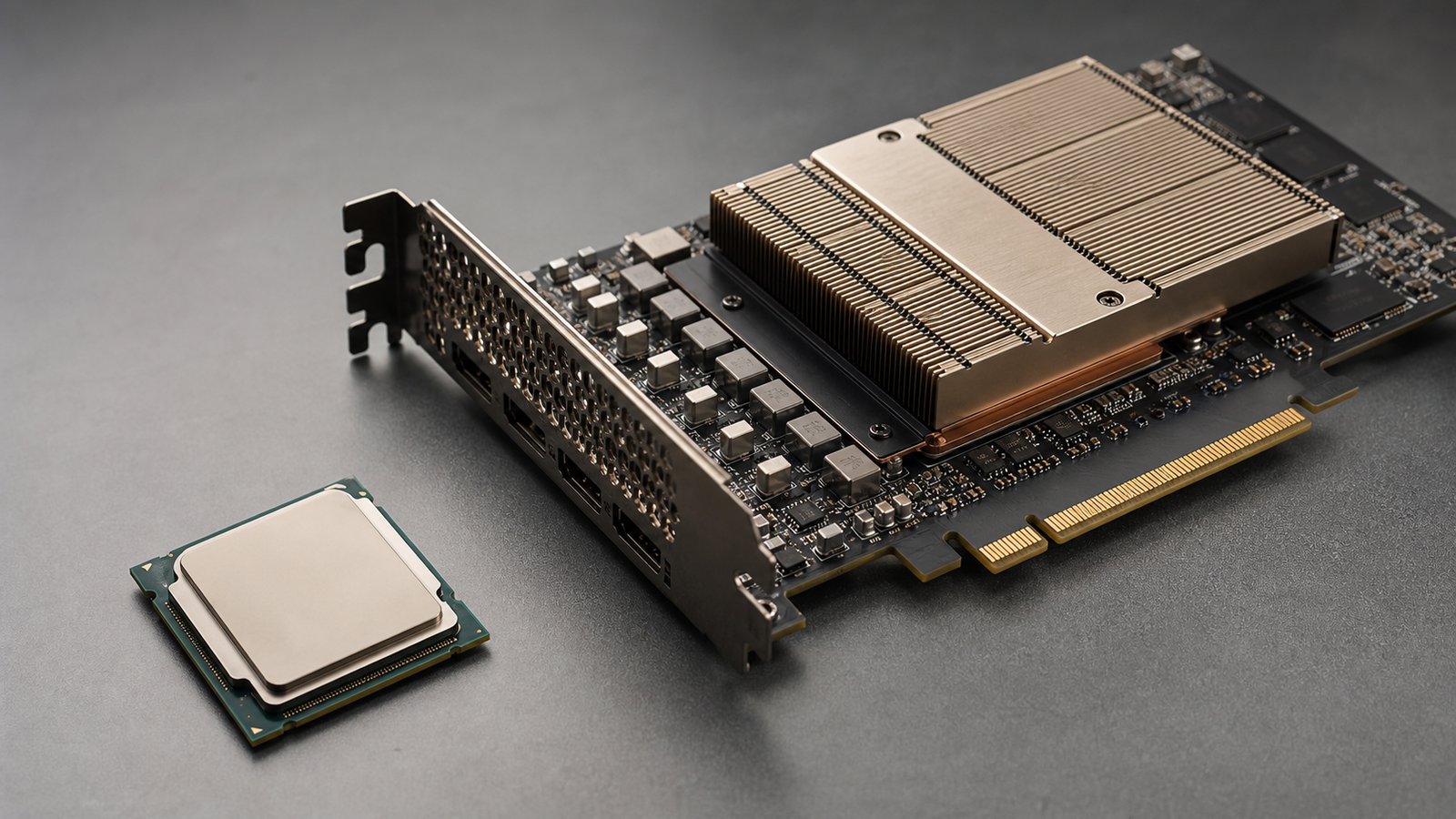
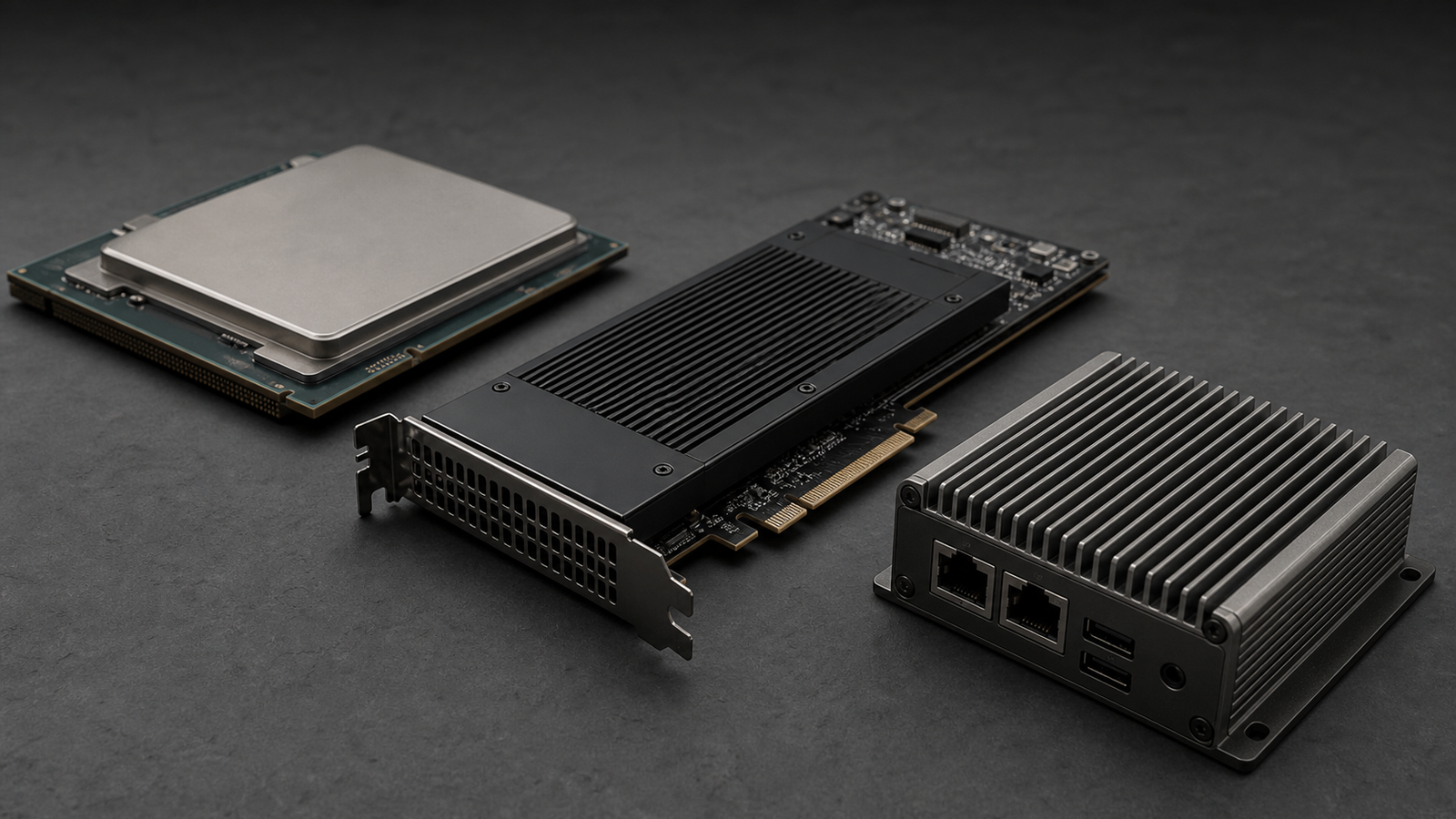
Intel used Hot Chips 2026 to describe three upcoming processor designs for agentic AI workloads: the Diamond Rapids Xeon platform, the Crescent Island inference GPU, and the Wildcat Lake client processor. The company presented them as connected layers rather than one universal AI chip, spanning rack-scale orchestration, high-throughput inference, and local or edge execution.
The disclosures arrived in Intel’s August 24 Hot Chips briefing. Product availability, complete platform pricing, and independent workload results were not part of the announcement, so the presentation is best read as an architecture roadmap rather than a purchase guide.
Three layers, three different jobs
According to Intel’s newsroom summary, Diamond Rapids targets data-center systems, Crescent Island is optimized for inference, and Wildcat Lake brings AI-oriented design choices into mainstream client and edge systems. That separation matters because an agent workflow may need large shared memory and many CPU cores in one stage, accelerator throughput in another, and low-latency local response at the endpoint.
Intel also says Wildcat Lake is its first processor to use UCIe. The UCIe Consortium defines an open die-to-die interconnect intended to connect chiplets inside advanced packages. In practical terms, the interface can let a processor family combine functional blocks without treating every generation as one monolithic die.
Why the split matters for builders
Agentic AI is often described as a software feature, but the hardware path changes system behavior. A server can coordinate tools and maintain a large context, an inference accelerator can serve several models, and an edge processor can keep a camera or machine responsive when a network link is slow. The difficult work is deciding which state and which model belong at each layer.
That partition also changes failure handling. If an edge model loses contact with a larger service, the product needs a defined local mode rather than a stalled agent. If the server delegates an action to an endpoint, identity, authorization, timeouts, and audit logs must cross the boundary with the request. None of those controls comes automatically from a faster processor.
Wildcat Lake’s UCIe disclosure is therefore more interesting than a generic “AI PC” label. Chiplet packaging may give Intel more ways to tune compute, graphics, I/O, and accelerator blocks for different price or power envelopes. It does not by itself guarantee software compatibility, low latency, or better battery life.
Developers will need concrete answers about memory sharing, supported numeric formats, model size, and fallback behavior. System builders will also care about thermal limits under continuous inference, not only short peak performance. Those details determine whether a platform can sustain camera analytics, voice processing, or local planning without unpredictable throttling.
TVG Analysis
Intel’s three-layer story is credible because it acknowledges that agent workloads do not have one compute profile. The more useful test will be whether developers can move models and telemetry between those layers without rebuilding the toolchain for each processor. Memory capacity, interconnect behavior, software support, and sustained power limits will matter more than the word “agentic” on a slide.
TVG will watch for shipping dates, full memory configurations, measured inference performance, and details on how the platforms expose acceleration to common runtimes. Independent tests will also need to separate short demonstrations from sustained multi-agent workloads.
For related silicon context, see TVG’s coverage of custom LLM inference silicon.