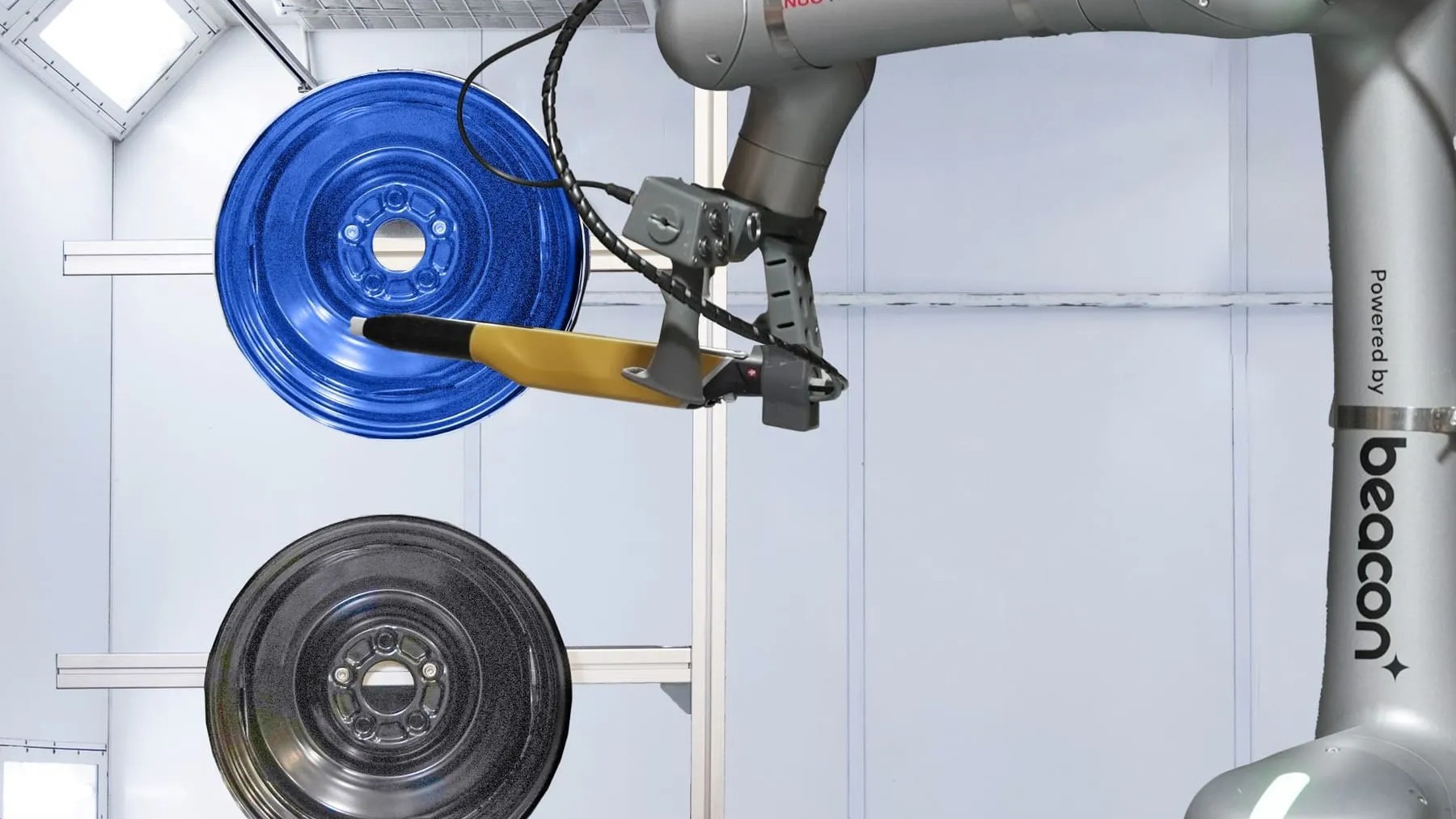
Hirebotics has added two different motion extensions to its Beacon-controlled cobots: encoder-based line tracking for painting parts that keep moving on a conveyor, and a modular linear rail for reaching along large stationary workpieces. The rail is available with manual positioning now; automated movement is planned for the end of 2026.
Featured image: Hirebotics.
The Robot Report detailed the additions on September 19 after Hirebotics demonstrated them at IMTS 2026. Although both extend where a cobot can work, they solve different coordinate problems: one keeps a tool path registered to a moving part, while the other relocates the robot base along a long part.
Conveyor tracking changes the robot’s reference frame
For Cobot Painter, an encoder reports conveyor movement and a separate sensor detects an arriving part. Beacon uses that motion reference to start the programmed operation and compensate the paint path as conveyor speed changes. The part does not need to stop inside a fixed booth just so the robot can replay a stationary path.
Hirebotics says operators calibrate conveyor direction and movement through the same Beacon interface used to teach the spray path. That is a more specific claim than “the robot follows the line”: path coordinates must remain tied to the workpiece while both the part and robot joints are moving.
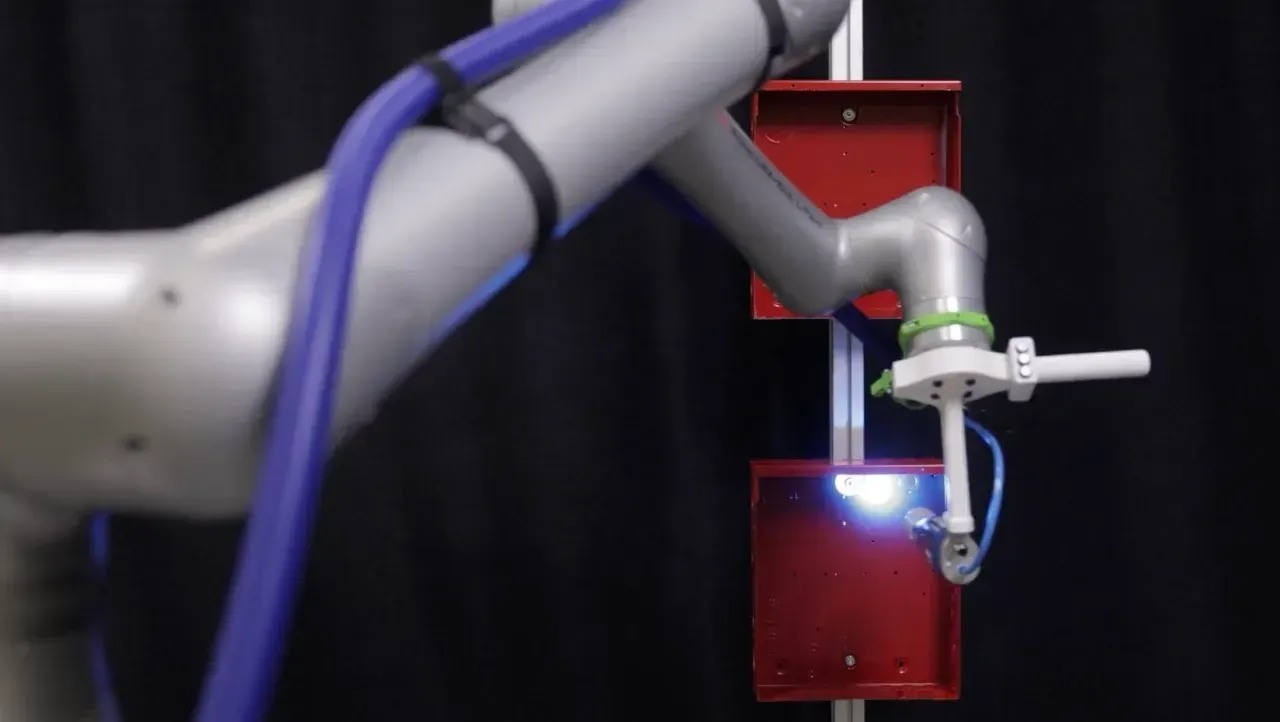
The current Cobot Painter page lists a FANUC CRX-10iA/L Paint arm with 55.82 inches of reach and describes line tracking as a coming add-on. The product boundary matters: the demonstration establishes the intended workflow, but Hirebotics has not published conveyor-speed limits, tracking error or release pricing on that page.
The rail moves the base, not the part
The modular rail addresses frames and weldments that exceed one arm’s work envelope. Hirebotics offers standard 5-foot sections and custom lengths, allowing a cobot to be repositioned along a large assembly instead of repeatedly moving the assembly through the cell.
The first version uses manual positioning. Hirebotics says Beacon position verification is planned to guide operators through position changes, while a fully automated version is targeted for the end of 2026. Until that arrives, the rail should not be read as a continuously coordinated servo axis equivalent to the conveyor tracker.
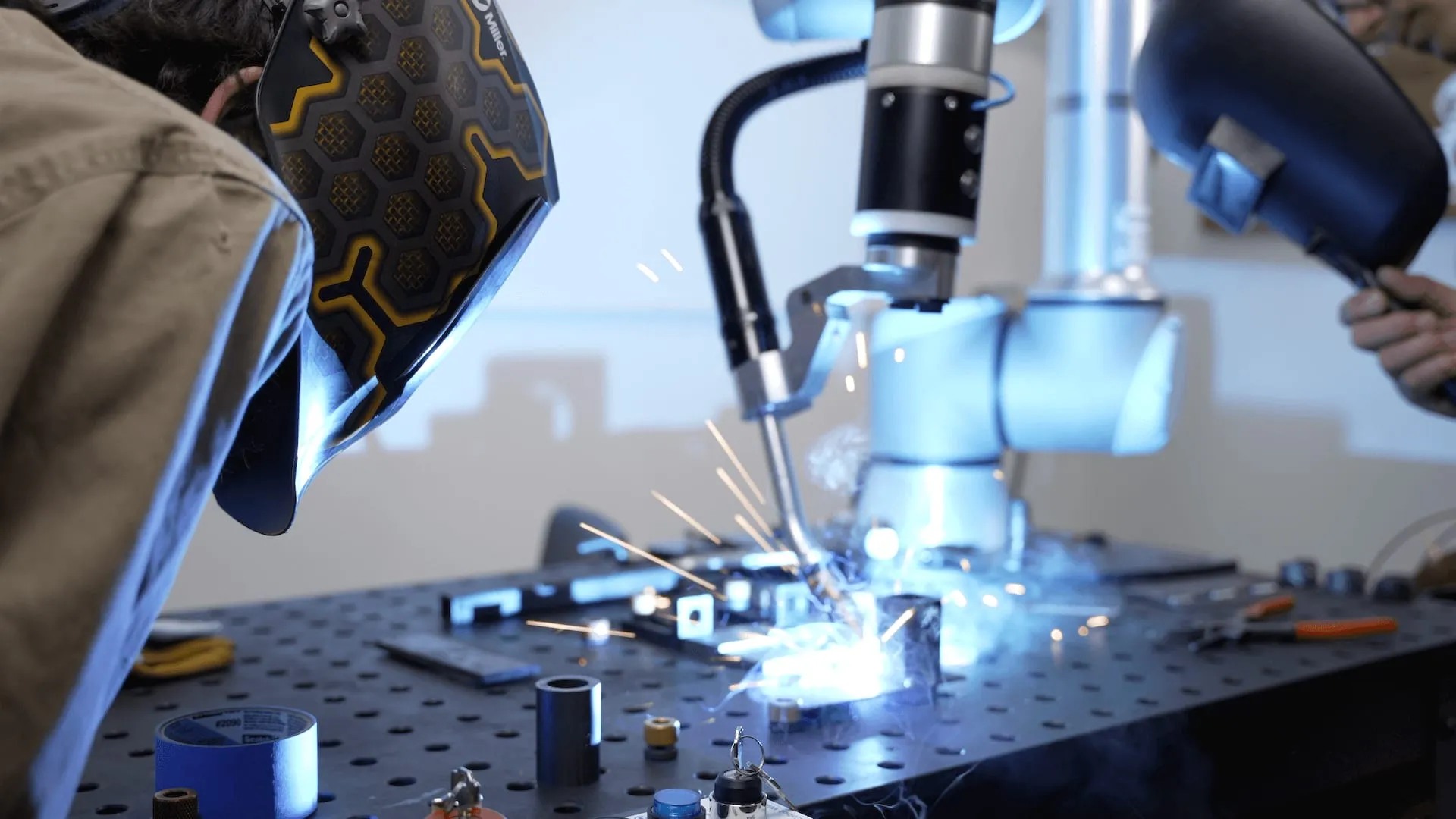
The company describes the rail as usable across welding, plasma cutting and painting applications. Its Cobot Welder configuration lists a UR8 Long arm with 68.9 inches of reach, while the announcement uses 12-foot frames and 20-foot assemblies as examples of parts that exceed a fixed station.
Deployment details remain application-specific
Line tracking needs a trustworthy conveyor position signal and a repeatable relationship between the detected part and taught path. A rail needs verified stops, cable management and a way to ensure that a program section runs from the expected base position. Those requirements do not disappear because path teaching remains no-code.
Hirebotics has therefore expanded the physical jobs its cobots can approach without presenting both additions as the same product. The open questions are quantitative: supported conveyor speeds, tracking tolerance, rail-position repeatability and the exact release state of automated movement.