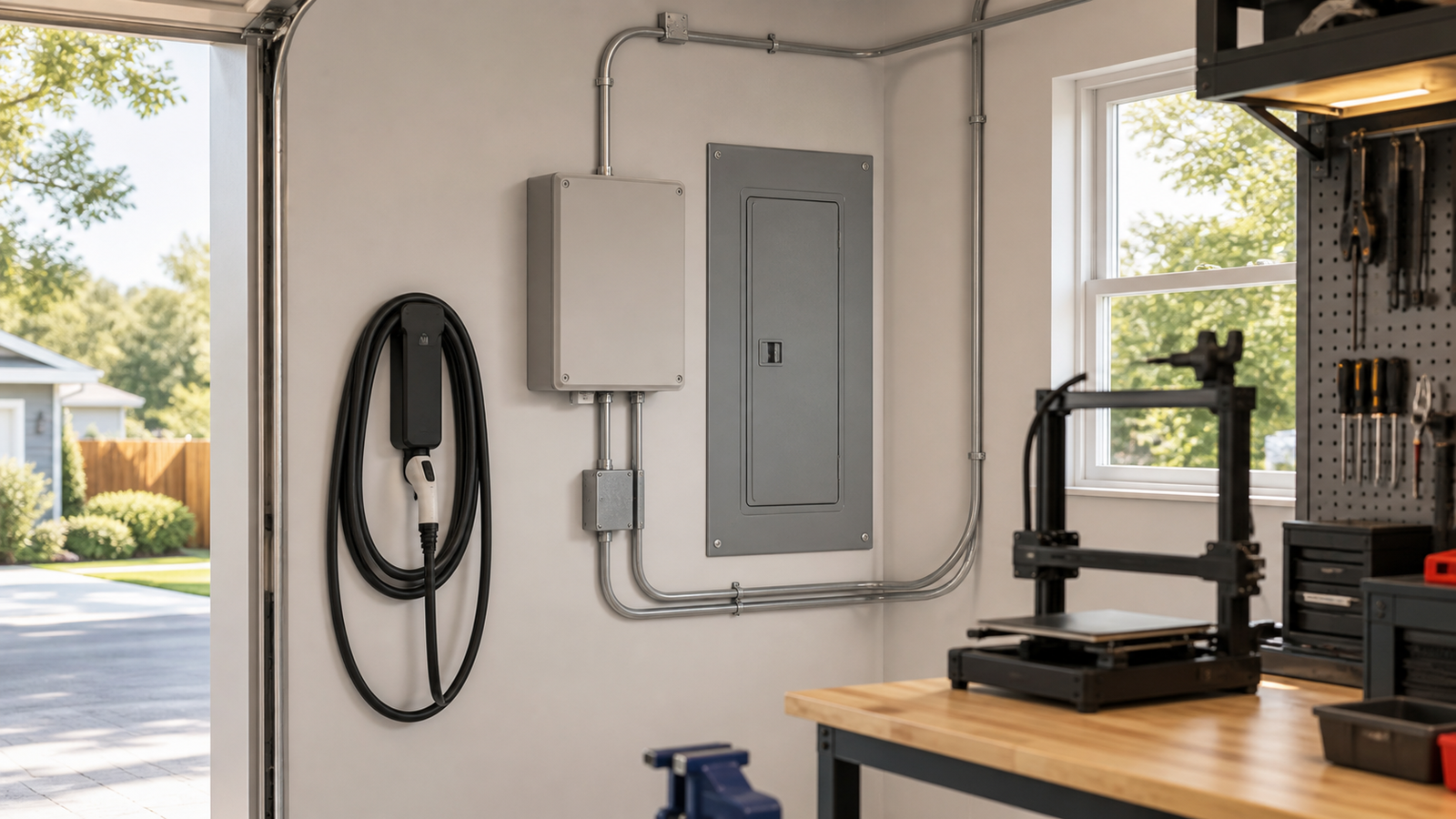
A Level 2 EV charger is not just another garage gadget. In a maker garage, it shares capacity with tools, printers, compressors, battery chargers, networking gear, and sometimes a home-lab rack.
Quick answer
- Use load management: when EV charging shares capacity with other large house or shop loads.
- Plan before buying: panel capacity, breaker sizing, charger settings, and permit rules matter.
- Do not guess: involve a qualified electrician for panel work and code compliance.
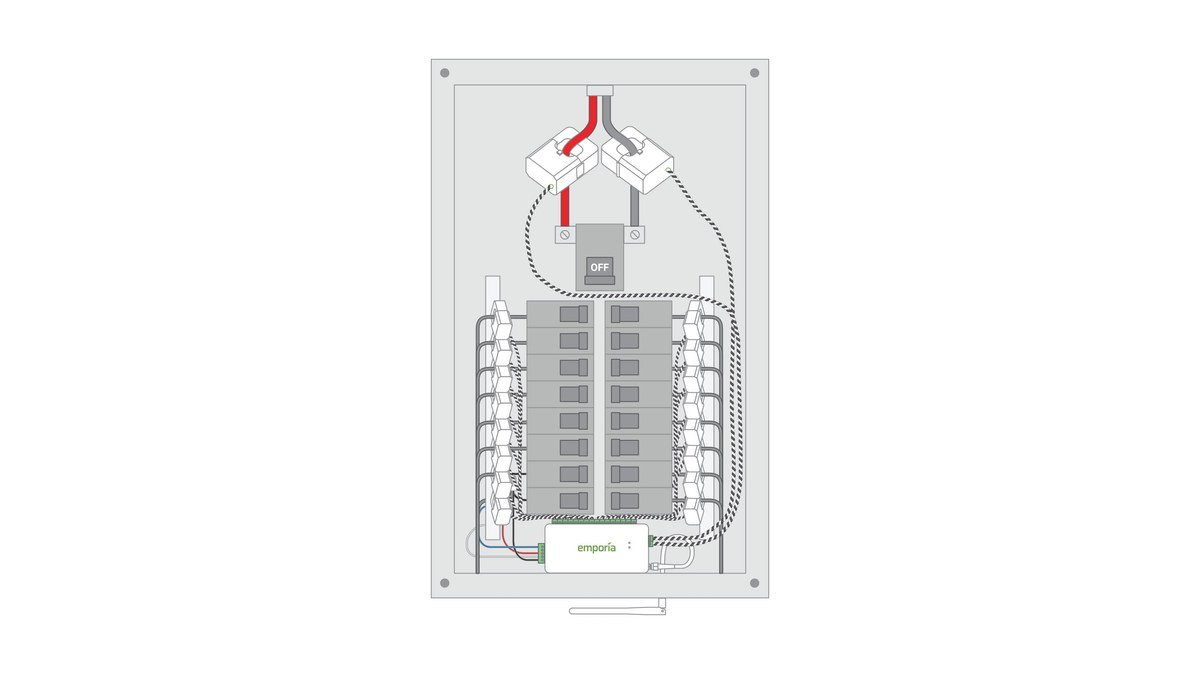
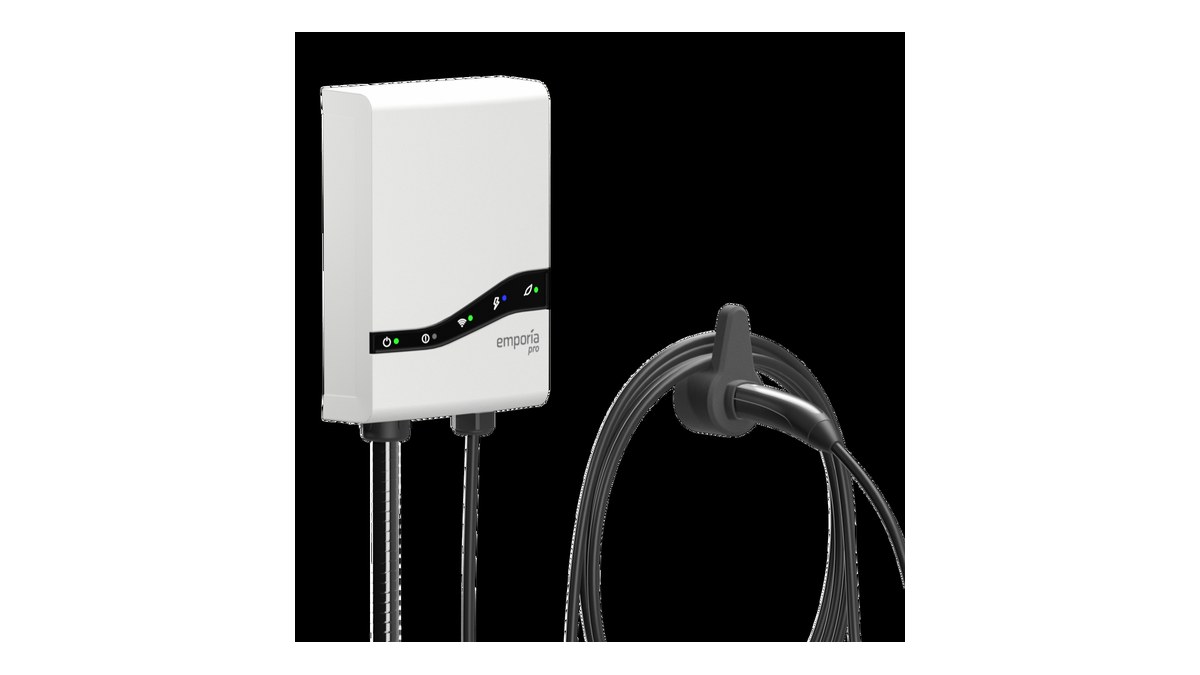
Load-management systems monitor or limit charging so the service, panel, or circuit is not pushed beyond its safe capacity. Some systems reduce charging current when other loads are active. Tesla’s Wall Connector documentation, for example, describes power management and power sharing approaches for installations with multiple connectors or constrained supply.
For a maker garage, that matters because “other loads” are not theoretical. A compressor may start while a printer enclosure heater is running. A CNC spindle may share time with dust collection. A home-lab server may be on all day while the vehicle starts charging after dinner.
Map the real loads
Start with a list, not a purchase link. Document the panel rating, existing large appliances, garage circuits, charger target current, shop tools, HVAC loads, and any equipment that runs unattended. The answer may be a larger circuit, a lower charger current, dynamic load management, a subpanel upgrade, or a charging schedule.
TVG’s USB-C PD trigger-board guide made a smaller version of the same point: a connector standard does not erase the need for a power budget. EV charging simply raises the stakes.
Maker-garage checklist
- Panel capacity: have the service and panel evaluated before assuming a charger size.
- Continuous load: remember that charging can last for hours, unlike a short tool startup.
- Tool overlap: list which shop loads may run while the car charges.
- Scheduling: decide whether charging should pause during heavy shop sessions.
- Documentation: label the setup clearly so another household member understands the limits.
- Future expansion: leave room for another EV, heat pump, welder, or larger fabrication tool if those are realistic.
TVG Take
EV charger load management is not glamorous, but it is exactly the kind of systems thinking that makes a maker garage safer and more reliable. The charger should not be treated like a lifestyle accessory or a random high-power gadget.
For TVG readers, the engineering takeaway is conservative: use professional electrical work for the installation, then keep the maker side honest with a written load plan. The garage is becoming a mixed energy system. Treat it that way.