A basic continuity tester can prove that conductors reach the other end in the expected order. It cannot prove that a cable will carry the Ethernet link your robot pit needs. Qualification tools add evidence about link capability and fault location, while certification instruments address formal cabling-standard compliance. The names sound similar, but the claims are different.
For temporary robot networks, the right tool depends on whether the team is building patch leads, isolating an intermittent fault, validating a long run, or documenting installed cabling.
Quick answer
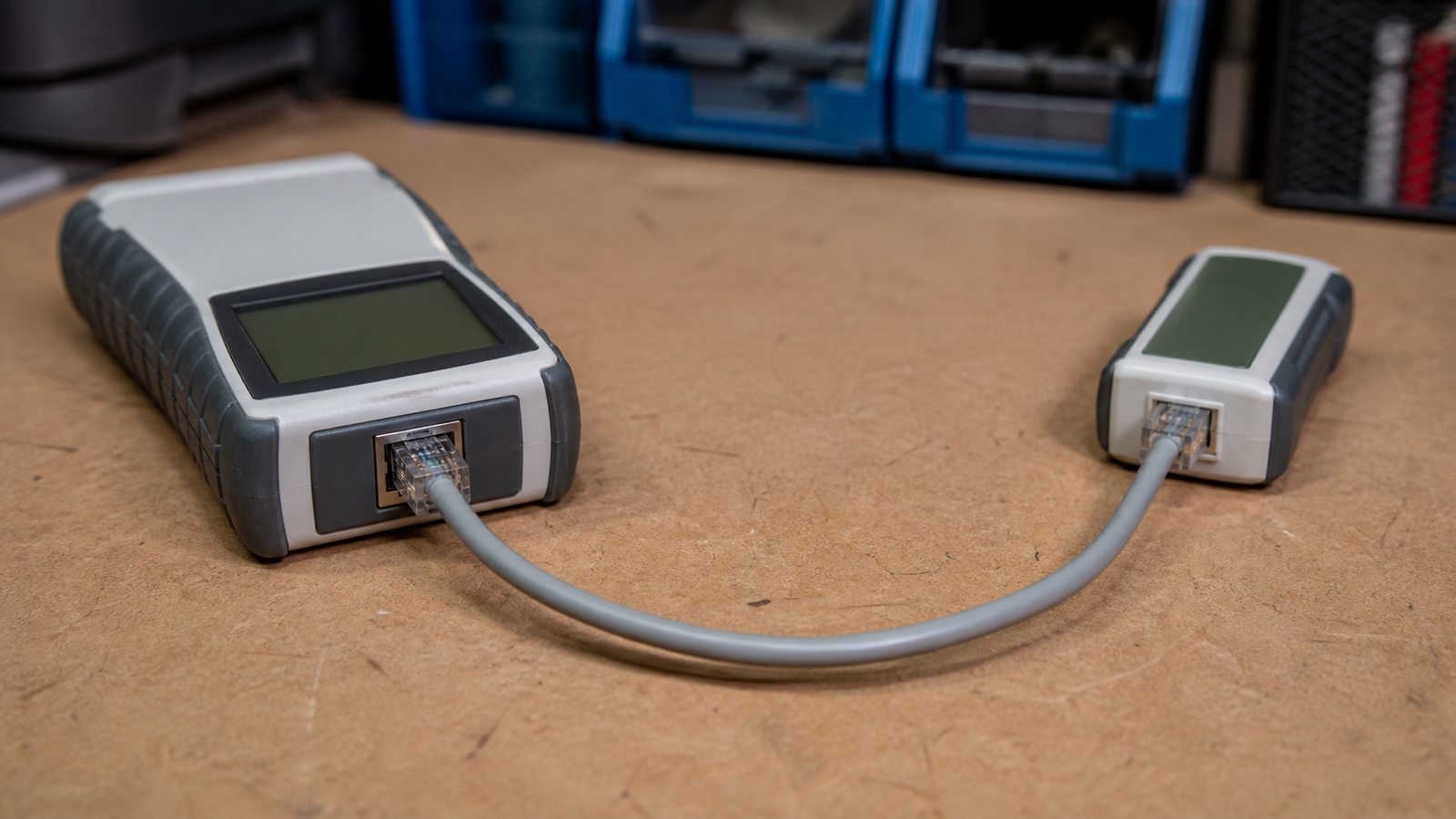
- Use a wire-map tester to catch opens, shorts, reversals, and split or crossed pairs when supported.
- Use a qualification tester when you need evidence that an existing run can support a target Ethernet rate.
- Use a certifier for standards-compliance records on permanent installed cabling.
- Always keep a known-good cable because substitution is often the fastest first diagnostic.
What continuity leaves unanswered
The cheapest tester sends signals through conductors and reports whether the far-end remote receives them. That is useful after crimping a connector. It catches a missing conductor and many order mistakes before the cable reaches a robot.
Ethernet, however, depends on balanced twisted pairs and high-frequency signal behavior. A cable can have end-to-end continuity and still suffer from excessive untwist, poor termination, damaged geometry, a marginal connector, or noise. Some basic testers also miss split pairs, where continuity order looks plausible but conductors are paired incorrectly.
What qualification adds
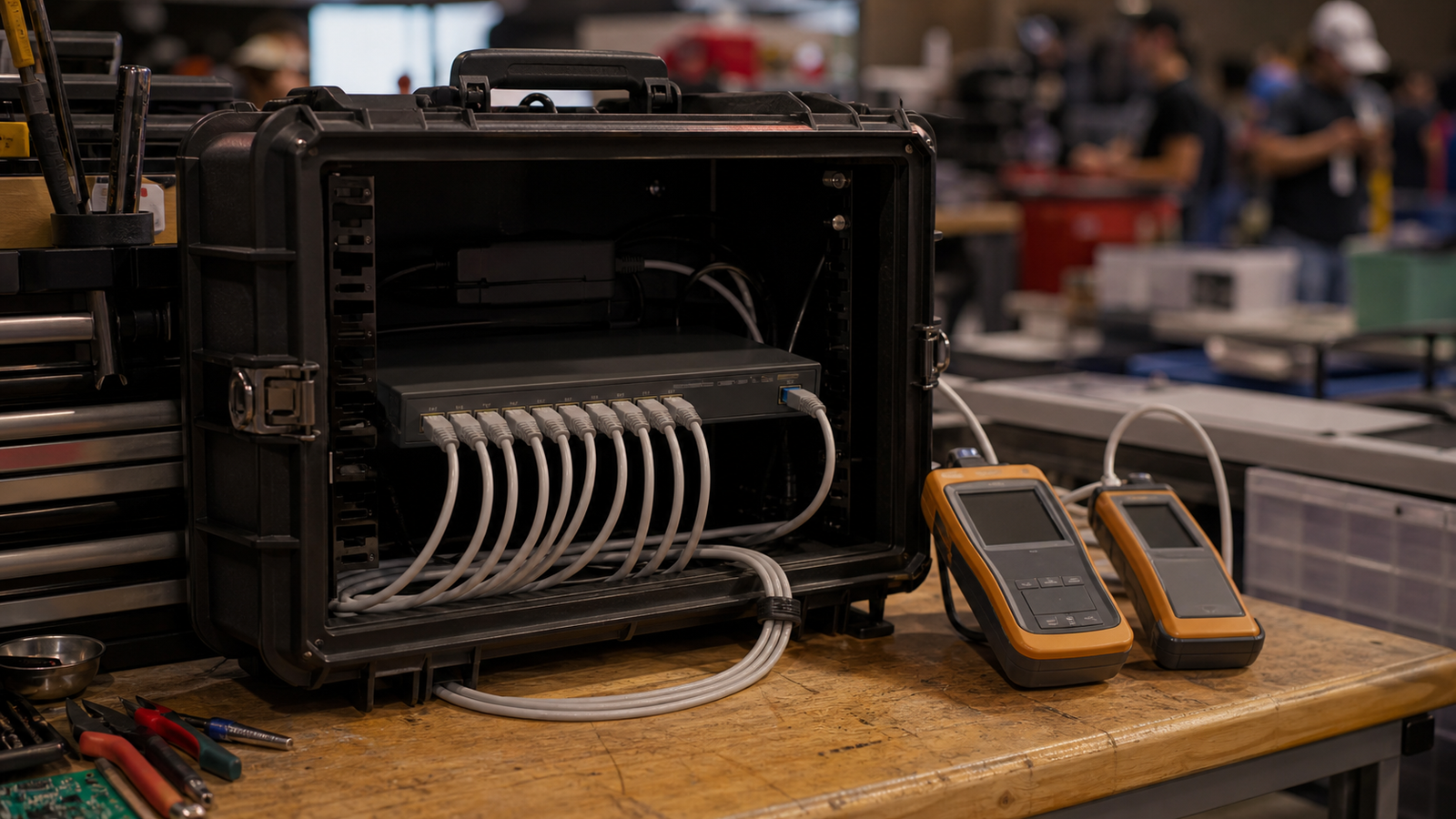
Fluke Networks describes qualification as determining whether an existing cabling link can support a technology or data rate. Depending on the instrument, that may include length, wire map, fault distance, signal-to-noise-related measurements, or an active link test.
That is closer to the robot-pit question: will this run reliably carry the intended link? It still is not the same as certifying permanent structured cabling to every required limit with a calibrated field certifier and documented test setup.
A practical fault-isolation order
- Save the switch and endpoint configuration, then check link LEDs and negotiated speed.
- Replace the suspect patch lead with a labeled known-good cable.
- Move to a known-good switch port without changing several variables at once.
- Run a wire map on the removed cable and inspect both latch and strain relief.
- If the fault depends on distance, motion, or link rate, qualify the full channel under the intended conditions.
- For PoE, verify power negotiation and load separately from data.
Cisco’s Ethernet troubleshooting material reinforces the value of checking physical connections, ports, and link behavior before assuming a higher-layer software fault.
PoE makes partial success deceptive
A powered device may boot yet reset when the camera, radio, heater, or compute load rises. Conversely, data may link while power fails. The Ethernet Alliance PoE program focuses on standards-based interoperability, but a field cable still needs correct pairs, suitable conductors, sound contacts, and acceptable loss.
Do not improvise load tests that can damage equipment. Use standards-aware PoE test tools or the switch’s diagnostics, and confirm that injectors, splitters, and endpoints support the same mode. Avoid repeatedly flexing a live damaged cable around exposed conductors.
Build a small robot-pit network kit
Carry two known-good patch cables in different lengths, a wire-map tester with remote, spare boots and couplers, a labeler, a compact managed switch, and a saved offline copy of network settings. Add a qualification tool when the team maintains long temporary runs or must distinguish cable capability from endpoint behavior.
Record cable ID, length, test date, and the fault found. A green light without a cable identity is not a maintenance record.
TVG Take
Continuity testing is the first gate, not the final verdict. Buy qualification capability when downtime or long runs justify stronger evidence. Reserve formal certification for permanent cabling and contracts that require it.
For the larger network decision, see TVG’s Wi-Fi 7 versus wired 2.5GbE maker-lab guide.