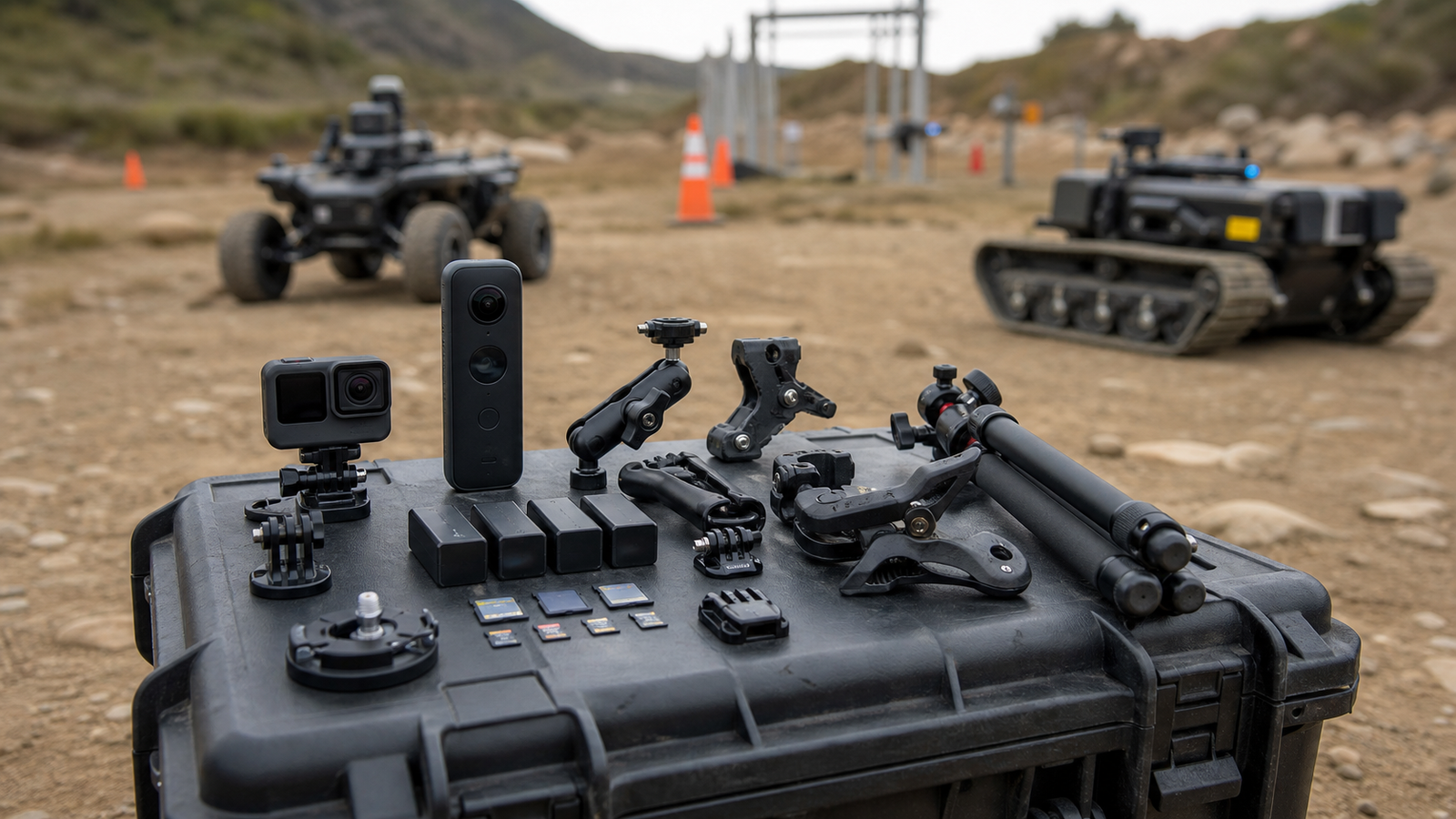
For field documentation, an action camera and a 360 camera are not interchangeable. Both can record a robot test, a maker event, a construction walkthrough, or a bike-mounted experiment, but they capture evidence in different ways. The better choice depends less on brand loyalty and more on what you need to prove later.
An action camera is strongest when the camera can be aimed at the important subject before the run begins. A 360 camera is strongest when the scene is unpredictable and you may need to reframe the view afterward. That single difference changes mounting, storage, editing, battery planning, and the value of the footage.
Choose an action camera when the subject is known
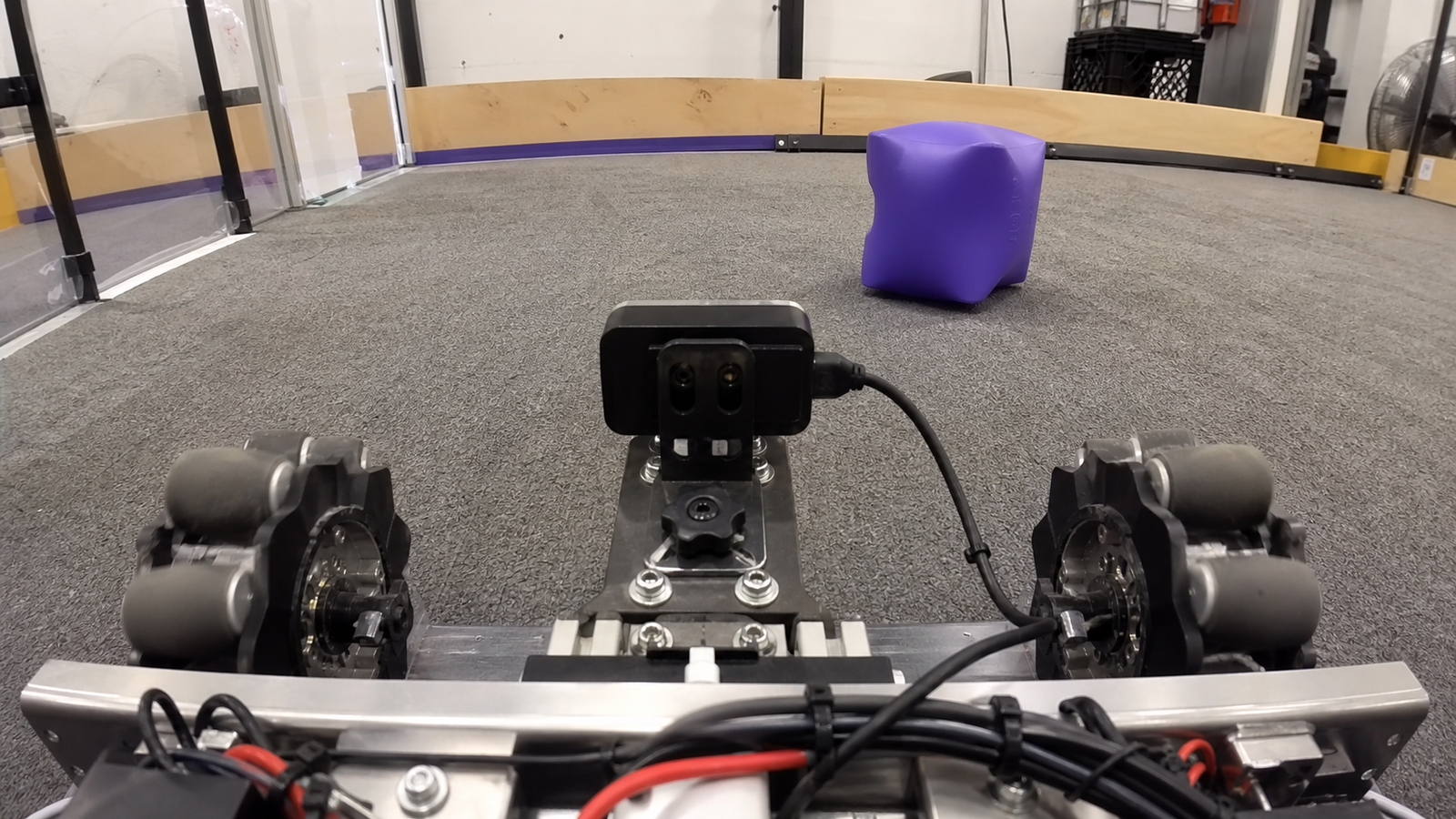
Action cameras are well suited to robotics test videos, tool demonstrations, vehicle mounts, and workbench shots where the operator knows the direction of interest. They are usually easier to review quickly because the footage already has a point of view. For a STEM team, that can matter more than cinematic flexibility. Mentors need to see whether a manipulator missed the cone, whether a drivetrain slipped, or whether a cable snagged.
The tradeoff is aim. If the camera is pointed at the wrong place, the evidence is gone. A fixed action camera can miss an off-frame failure, a safety observer’s gesture, or a second robot crossing the path.
Choose a 360 camera when the scene is unpredictable
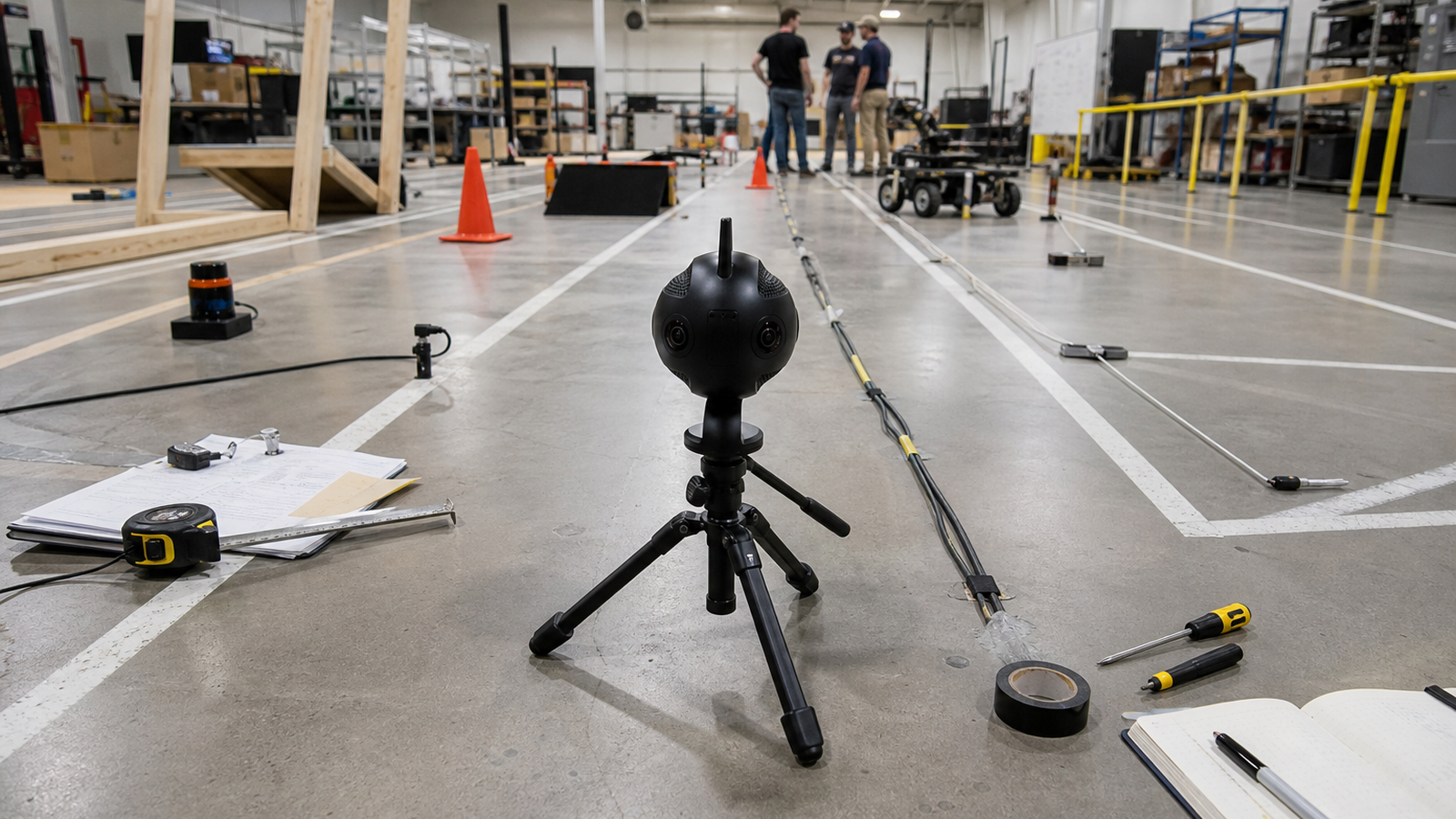
A 360 camera is useful when the operator cannot know where the important event will happen. Field inspections, mobile robot trials, classroom competitions, and maker faire walkthroughs can all benefit from a full scene capture. The editor can later reframe toward the relevant detail, which reduces the chance that a useful moment happened just outside the shot.
The cost is workflow. 360 footage usually needs more storage, more careful lens protection, and more time in post. It can also be less convenient when the final output is a quick evidence clip rather than a polished recap.
Decision factors that matter
- Mounting: action cameras tolerate simple fixed mounts; 360 cameras need fewer obstructions around the lenses.
- Evidence: use action cameras for known failure points and 360 cameras for context.
- Battery: plan hot-swap or external power for long field days.
- Audio: do not assume usable spoken notes in wind, machinery, or gym noise.
- Storage: higher resolutions and long runs demand more cards and a backup plan.
- Editing: action footage is faster to review; 360 footage is more flexible but slower.
TVG recommendation
For most robotics clubs and maker teams, the first camera should be a rugged action camera with spare batteries, a real mount kit, and a storage workflow. Add a 360 camera when post-run investigation, event coverage, or walkthrough context matters enough to justify the extra editing time.
The best setup is often both: one action camera aimed at the expected failure point and one 360 camera placed safely away from the work zone. That combination gives the team a detailed view and a context record without pretending one camera can do every job.
Storage and heat still decide long recordings
Camera choice should include the boring accessories. A technically better camera is less useful if the team runs out of formatted cards, forgets the battery charger, or loses clips because the device overheated in the sun. Field documentation is an evidence workflow, not just a camera purchase.
For longer robot tests, label memory cards by session, keep one card as a backup, and copy footage before reformatting. A five-minute clip of the actual failure is more valuable than an hour of beautiful footage that cannot be matched to the test log.
Related TVG reading
For readers building out the same technical context, these TVG Report pieces connect the hardware, software, and deployment angles without changing the original reporting.
- Action Camera, 360 Camera or Drone? A Field Documentation Kit for Robot Teams
- Action Camera, 360 Camera, or Phone for Robot Field Documentation?
- Action Camera Storage Specs for Robotics and Maker Field Tests
What to watch next
For TVG Report readers, the next useful signal is whether the ideas in Action Camera or 360 Camera? A Field Documentation Buying Guide for Makers show up in repeatable deployments, documented build workflows, or clearer vendor specifications rather than only launch messaging. We will keep watching for practical details that help builders compare tradeoffs, failure modes, and long-term support.