Editorial mode: Template B — Analysis / Guide.
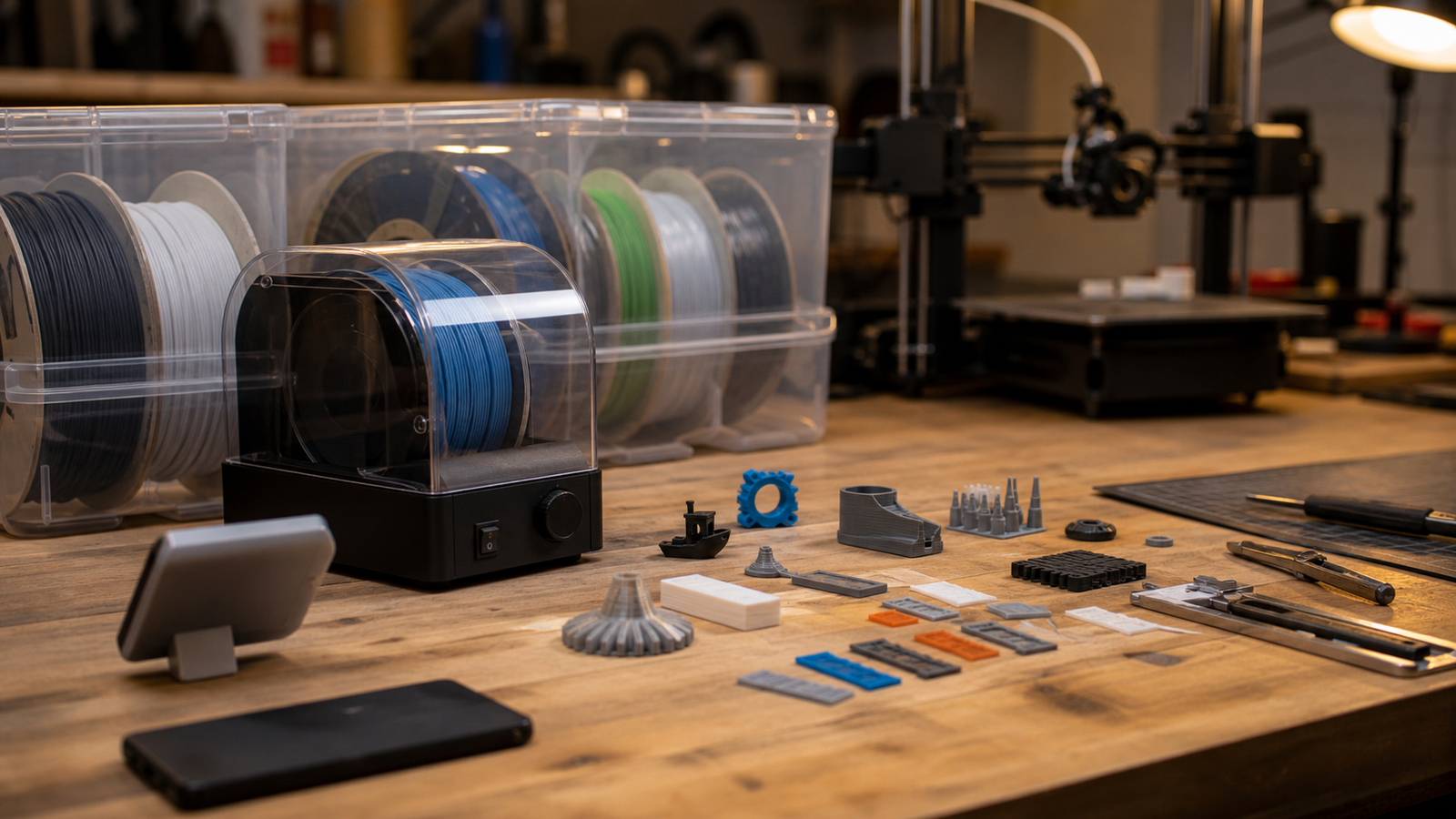
Wet filament is not the cause of every bad 3D print, but it is one of the easiest reliability problems for a maker lab to ignore. A printer can be well tuned and still produce popping, stringing, weak walls or cloudy surfaces when the material has absorbed moisture.
Drying guides from filament vendors and printing resources generally agree on the larger pattern: PLA, PETG, TPU, nylon and polycarbonate do not behave the same way. The exact temperature and time should come from the filament maker’s guidance, but the lab workflow matters as much as the number on the dryer.
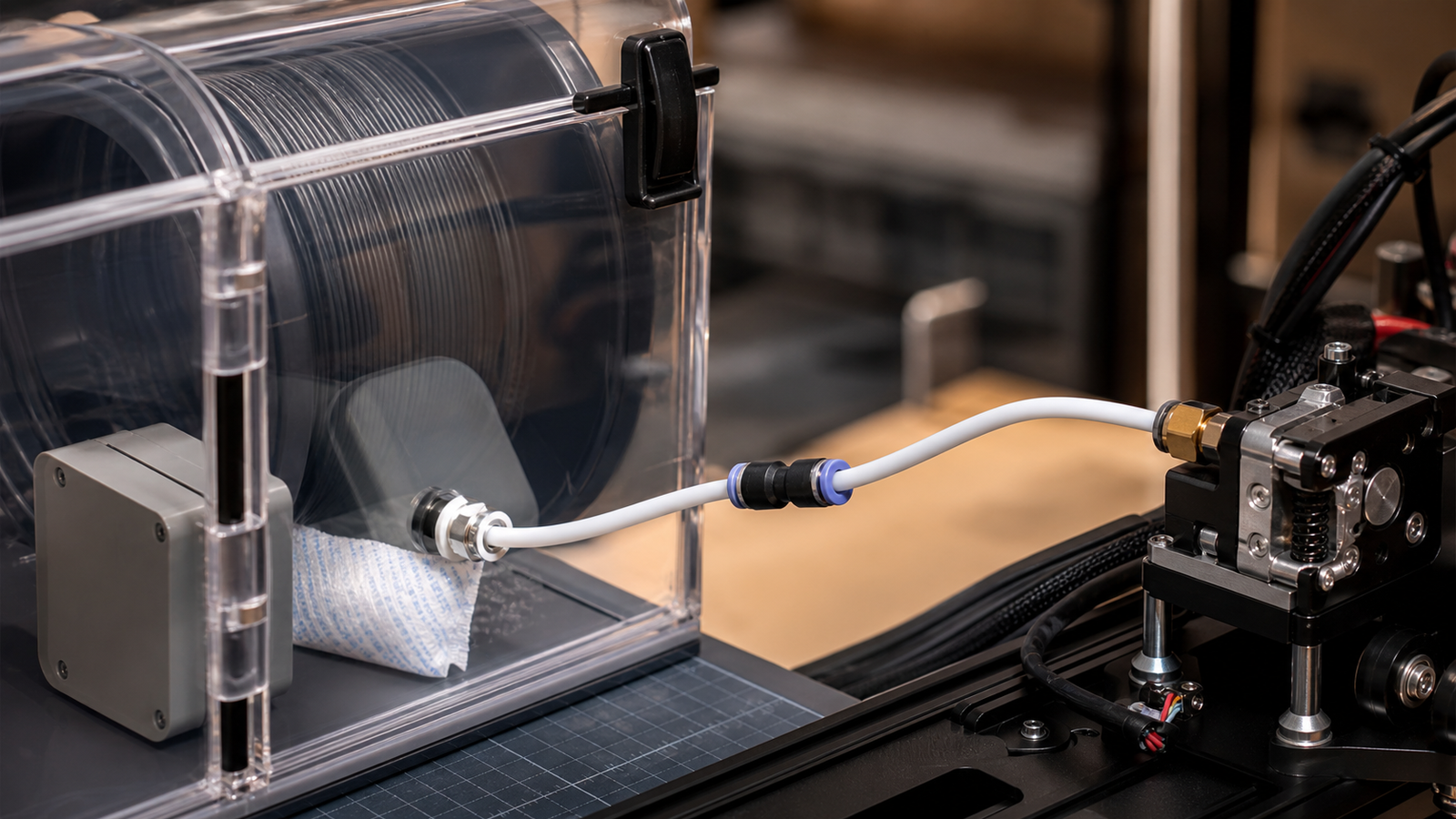
Start with symptoms, then verify storage
Moisture symptoms often look like other problems. Stringing can also come from retraction settings. Rough walls can come from temperature, speed or extrusion issues. Weak parts can come from print orientation or under-extrusion. That is why filament drying should be part of a checklist, not the only answer.
For shared labs, the first audit is storage. Are spools left open for weeks? Are desiccant packs regenerated? Is nylon treated differently from PLA? Does the lab mark when a spool was opened and dried? Without those habits, students and builders end up tuning the printer around unstable material.
Different materials need different caution
PLA is often forgiving, but it can still absorb enough moisture to affect surface quality. PETG and TPU tend to make moisture problems more visible. Nylon is a different category: it is highly hygroscopic and can turn a strong engineering filament into an unpredictable material if storage and drying are casual.
The TVG rule is to avoid one universal dryer preset. A dryer that is safe for PLA may be too cool or too short for nylon. A setting intended for high-temperature material may soften or deform a low-temperature spool or spool holder. Check the filament maker’s data, then document the lab’s settings so the next person does not guess.
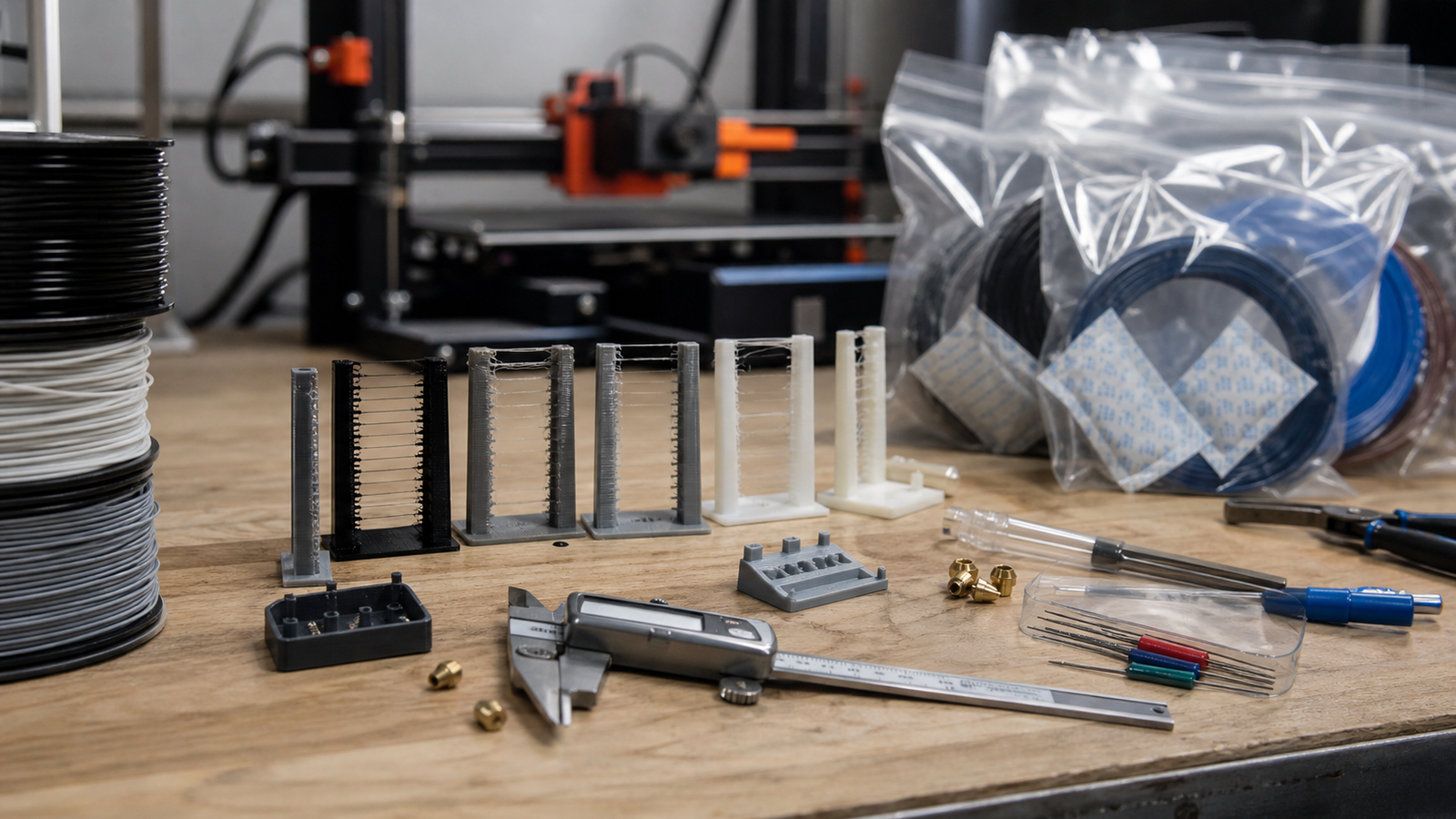
A practical lab workflow
- Label spools with material, open date and last dry date.
- Store active materials in sealed boxes or bags with desiccant.
- Dry before critical prints, especially for TPU, PETG, nylon and filled materials.
- Print a small test coupon before a long job when material history is unknown.
- Keep dryer settings documented near the printer, not in one person’s memory.
This connects with TVG’s field-kit approach in the mobile maker-lab cable guide: small habits prevent hard-to-debug failures later.
When drying is not enough
Drying should not become a ritual that hides other faults. If the same spool prints well on one machine and poorly on another, check nozzle condition, extruder tension, hotend temperature, part cooling and slicer profile before blaming moisture. If every spool fails on one printer, the printer is probably the problem.
Labs should also keep safety in mind. Use equipment intended for filament drying or follow manufacturer guidance for safe temperature limits. Do not improvise with uncontrolled heat sources, food ovens used for cooking, or settings that can soften spools and create tangles. The goal is controlled material conditioning, not a risky shortcut.
For bigger prints, combine drying with a run plan: known-good spool, clean nozzle, calibrated first layer, enough material left on the reel and a storage box ready after the job. That habit pairs well with TVG’s large-format printer checklist, where workflow reliability matters as much as build volume.
For shared printers, post the drying log beside the slicer profile rather than hiding it in a storage cabinet. The person slicing the job needs to know whether the spool has been open for two days or two months. That small operational note often saves more time than another round of blind temperature tuning.
TVG Take
A filament dryer is not a status accessory. It is a repeatability tool. The best maker labs treat moisture control like calibration: boring, logged and checked before the expensive print starts.