Arducam’s Pico4ML Pro is a compact development kit built around the Raspberry Pi RP2040 microcontroller for TinyML and on-device machine-learning projects. Its integrated camera, display and microphone target STEM education, robotics prototypes and embedded developers who want to avoid assembling those components separately.
An RP2040 board built around TinyML inputs
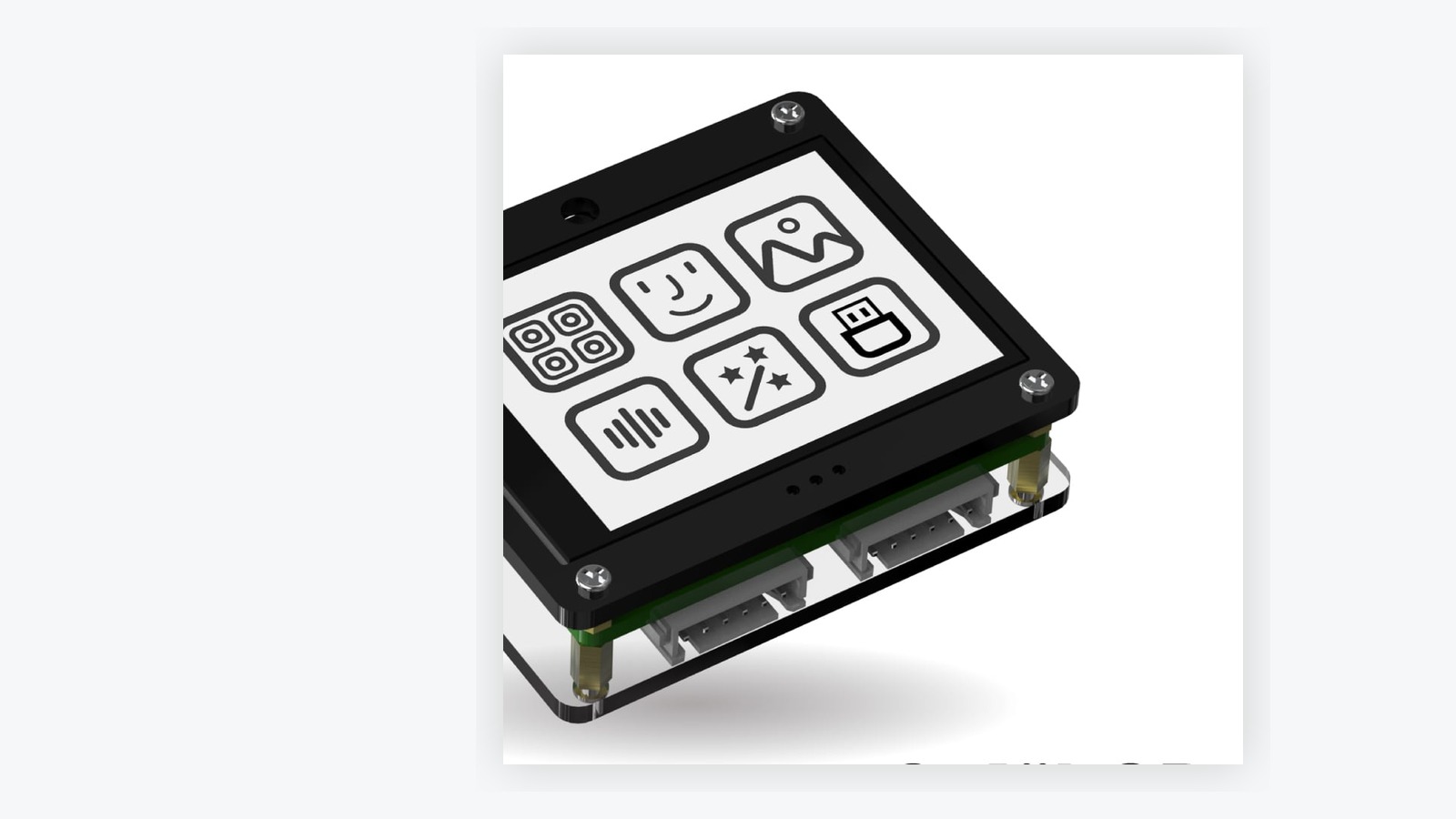
The Pico4ML Pro integrates an RP2040 microcontroller with a camera module, a 2.4-inch LCD screen, and a microphone. This all-in-one approach aims to lower the barrier to entry for developers experimenting with audio and vision-based AI models on a low-power platform. By bundling the core components, it allows teams to focus on software and model development rather than initial hardware integration.
The intended use case
This board is aimed at developers and students exploring machine learning applications where low cost, small form factor, and low power consumption are critical. Key target users include:
- STEM Education: An accessible platform for teaching the fundamentals of machine vision and audio processing.
- Robotics Engineers: Suitable for adding simple vision or wake-word detection to robotics projects.
- Prototypers: A rapid prototyping tool for testing on-device AI concepts before committing to custom hardware.
The RP2040 sets the ceiling
The hardware choices reflect a focus on entry-level TinyML tasks:
- Microcontroller: Raspberry Pi RP2040 (Dual-core Arm Cortex-M0+). A popular choice for its strong community support and PIO state machines, but with limited RAM (264KB) for more complex models.
- Camera: Comes with a compatible camera module, simplifying vision-based projects like person detection or gesture recognition.
- Display: An integrated 2.4-inch LCD screen provides immediate visual feedback, useful for debugging and creating simple user interfaces.
- Audio: An onboard microphone enables audio-based applications like wake-word detection.
What integration removes
Combining the camera, 2.4-inch display and microphone on one board removes several wiring and driver choices from the first prototype. The display can expose a class label or confidence result without a separate computer, while the microphone and camera support two different TinyML input paths on the same RP2040 platform. That shortens the path from a model example to a visible embedded behavior.
The same integration makes memory budgeting the central constraint. The RP2040’s 264KB of SRAM must accommodate application code, runtime buffers and any image or audio data needed during inference. The public specifications do not establish frame rate, model latency, power draw or which operator sets are supported by the supplied workflow, so those details must come from current examples and documentation rather than the component list alone.
The 264KB memory boundary
The primary limitation is the RP2040’s constrained memory, which will prevent it from running larger, more complex machine learning models. The performance will be highly dependent on model optimization. The quality of the provided software examples and documentation will also be a critical factor in how quickly a new user can become productive.
Who can use it well
The Arducam Pico4ML Pro is a strong contender for anyone needing an affordable, all-in-one platform to start with TinyML. It is particularly well-suited for educational settings and for developers who need to quickly prototype simple, on-device AI features without the complexity of sourcing and integrating individual components.
The decision boundary
Pico4ML Pro’s advantage is integration, not raw model capacity. The RP2040, camera, display and microphone provide a compact teaching and prototype loop, while 264KB of RAM keeps the useful workload in small, carefully optimized vision and audio models. Projects that need larger networks or higher frame rates require a more capable accelerator.