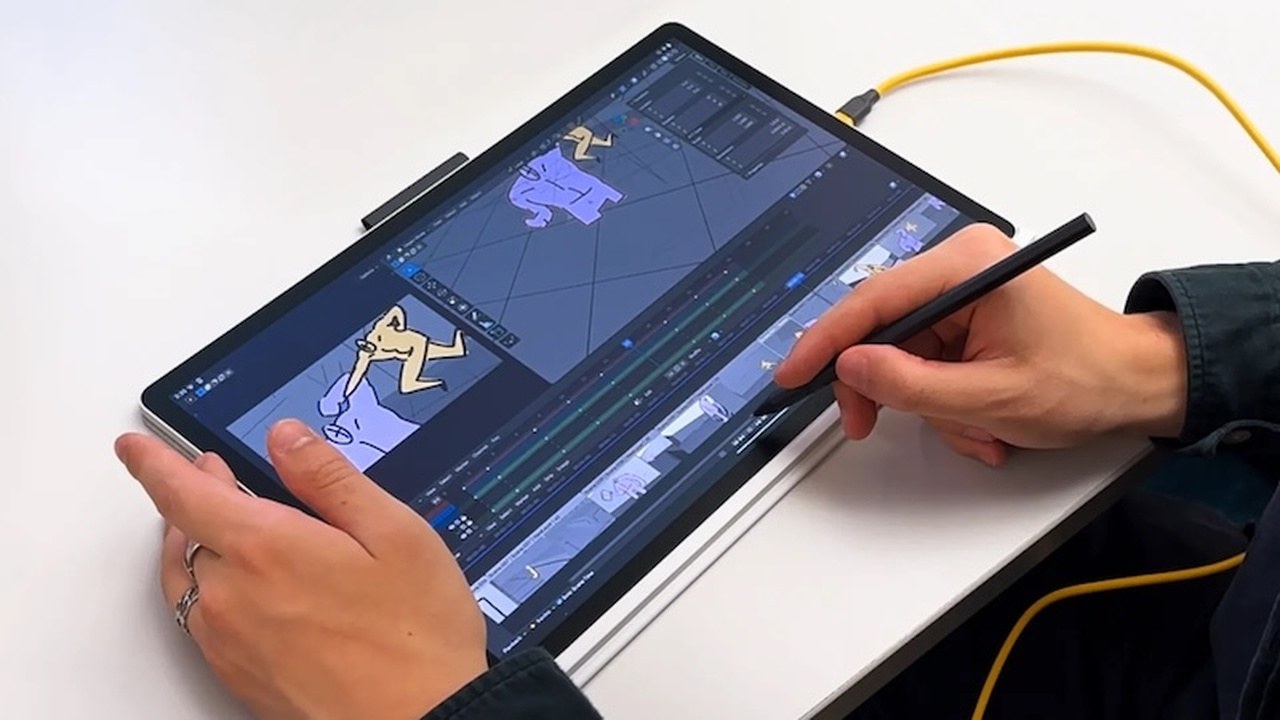
Blender for Android Alpha 4 arrived on September 26 with four APK choices, working audio, CPU denoising and a set of graphics fixes. It is still an unofficial build, and the release notes identify several GPU combinations that remain broken.
Featured image: Blender Conference.
The most consequential addition is not a new modeling tool. It is an alternate Vulkan-driver path for some Adreno devices, packaged separately so users can choose between Android’s vendor driver and Mesa’s open-source Turnip driver.
Four APKs now expose the driver choice
The project publishes lite and full builds at 193.8 MiB and 273.3 MiB. Two experimental Turnip variants raise those sizes to 196.3 MiB and 275.8 MiB. The full packages add Cycles, OpenImageDenoise and other heavier components; the lite packages keep the download smaller.
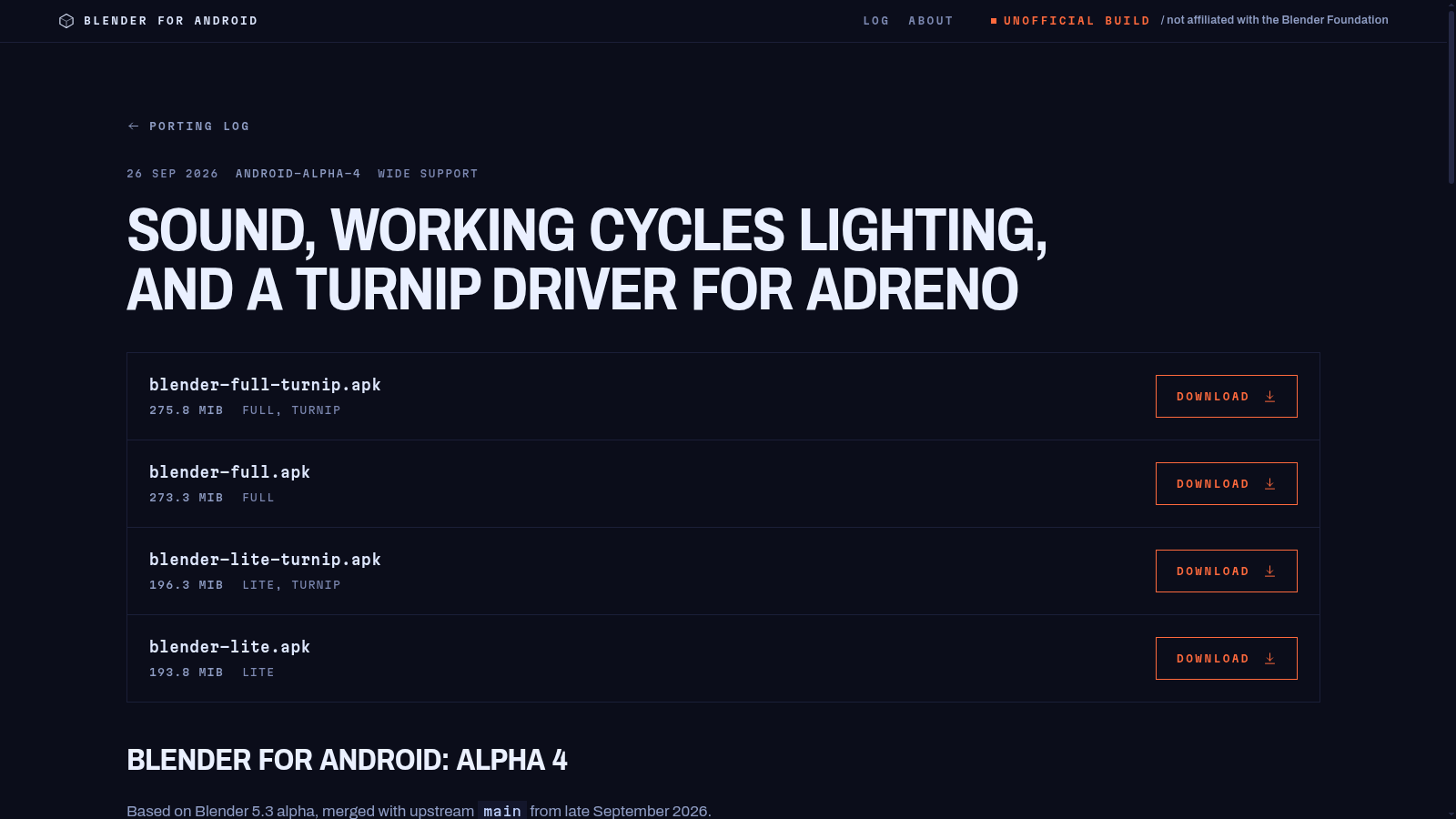
Turnip is Mesa’s open-source Vulkan driver for Qualcomm Adreno GPUs. Alpha 4 loads it through libadrenotools, giving affected users an alternative when the regular APK encounters vendor-driver behavior. That option is not a universal “faster” build, and it is not intended for Mali hardware.
The release records that a vendor-driver vertex-input workaround now applies on Android instead of only Windows. It also fixes an Adreno 830 crash or black screen when the swapchain grows past five images and selects a composite-alpha mode actually supported by the surface.
Audio and Cycles cross different thresholds
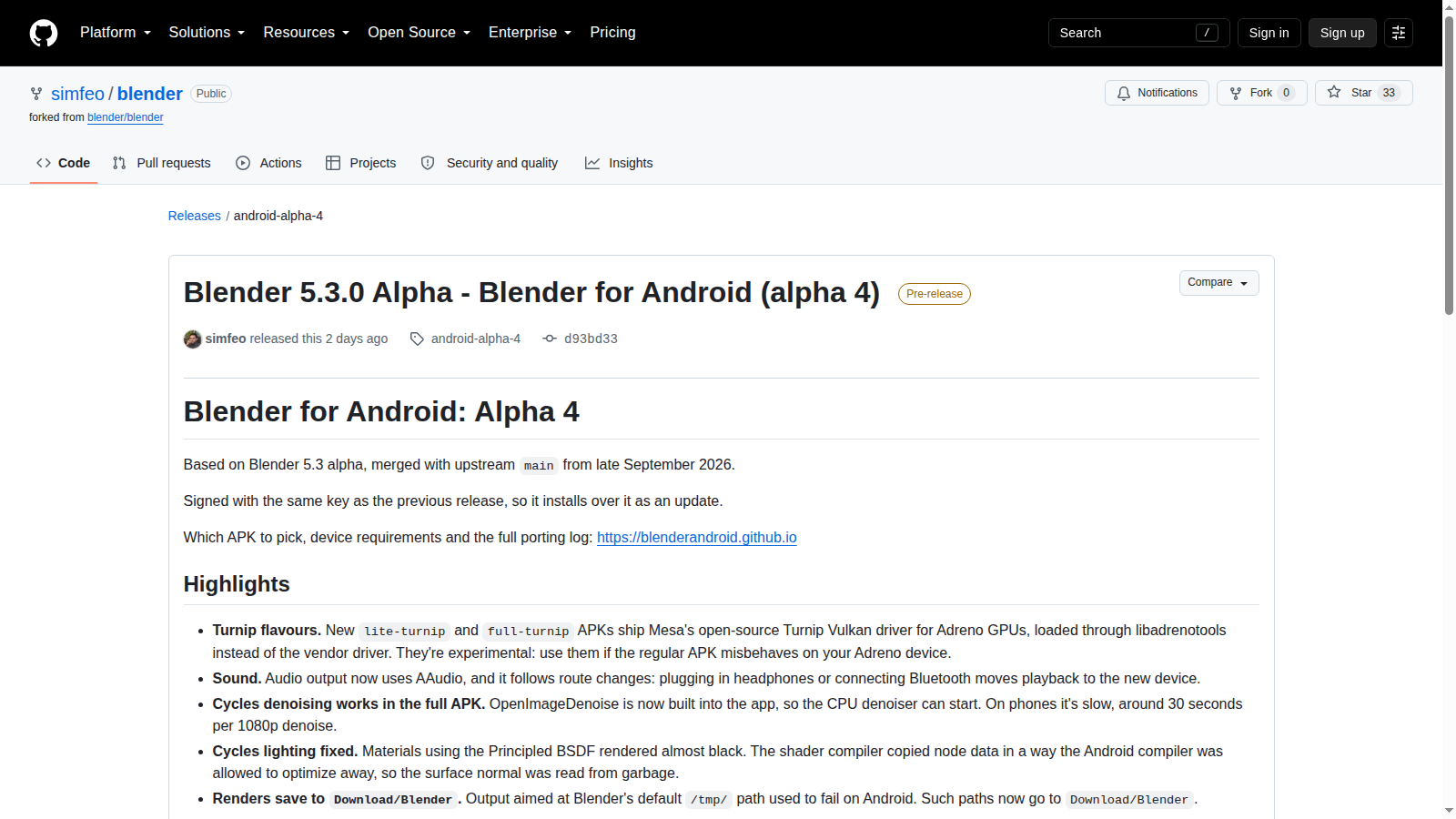
Audio now uses Android’s AAudio path and follows route changes, so playback moves when headphones are inserted or a Bluetooth device connects. That turns sound from a missing subsystem into an integrated Android behavior rather than a one-route demo.
The full APK now includes OpenImageDenoise, allowing the CPU denoiser to start. The project reports roughly 30 seconds for a 1080p denoise on phones. That is evidence of function, not a claim that phone-class hardware has become a fast Cycles workstation.
A separate Cycles correction addresses Principled BSDF materials that previously rendered almost black. According to the release notes, node data was copied in a form the Android compiler could optimize away, leaving the shader to read an invalid surface normal.
Android file paths and input behave more naturally
Render output aimed at Blender’s desktop-style /tmp/ default now goes to Download/Blender. The startup log at Download/blender-startup.log records the Vulkan API version, device features and active shader workarounds, making a bug report more useful than a screenshot alone.
Alpha 4 also incorporates a virtual keyboard with function and navigation keys, long-press tool variants, finger scrolling in long popups, inline IME composition, and the ability to open .blend files from other Android apps.
The named failures still define the alpha
Mali-G57 devices with the r32 driver can show stray triangles in UI widgets and meshes. A Moto G Stylus 5G (2024) with Adreno 710 now starts the app but can display repeated geometry and noise. The notes also warn that Turnip on Adreno 642L can lose the GPU after EEVEE use.
Those are concrete compatibility boundaries, not small polish items. Alpha 4 broadens the number of working paths and improves diagnostics, but the correct build still depends on the GPU and driver. The next useful evidence will be device-specific fixes and reproducible logs showing which workaround path was active.