Arduino is using Maker Faire Bay Area’s September 25–27 run on Mare Island to put its dual-processor strategy in front of builders, not just on a specification sheet. The company’s event notice lists a custom handheld retro-gaming build based on UNO Q, Plug and Make activities, and VENTUNO Q among the hardware at its booth.
Featured image: Arduino.
The useful distinction is not that both boards can “run AI.” It is where each platform draws the line between a Linux-capable application processor and a microcontroller responsible for time-sensitive hardware work.
UNO Q makes the split visible in a maker-scale project
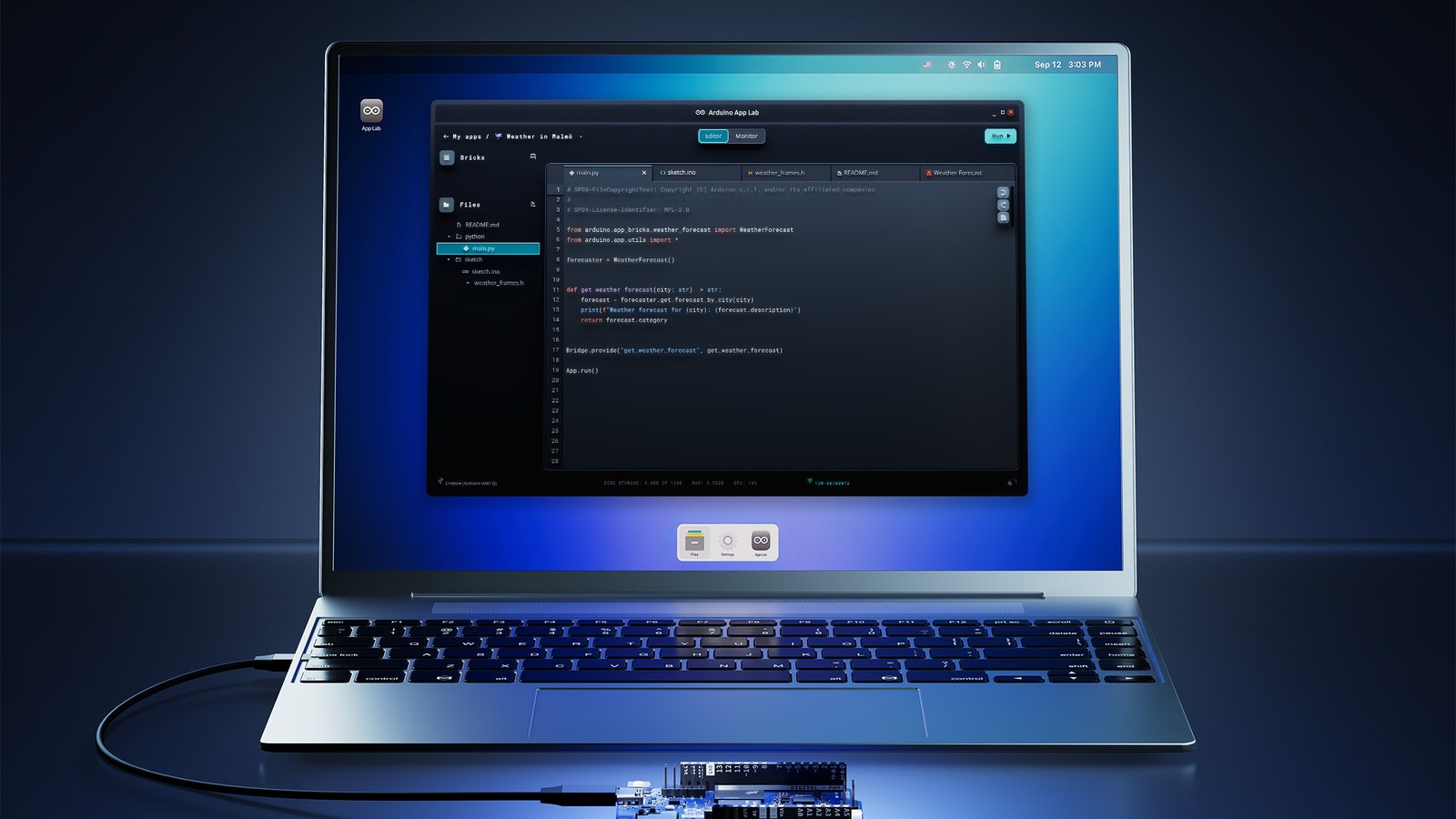
UNO Q pairs a Qualcomm Dragonwing QRB2210—with four Arm Cortex-A53 CPU cores running up to 2.0 GHz—with an STM32U585 Cortex-M33 microcontroller running up to 160 MHz. Arduino connects the two sides through its remote procedure call layer.
That arrangement lets a project keep a graphical interface, file handling or higher-level application code on the Linux side while the microcontroller deals with buttons, sensors and actuators on tighter timing. A handheld game is a compact way to expose that boundary: display and application work can coexist with controls that should not wait behind an unpredictable Linux task.
Arduino’s announcement identifies the projects but does not publish latency traces, power measurements or a complete source bundle for the booth demos. The event therefore provides implementation examples, not performance validation.
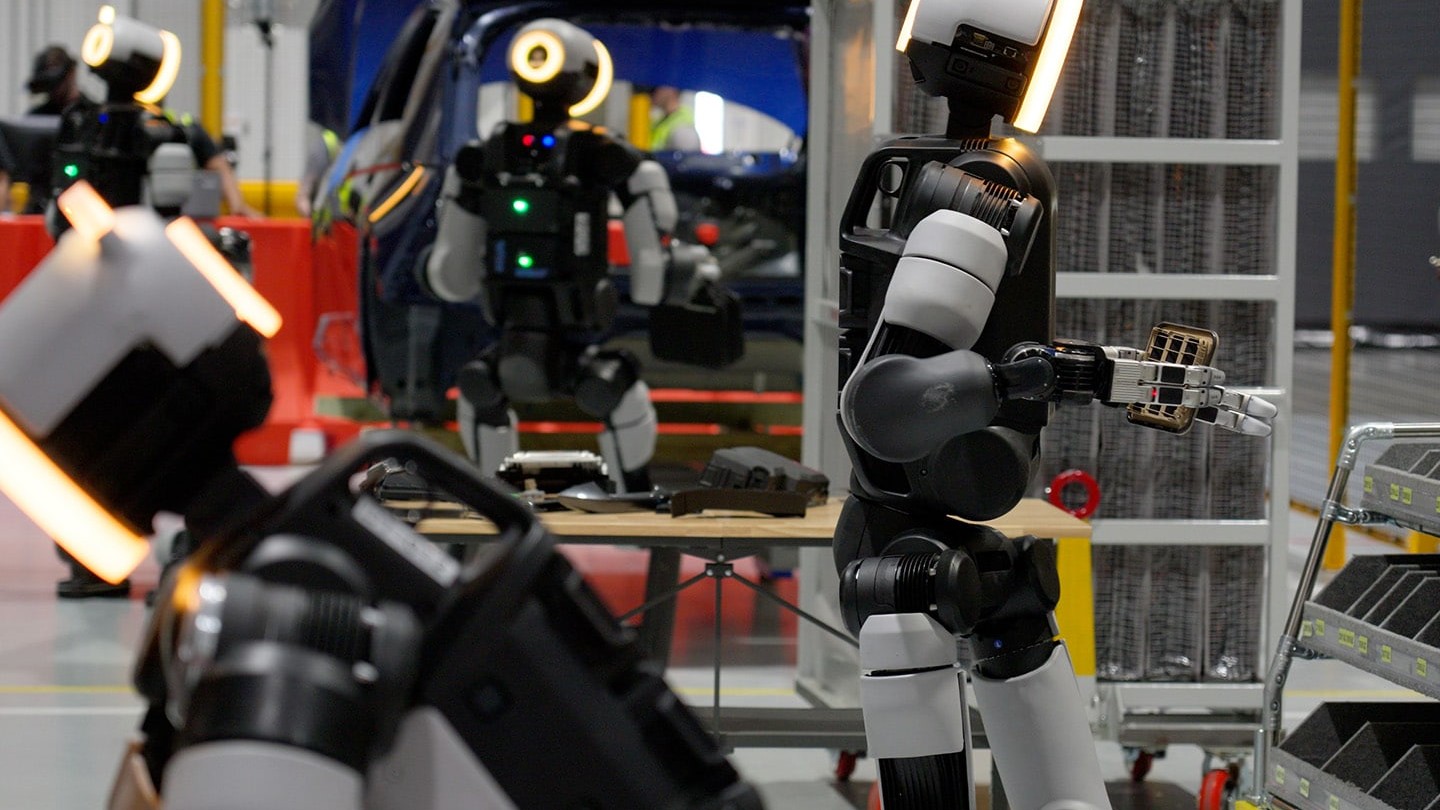
VENTUNO Q moves the same idea toward heavier robotics
VENTUNO Q expands the application-processor side with a Qualcomm Dragonwing IQ8 and an NPU rated by Arduino at up to 40 dense TOPS. Its real-time side is an STM32H5. Arduino’s documentation positions that pairing for computer vision, local models and ROS 2 workloads that still need deterministic motor or I/O control.
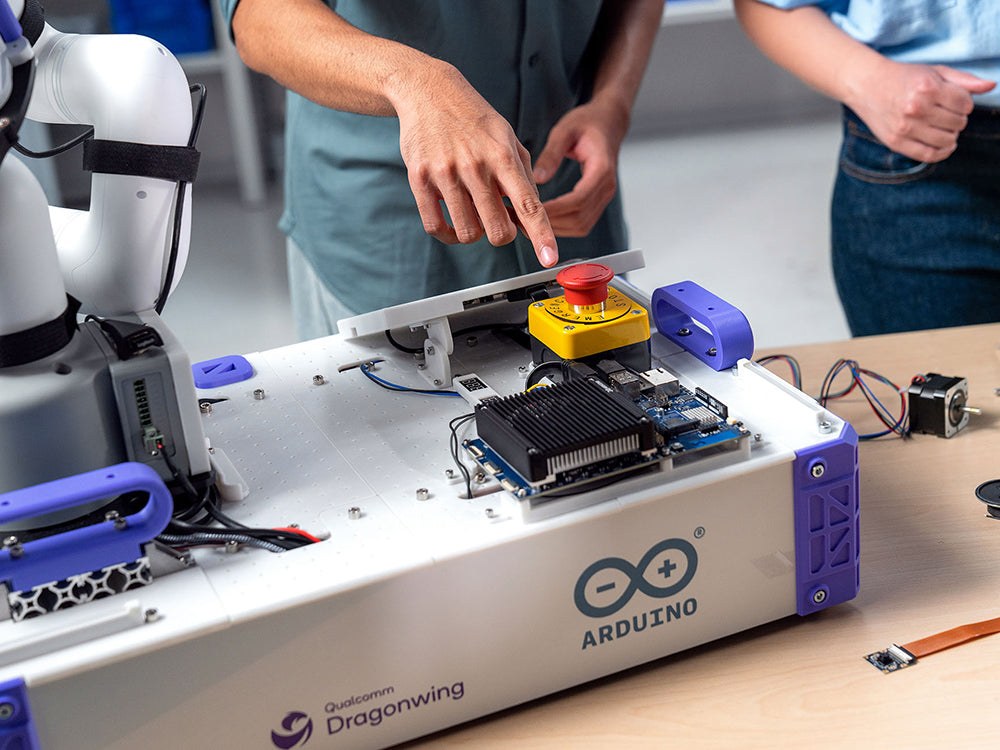
The architecture is related to UNO Q, but the engineering envelope is different. UNO Q is the accessible demonstration of a mixed Linux-and-microcontroller workflow; VENTUNO Q allocates substantially more compute to perception and robotics software.
What the live demos can establish
A public demo can show that the software stack, processor bridge and attached hardware operate together for a defined task. It cannot establish worst-case response time, sustained thermal behavior or model throughput without measurements. Those are the numbers to watch for when Arduino publishes project files or post-event technical notes. The same evidence gap applies to comparing the two boards across workloads.