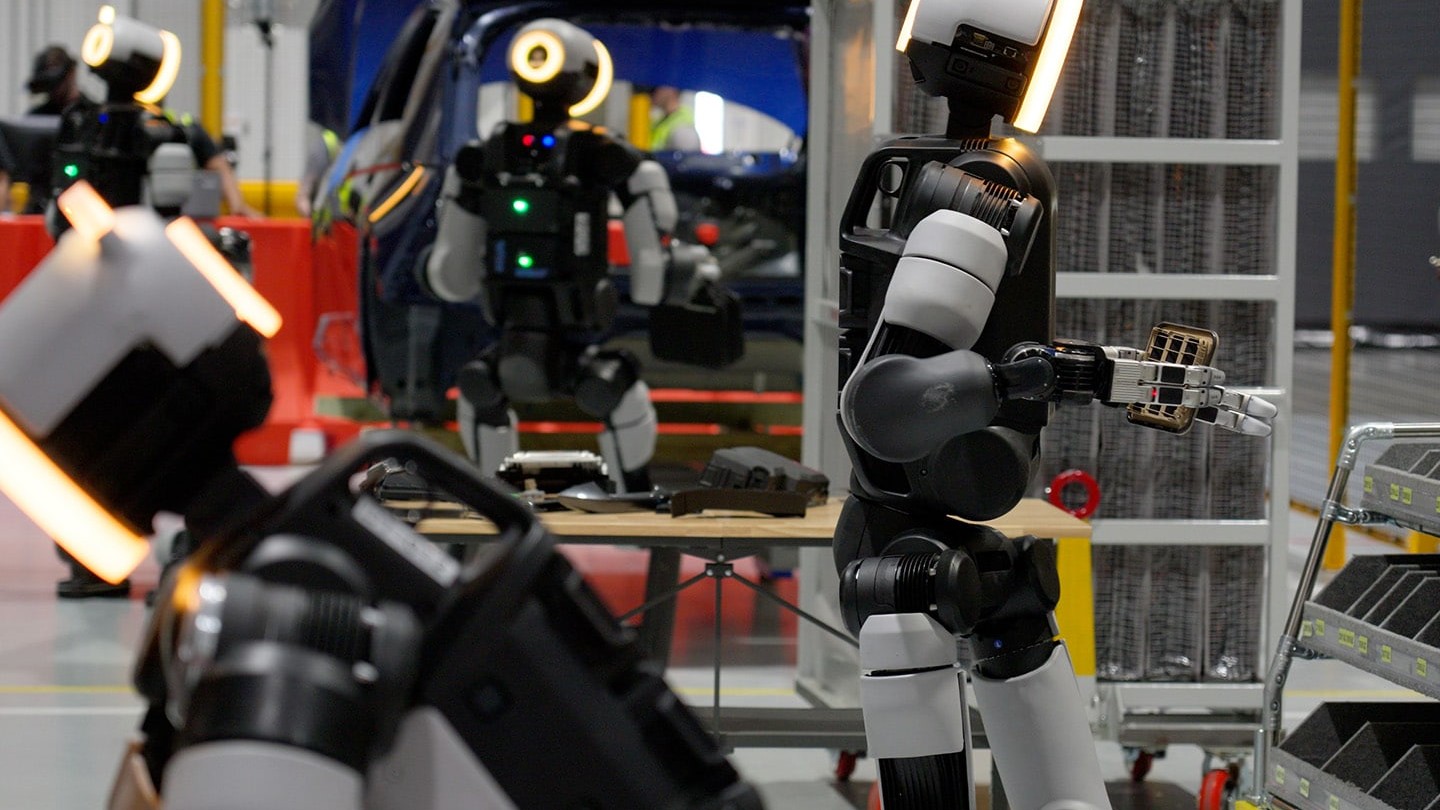
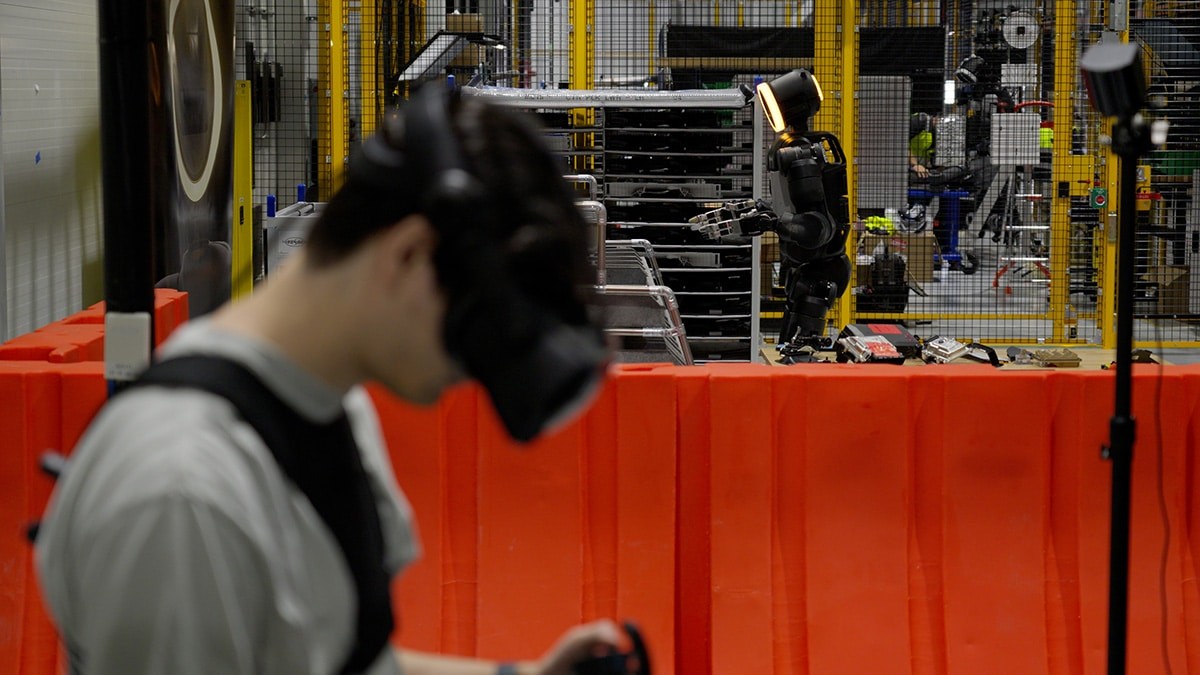
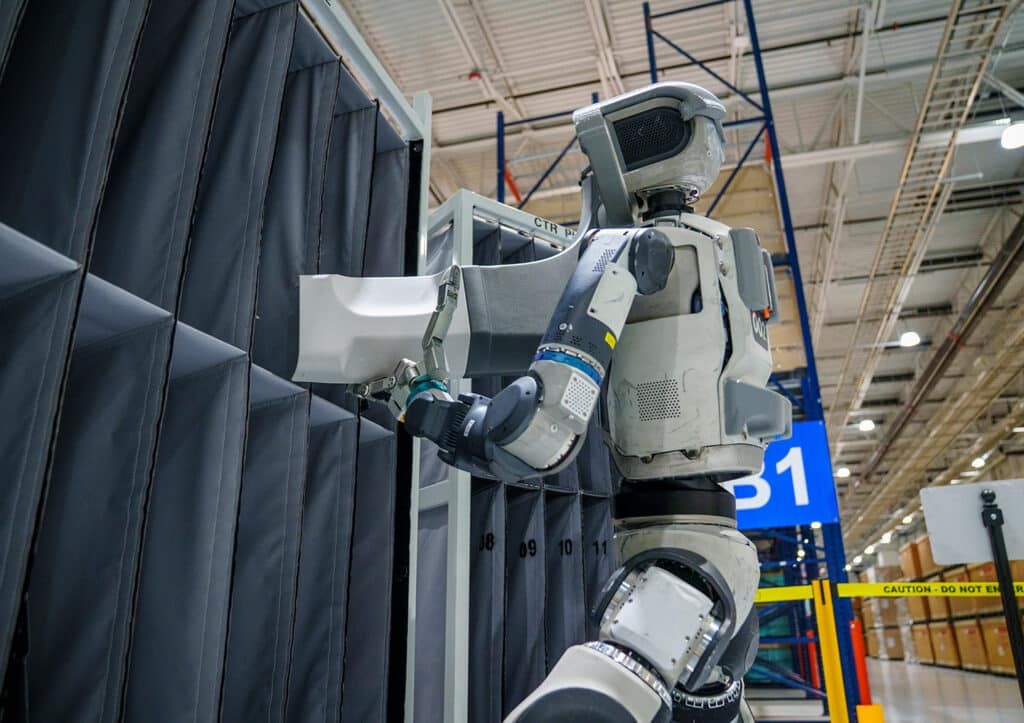
Boston Dynamics has opened the Robotics Metaplant Application Center at Hyundai Motor Group Metaplant America near Savannah, Georgia. Atlas robots there are training on a specific factory task: preparing automotive parts and placing them in the correct sequence for assembly.
Featured image: Boston Dynamics.
The September 21 announcement calls the first RMAC phase operational. That wording matters: it confirms a working training site inside Hyundai’s manufacturing campus, not a completed production rollout.
Parts sequencing is the first manufacturing boundary
Parts sequencing requires the robot to identify, grasp and order components so the right item reaches assembly at the right time. It is narrower than assembling the components, but it still exposes the system to factory variability: mixed part geometry, presentation errors, changing work queues and recovery after a missed grasp.
Boston Dynamics says component-assembly applications are planned by 2030. Humanoids Daily’s independent report also distinguishes training from deployment and cites Hyundai’s published 2028 start target for Atlas deployment at the Georgia plant. The current milestone is therefore an application-development environment ahead of that timetable.
A ten-times-larger site is planned for 2027
RMAC is scheduled to move into a new HMGMA building in 2027 that Boston Dynamics describes as approximately ten times the size of the current operation. The company also says it is discussing training and data-collection work with existing Spot and Stretch customers in manufacturing, aerospace, semiconductors, logistics, food and beverage, and life sciences.
Those discussions do not establish Atlas deployments in those sectors. They show where the company wants to collect task data and explore use cases after the automotive sequencing work. Evidence of transfer will require the same skill to survive different fixtures, part presentations and operating procedures without rebuilding the entire application.
Capacity targets are not current production
Boston Dynamics repeats a plan to deploy 25,000 Atlas units across Hyundai and Kia plants over the next few years and to establish a U.S. production facility capable of 30,000 robots annually. Those are roadmap and capacity figures. The announcement does not report a current RMAC fleet size, sustained sequencing rate, intervention frequency or completed production volume.
The next useful evidence is operational: parts handled per hour, recovery from mis-picks, human intervention time, safe behavior around changing work and skill transfer between stations. RMAC creates the place to generate those results; the opening itself does not supply them.