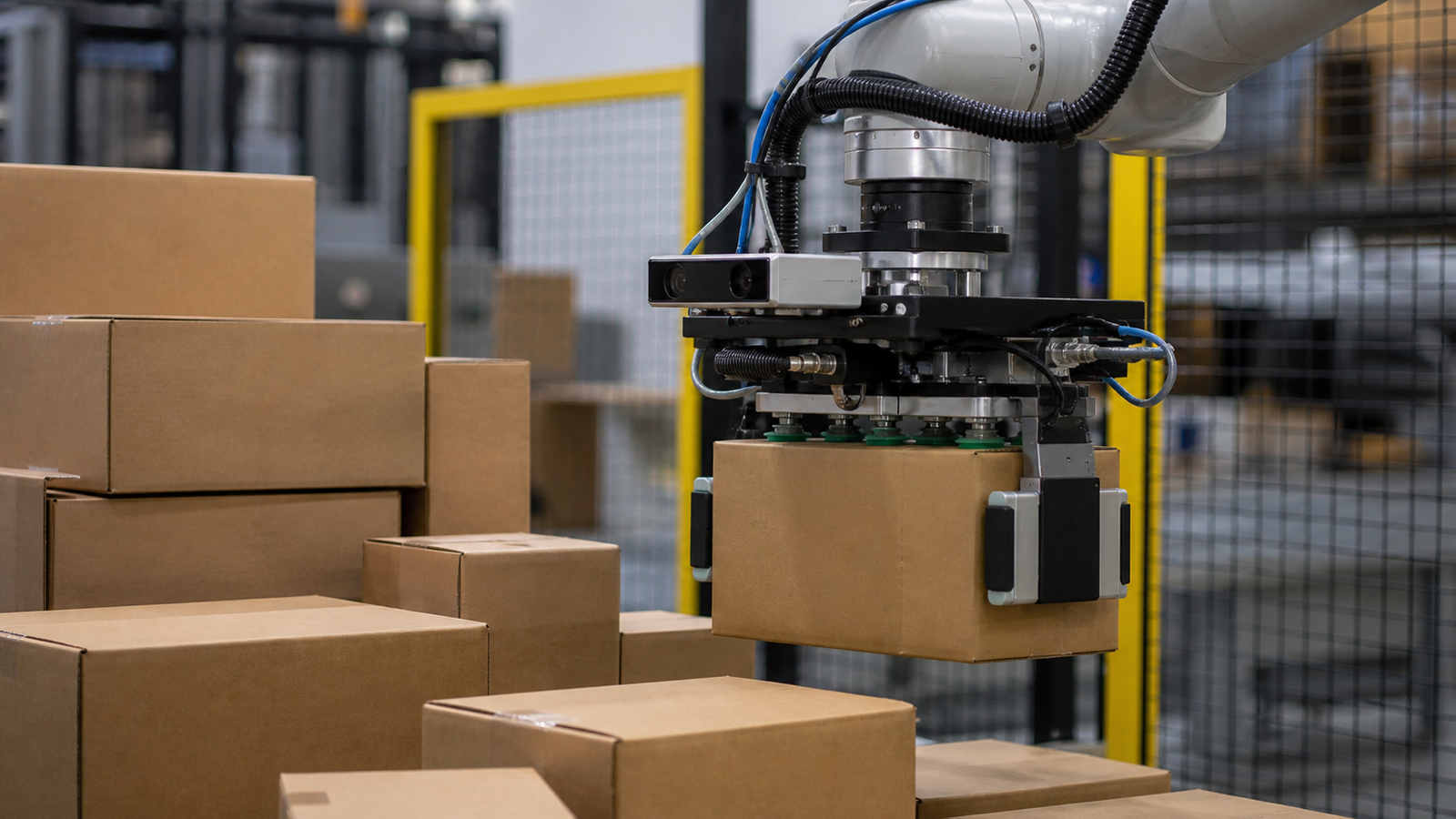
KUKA, Contoro Robotics, and States Logistics are showing why trailer unloading is a serious warehouse-robotics test. The task sounds simple — remove cartons from a trailer — but the robot has to handle mixed boxes, tight geometry, variable stacks, and real distribution-center timing.
Quick answer
- Why it matters: floor-loaded trailer unloading is still one of the harder warehouse automation jobs.
- What to watch: gripper reliability, perception in a dark trailer, carton variation, and human handoff.
- TVG view: this is a better robotics signal than a clean demo cell because the environment is messy.
What was deployed
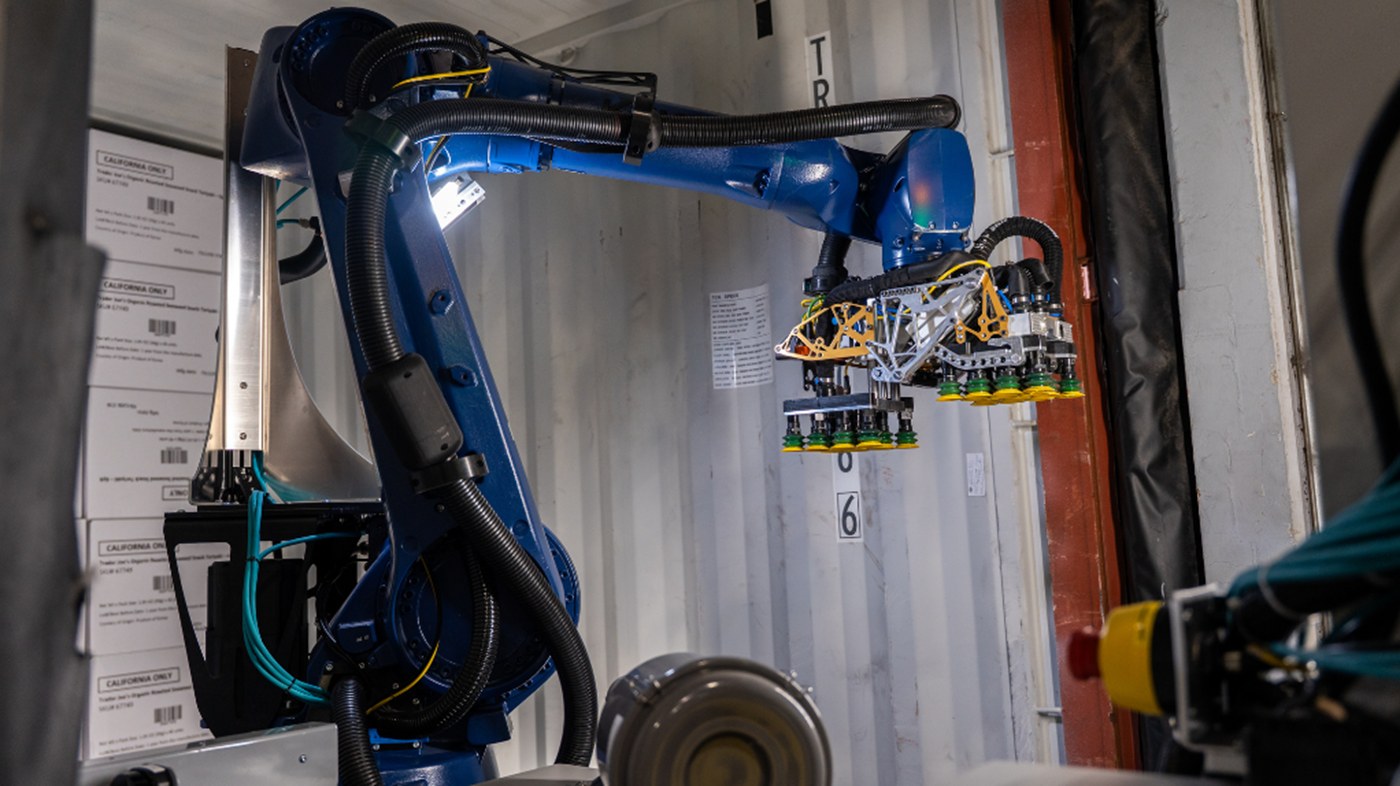
The core job is simple to describe and hard to automate: remove boxes from a trailer or container where carton sizes, weights, orientations, gaps, and stack conditions change from load to load. KUKA describes a system that combines robot hardware with Contoro’s AI software and real-time perception.
Contoro’s own technology overview emphasizes autonomous trailer and container unloading, including a gripper intended to handle varied warehouse boxes. The company also describes a human-in-the-loop approach, which is important because edge cases in trailers can be messy.
Why it matters
Warehouse robotics often looks more mature in promotional footage than it feels on a loading dock. Palletizing, goods-to-person picking, mobile-robot transport, and sortation all benefit from some level of order. Floor-loaded trailer unloading starts with disorder.
A system has to perceive a partial wall of boxes, select a grasp, avoid collapsing the stack, manage damaged cartons, and keep moving even when the next item is not where the previous frame predicted. The robot also has to work safely beside dock equipment and human supervisors.
That connects to TVG’s broader robotics reliability coverage, including sensor-noise debugging and robot wiring choices. In the warehouse, the same principle scales up: perception, mechanics, cabling, safety, and workflow all have to survive the real environment.
The technical bottlenecks
The visible robot arm is only one part of the system. The harder engineering questions are perception under uneven lighting, carton-face detection, grip selection, box separation, exception handling, and recovery after a failed pick.
The gripper matters because a floor-loaded trailer is not a tidy bin. A pure suction approach can struggle with porous, damaged, or wrapped surfaces. A clamp-style approach needs accessible sides and collision clearance. A hybrid approach has to decide quickly which grasp is safest for the next box.
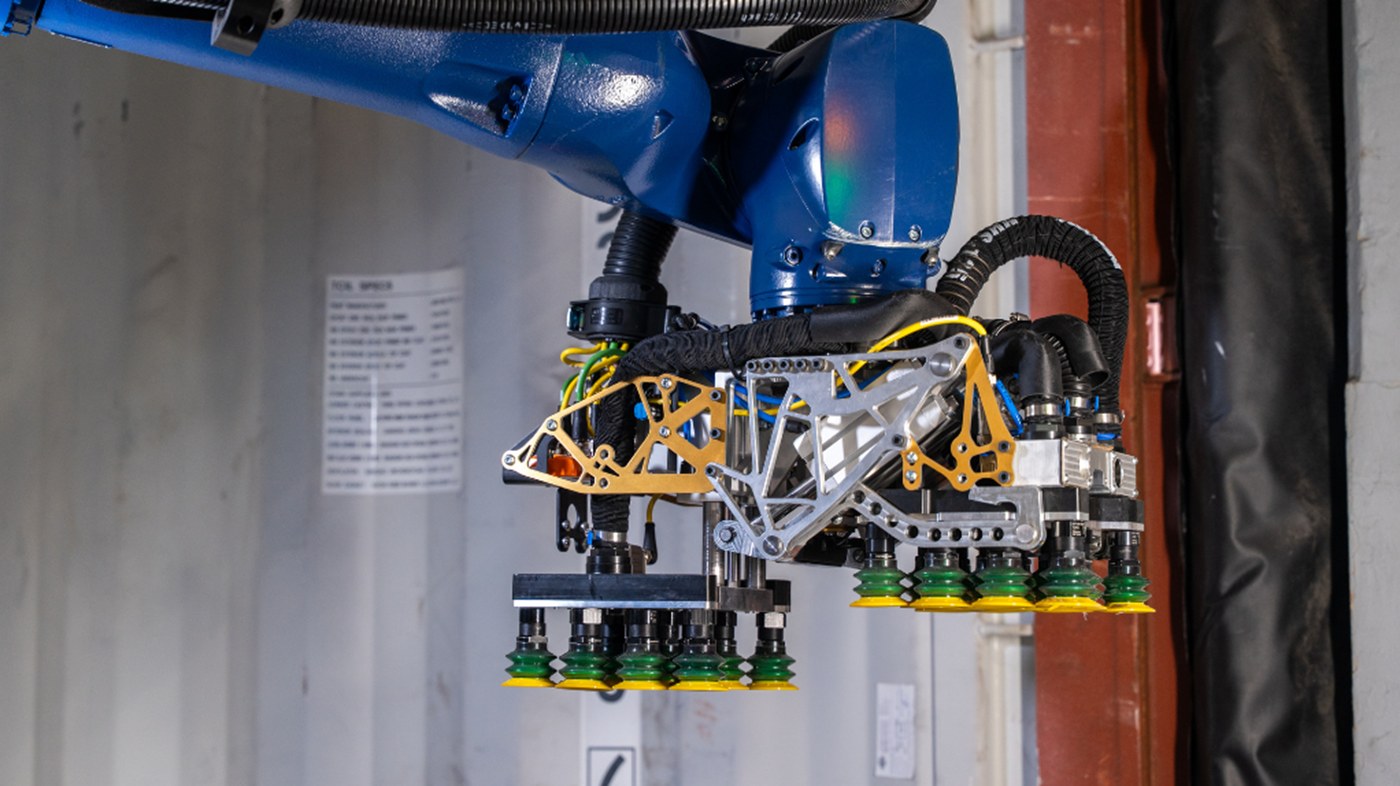
Throughput is another constraint. A robot that unloads safely but slowly may still be useful in difficult labor conditions, but the deployment case gets stronger when it can handle ordinary trailers without constant intervention. That is where human-in-the-loop supervision can be practical: the robot handles most picks while a remote or nearby operator helps with unusual cases.
What operators should measure next
The practical scorecard should include more than boxes per hour. Operators should track exception rate, damaged-package rate, time spent in human assist, trailer types supported, reset time after a jam, and how often the workcell needs manual clearing. They should also record whether the system performs differently with dense consumer cartons, soft packages, heavy boxes, and partially collapsed stacks.
Safety evidence matters too. A robot unloading inside a trailer changes the human job, but it does not remove the dock environment. The deployment still needs clear guarding, stop procedures, supervisor training, and maintenance access that does not create new risks.
TVG Analysis
The KUKA-Contoro-States Logistics example is worth watching because it sits in the gap between robotics capability and warehouse reality. Trailer unloading is repetitive enough to justify automation, but variable enough to expose weak perception, weak grippers, and weak recovery logic.
TVG would watch for three follow-up signals: measured unload rates across different trailer types, how often human assistance is needed, and how the system handles damaged cartons or unstable stacks. Those details will say more about product readiness than a clean demo clip.