A robot sensor can fail without the sensor being bad. The wire may be loose, the connector may be wrong for vibration, the terminal may be clamped on insulation, or the harness may pull every time the chassis turns.
Two common low-voltage choices are JST-style plug connectors and screw terminals. They are both useful. They are not the same tool.
Quick answer
Use JST-style connectors when a small sensor harness needs keyed, compact, repeatable plug-in service. Use screw terminals when a prototype needs fast wire changes, mixed wire lengths, or field-adjustable connections. For mobile robots, either option needs strain relief, correct wire preparation, and a realistic vibration test.
Where JST-style connectors help
JST is a connector manufacturer with many product families, and “JST” is often used casually in maker spaces to describe small keyed plug connectors. The useful idea is a compact plug-and-socket harness. A sensor can be unplugged, replaced, or routed through a chassis without loosening individual wires.
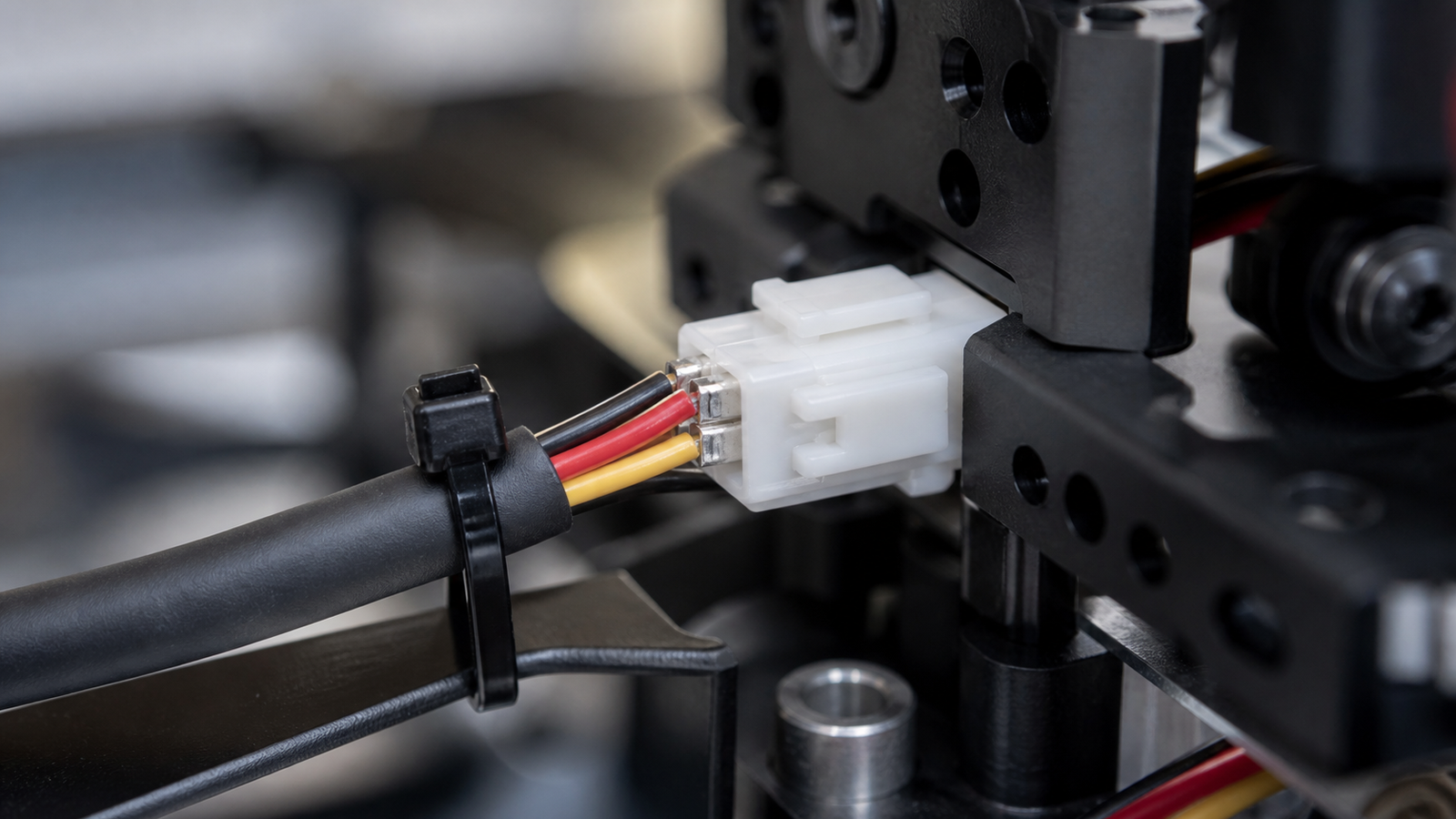
That is valuable for small robot sensors: time-of-flight modules, limit switches, encoders, IMUs, LEDs, and low-current peripherals. A keyed connector can reduce reversed connections when the harness is built correctly.
The risk is overconfidence. Small connectors have current limits, crimp quality requirements, mating-cycle limits, and latch behavior that varies by family. A poorly crimped wire in a neat-looking plug is still a failure waiting to happen.
Where screw terminals help
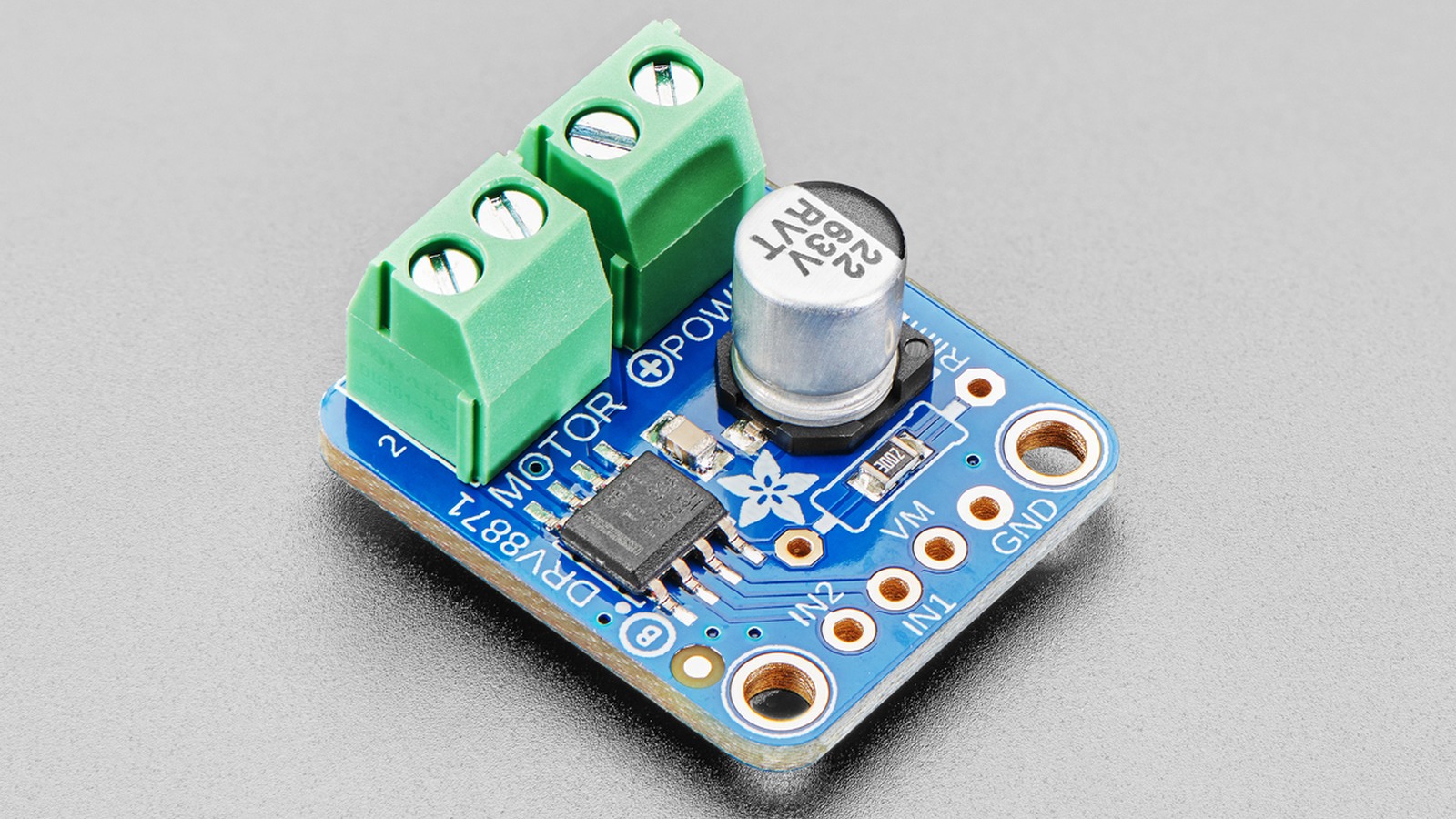
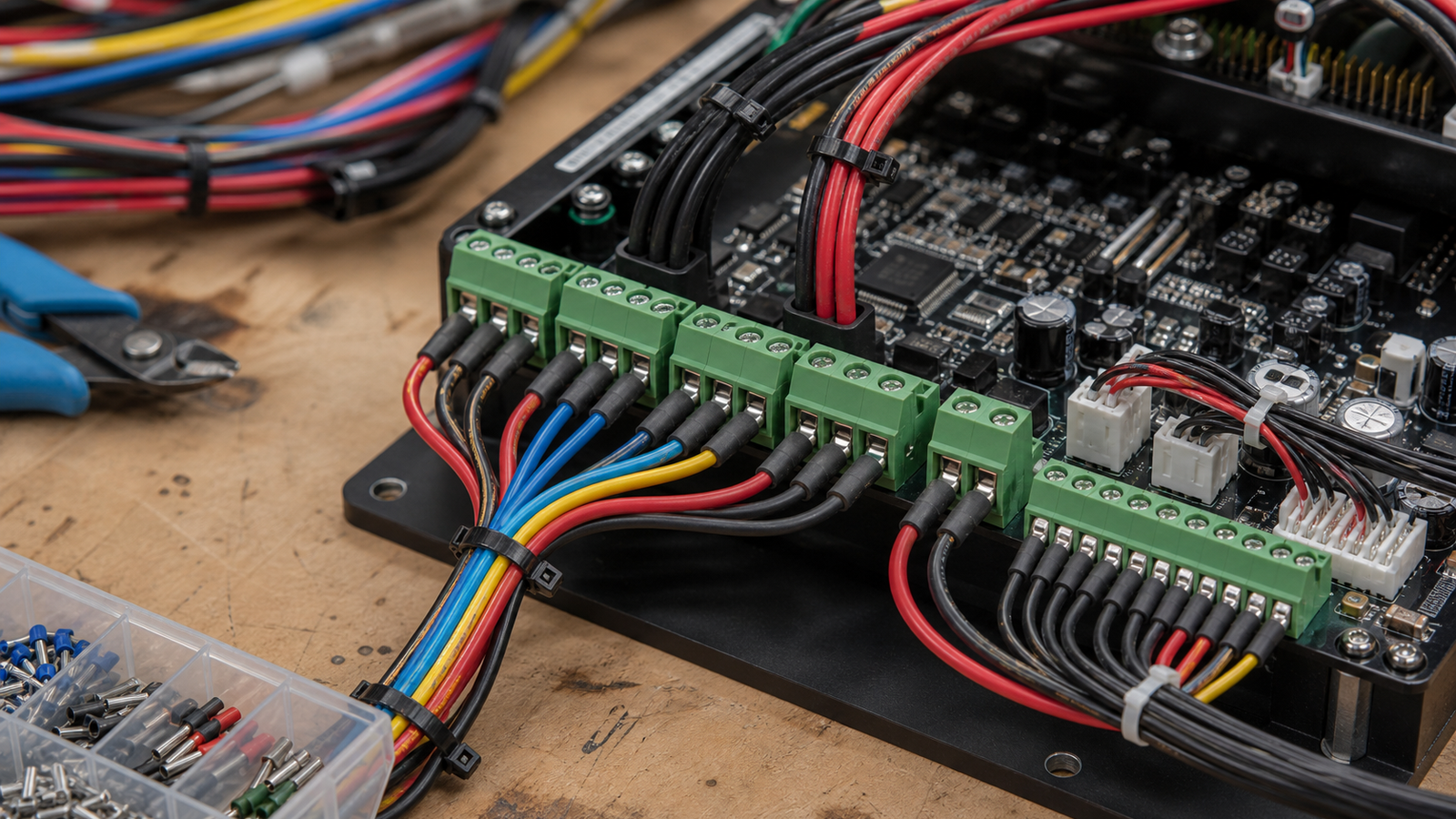
Screw terminals are attractive during prototyping because they accept bare wire ends and make changes easy. Adafruit’s Terminal Block Breakout FeatherWing is one example of how maker boards use terminal blocks to expose connections without soldering every lead.
They are useful for benches, classroom projects, power distribution experiments, and quick sensor swaps. They also make it easy to land different wire lengths while the robot layout is still changing.
The risk is mechanical. A screw terminal can loosen under vibration, clamp on insulation instead of conductor, cut strands, or invite messy wiring if the builder treats it as a permanent harness without strain relief.
Prototype versus field robot
On a first prototype, screw terminals can be faster and more forgiving. Students can move a wire, test a sensor, and see the effect immediately. That feedback loop is useful.
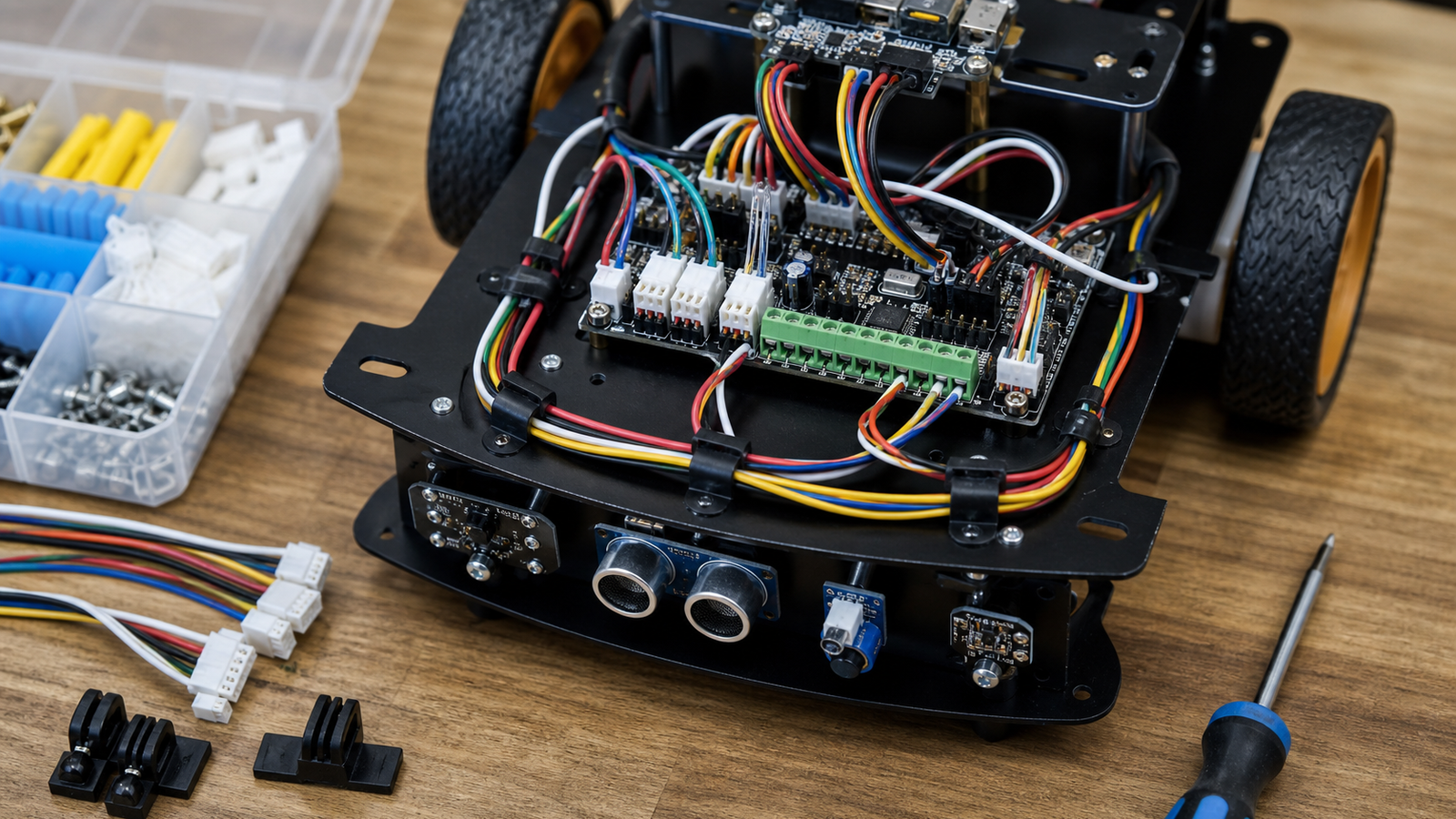
On a robot that will drive, turn, bump, or be handled by many people, a finished harness is usually safer. Pre-crimped leads, keyed connectors, cable clips, and a documented pinout reduce the number of loose-wire surprises.
The transition point is important. Many robots fail because temporary wiring becomes permanent without a design review.
Failure checklist
- Pull test: gently tug each wire and connector after assembly.
- Vibration test: run the robot over the surface it will actually use.
- Service test: unplug and reconnect the sensor without guessing orientation.
- Current check: confirm connector and wire ratings match the load.
- Strain relief: route force into the chassis, not the solder joint or terminal.
- Documentation: photograph the harness and save the pinout.
Connector discipline connects to vision reliability
TVG recently covered MIPI CSI ribbon-cable strain relief and PoE camera cable strain relief. The same principle applies here. Robot reliability is often decided by mechanical details around an electrical connection.
If a sensor connection is allowed to carry chassis motion, it will eventually become a diagnostic problem. The code will look suspicious. The sensor will look suspicious. The connector may be the real fault.
TVG Take
JST-style connectors are better for compact repeatable harnesses. Screw terminals are better for change-heavy prototyping. A disciplined robot build may use both: terminals on the bench, keyed harnesses in the final mobile system, and strain relief everywhere force can reach the wire.