Robot camera calibration is often treated as a setup task. In a classroom, maker lab, or small robotics team, it should be treated as a checklist. Cameras move, lenses get touched, lighting changes, firmware updates land, and a mount that looked solid on the bench can shift after one hard stop.
This article strengthens TVG’s robot-vision cluster alongside our PoE vs USB-C classroom robot camera guide and our Raspberry Pi AI Camera dataset labeling checklist. The core idea is simple: vision reliability depends on repeatable setup, not only model accuracy.
Why calibration drifts
A camera system can drift for ordinary reasons. A student adjusts the mount to fit a new mechanism. A lens cover gets smudged. A field is brighter in the afternoon than in the morning. A USB cable wiggles just enough to cause dropped frames. A target moves by a few centimeters. None of those failures look dramatic, but they can make a robot miss a tag, misread distance, or chase a false detection.
Calibration also has two meanings. One is mathematical: lens distortion, camera matrix, focal length, and the relationship between the camera and the robot frame. The other is operational: is the camera still mounted, focused, exposed, and timestamped the same way it was when the team tested it?
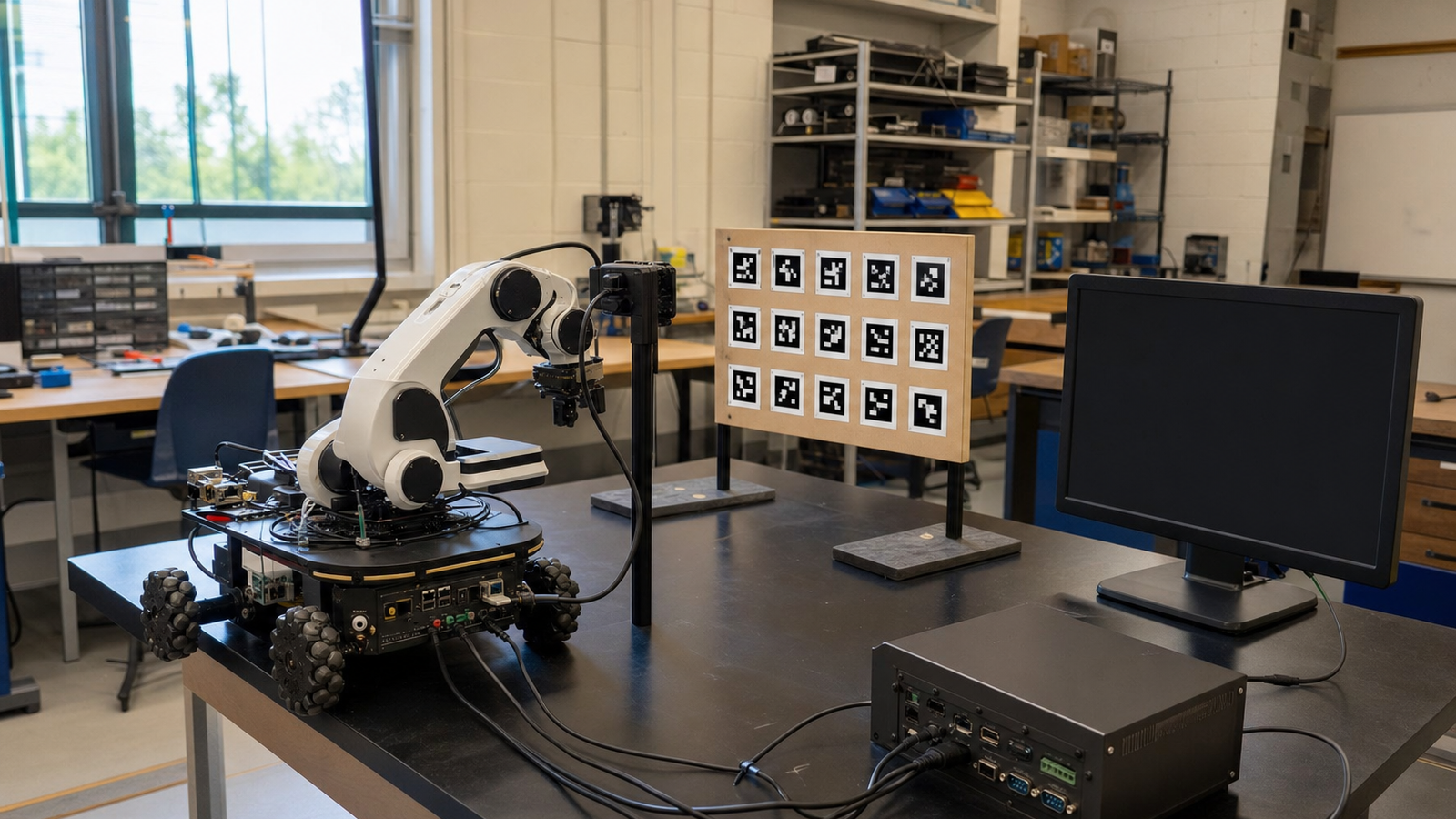
A practical calibration checklist
- Mount: verify the bracket is tight and the camera angle has not changed.
- Lens: clean the cover and check focus before blaming software.
- Lighting: test in the same lighting range expected during operation.
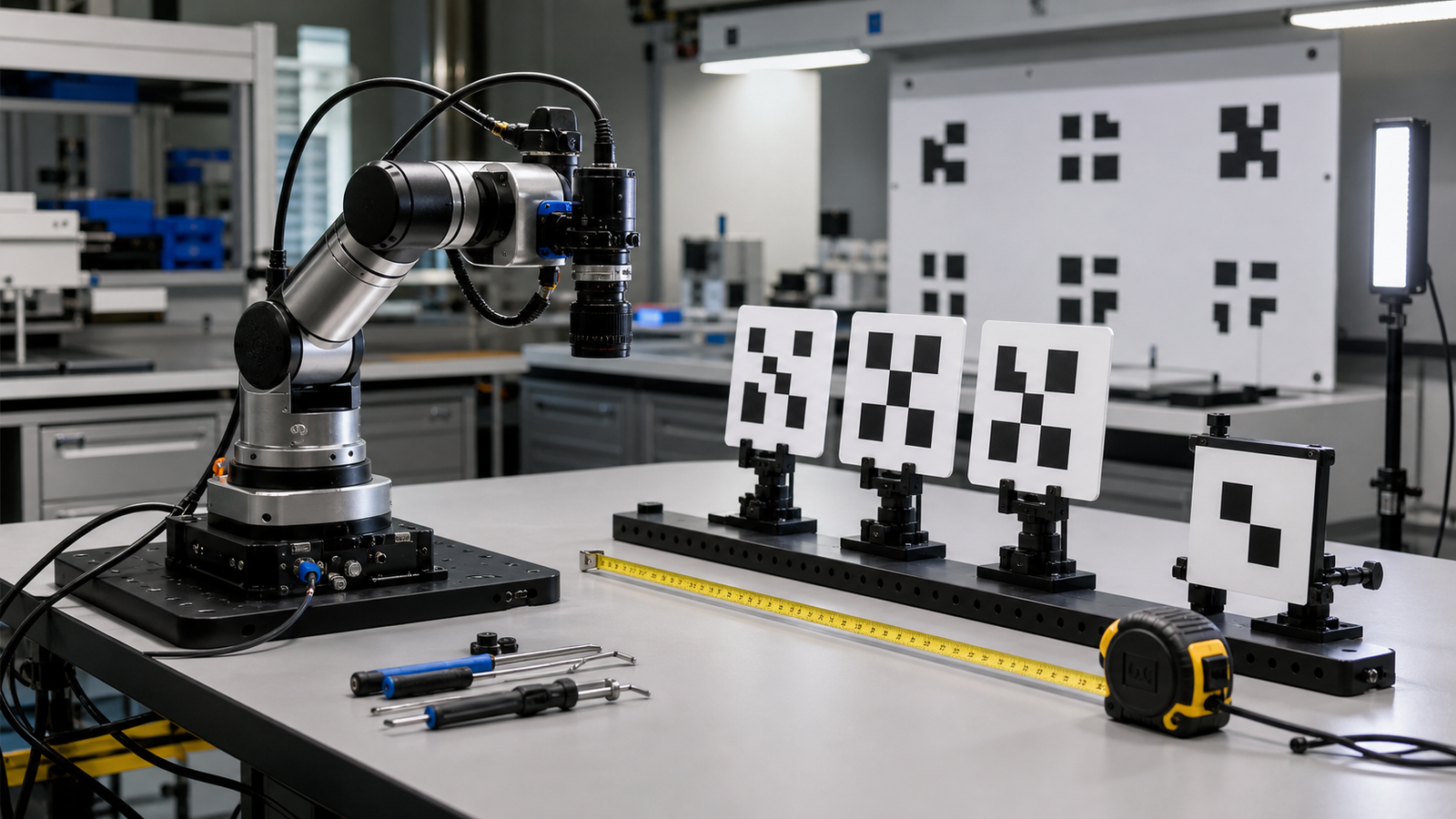
- Targets: measure target height, spacing, and field placement.
- Timestamps: confirm frames and robot state are aligned closely enough for control decisions.
- Bandwidth: check resolution, frame rate, cable quality, and CPU load together.
- Logs: save at least one known-good run for comparison.
OpenCV’s camera calibration documentation explains the mathematical side of calibration. Robotics teams using AprilTags can also use the WPILib AprilTag documentation as a reference point for target-based workflows.
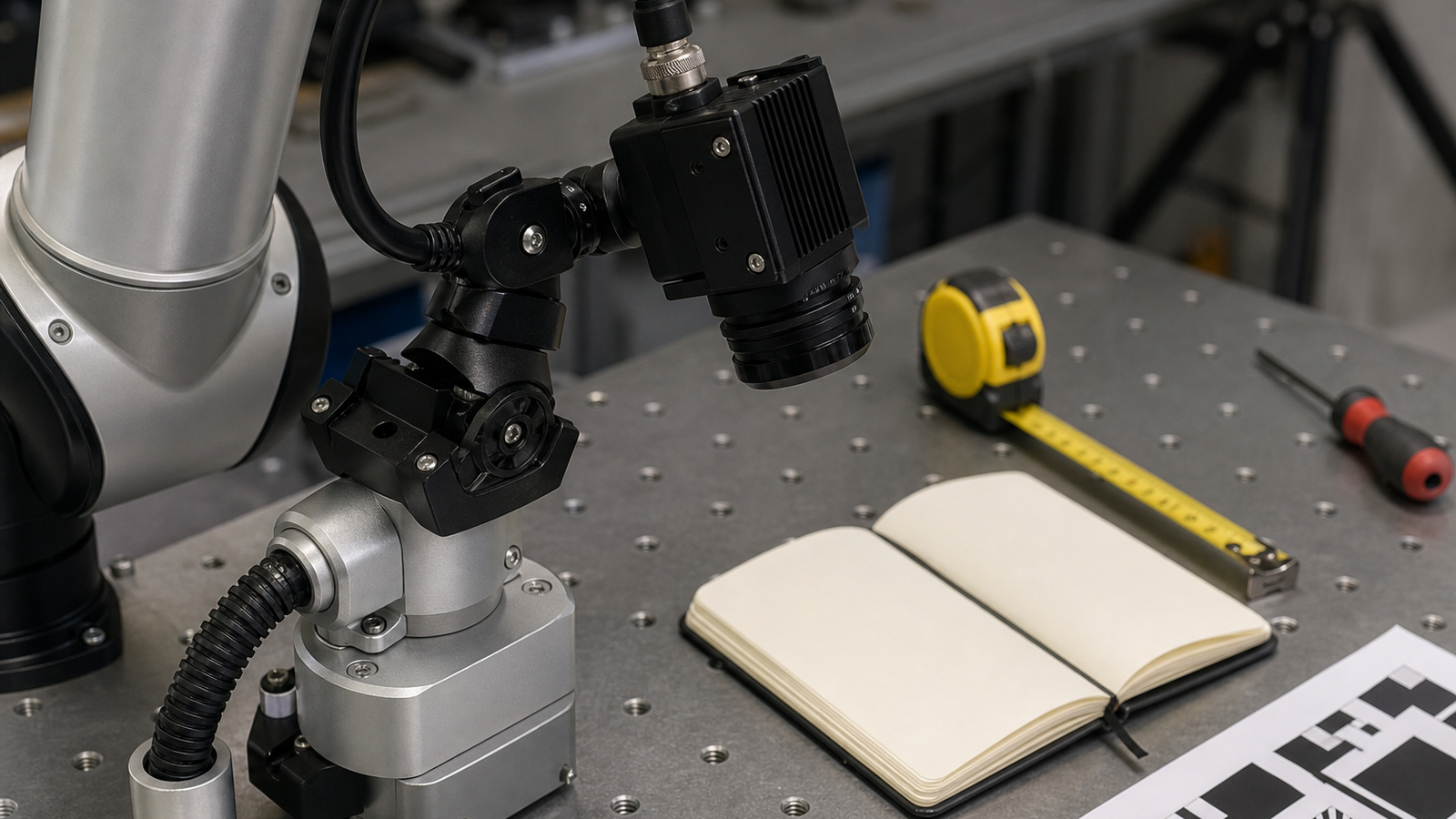
When to re-check
Teams should re-check calibration before major tests, after transport, after any camera or mount change, after software updates that affect vision settings, and after repeated unexplained misses. The checklist should be short enough that students will actually use it.
A good practice is to create a two-minute pre-run routine: inspect mount, clean lens, verify target detection from a known distance, record frame rate, and save a short log. If the robot fails later, the team has a baseline instead of a memory.
TVG Take
Robot vision fails in physical ways before it fails in glamorous AI ways. A classroom team that keeps a calibration checklist will learn more from failures because it can separate model problems from mounting, lighting, timing, and wiring problems. That is the difference between debugging and guessing.
Separate software confidence from physical confidence
A detector can report high confidence while the physical setup is still wrong. The camera may see the target clearly, but the robot may have the wrong camera-to-robot transform, a delayed timestamp, or a mount that changed angle after a collision. Students should learn to question both the software result and the physical assumptions behind it.
One useful habit is to keep a known-good image set. Save a few frames from the correct distance and lighting, then compare new runs against that reference when the robot starts missing targets. If the new frames look different, fix the physical setup before rewriting the vision code.
Make the checklist student-owned
The checklist works best when students maintain it, not when a mentor keeps it hidden. Give one student ownership of camera mount inspection, another ownership of target measurement, and another ownership of logs. Rotating those roles turns calibration from a mysterious adult task into normal engineering practice.