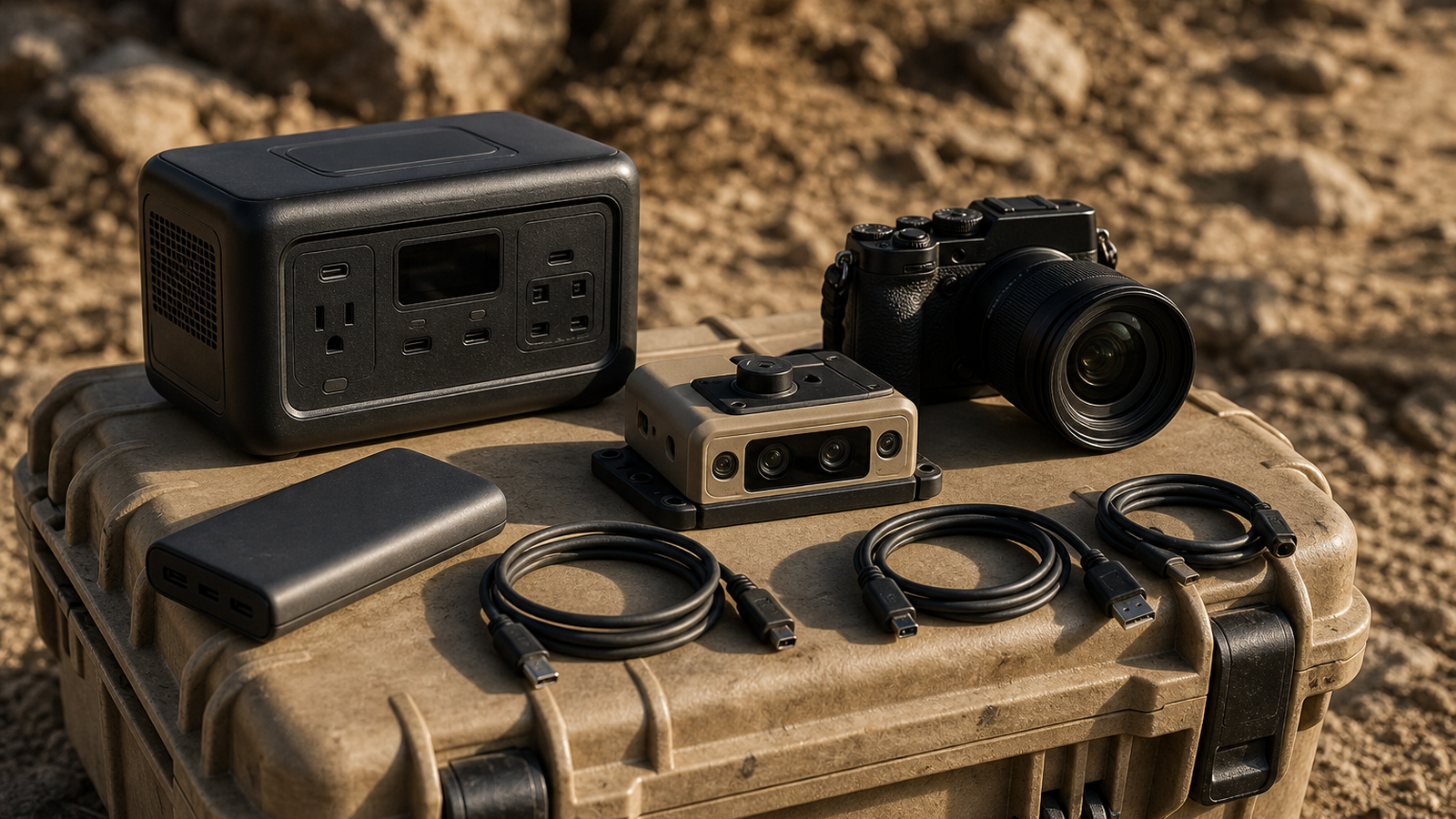
A field robot demo can be ruined by a battery choice that looked fine on paper. A USB-C PD battery pack and a portable power station may both advertise impressive watt-hours, but they serve different jobs. The decision should start with the load: what needs power, how many watts it draws, how long it must run and which connectors can safely carry that load.
The USB Implementers Forum describes USB Power Delivery as a charging specification for compatible USB devices, while USB Type-C defines the connector and cable ecosystem around modern USB power and data. Portable power stations add AC outlets, DC outputs and larger batteries, but that extra flexibility also adds size, charging time and cable-management risk.
When USB-C PD is enough
USB-C PD battery packs are strongest when the field kit is small: a phone, tablet, compact camera, single-board computer, portable monitor or travel router. The benefits are obvious. The pack is light, quiet and easy to recharge. Cables are simple if every device negotiates power correctly.
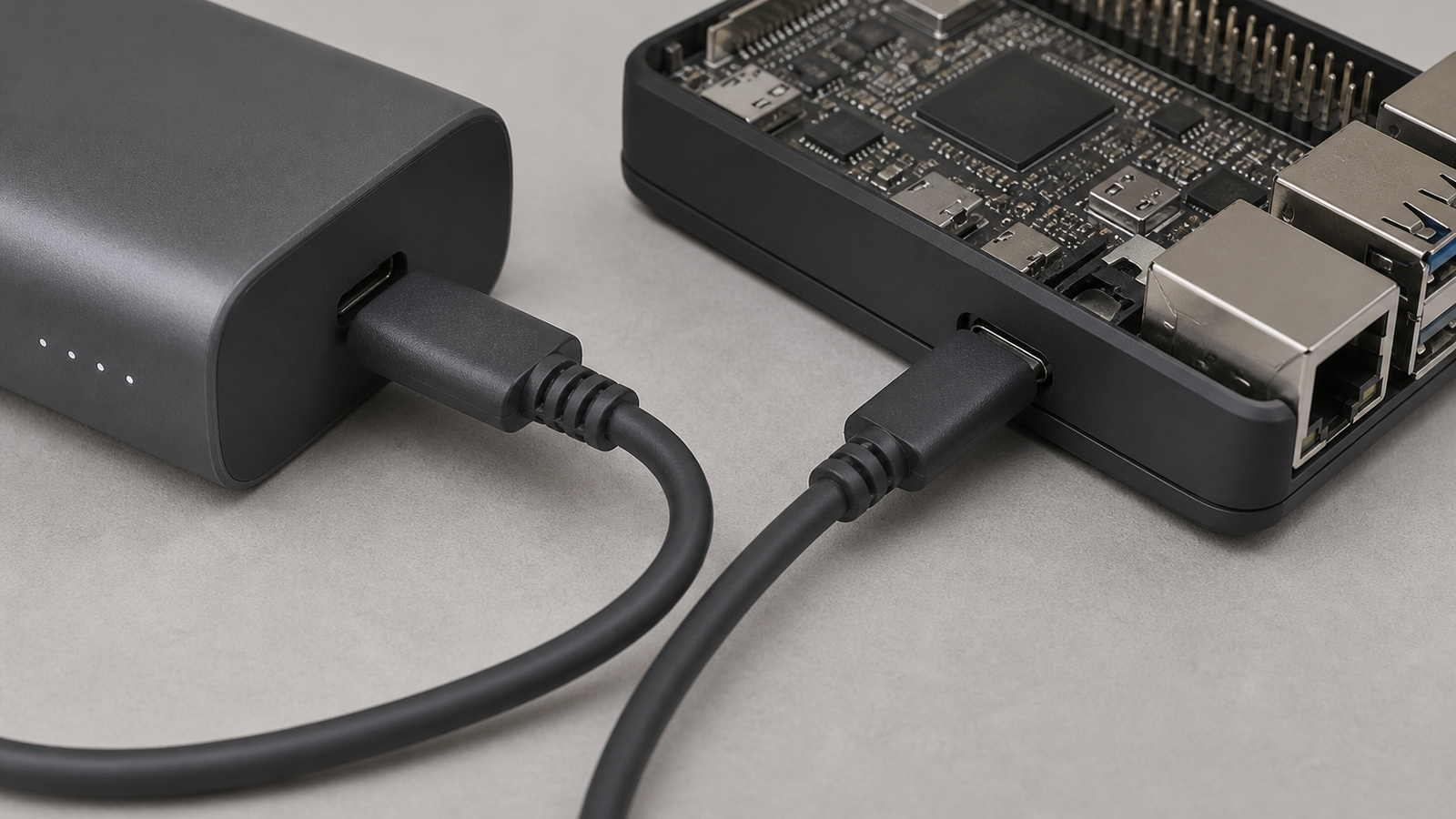
The risk is assuming every USB-C port behaves the same. Some devices need a specific voltage or wattage level. Some cables are charge-only or not rated for higher power. A maker lab should label known-good cables and test the full run before an event day.
When a power station makes sense
A portable power station becomes more useful when the kit includes mixed loads: LED lighting, a router, camera chargers, a small monitor, a soldering station used briefly or equipment that still depends on AC adapters. The station can simplify a booth or field table, but it can also create a messy hub of plugs if the layout is not planned.
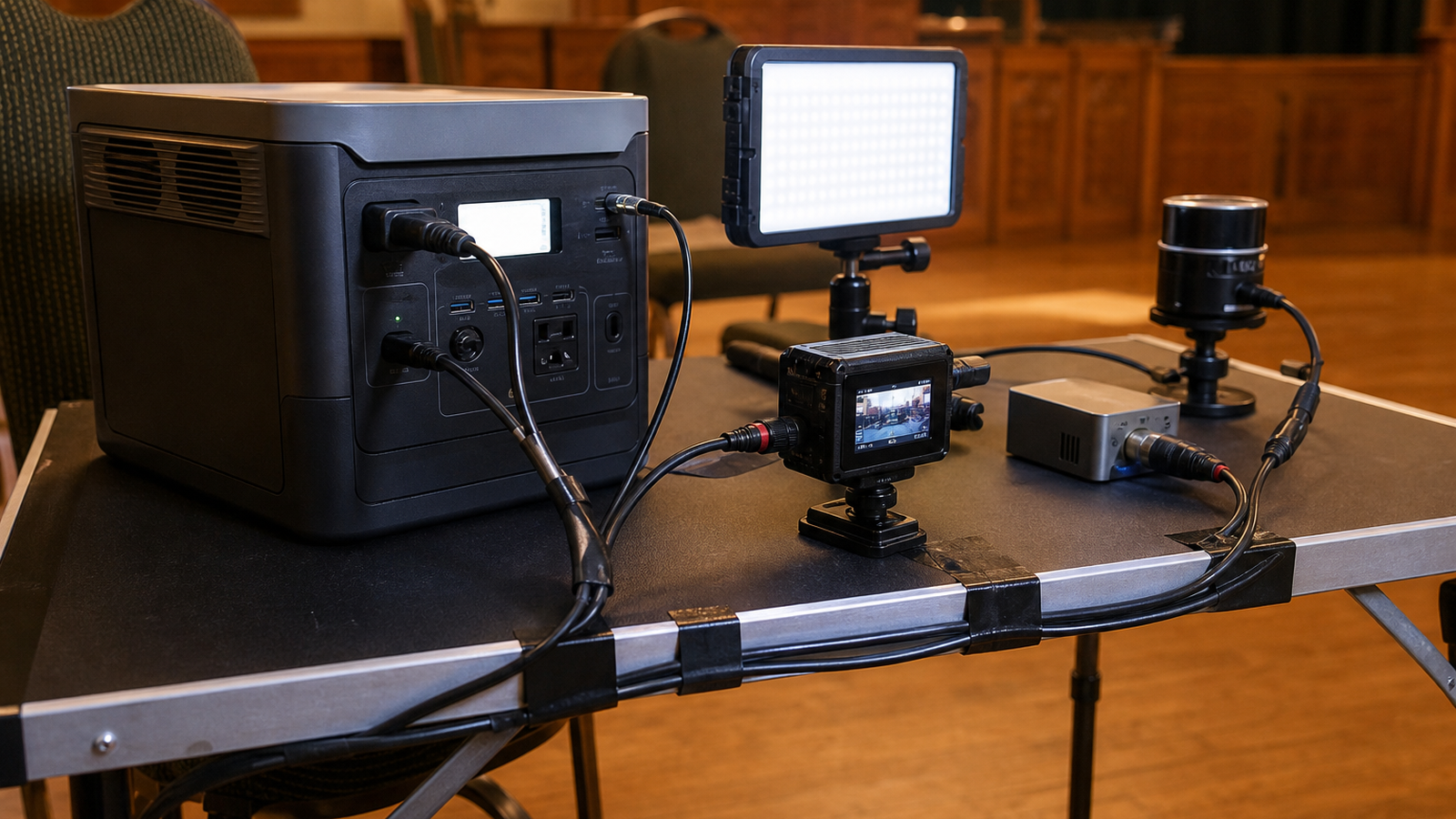
- Add watts first: list every device and its realistic draw.
- Check peak loads: motors, lights and chargers may spike above their average draw.
- Plan recharge time: a large battery is not useful if it cannot recover before day two.
- Route cables safely: keep walkways, wheels and tripod legs clear.
- Bring a fallback: critical recording or networking gear should not share one single failure point.
Build a runtime worksheet
The simplest planning tool is a worksheet with four columns: device, expected watts, connector and required runtime. A camera that draws a few watts, a router that needs steady power and a monitor that spikes when brightness is raised should not be treated as one generic load. Add the numbers, then add margin. Batteries age, temperature changes performance and cheap cables create voltage-drop surprises.
Safety matters at booths and field events. OSHA’s electrical guidance is not written for maker demos specifically, but its emphasis on electrical hazards is a useful reminder: extension cords, adapters and power strips should be routed and inspected deliberately. A clean power plan prevents both data loss and trip hazards.
For repeat events, keep the worksheet with the gear. The next setup should begin with measured loads and known-good cables, not another guess at the table.
TVG Take
For field technology, buy the power architecture, not the biggest number on the box. USB-C PD is the clean choice for compact kits with known-good devices and cables. A portable power station is better for mixed loads and longer events. In both cases, the engineering habit is the same: measure, label, rehearse and leave margin.
Related TVG reading: portable SRT and NDI encoder field-production checklist.