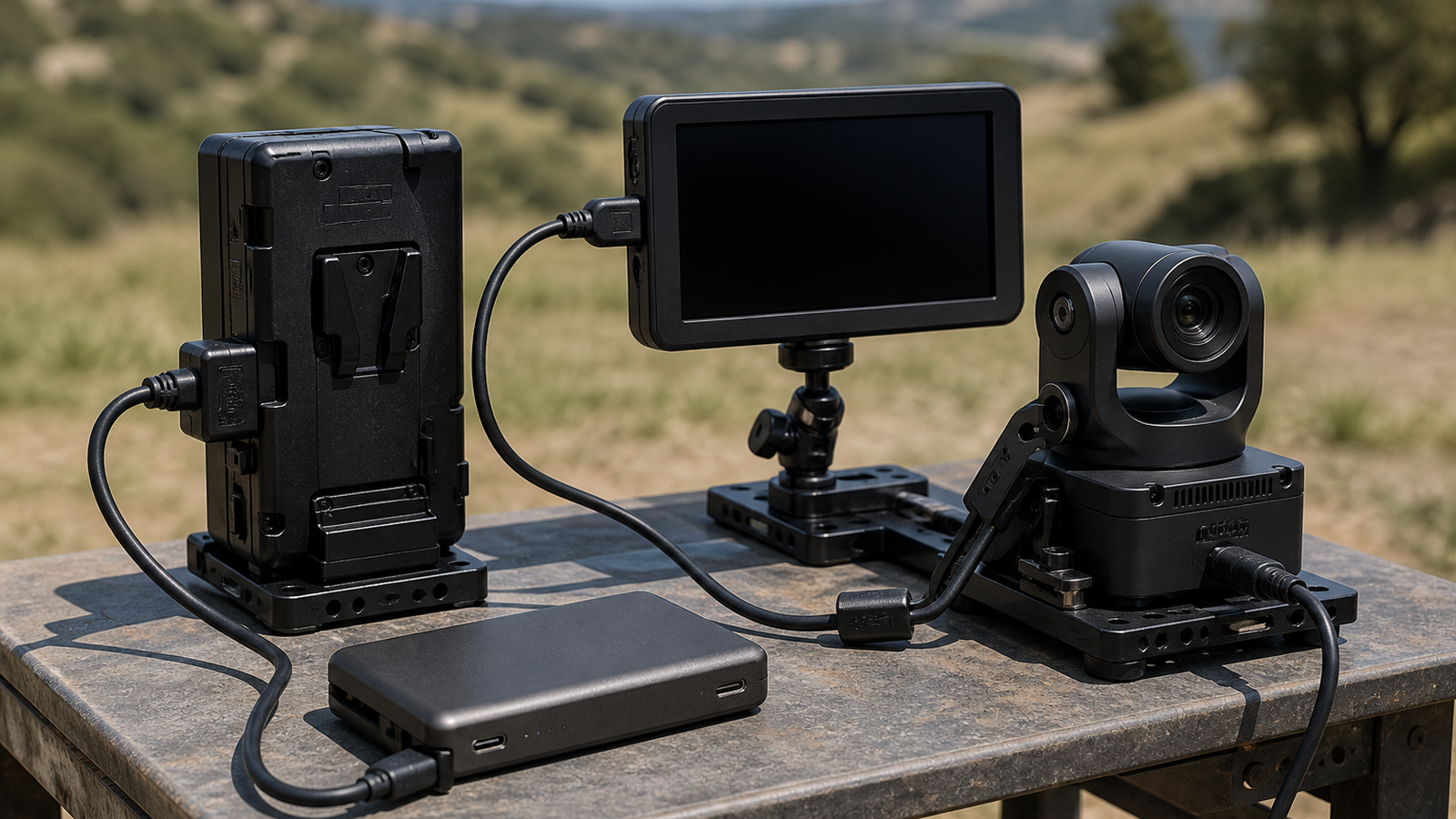
USB-C power banks and V-mount batteries often appear in the same field kit, but they solve different problems. One is built around portable consumer-device charging. The other comes from professional camera and production workflows where mounting, higher capacity, and accessory rails matter.
For field robots, camera rigs, portable monitors, and maker-lab dashboards, choosing between them is not about which battery looks more serious. It is about voltage, connectors, mounting, runtime, and what happens when a cable gets bumped.
Quick answer
Use a USB-C PD power bank for simple, portable, low-to-medium power devices that negotiate cleanly over USB-C. Use a V-mount-style battery setup when the rig needs secure mounting, multiple outputs, longer runtime, and a more production-oriented accessory ecosystem. For robots, add strain relief, fusing where appropriate, and a fallback plan instead of trusting any battery as plug-and-forget.
Where USB-C PD fits
The USB Implementers Forum positions USB Power Delivery as a standard for higher-power charging and power negotiation over USB-C. That makes USB-C PD attractive for portable monitors, small computers, phones, tablets, lights, and some camera accessories.
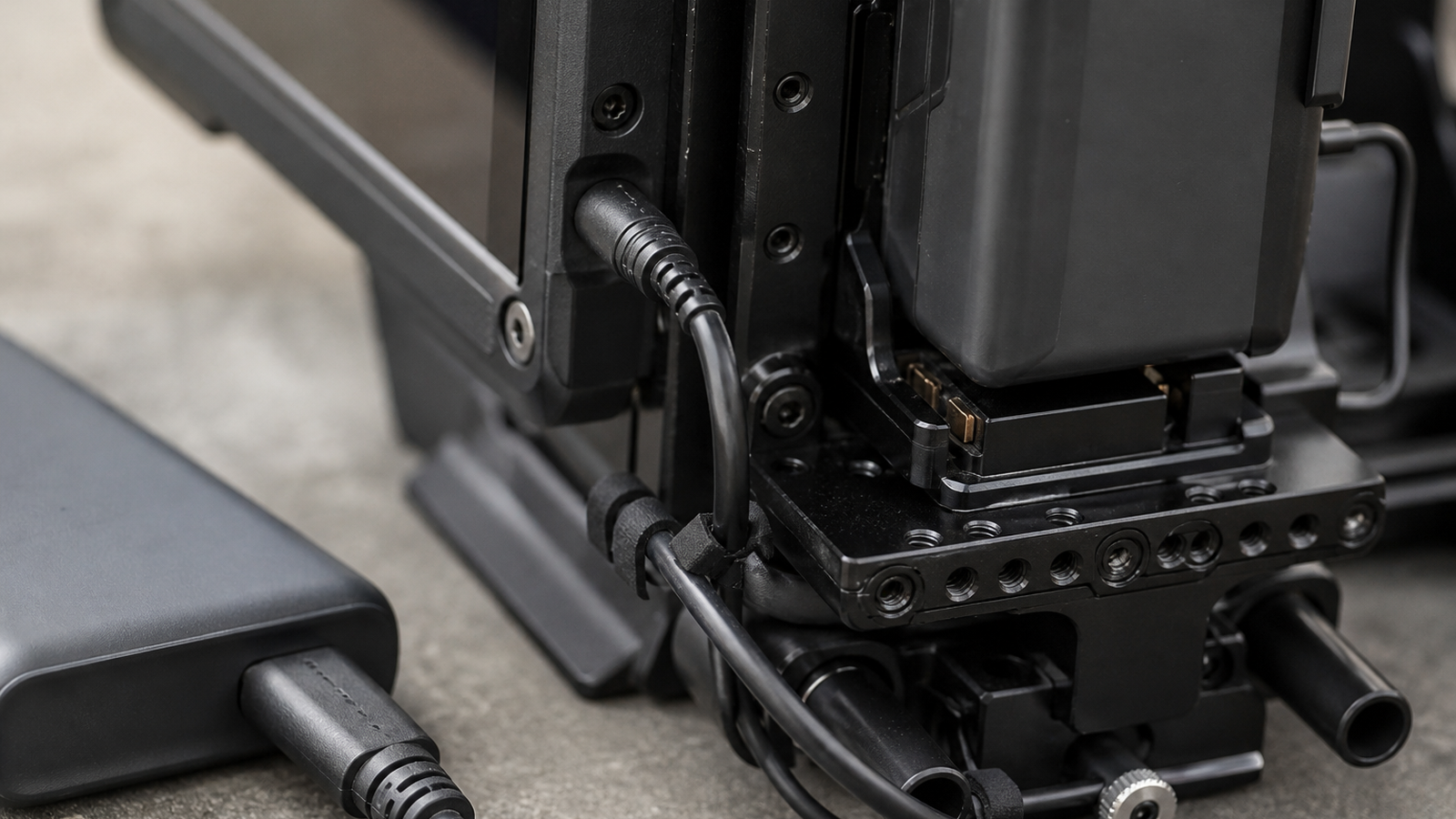
The strength is convenience. A good PD bank can be thrown into a bag and used across several devices. The weakness is that the connection is still a small reversible plug that can be stressed by robot motion, field handling, or dangling adapters.
Where V-mount batteries fit
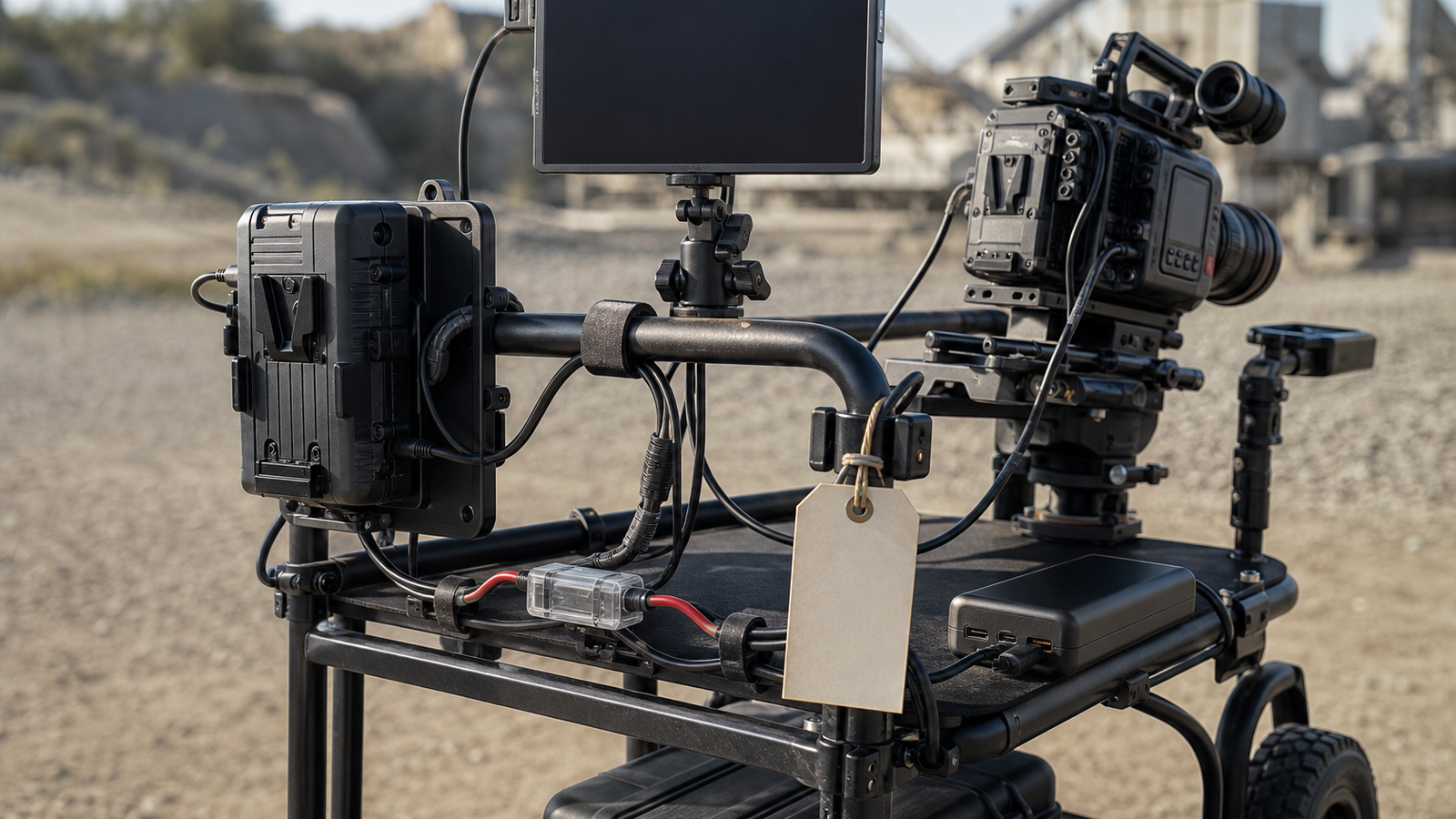
V-mount batteries are common in video production because they attach to plates and rigs, provide higher-capacity options, and often feed multiple accessories. For a robotics documentation cart or field test stand, that can be useful: one mounted battery can power a monitor, recorder, wireless video gear, or lighting.
The tradeoff is complexity. Plates, D-Tap-style outputs, barrel adapters, USB-C ports, and charger choices add more ways to make a wiring mistake. A field team should know which output voltage each device expects and how the rig behaves when one accessory is unplugged.
Decision checklist
- Voltage: confirm each device’s required input and avoid mystery adapters.
- Power negotiation: USB-C PD devices may not request the profile you expect through every cable.
- Mounting: a robot or camera mast needs retention and strain relief, not a battery swinging by a cable.
- Runtime: estimate actual draw from monitor brightness, camera mode, radio gear, and mini PC load.
- Safety: keep batteries protected from impacts, shorts, heat, rain, and cable strain.
- Dashboard use: compare power planning with TVG’s portable monitor vs tablet robot dashboard guide.
TVG Take
For maker teams, the best battery is the one whose failure mode you understand. USB-C PD is excellent for simple portable rigs. V-mount systems are better for structured field carts and production-style setups. Neither replaces power budgeting, connector discipline, and a cable plan that survives motion.
Runtime math without false precision
Teams should estimate runtime with a margin instead of copying the battery label into the plan. A monitor at full brightness, a camera recording high-bitrate video, a wireless link, and a mini PC can draw far more than a casual bench test suggests. Cold weather and aging cells also reduce available capacity.
A useful field rule is to test the full rig for the length of a real session before the event day. Leave the camera recording, run the monitor at the brightness you will use outdoors, move the cart or robot so cables flex, and confirm that the system shuts down safely when power is removed. That test catches loose connectors and weak adapters before they become lost data.