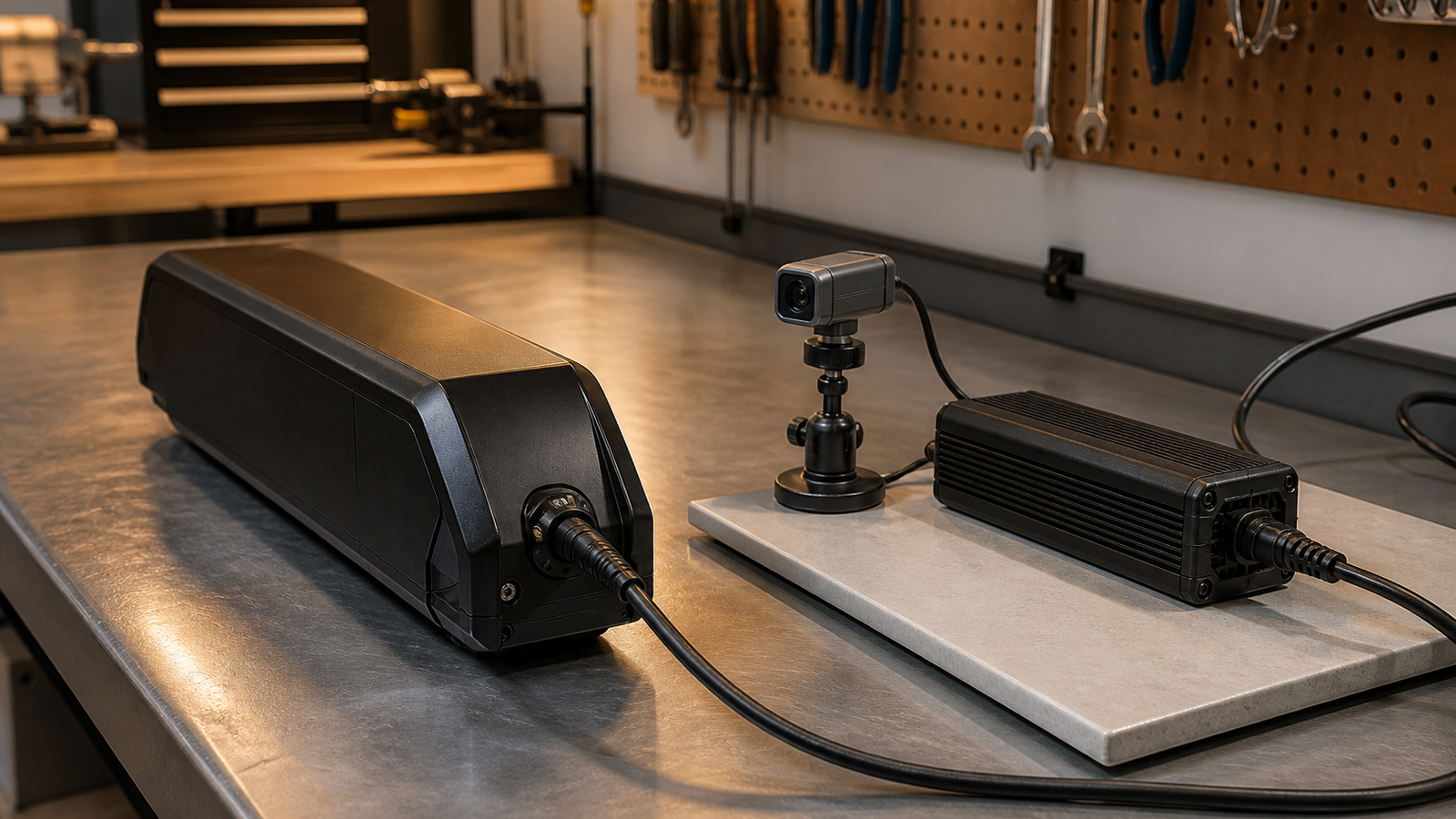
E-bikes are transportation technology, but many of their charging problems show up in maker garages. The same room may hold 3D printers, Li-ion tool packs, soldering gear, chargers, extension cords, filament dryers, and a workbench full of projects.
That makes e-bike battery charging a workshop-system question, not just a question of finding an open outlet.
Quick answer
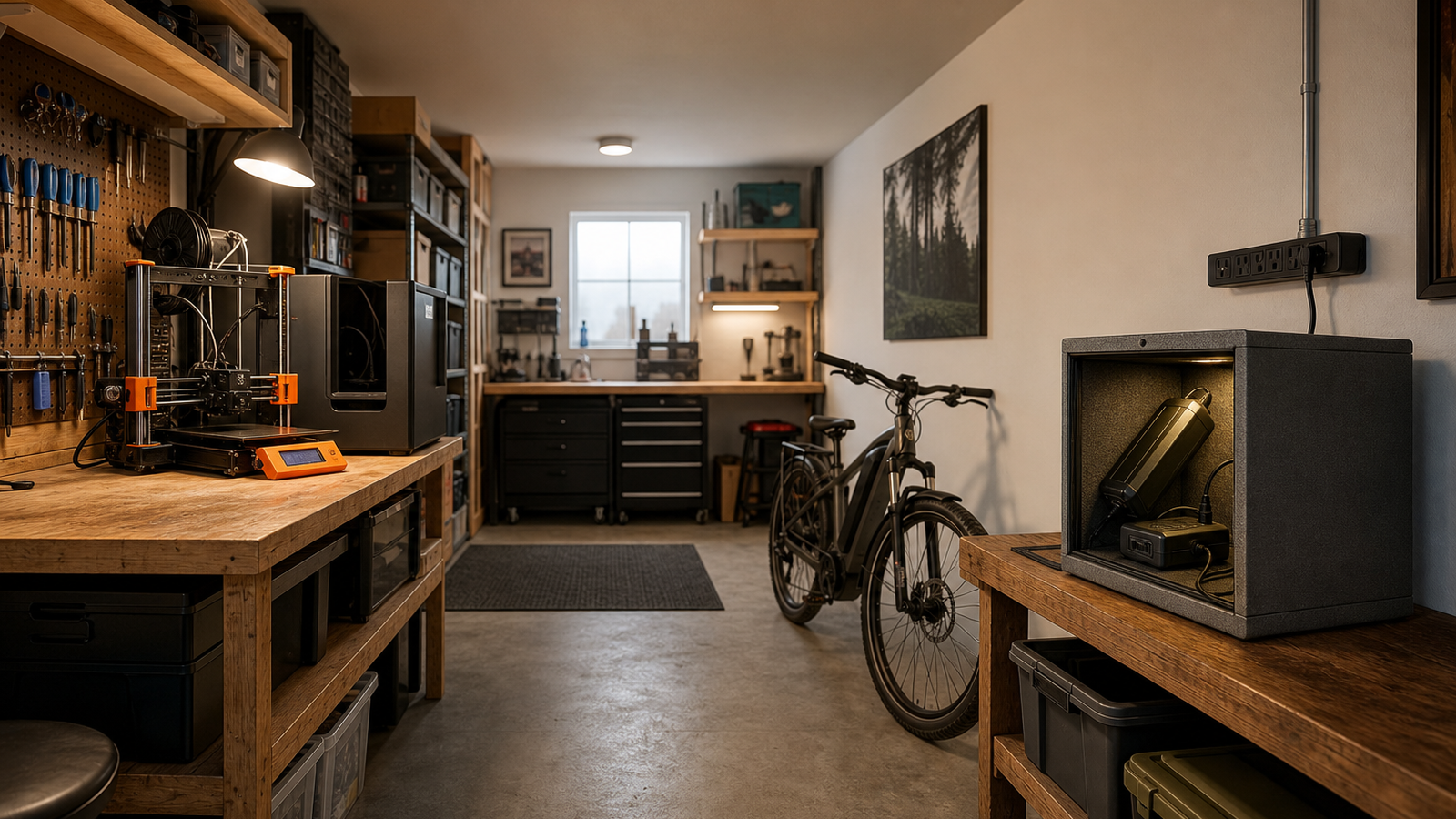
Create a dedicated charging spot with airflow, stable placement, cable strain relief, clear separation from clutter, and a habit of using the manufacturer’s charger. Do not charge damaged packs, do not bury chargers under gear, and do not let the e-bike battery share a chaotic bench with hot tools, solvents, loose metal parts, or printer enclosures.
Why maker garages are different
Bosch’s e-bike battery guidance emphasizes using appropriate chargers and caring for batteries as systems, not loose cells. UL Solutions also treats micromobility safety as a testing and certification problem because batteries, chargers, and devices interact.
A maker garage adds risk because it contains many other electrical and thermal loads. A printer enclosure may run for hours. A soldering station may be left hot. A tool battery may be charging from the same outlet strip. None of these automatically make e-bike charging unsafe, but they make organization more important.
Workbench rules
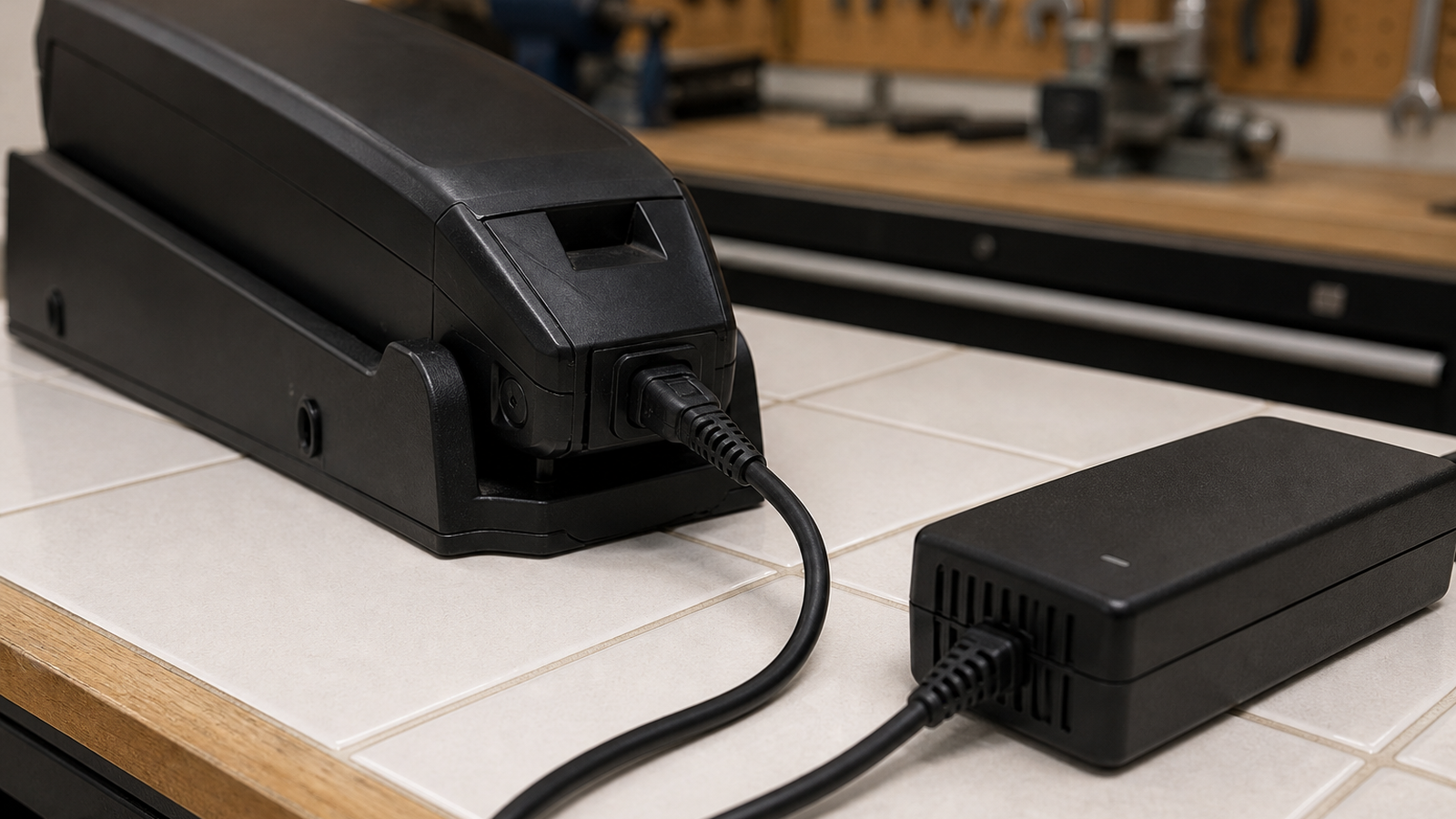
- Use the correct charger: do not improvise around voltage, connector, or current limits.
- Keep the charger visible: avoid covering charger bricks or placing them in sealed boxes while operating.
- Separate heat sources: keep packs away from soldering irons, heaters, printer enclosures, and direct sunlight.
- Route cables cleanly: prevent trips, wheel snagging, and connector strain.
- Inspect before charging: swelling, impact damage, water exposure, or unusual heat should stop the routine.
- Document the setup: a shared garage needs simple rules everyone follows.
How this connects to maker projects
TVG recently covered e-bike torque sensors vs cadence sensors because e-bikes are a practical robotics-adjacent system: sensors, controllers, motor response, firmware, and batteries all meet in one product. Charging deserves the same engineering mindset.
If a garage is used for youth robotics, classroom builds, or shared projects, the charging station should be separated from student work areas and treated as part of the lab layout.
TVG Take
E-bike batteries are useful technology, not mystery bricks. Treat them with the same discipline you would apply to a robot power system: correct charger, clear wiring, temperature awareness, physical protection, and a defined place in the workshop. The goal is not fear. The goal is a charging routine that survives real garage behavior.
What not to combine
The charging station should not be the same surface used for soldering, solvent work, grinding, or printer maintenance. Loose screws, metal tools, hot nozzles, and cluttered extension cords create avoidable problems. A simple metal shelf, clear bench area, or manufacturer-approved storage position is better than a crowded project table.
Shared garages also need a human routine. Decide when packs are charged, who checks them, where the charger lives, and what counts as a stop condition. Unusual heat, smell, swelling, damaged connectors, impact marks, or water exposure should end the normal routine and move the pack out of casual use until it can be evaluated safely.