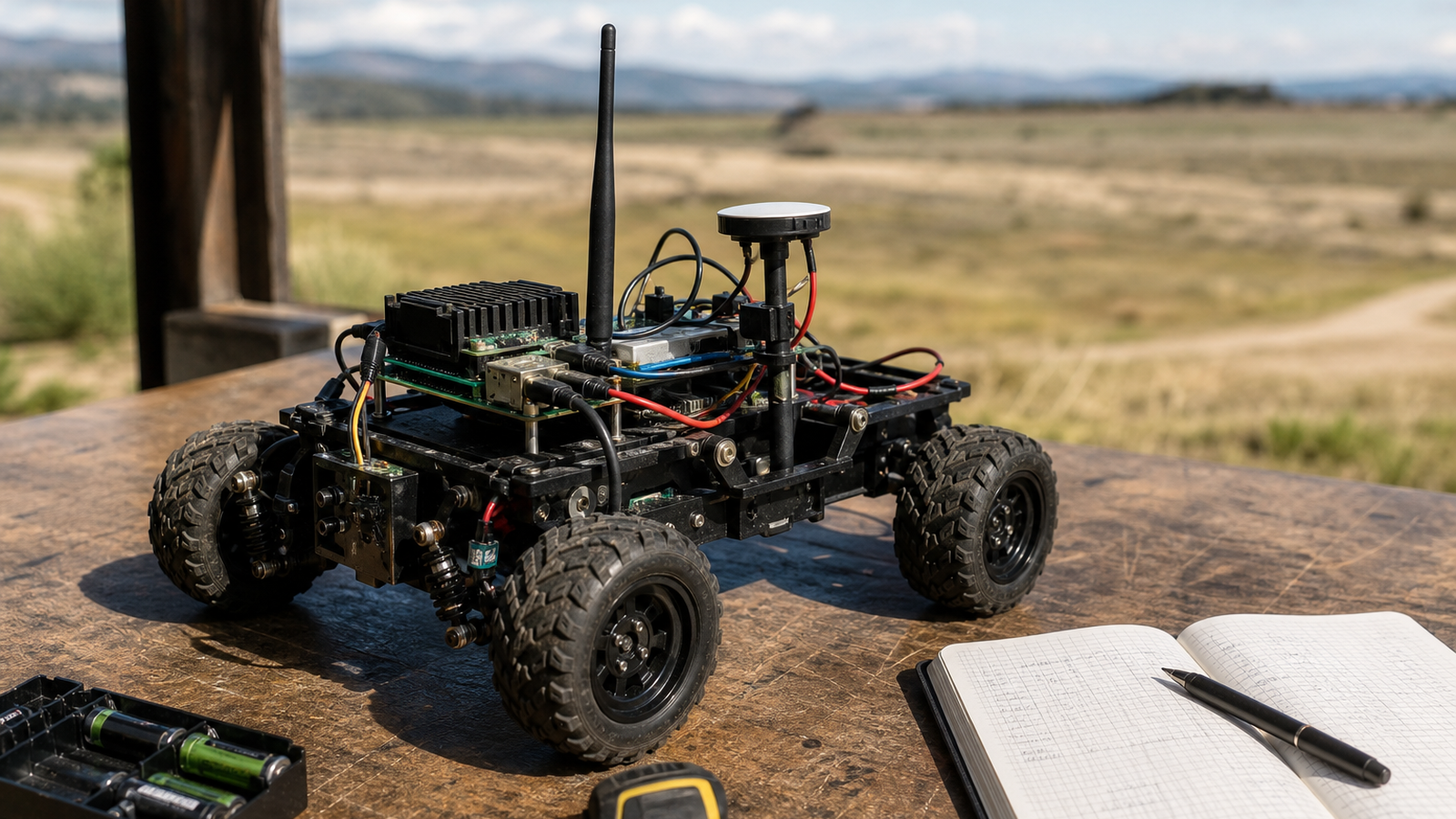
Raspberry Pi’s news feed this week highlighted LoRa radio communication hardware for Raspberry Pi projects, a small announcement in product-news terms but a useful reminder for robotics and STEM teams: not every field link should be treated like Wi-Fi.
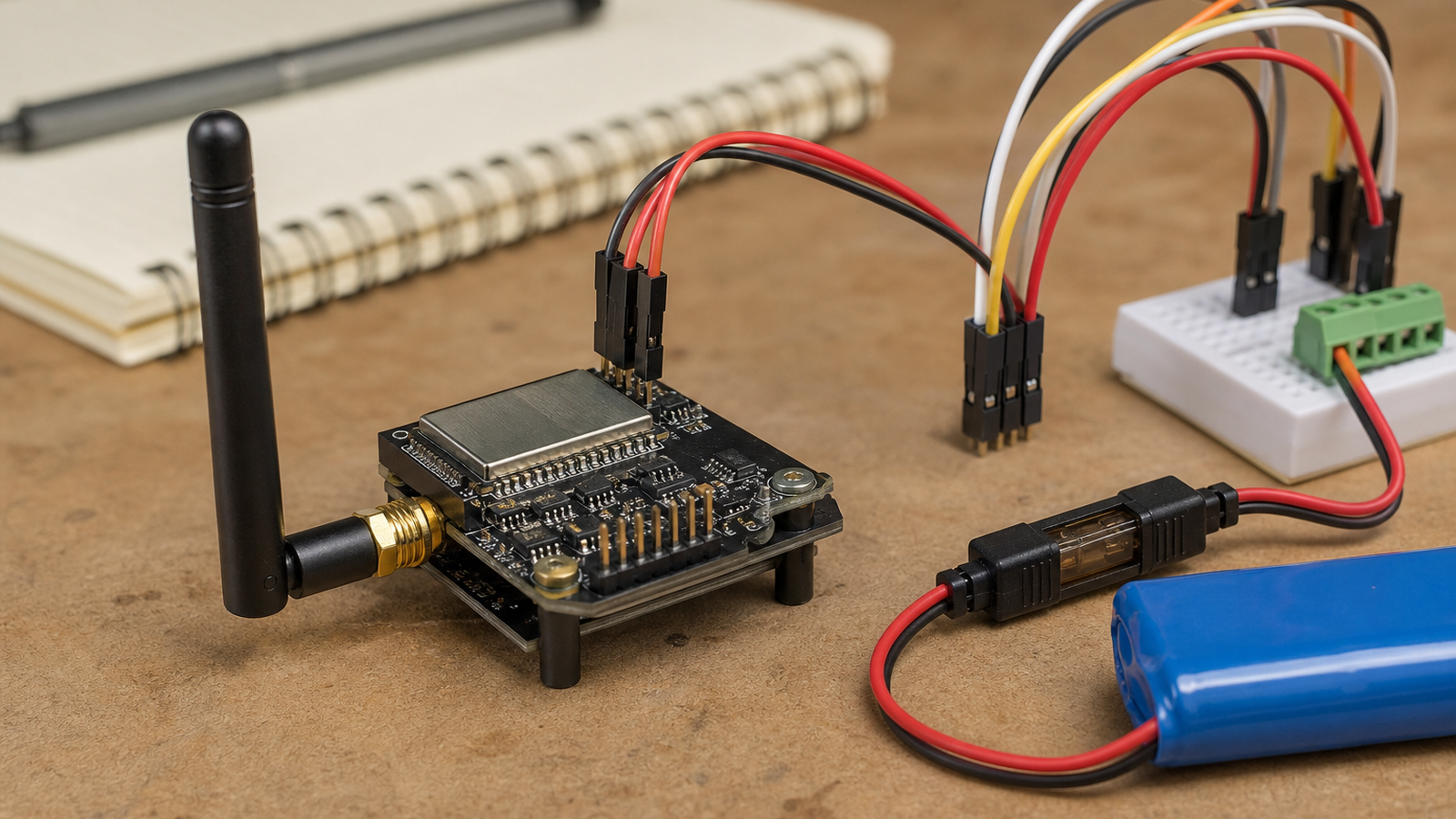
The Raspberry Pi post describes third-party LoRa radio devices built for Pi-based projects. LoRa is not a high-throughput video link. Its value is the opposite: low data rate, long range, and resilience in places where a normal access point is unavailable or badly placed.
For TVG readers building small field robots, weather stations, rover projects, or outdoor STEM demonstrations, that distinction matters. A camera stream, SSH session, and telemetry heartbeat do not belong on the same assumptions sheet.
Why it matters
Recent TVG coverage has looked at RTK GNSS validation for small field robots and connector failures in robot battery systems. Communications deserves the same practical treatment. A robot that navigates outdoors can lose video and still be safe; it should not silently lose stop commands, health status, or position breadcrumbs.
LoRa-style links are usually best thought of as a control and telemetry layer, not a replacement for broadband networking. That means the project plan should decide early what gets sent over the long-range channel: battery state, GPS fix status, mode, error codes, and a few operator commands.
The engineering tradeoff
The good news is that a low-data radio path can be easier to reason about than a congested Wi-Fi link. Packets are small. Expectations are clear. Range can be tested with a walking survey instead of guessed from a router spec sheet.
The hard part is discipline. If a maker team keeps adding payload fields until the link behaves like a tiny internet connection, the design loses its advantage. LoRa-style systems are usually strongest when messages are short, infrequent, and tolerant of retries.
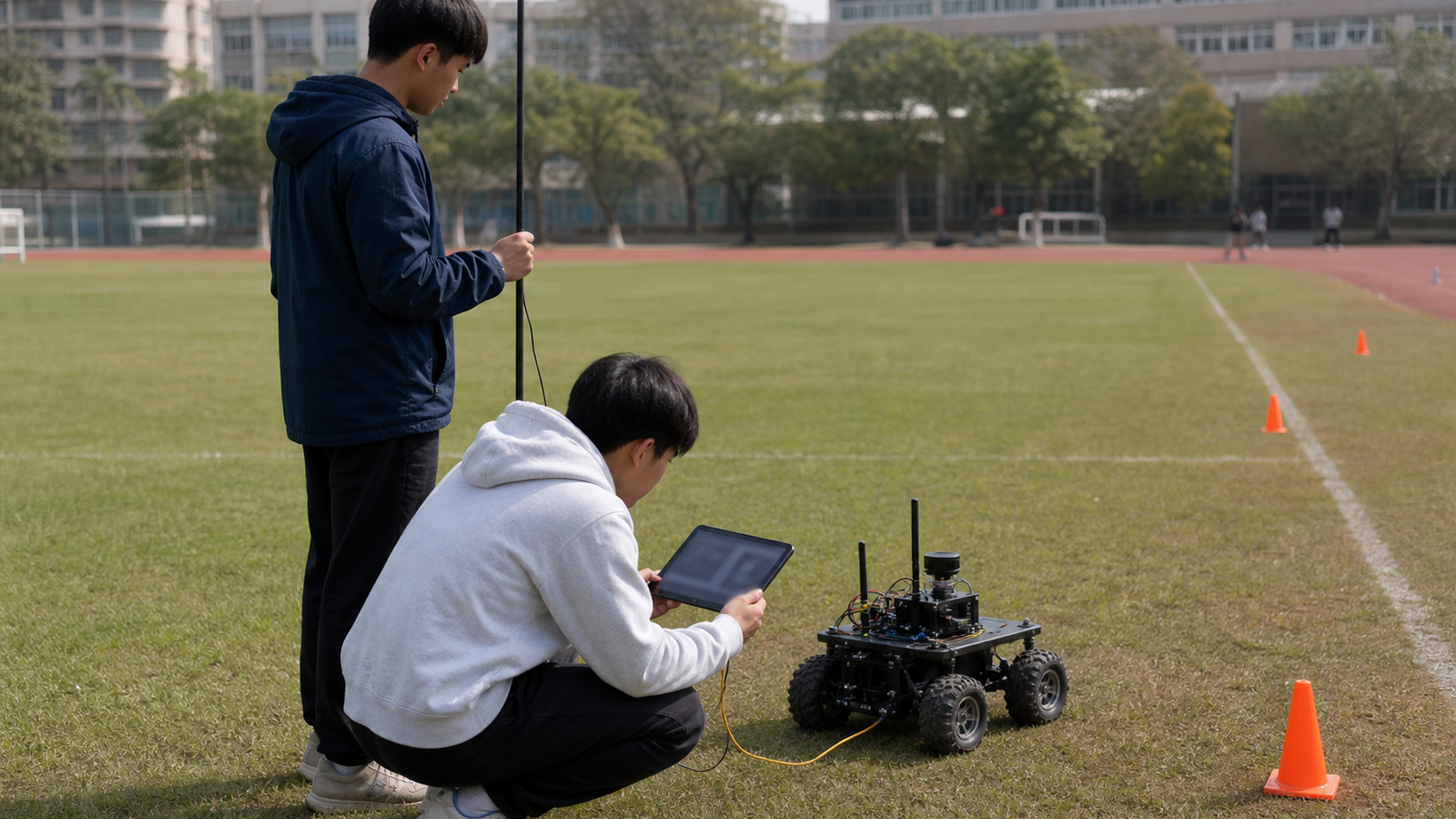
A practical field-robot test should log packet interval, missed messages, antenna orientation, battery voltage, and the robot’s location when the link degrades. Teams should also test body blocking, wet grass, low antenna height, and nearby buildings. Those details often matter more than the module name.
What to test before trusting it
- Minimum telemetry message: mode, battery, fix status, and stop/hold state.
- Loss behavior: what the robot does after missed packets.
- Antenna placement: height, ground clearance, and cable strain relief.
- Power budget: radio current during transmit bursts, not just idle draw.
- Operator workflow: whether the person in the field can understand degraded-link warnings quickly.
TVG Analysis
The useful takeaway is not that every Raspberry Pi robot needs LoRa. It is that field robotics needs a layered communications plan. Wi-Fi can serve development and high-bandwidth tasks. A lower-bandwidth radio path can carry safety and status signals when the robot leaves the bench.
What remains unknown from the public product-news view is how each specific accessory handles power, drivers, antenna quality, regional frequency rules, and documentation. TVG will watch for Pi-compatible hardware that makes those constraints easier for student and maker teams to validate, not just easier to plug in.
How TVG would set up the first field trial
A conservative first trial would keep the robot slow and the payload boring. Put the rover in a bounded area, send only a few telemetry fields, and walk the operator away in measured steps. Record when messages arrive late, when they drop entirely, and whether the robot’s loss-of-link behavior is obvious to the person supervising the test.
Teams should also separate development convenience from field reliability. SSH, camera setup, and log downloads can happen over Wi-Fi at the bench. The long-range radio path should prove that the robot can report state and accept simple safety commands when the rich network is unavailable. That division keeps the radio link understandable for students and easier to debug after a failed run.