Engineering answer: GNSS, NTP and an RTC are reference inputs, not interchangeable clocks. Use a monotonic clock to measure intervals, map measurements to UTC through a disciplined clock model, and record synchronization quality. When the reference disappears, enter holdover and let stated uncertainty grow.
Assign each source a job
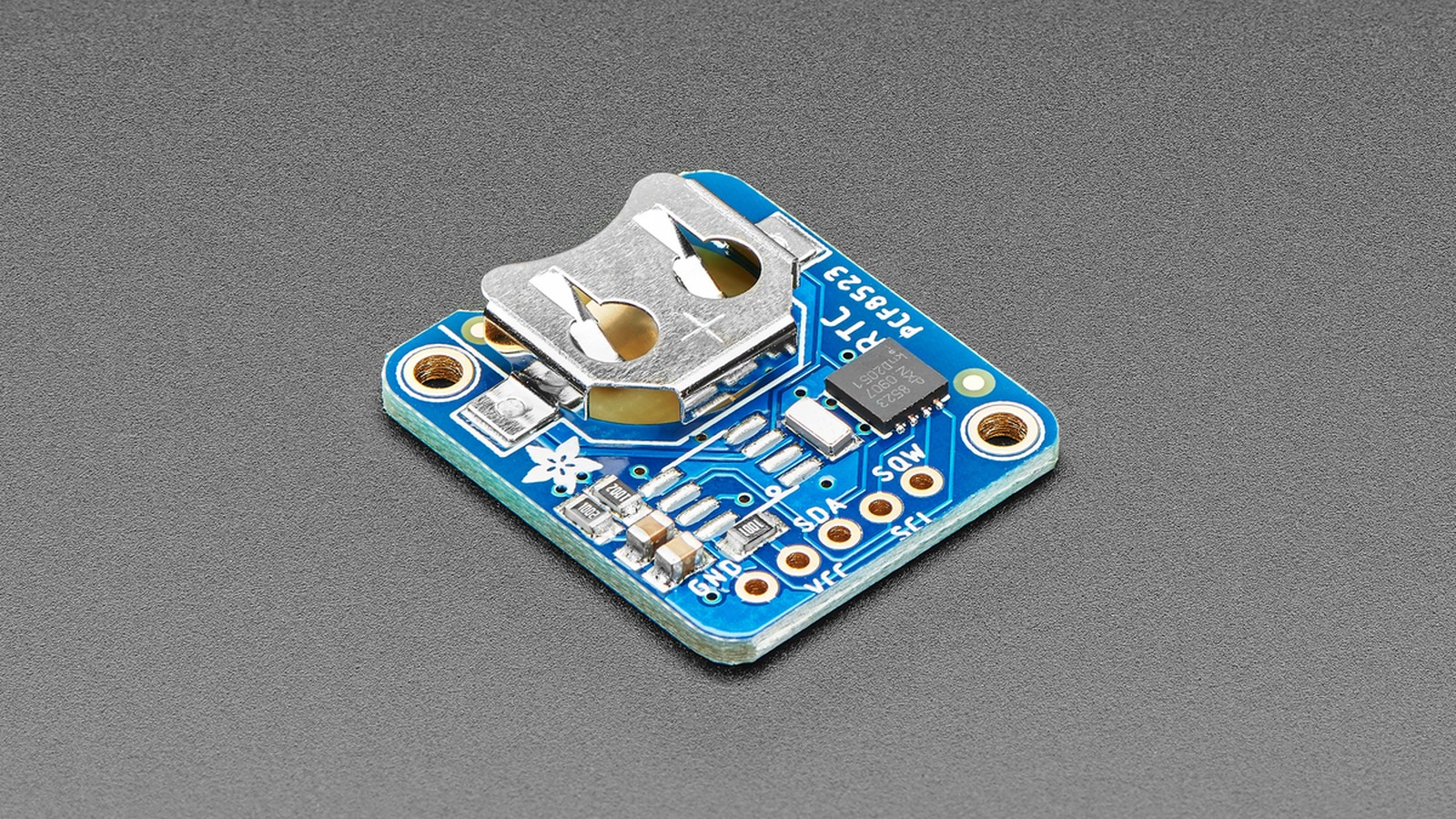
A GNSS receiver can deliver UTC-linked time and often a one-pulse-per-second signal, but antenna view, receiver state and integration delay matter. NTP transfers time over a network and estimates offset and delay; it does not make variable network latency vanish. A battery-backed RTC preserves approximate calendar time across power loss and can seed the system at boot, but its oscillator drifts with temperature and age.
A logger may use all three: RTC for startup, NTP or GNSS for discipline, and a local hardware clocksource for continuous measurement. Record the selected source and why another source was rejected.
Sample the timing reference and sensor through a defined software and hardware path; undocumented buffering can dominate the timestamp error.
Keep UTC out of duration math
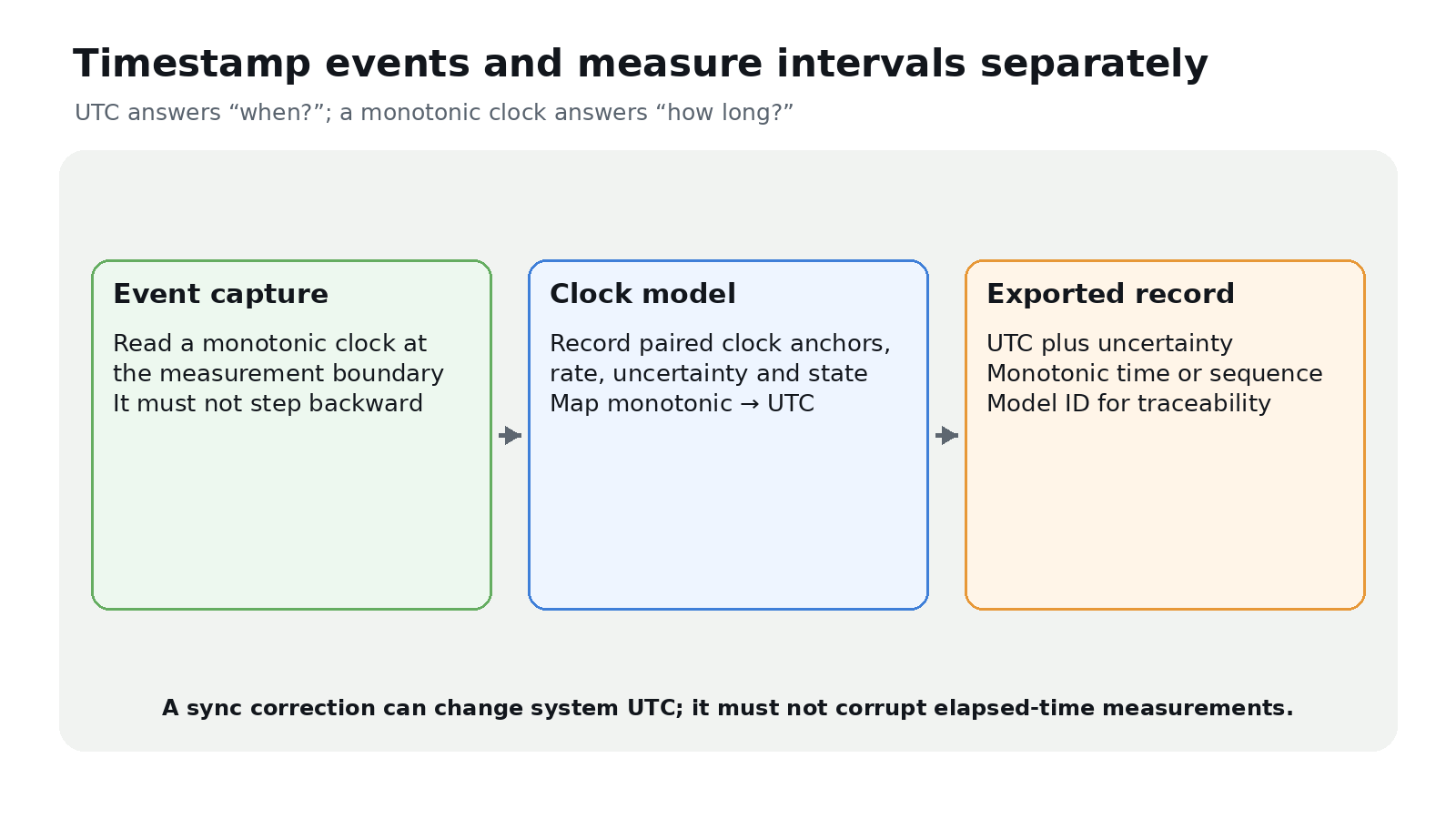
UTC answers “when did this event occur?” A monotonic clock answers “how much time elapsed?” Wall time can be stepped or slewed when synchronization changes; monotonic time must not run backward. Capture monotonic time close to the sensor read, then store the UTC mapping, sequence number and uncertainty needed to join logs later.
Discipline before deployment
Clock discipline repeatedly estimates offset and oscillator rate instead of copying a reference once. During a soak test, log reference offset, frequency correction, temperature, synchronization state and rejected samples. Measure drift over the expected environmental range. A single “synced” flag cannot express timestamp quality.
Specify holdover as an error budget
Holdover begins when the external reference is unavailable. The logger continues from its local oscillator and last rate estimate, while timing uncertainty increases. Define the maximum acceptable timestamp error and derive how long the unit may remain in holdover. On reacquisition, validate the reference, record the transition, and state whether UTC was stepped or gradually corrected.
A useful field record therefore includes event monotonic time, exported UTC, clock source, sync/holdover state and uncertainty. That evidence is more valuable than naming one technology “most accurate” without describing the complete clock path.