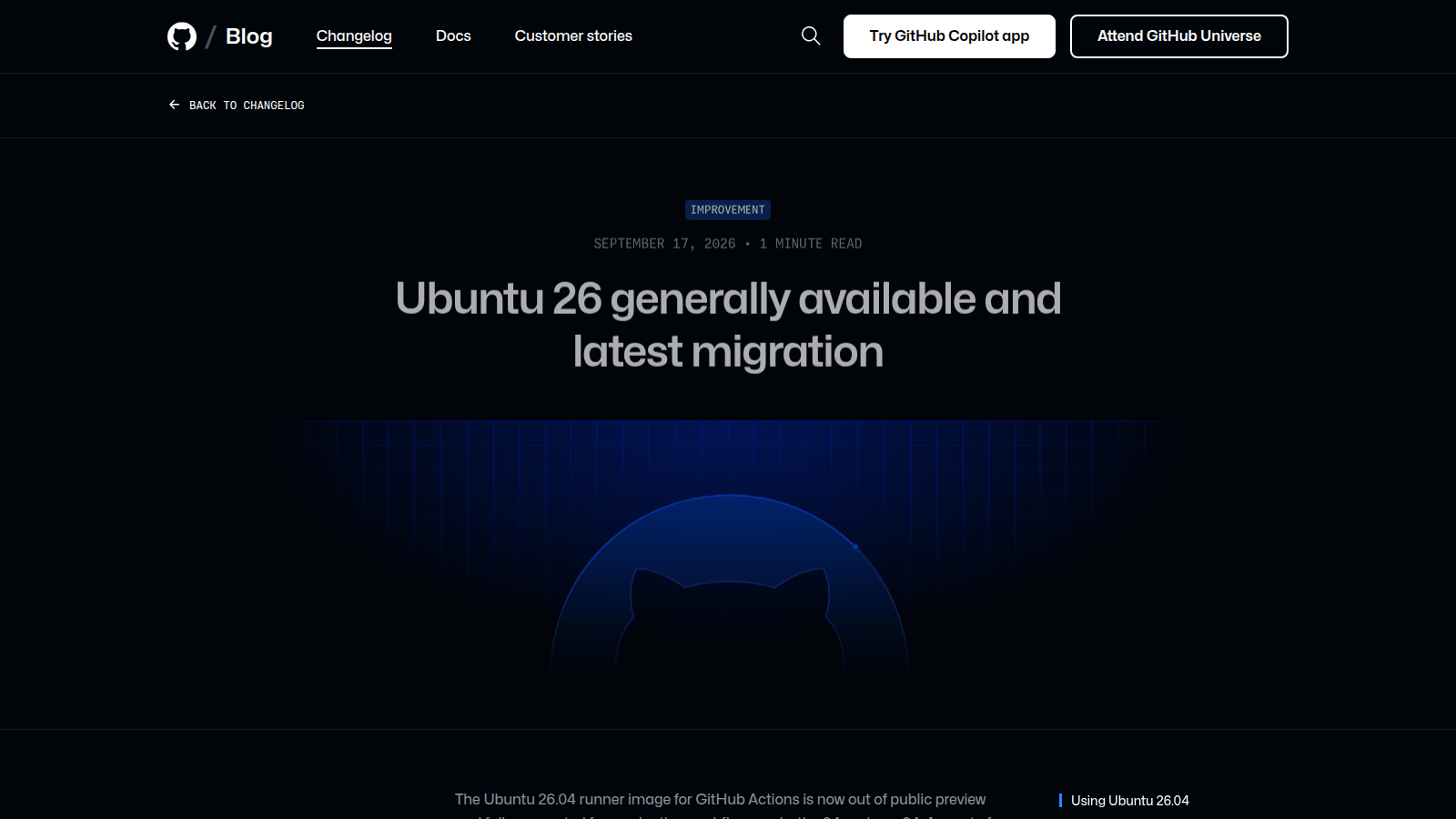
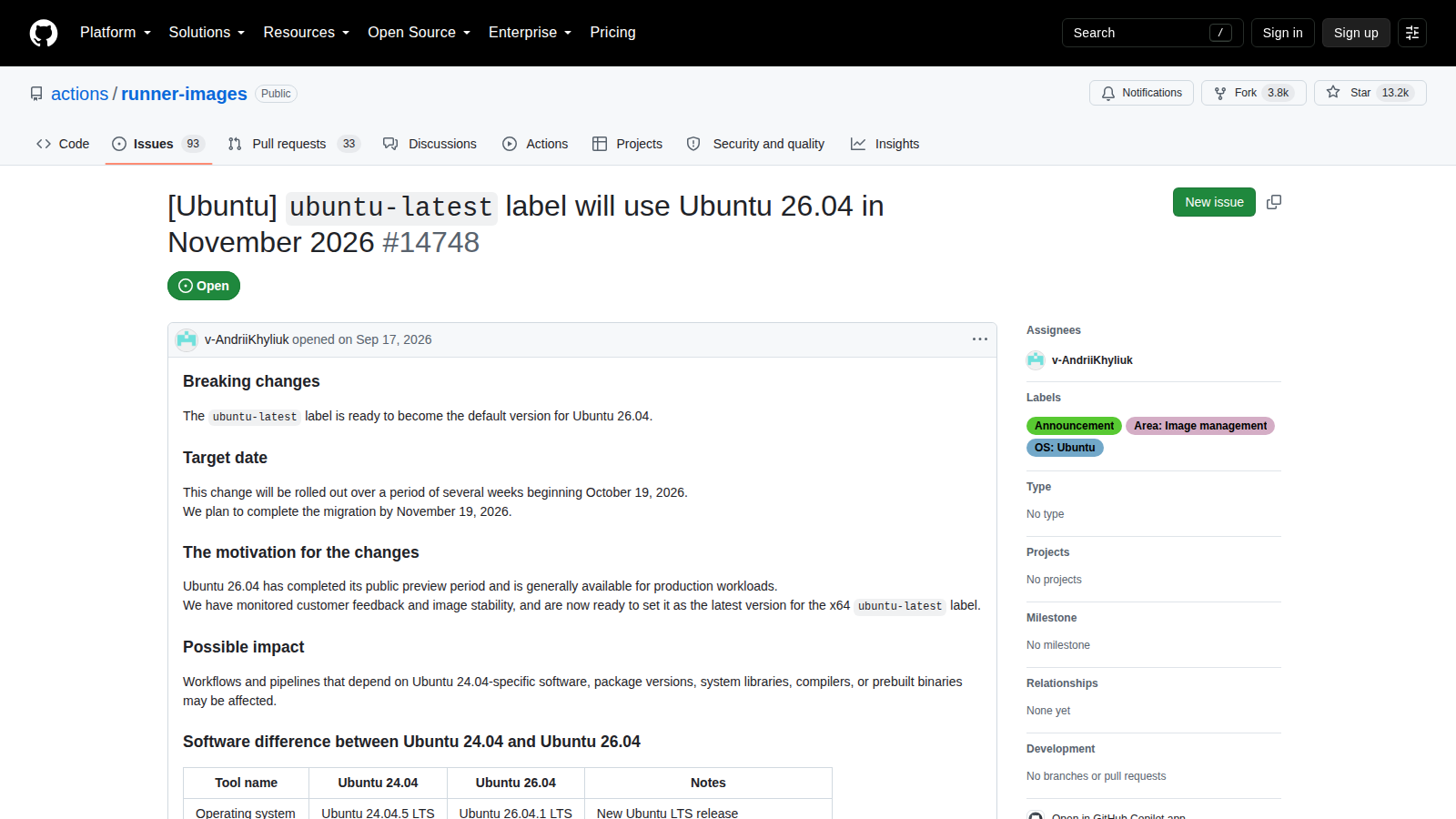
GitHub Actions now supports Ubuntu 26.04 runner images for both x64 and Arm64, and the floating ubuntu-latest label will move from Ubuntu 24.04 to 26.04 between October 19 and November 19, 2026. Workflows that depend on an unversioned operating-system image should test now or pin 24.04 before the phased change reaches them.
Featured image: GitHub.
GitHub’s September 17 announcement marks the Ubuntu 26.04 image generally available for production workflows. The explicit labels are ubuntu-26.04 for x64 and ubuntu-26.04-arm for Arm64. Those labels let a repository exercise the new image before ubuntu-latest changes underneath existing jobs.
The label changes; the workflow file may not
A job that says runs-on: ubuntu-latest follows GitHub’s current default image. During the rollout window, otherwise identical workflow files can begin on Ubuntu 24.04 and later run on 26.04. GitHub warns that updated or removed tools and changed tool versions can break builds that rely on the image’s preinstalled state.
The lowest-effort compatibility check is a temporary matrix or branch run that replaces the label with ubuntu-26.04. Exercise compilation, packaging, browser tests, container builds and deployment tooling—the stages most likely to touch operating-system packages or native libraries. A green unit-test job alone does not prove that the complete pipeline is portable.
Pinning 24.04 buys time but creates an upgrade decision
If the 26.04 run fails and the change cannot be repaired before October 19, GitHub’s documented holding action is runs-on: ubuntu-24.04. That prevents a surprise operating-system switch while preserving the current image. It should be treated as a deliberate compatibility pin, not a permanent way to ignore image retirement.
The runner-images migration issue is the more useful inventory for this work because it tracks the rollout and links the included-software manifests. Compare the tools a job actually invokes rather than diffing every package. When possible, install required compilers, runtimes and CLIs explicitly or use setup actions with declared versions so the workflow does not depend on an incidental preinstall.
Arm64 needs its own test
The Arm64 label is not merely an alias for x64. Native dependencies, downloaded binaries and container manifests can vary by architecture even when the Ubuntu release matches. A project that intends to use ubuntu-26.04-arm should verify that each setup action and third-party binary publishes an Arm64 artifact rather than assuming an x64-only download will work.
Canonical’s Ubuntu 26.04 LTS release notes establish the operating-system baseline and its five-year standard support period. GitHub’s runner image is still a curated CI environment layered on that release, so its installed-software manifest—not a generic Ubuntu package list—is the final reference for what the hosted runner contains.
Repositories that pass on the explicit 26.04 label can keep ubuntu-latest and accept the managed transition. Repositories that fail should pin 24.04, record the failing tool or package, and remove the pin only after that exact dependency is fixed.