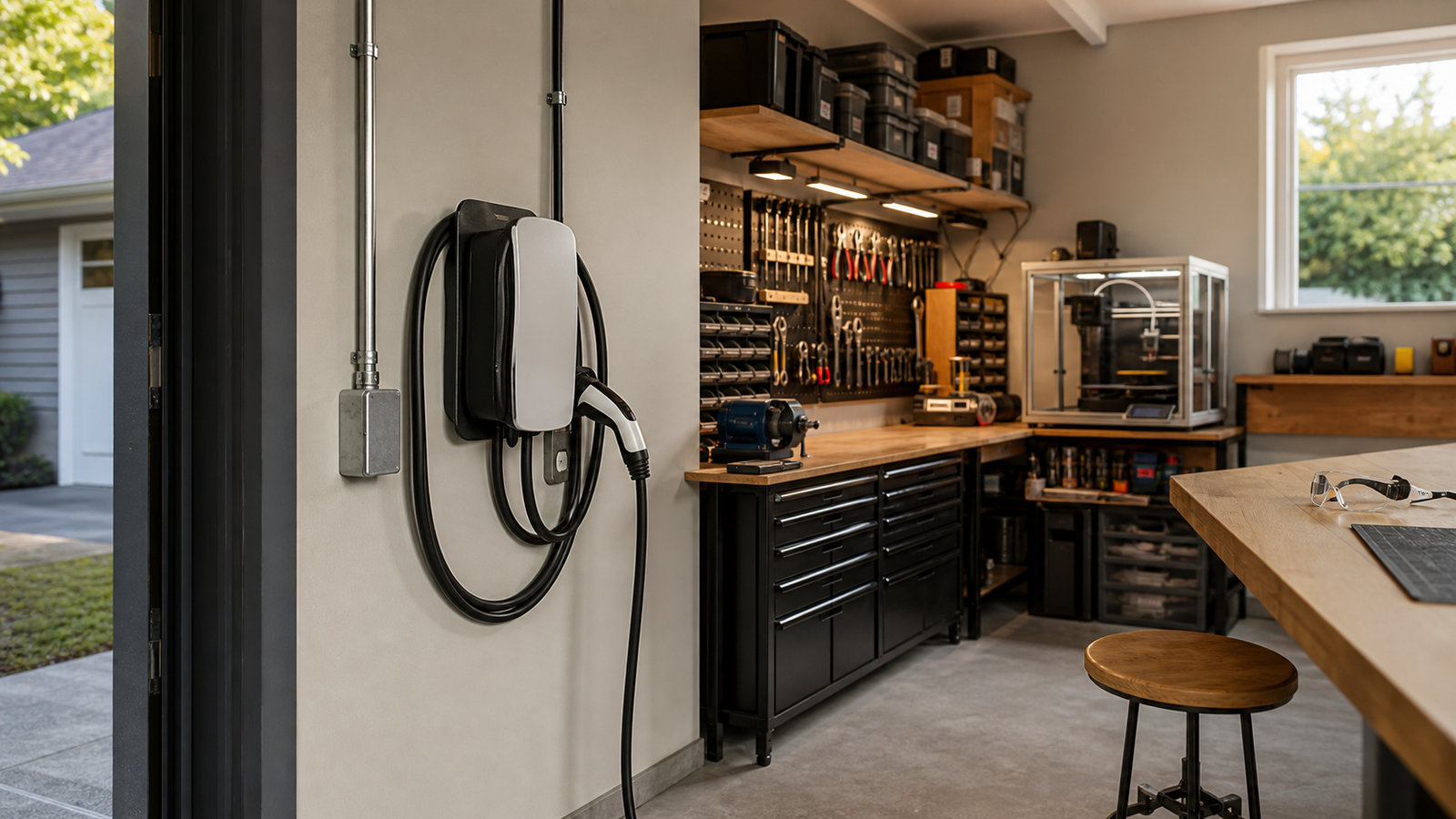
A garage maker lab can look harmless one device at a time: an EV charger on the wall, a 3D printer in an enclosure, a compressor under the bench, a soldering station, a battery charger, a mini PC, and a few LED work lights.
Together, they become a power-planning problem that deserves attention before the next tool arrives. This is not a substitute for an electrician or local code review. It is a systems checklist for TVG readers who want to understand the questions to ask.
Quick answer
If an EV charger shares a garage with maker equipment, document the big loads, duty cycles, circuit assumptions, ventilation needs, cable routes, and shutoff plan. Then involve a qualified electrician before changing circuits, panels, breakers, or hardwired charging equipment.
Why garage labs are different
A living-room smart plug rarely runs near its limit for hours. A garage lab can combine high-current charging, heating elements, motors, compressors, power supplies, and batteries in the same physical area. Some loads are continuous. Some surge at startup. Some generate heat. Some are unattended for long prints or overnight charging.
An EV charger adds one of the largest predictable loads in the space. That does not mean it cannot coexist with a useful maker lab. It means the lab should be designed around known loads instead of extension-cord improvisation.
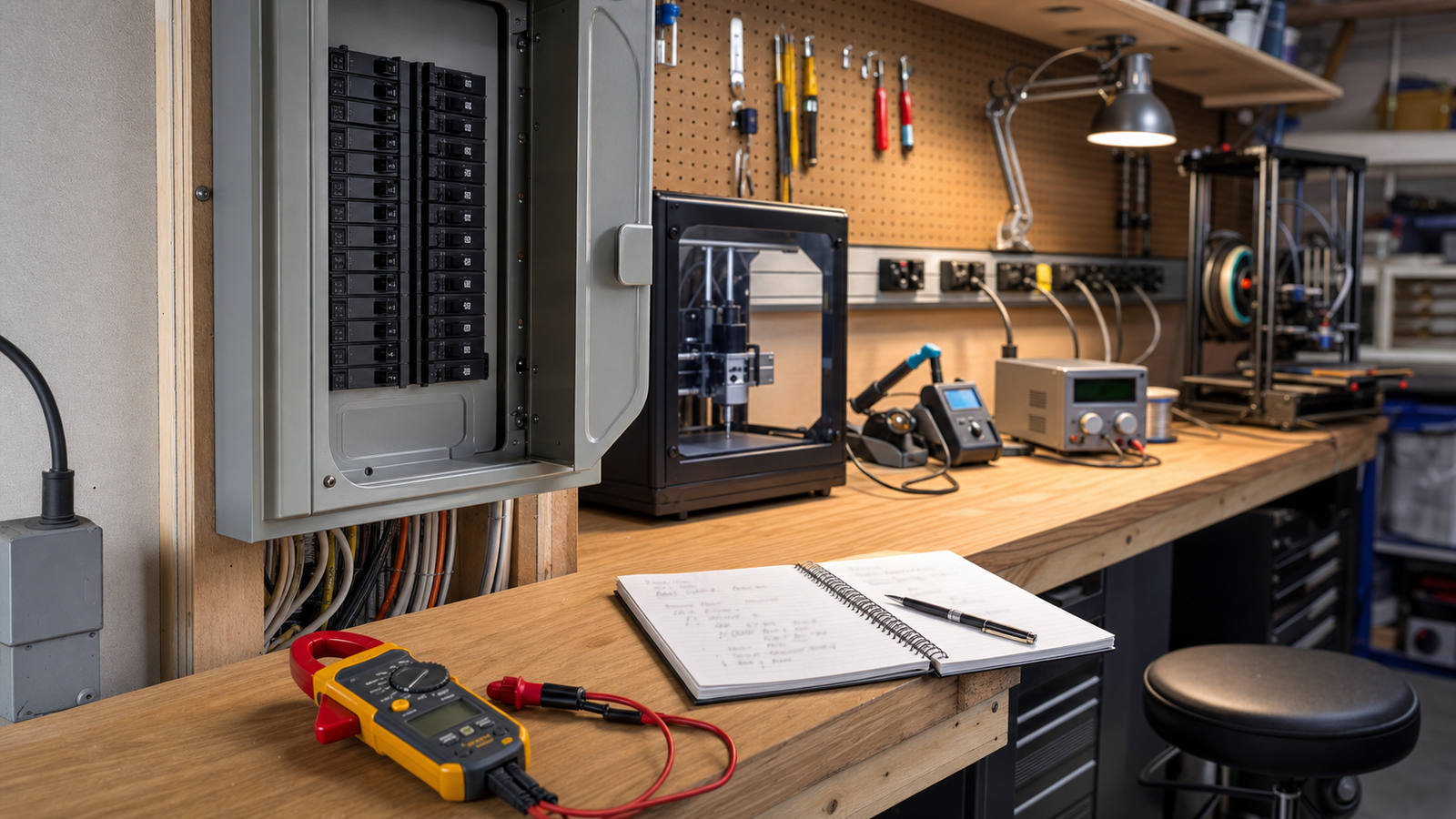
A non-electrician checklist
- List the large loads. EV charger, heater, compressor, printer enclosure, welder, battery chargers, laser cutter, and power tools belong on the first page.
- Record duty cycles. A tool that runs for 30 seconds is different from a charger or heated bed running for hours.
- Separate convenience from safety. Cable trays and labels help organization, but they do not increase circuit capacity.
- Plan ventilation and heat. Electrical load, battery charging, printer enclosures, and resin or soldering workflows can overlap with air-quality concerns.
- Document shutdown. Everyone in the house or lab should know what can be turned off quickly and what should not be touched.
Where smart charging can help
Some EV charging setups support scheduled charging, current limits, utility programs, or energy monitoring. Those features can reduce conflicts, especially when a lab runs mostly during the day and the vehicle charges overnight.
But software controls should not be treated as a replacement for correct installation. A smart schedule is useful only after the electrical design is appropriate for the building, panel, circuit, charger, and local requirements.
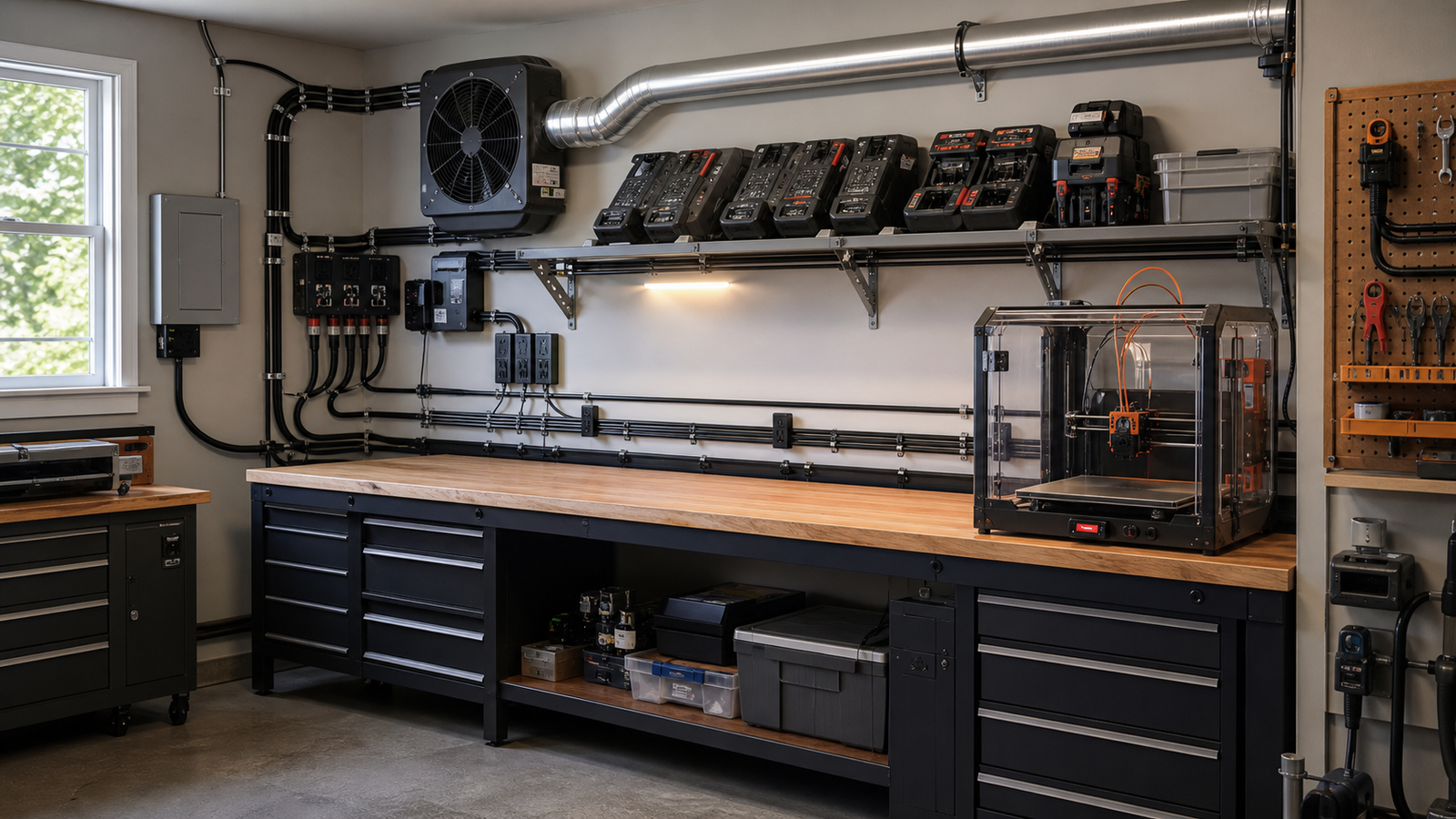
TVG Take
The engineering-first move is to treat the garage as a small lab with a load budget, not as spare space that happens to have outlets. The EV charger is part of that budget. So are the tools, printers, chargers, lights, ventilation, and future projects.
For STEM families and maker clubs, the documentation itself can become a useful lesson: what uses power, when it runs, what gets hot, what needs supervision, and when professional help is required. That is a better safety culture than memorizing a rule after something trips.
What to document before calling for help
A useful garage-lab inventory does not need to include technical calculations. It should include device names, rated power where visible, whether the device runs continuously, whether it creates heat, whether it charges batteries, and whether it is ever left unattended. Photos of the existing panel area, charger location, outlets, and workbench layout can help a professional understand the space.
Also document the non-electrical constraints. Where will the car park while a print enclosure is running? Can a charger cable become a trip hazard? Is the ventilation path blocked when the garage door is closed? Are flammable materials stored near chargers, heaters, or soldering tools? These questions are part of the system even though they are not breaker math.
Good lab habits
The safest garage labs tend to look boring. Heavy loads have permanent homes. Cables do not cross walkways. Batteries charge on a predictable bench. Enclosures have clearance. Emergency shutoff information is visible to the people who use the space. New tools are added to the inventory before they become part of a routine.
That discipline also makes the lab easier to teach. Students and family members can see that engineering is not only about building the robot or print; it is about making the workspace reliable enough to support repeated projects.
Related TVG reading
For readers building out the same technical context, these TVG Report pieces connect the hardware, software, and deployment angles without changing the original reporting.
- EV Charger Load Management Is a Garage-Lab Engineering Problem
- Wi-Fi 7 Channel Planning for Garage-Lab Robots, Cameras and Maker Stations
- NAS Snapshot Planning for Maker Labs That Keep Breaking Project Files