Bluetooth Channel Sounding is one of the more useful radio features for maker labs to watch because it gives students a concrete measurement problem: how far apart are two devices, and how trustworthy is that number?
The Bluetooth SIG says Bluetooth Core 6.0 includes Channel Sounding, and its technical explainers describe phase-based ranging and round-trip time methods for finer distance awareness between Bluetooth devices. That does not make every future tag, lock, robot, or smart-home sensor automatically precise. It does make proximity a better engineering lesson than simple received-signal-strength guessing.
Quick answer
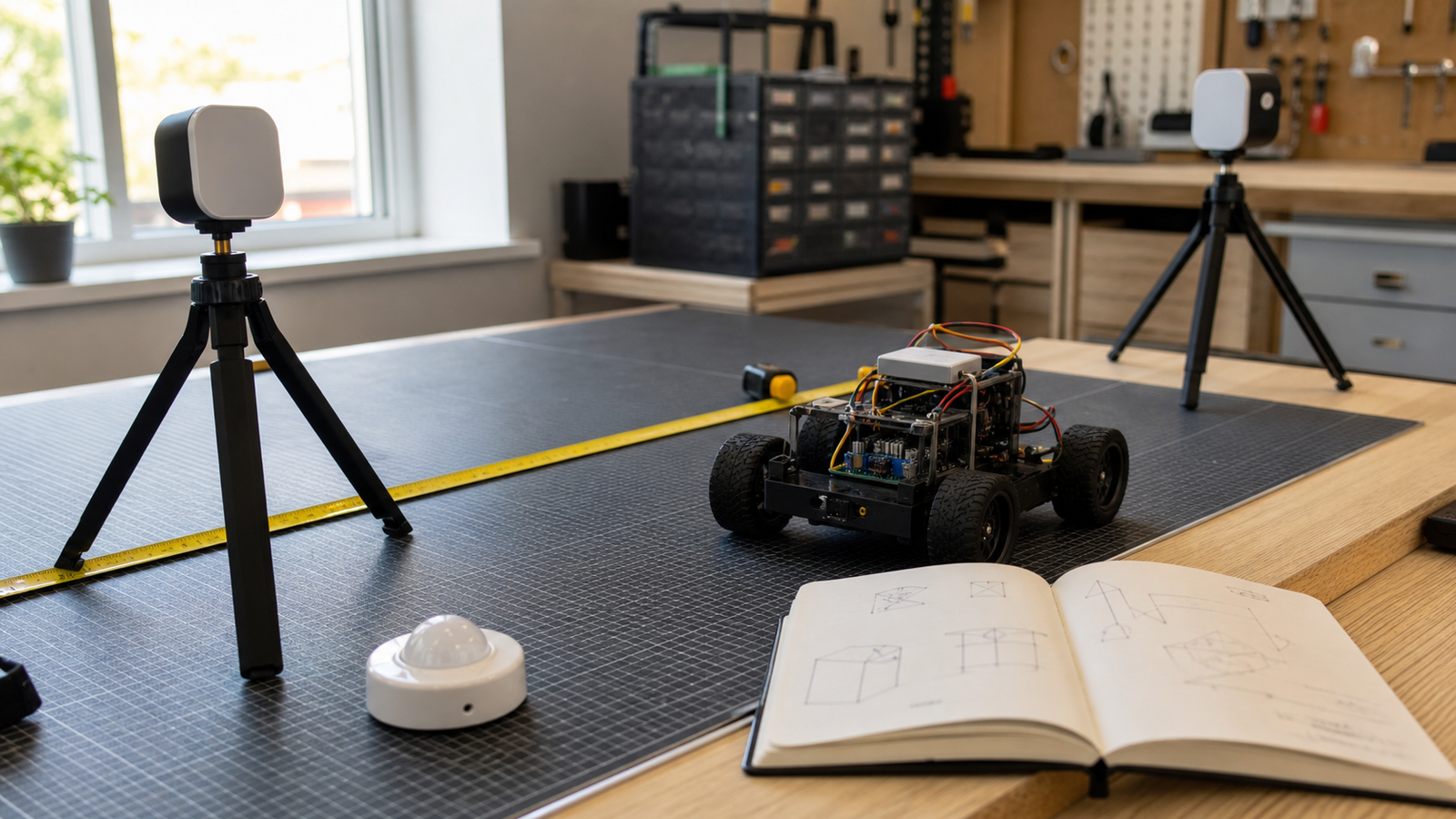
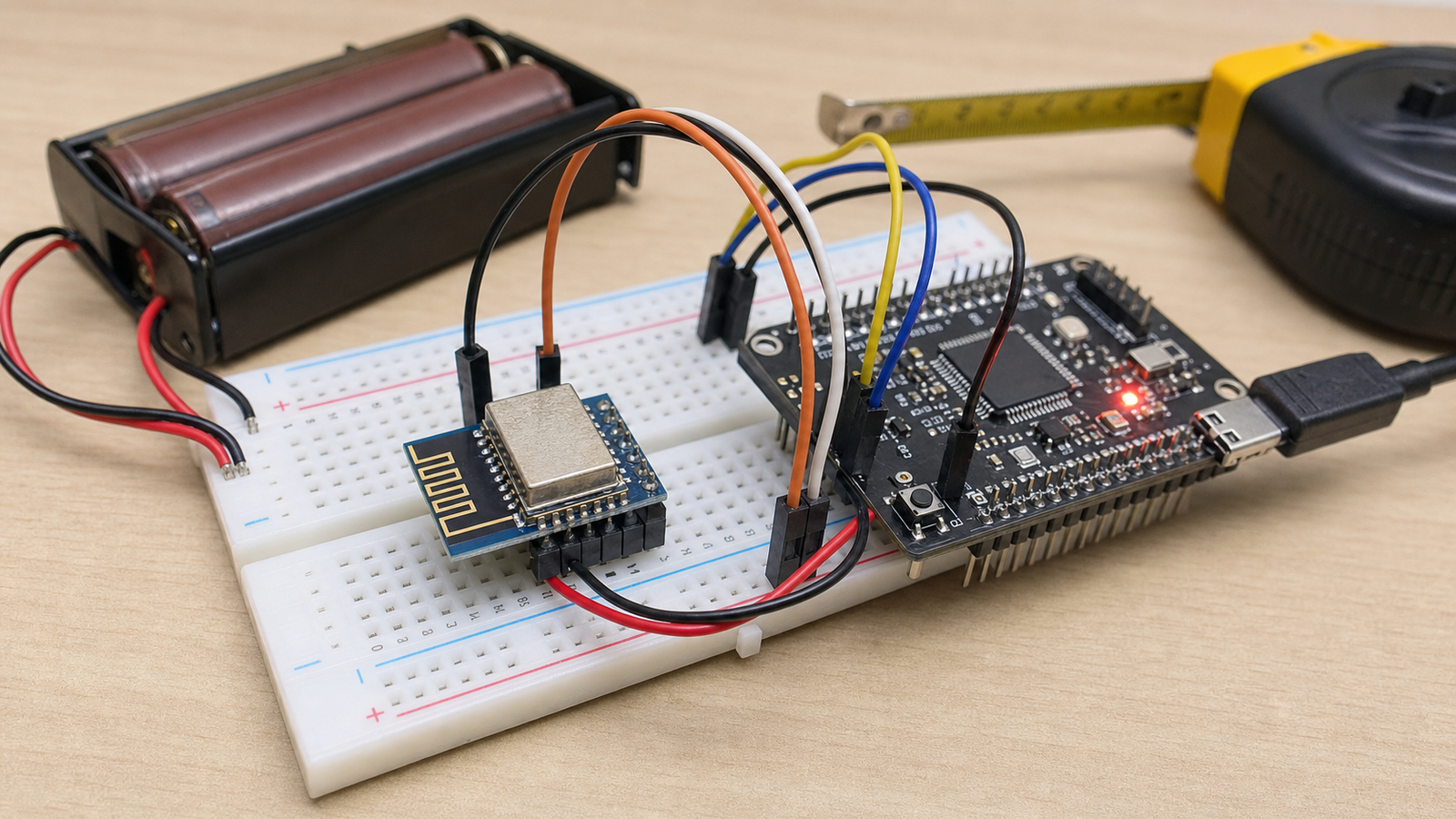
Use Bluetooth Channel Sounding in a maker lab as a proximity-measurement project: compare reported range with measured distance, change orientation and obstacles, log errors, and discuss why radio distance is not the same as a tape measure.
Why RSSI was never enough
Many classroom Bluetooth projects begin with signal strength. RSSI is useful for rough presence detection, but it is easily distorted by bodies, walls, antenna orientation, reflections, and device placement. Students can learn from that, but they should not mistake it for accurate ranging.
Channel Sounding gives builders a more interesting starting point. Phase-based ranging and round-trip timing bring Bluetooth closer to the kind of distance awareness used in secure access, tags, smart-home presence, and robot-adjacent location projects. The engineering challenge shifts from “can I see the device?” to “how does the reported distance change when the environment changes?”
A simple lab plan
- Mark real distances: use a tape measure and fixed points before reading the radio value.
- Test orientation: rotate one device and record how the estimate changes.
- Add obstacles: compare open air, a backpack, a person standing nearby, and a wall.
- Repeat runs: a single good reading is not a calibration.
- Compare with another sensor: camera, ultrasonic, or time-of-flight modules make useful contrasts.
- Log errors honestly: save the bad readings because they explain the system.
This connects directly to TVG’s Matter, Thread, and Wi-Fi 7 reliability guide. Smart-home and robotics projects are not only about protocol logos. They are about how radios, sensors, software, and physical placement behave together.
Where it fits in a project
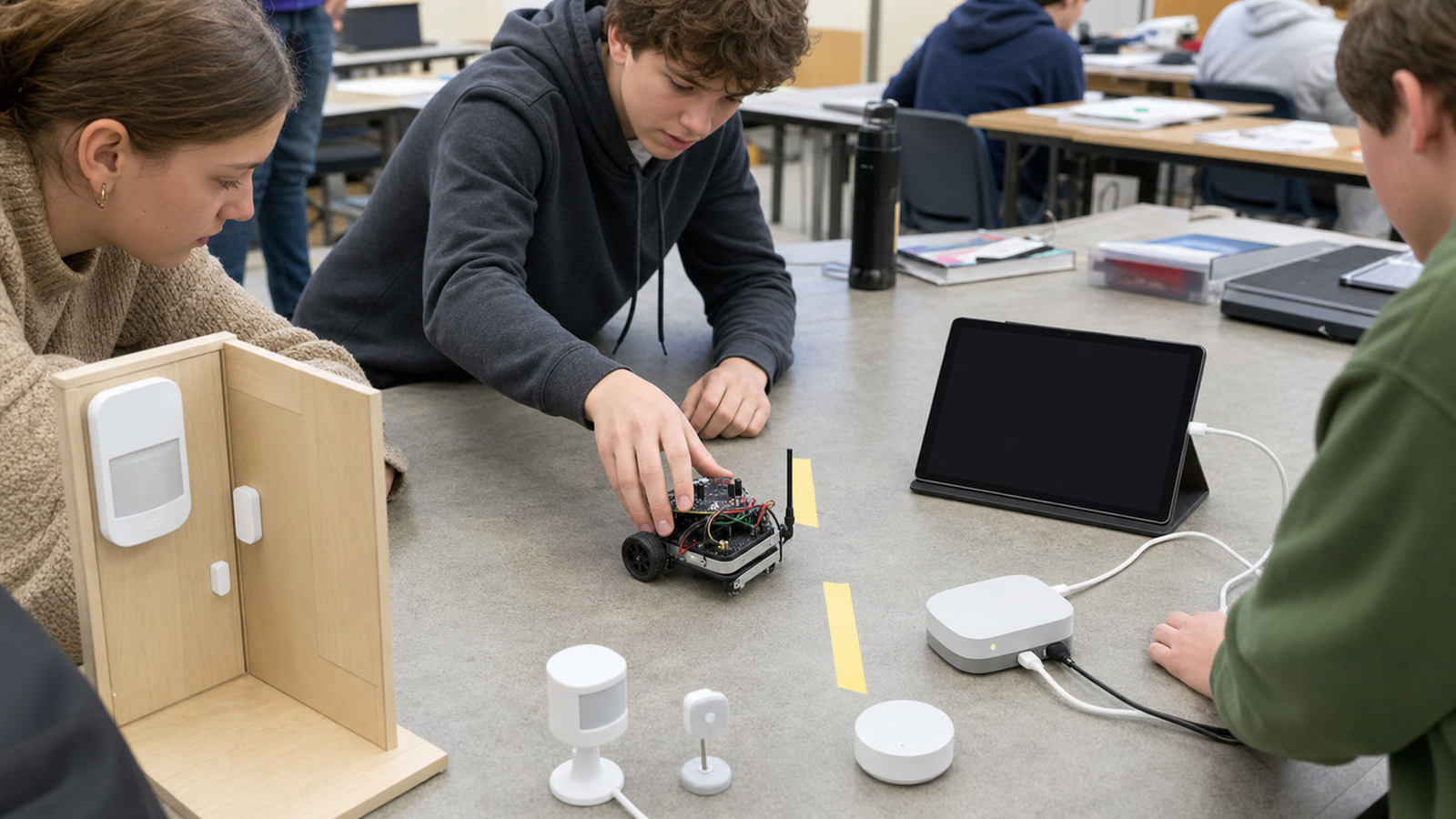
Good early uses are presence zones, access-range experiments, smart-home occupancy demos, robot docking cues, asset-finding prototypes, and classroom comparisons with ultrasonic or camera-based distance. Weak uses are any project that assumes one radio reading can replace mapping, line of sight, or mechanical safety checks.
Teams should also separate product-readiness from standards-readiness. A feature can be part of the Bluetooth specification before every phone, tag, board, SDK, and cloud service exposes it cleanly. For classroom planning, that means choosing hardware deliberately and keeping the lab framed around measurement quality rather than promising a finished consumer-grade tracker.
TVG Take
Bluetooth Channel Sounding is promising because it gives builders a better tool for distance-aware projects. The credibility of the project will still depend on the test: measured baselines, orientation changes, obstacles, repeatability, and clear logs. Treat it as a measurement system, not a magic indoor GPS replacement.