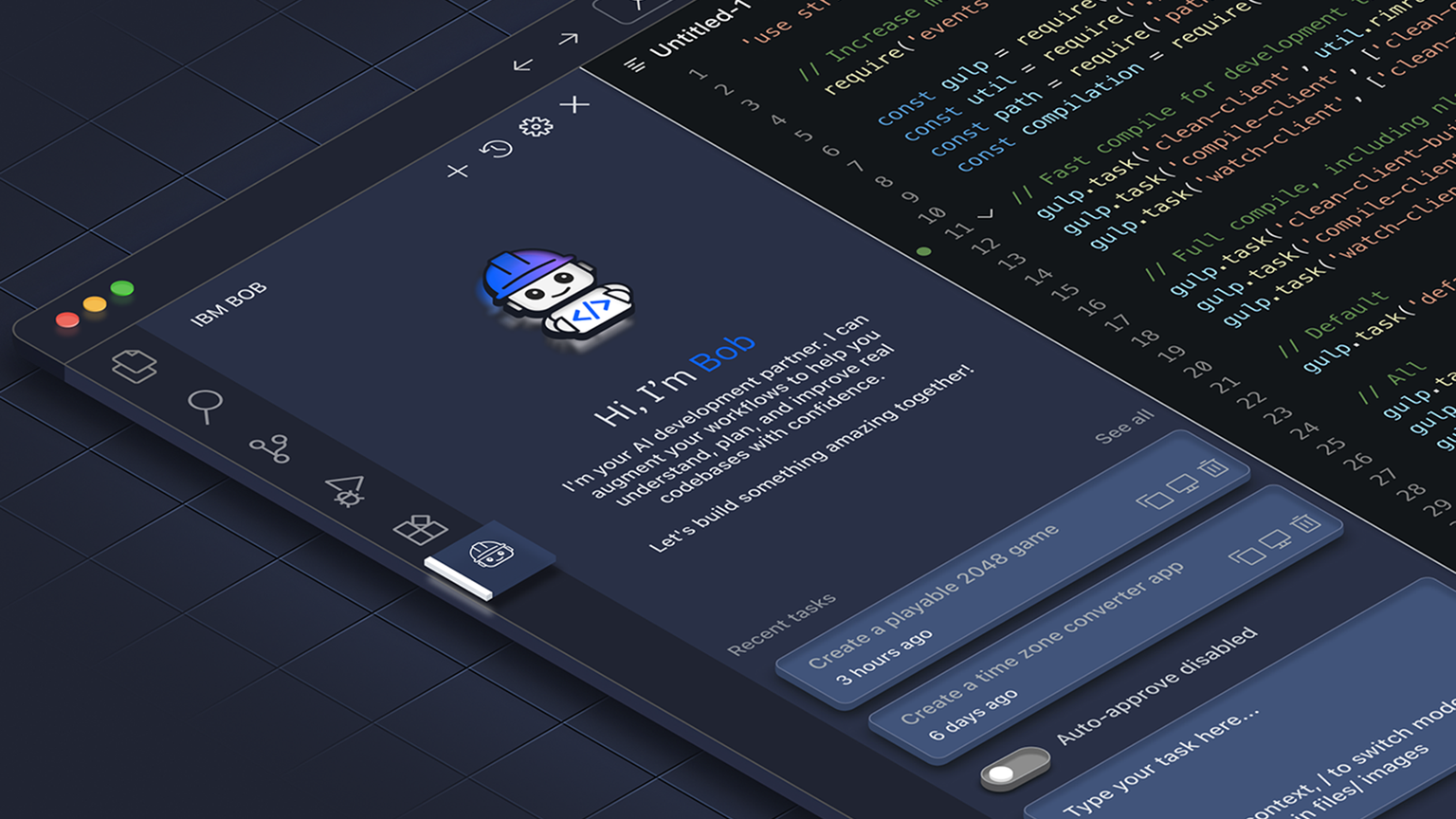
IBM says its Bob software platform has picked up new multi-agent capabilities and modernization workflows aimed at enterprise software teams. The July 9 announcement describes IBM Bob as moving beyond single-prompt code assistance toward coordinated agents that can help plan, change, review and modernize production software.
The company says the update also adds built-in AI cost and usage controls, a practical detail for engineering groups that are trying to move from pilot projects to governed development workflows. IBM introduced Bob earlier in 2026 as an AI development partner for production-ready software, and the latest update frames that system as a more structured platform for team-scale work.

Why it matters
For technical teams, the important shift is not that an AI tool can write more code. It is that vendors are packaging agentic software work as a managed workflow with roles, checks, cost visibility and modernization tasks. That puts pressure on teams to decide where AI agents sit in the engineering process: before review, beside review, or after a human-owned design decision.
TVG has covered practical AI and automation workflows before, including embedded testing moving closer to the board. IBM’s announcement belongs in the same broader pattern: AI development tools are being judged less by demo output and more by repeatability, traceability and how they fit into existing CI, security and architecture constraints.
What IBM is emphasizing
The public announcement highlights multi-agent operation, specialized modernization workflows and cost controls. In plain engineering terms, that suggests a toolchain where one agent may reason about a change, another may inspect a codebase, another may support testing or modernization, and the platform records enough context for the team to manage usage.
That still leaves hard questions. Multi-agent output can increase review surface area. Modernization tasks can touch old build systems, dependency trees and tests that were never designed for AI-driven edits. Cost controls help, but they do not replace code ownership, test coverage or security review.

TVG Analysis
The useful way to evaluate tools like IBM Bob is to ask where they reduce engineering friction without hiding risk. Good candidates include repetitive modernization chores, first-pass migration plans, dependency analysis, documentation cleanup and test-generation support. Riskier uses include large unattended rewrites, security-sensitive code paths and anything where the team cannot explain the change after the agent proposes it.
What remains unknown is how consistently these workflows perform across messy enterprise repositories and whether teams can export enough audit context for internal compliance. TVG will watch for real deployment examples, not just vendor claims about agent orchestration.
Signals for engineering managers
The first signal is whether the platform can keep recommendations tied to specific repository context. Enterprise code is rarely a clean tutorial project. It includes generated files, old libraries, framework migrations, internal conventions and release gates that are easy for a coding assistant to overlook.
The second signal is how the tool handles review boundaries. A multi-agent system may produce a stronger plan than a single assistant, but it can also create confidence through volume. Engineering managers should look for explainable diffs, test evidence, rollback paths and a clear record of which suggestions came from the tool.
The third signal is cost observability. Agentic workflows can trigger long chains of model calls, code scans and retries. IBM’s emphasis on cost controls is worth watching because AI software development will be judged by delivered changes, not by how many tokens were consumed in the process.
What teams should not assume
Nothing in the announcement proves that multi-agent software development is ready to run without human design judgment. The safer interpretation is that enterprise AI coding platforms are becoming more structured. They may help teams sort through modernization work, but they still need source control discipline, automated tests and humans who can say no.
For robotics, maker and embedded teams, the lesson is indirect but useful. As AI coding tools mature, the best results will likely come from narrow, testable tasks: driver cleanup, documentation, migration plans, simulation harnesses and build-system maintenance. Hardware-facing code still has physical consequences that a software-only agent cannot observe directly.
Sources
- https://newsroom.ibm.com/2026-07-09-ibm-advances-enterprise-ai-software-development-with-multi-agent-capabilities-and-specialized-modernization-workflows
- https://newsroom.ibm.com/2026-04-28-introducing-ibm-bob-ai-development-partner-that-takes-enterprises-from-ai-assisted-coding-to-production-ready-software
- https://newsroom.ibm.com/announcements?l=100