Outdoor robot sensors usually fail at the edges: the cable entry, the gasket, the low spot where water collects, or the connector that was easy to plug in on the bench but impossible to service after the enclosure was mounted. IP ratings and NEMA enclosure types help narrow the choice, but they do not design the whole system for you.
NEMA’s enclosure standard and IP-rating guides both describe protection against solids, water and environmental exposure. For maker labs, school robotics programs and small automation teams, the mistake is treating the printed rating as a guarantee instead of one input in a larger mechanical and maintenance design.
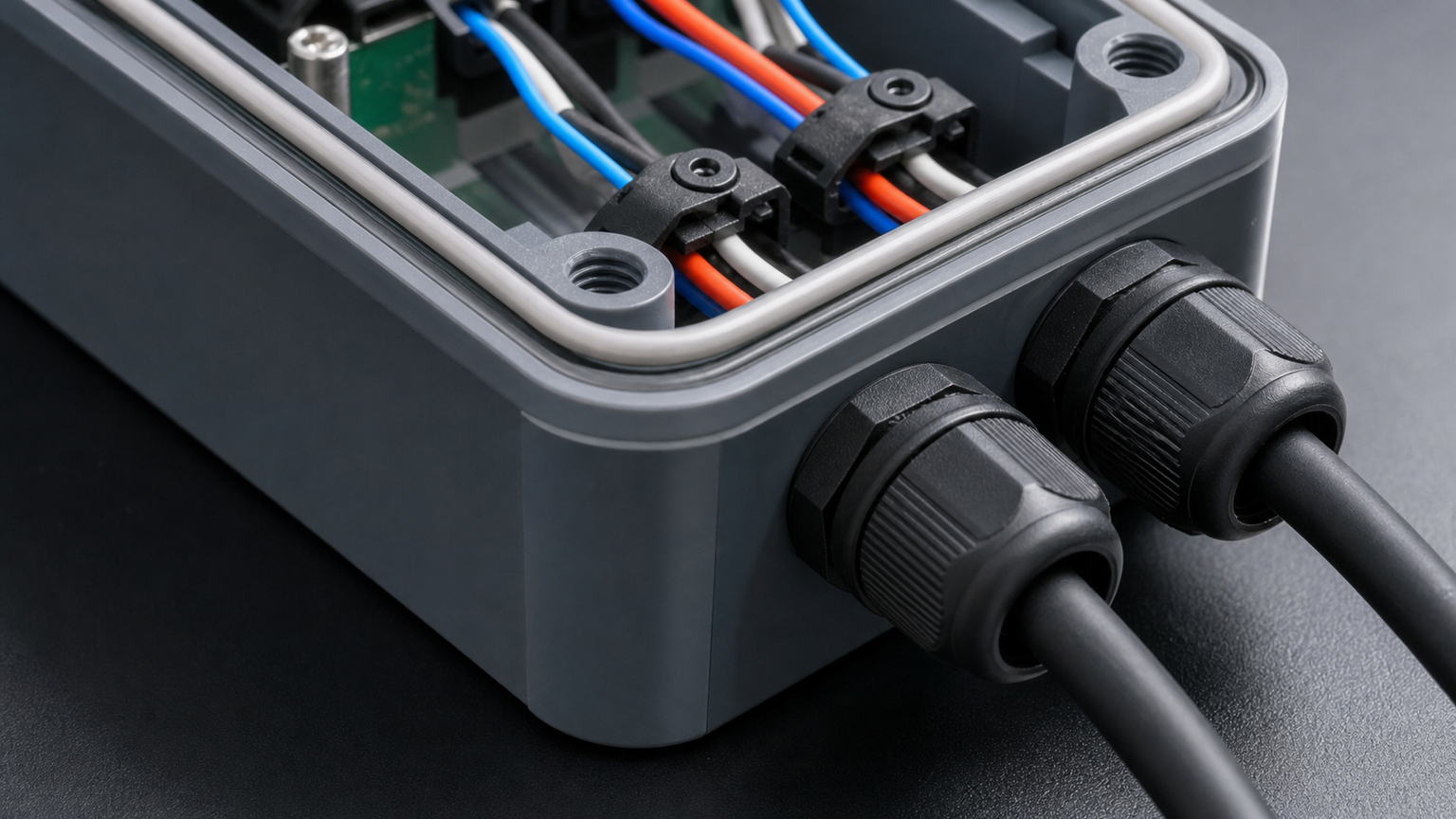
Start with the real exposure
A sensor under a roof eave faces a different problem from a box mounted near irrigation spray, dust, mud or a robot practice field. The project brief should answer four questions before buying an enclosure: where water comes from, where dust enters, how cables will enter, and who has to open the box later.
That evaluation complements TVG’s earlier work on robot power connectors and voltage drop. Electrical reliability and environmental protection meet at the enclosure wall. A sealed box with a loose cable gland is not a sealed system.
Rating is not the whole design
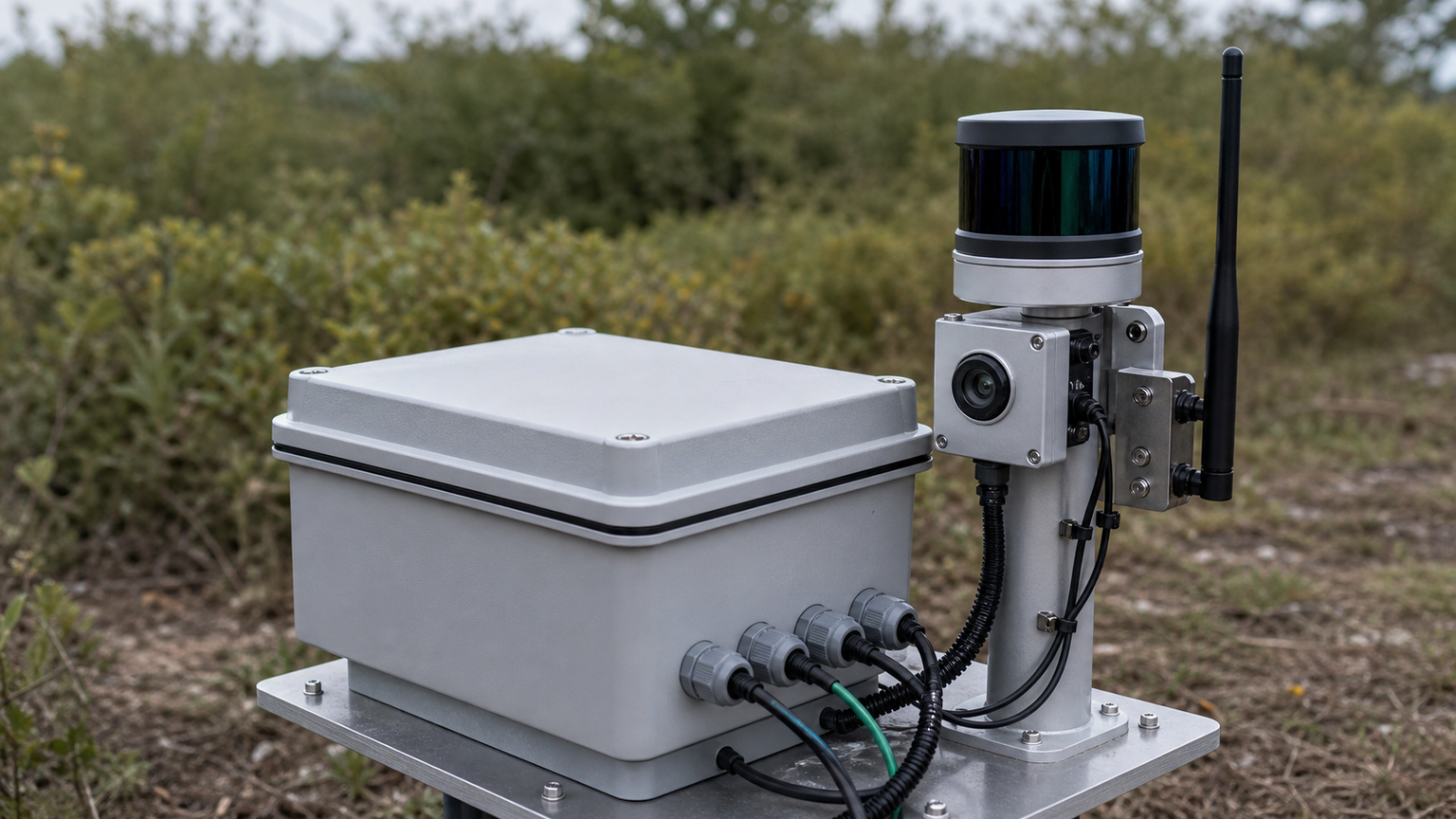
Look for a gasket that seats evenly, enough interior space for bend radius, a real strain-relief plan and a mounting position that avoids making the lid a water shelf. If a cable must enter from above, add a drip loop and reconsider whether the connector should be outside the box at all.
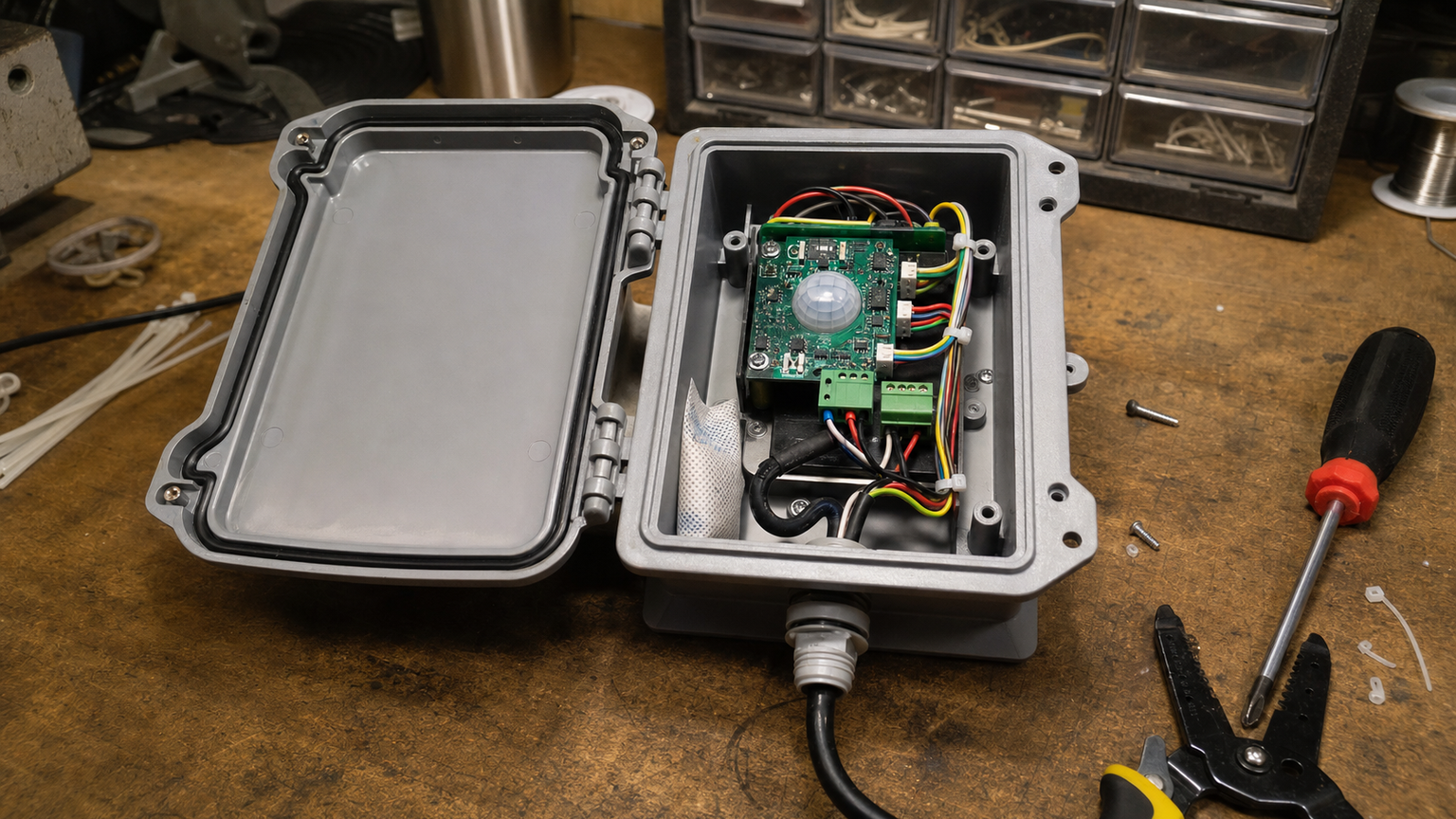
Serviceability matters
Outdoor sensor projects often need battery swaps, firmware access or probe replacement. If the enclosure requires removing six tiny screws in the rain, the maintenance process will eventually damage the seal. Use captive screws when possible, leave wire slack for the lid to open safely, and label internally rather than relying on exterior markings that fade.
TVG Take: choose the enclosure after mapping water, dust, cable strain and service access. A higher rating can help, but a physically coherent cable entry and maintenance plan usually decide whether the outdoor sensor survives the season.
Pick a rating for the failure mode
For many outdoor STEM projects, dust protection and splash protection matter more than temporary immersion. A box mounted under a table at a robotics event needs different protection from a sensor node near sprinklers or a gate controller exposed to wind-driven rain. The rating should follow the actual exposure, not the most impressive number in the catalog.
Also check whether the rating assumes a specific lid, gasket and factory configuration. Drilling extra holes, using the wrong cable gland or routing a cable through a loose rubber grommet can reduce the real-world protection. Once a maker lab modifies the box, the installed system is only as good as the new weakest opening.
Thermal and radio tradeoffs
Sealing a box can trap heat. That matters for single-board computers, camera modules, radios and battery chargers. A completely sealed enclosure may protect against rain while creating thermal throttling or battery stress. For radio devices, metal enclosures can also hurt wireless range unless antennas are designed and mounted correctly.
The right answer may be a plastic enclosure with external glands, a small sun shield, an internal mounting plate and a planned vent or membrane for pressure equalization. For higher-power electronics, choose the box around heat and maintenance first, then validate the environmental rating for the installation.
Build a pre-season inspection routine
Before a sensor goes outside, test the lid seal, tug gently on cable entries, check screw torque, and look for places where water can follow the cable into the box. After the first rain or cleaning cycle, open the enclosure in a dry place and inspect for condensation, residue or corrosion. That inspection is cheap evidence that the mechanical design is working.