
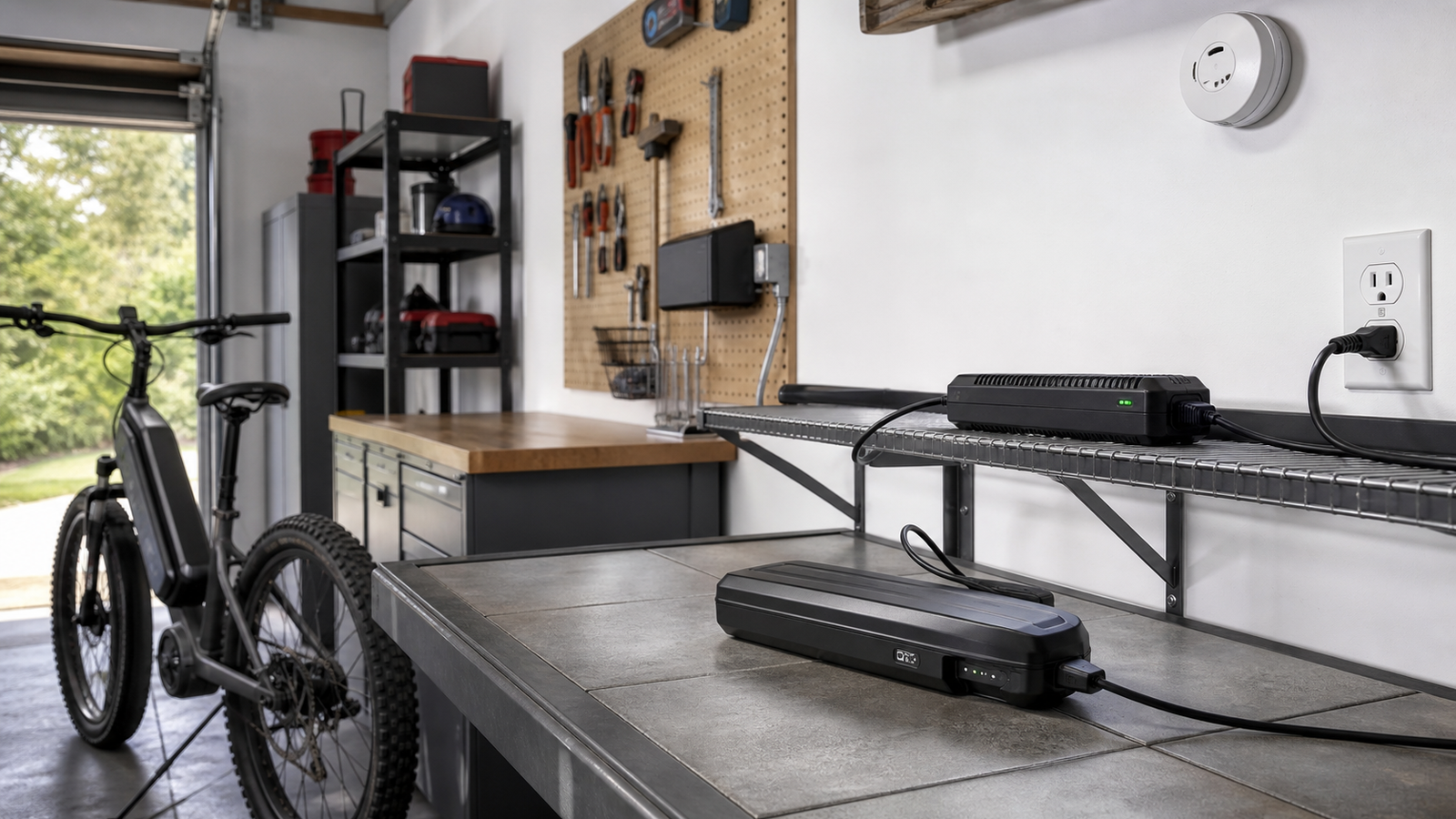
Editorial mode: Analysis / Guide. E-bike charging belongs in TVG’s engineering lane because it combines lithium-ion cells, battery-management systems, chargers, connectors, thermal behavior, user habits and storage design. It is not just a lifestyle accessory question. A charging setup is a small energy system inside a home, shop, garage or classroom.
UL Solutions describes UL 2849 as a certification path for e-bike electrical systems, including the interaction of battery, charger, motor and controls. Public consumer-safety pages from agencies such as CPSC are sometimes blocked to automated fetchers, but official guidance has consistently emphasized using manufacturer-provided chargers, not charging unattended overnight, avoiding damaged packs and keeping exits clear.
The quick answer
Use the battery and charger specified by the manufacturer, prefer certified systems, charge on a stable nonflammable surface with clear space around the pack, keep the charger ventilated, inspect connectors and housings, and do not turn a bedroom, exit path or cluttered workbench into a charging station.
What to check before charging
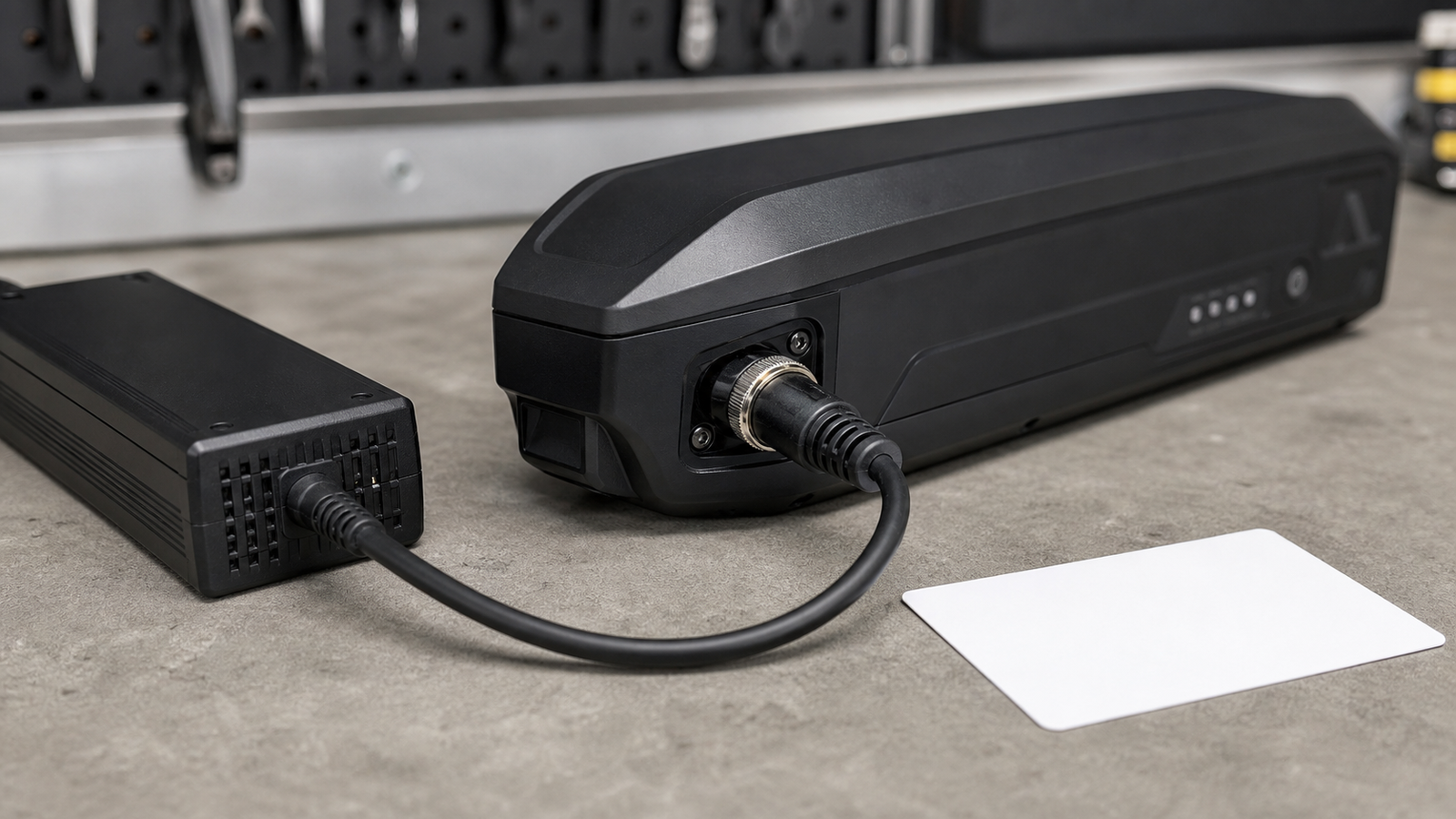
Start with compatibility. A connector that fits is not enough proof that a charger matches the pack. Voltage, current limit, charge profile and battery-management expectations all matter. Mixing chargers across bikes or aftermarket packs is a common way to hide risk behind a familiar plug.
Then inspect the pack. Look for swelling, impact damage, loose connectors, corrosion, unusual smell, heat after ordinary use, or a charger that behaves differently than before. A damaged pack should be removed from service and handled through the manufacturer or an appropriate battery recycling/safety channel, not experimented on in a classroom.
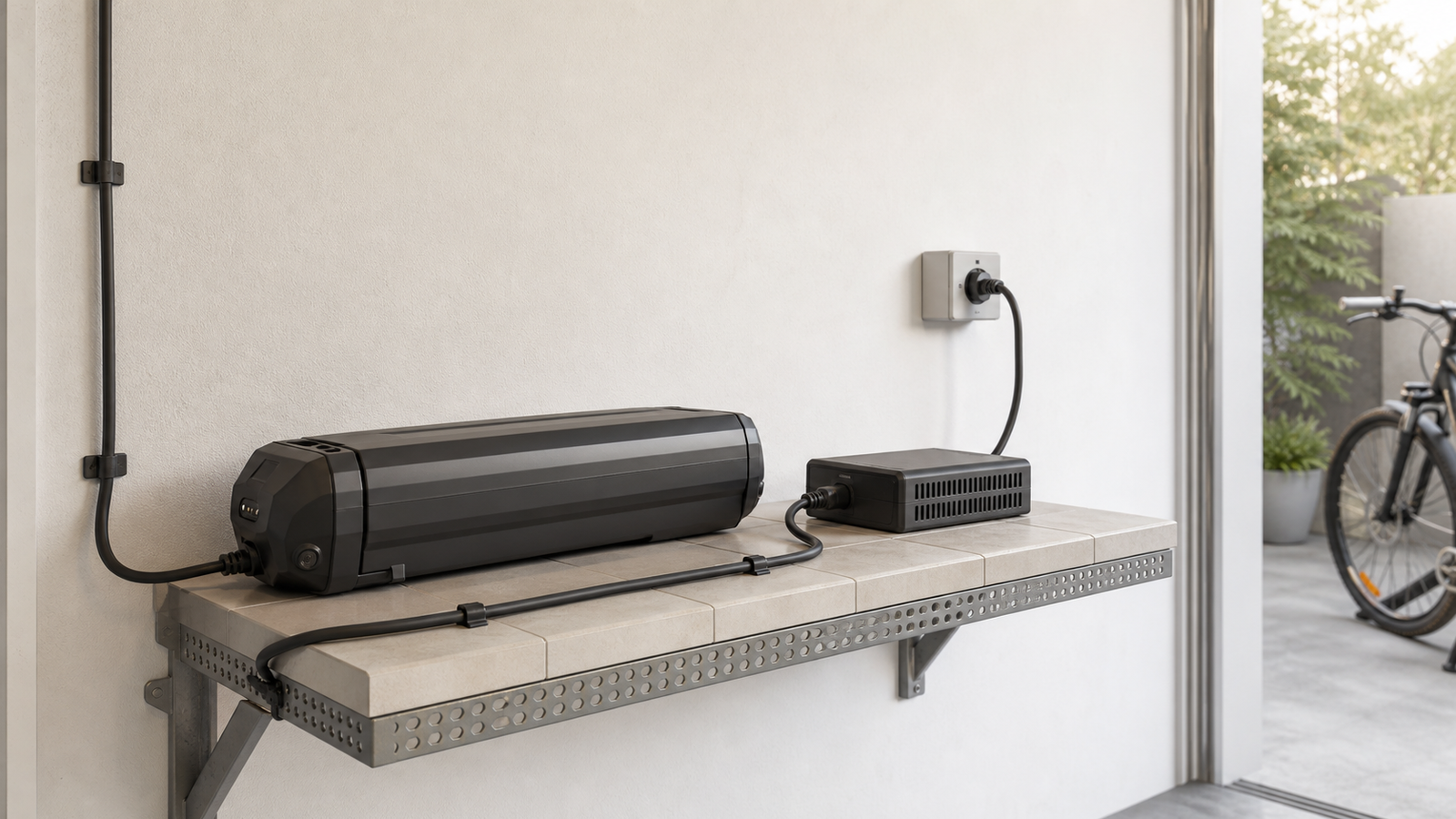
Charging location is part of the design. The safest habit is boring: hard flat surface, ventilation, no paper or fabric pile, no blocked exit, no extension-cord chain, no charger under a blanket, and no charging while everyone is asleep. For shared shops, make the charging area visible and rule-based rather than ad hoc.
For STEM and maker programs
If students are using e-bikes, scooters, robot batteries or large portable packs, treat charging as part of the lab curriculum. Teach energy density, fusing, BMS purpose, connector wear, storage voltage and safe transport. Do not let battery procedures live only in the head of one mentor.
A simple log helps: pack ID, charger ID, last inspection, charge start time, person responsible and any unusual behavior. The log is not bureaucracy for its own sake. It makes drift visible before a failure becomes dramatic.
TVG Take
E-bike charging is safest when it is designed like a small shop process instead of improvised like phone charging. Certification, matching chargers and visible charging rules do not remove every risk, but they reduce the number of invisible assumptions in the system.
Sources and related reading
Related TVG reading
For more engineering-first context, compare this piece with E-Bike Battery Charging: An Engineering Checklist for Safer Micromobility Setups, BRINC Raises $125M as 911 Drone Programs Move Toward Factory Scale, Raspberry Pi Puts Local Smart Homes Back on the Maker-Lab Agenda.




That’s a really thorough breakdown – I hadn’t thought about the ventilation aspect quite so specifically.