Raspberry Pi is using the latest issue of its official magazine to make a familiar smart-home argument more concrete: a small local computer can still be the most practical way to keep home automation understandable, repairable, and less dependent on vendor clouds.
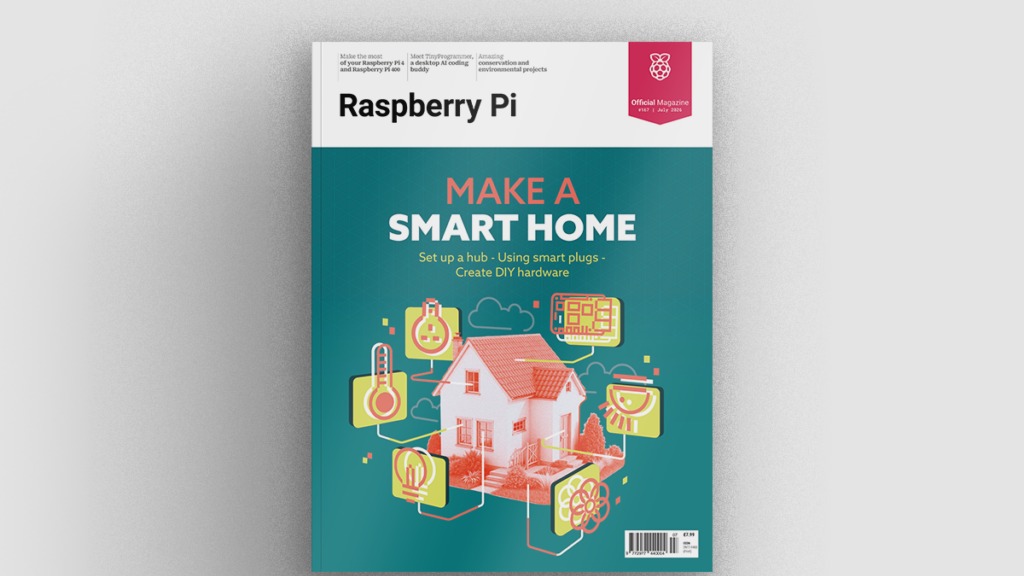
The company’s blog post for Raspberry Pi Official Magazine issue 166 frames the issue as a smart-home special, with coverage that ranges from smart plugs and DIY hardware to a privacy-first Home Assistant hub. Raspberry Pi says the magazine includes a local setup from Ben Everard that keeps data away from manufacturers’ cloud services while giving the owner more visibility into what is happening inside the home.
That is a small editorial announcement rather than a new board launch. For TVG readers, the useful part is the direction of travel: smart-home reliability is becoming less about buying one more connected device and more about how the control layer is assembled, backed up, and maintained.
What Raspberry Pi is highlighting
According to Raspberry Pi, the smart-home issue covers connected plugs, DIY hardware, and a local hub built around Home Assistant. The blog post describes a setup where the Raspberry Pi acts as the local computer tying devices together instead of treating every sensor, switch, and automation as a separate cloud account.
Home Assistant has become one of the strongest examples of that approach. Its documentation describes a local-first home automation platform that can connect many integrations while still allowing users to decide which services leave the local network. That does not make every device local by default, but it gives builders a place to see dependencies and reduce unnecessary cloud paths.
The Raspberry Pi angle matters because the hardware is inexpensive, well documented, and familiar to schools, maker spaces, and small labs. A Pi-based hub is not the only way to run Home Assistant, but it is one of the easiest ways for a technically curious household or classroom to see the full stack: power, storage, network, radios, automations, backups, and failure modes.
Why it matters for maker labs
Smart-home devices are often sold as appliances. In practice, they behave more like distributed systems. A motion sensor may depend on a radio mesh, a bridge, an app, a remote account, a naming scheme, and a firmware policy. When any one of those layers changes, the automation can fail in ways that are hard for a nontechnical user to diagnose.
For maker labs and STEM classrooms, that makes smart-home projects useful teaching material. Students can compare Wi-Fi, Thread, Zigbee, and Bluetooth devices; measure response time; document what still works when the internet connection is removed; and build simple automations that fail safely. TVG has covered adjacent readiness questions in our Wi-Fi 7 access point guide for home labs and our E-Ink dashboard guide for Home Assistant-style displays.
The technical lesson is not “use Raspberry Pi for everything.” The better lesson is to treat the hub as a maintainable controller: put it on clean power, document its storage card or SSD, export backups, label radios and bridges, and keep automations understandable enough that someone else can repair them later.
Standards do not remove integration work
The smart-home market is also moving toward Matter and Thread, which are intended to reduce some of the device-compatibility friction. The Connectivity Standards Alliance describes Matter as a common application layer for smart-home devices, while the Thread Group positions Thread as a low-power mesh networking technology for connected products.
Those standards help, but they do not erase the operational work. A Matter device can still need a reliable border router, a clear ownership model, firmware updates, and a fallback plan if a vendor app changes. A smart plug can still be placed in a location where Wi-Fi coverage is poor. A sensor can still have battery or pairing issues. The Raspberry Pi magazine focus is useful because it puts attention back on the system that holds those pieces together.
TVG Analysis
For TVG Report, the practical takeaway is that smart-home projects should be evaluated like small automation deployments, not like one-off gadgets. The best lab builds are not the ones with the most devices; they are the ones with clear documentation, local visibility, safe failure behavior, and a backup path.
What remains unknown from Raspberry Pi’s post is how much of the magazine’s example build depends on specific radios, bridges, or device brands. TVG will watch for more local-control examples that show not just what can be automated, but how the setup behaves when the internet drops, hardware fails, or firmware changes.