Agility Robotics is exploring robot designs that use wheels as well as legs, co-founder and Chief Robot Officer Jonathan Hurst told The Robot Report on September 25. The company has not announced a wheeled product, price, deployment customer or release date. For now, the useful news is a confirmed design direction—not a second platform ready for procurement.
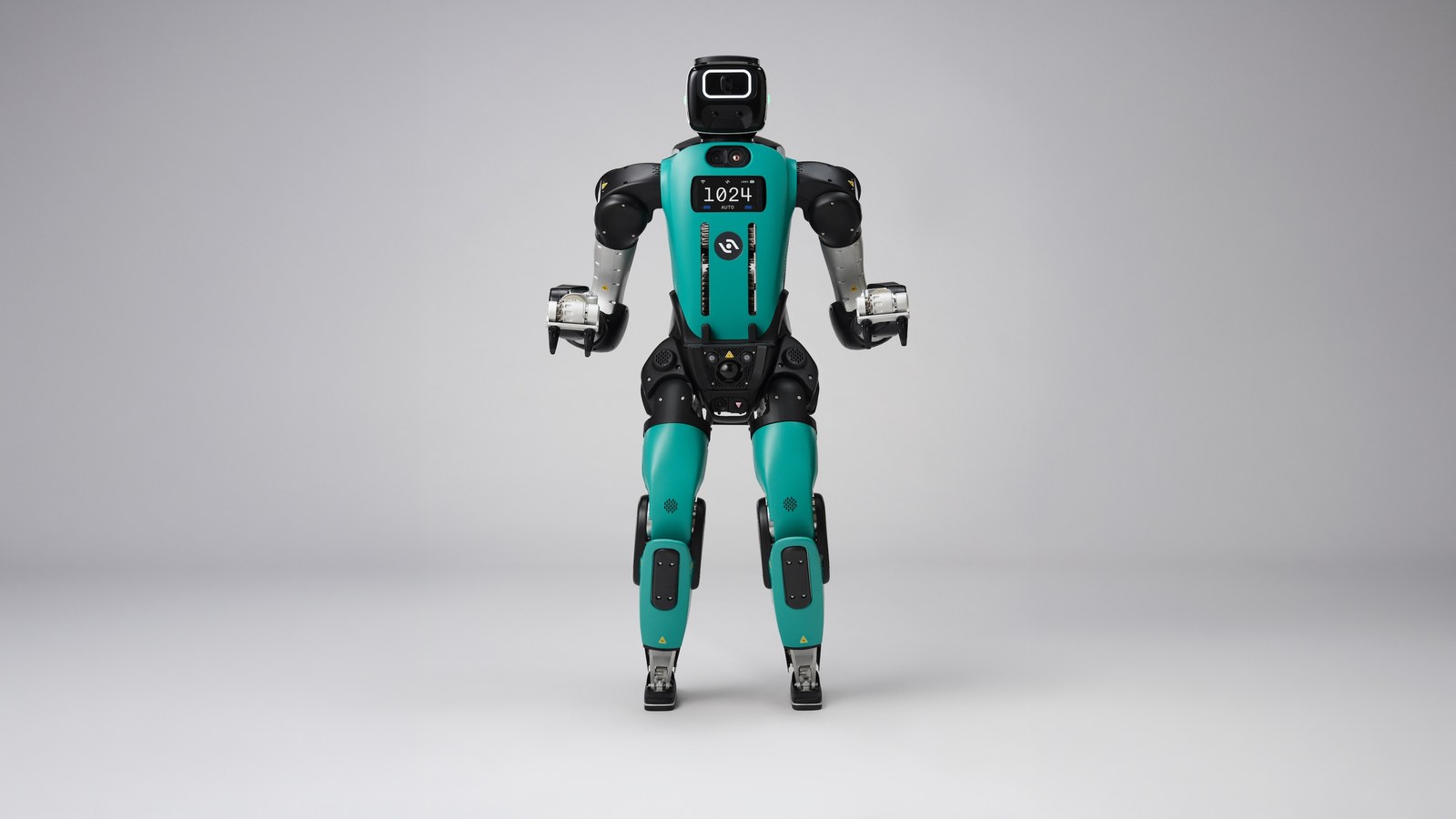
Featured image: Agility Robotics.
The clue appeared near the end of Agility’s Digit 5 launch video: a rendering of a humanoid upper body on a wheeled base. Hurst then confirmed by email that Agility is examining “a range of robot designs and form factors, including wheels” for different environments and customer needs. That wording matters. It describes exploration, not a production commitment.
Why wheels would change the operating envelope
Digit 5 is built around legs because facilities contain thresholds, uneven transitions and work cells designed for people. Wheels can trade some of that terrain access for simpler locomotion on smooth floors, potentially reducing the energy and control effort spent on balance. Agility has not published a wheeled platform’s speed, slope limit, floor-gap tolerance, braking architecture or battery runtime, so none of those possible advantages should be treated as specifications.
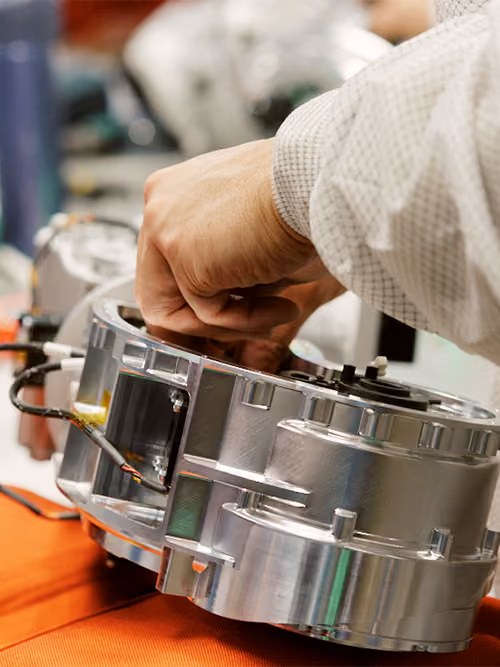
The current reference point is Digit 5. Agility lists a 23 kg (50 lb) payload, 2.2 m (7.2 ft) reach, a 10:1 run-to-charge ratio and 20 working hours per 24-hour period. The company says the robot was trained on 65,000 hours of operational data. Those figures describe the legged product only; they do not transfer automatically to a wheeled concept.
Digit 5 shows which system layers may carry over
The more durable part of Agility’s work may be above the drivetrain. Digit 5 combines human-detection software, visual and audible motion cues, and an independent safety controller that can stop the robot or command a seated response. Agility also says its fleet software is intended to connect with compatible autonomous mobile robot, warehouse-management, warehouse-execution and manufacturing-execution systems.
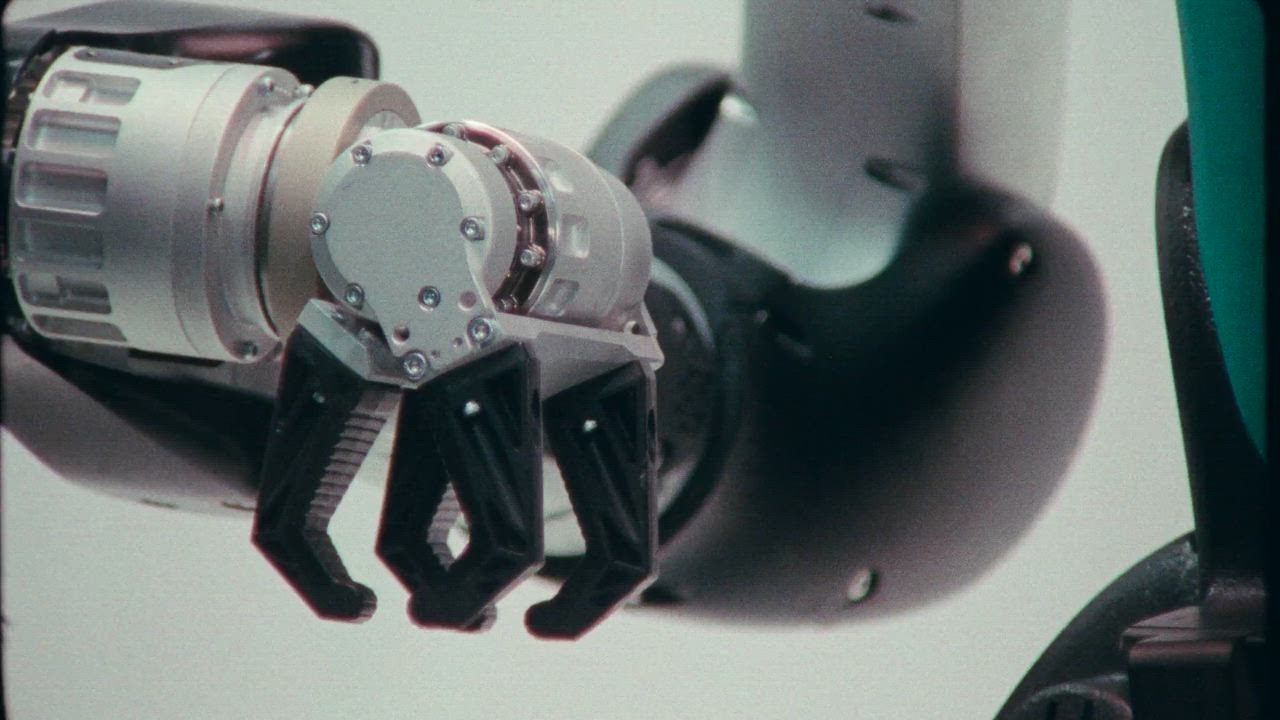
A wheeled machine could reuse parts of that perception, workflow and fleet stack while requiring a different safety case for stopping distance, caster behavior, stability and contact geometry. That systems boundary differs from tool-flange safety integration on a fixed industrial arm. The company’s Digit 5 release references work on ANSI/A3 TR R15.108 and ISO 25785-1, but Agility has not said which standards framework would govern a wheeled derivative.
What remains unconfirmed
There is no disclosed prototype specification, manufacturing plan or customer trial. It is also unclear whether the rendering represents a humanoid torso on a mobile base, a non-humanoid mobile manipulator, or simply a design study. The next meaningful evidence would be a named use case, measurable mobility limits and a safety validation plan—not another rendering.