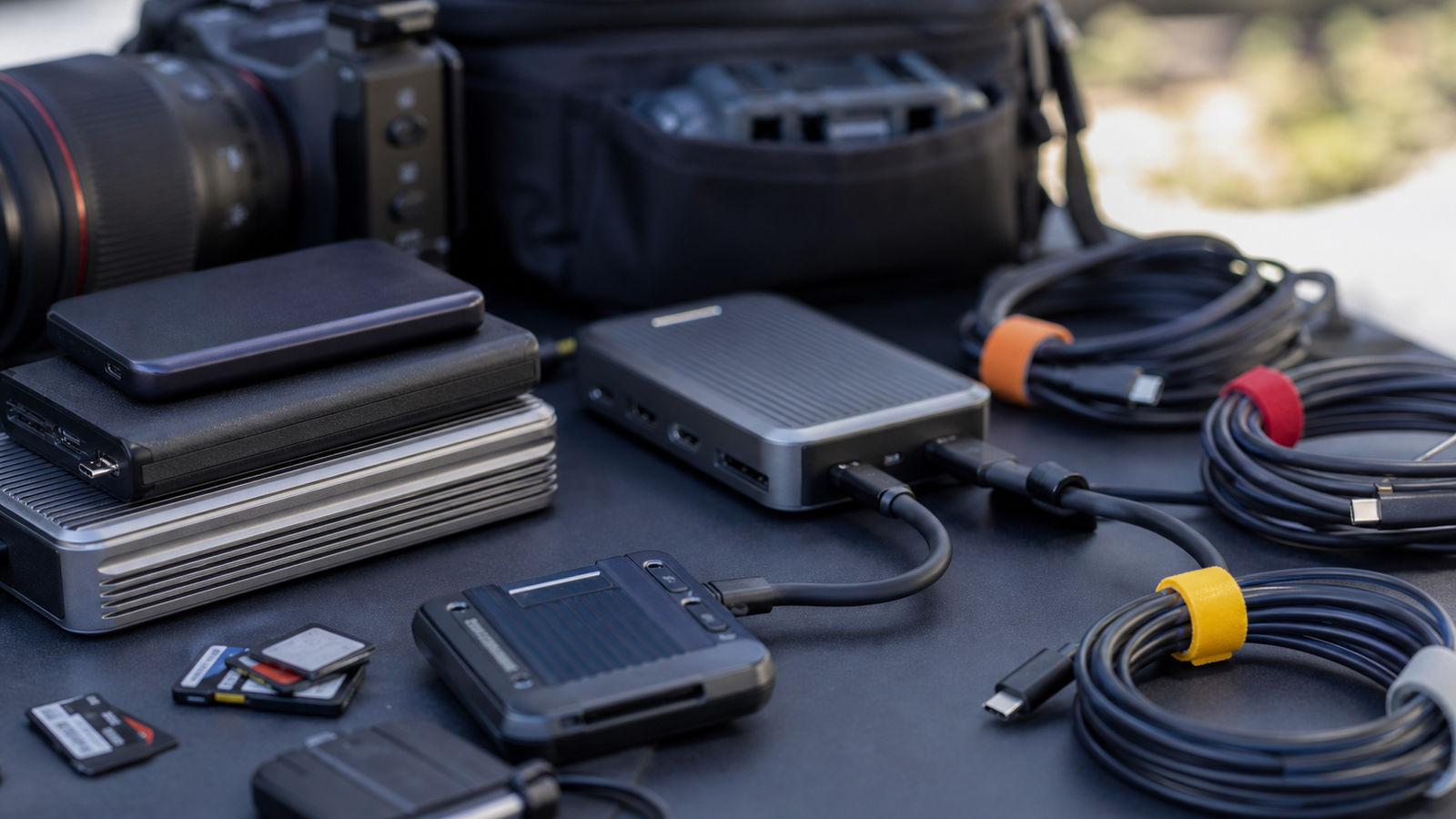
USB4 Version 2 should not be treated as “just a faster Type-C cable.” For field storage and creator kits, reliability depends on the cable, dock, drive, host controller, thermal behavior, power negotiation, and fallback speed.
Quick answer
- Do not trust the label alone: test the whole chain before a field job.
- Mark known-good cables: separate high-speed data cables from charge-only or unknown cables.
- Run a sustained write test: short benchmarks miss heat and fallback problems.
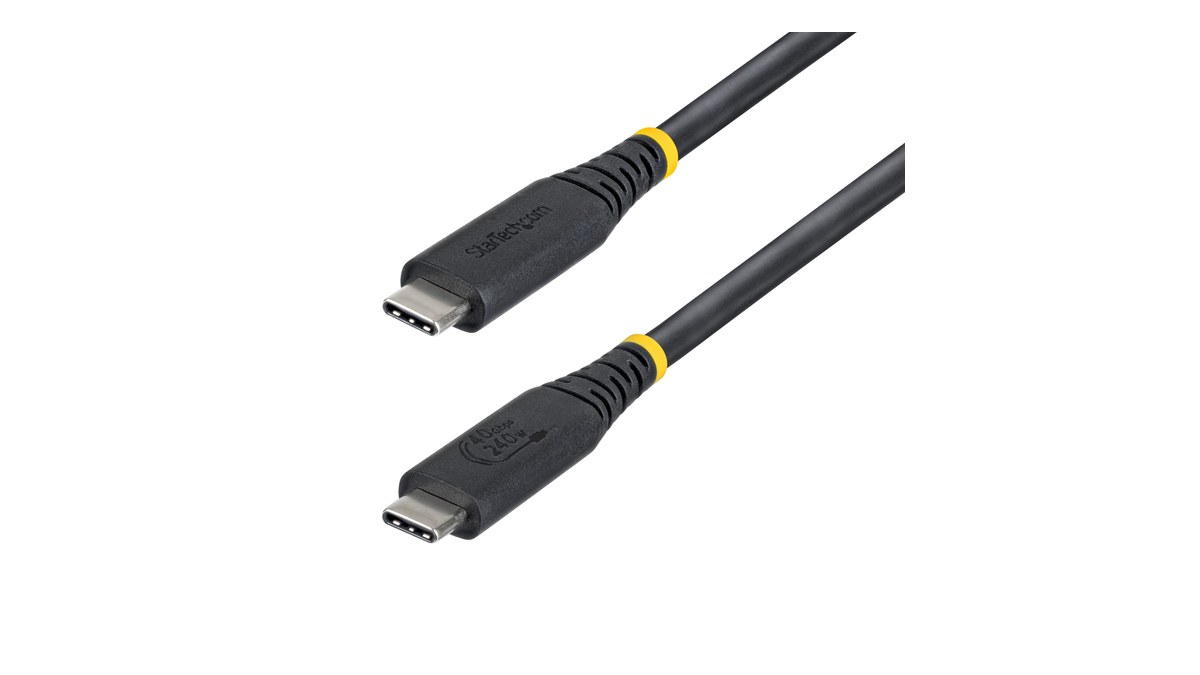
The cable is only the first gate
USB-C makes incompatible capabilities look physically identical. A cable can fit the port and still fail the job because it lacks the required data rate, power profile, or certification. TVG’s earlier USB-C PD cable-marker guide covered the same problem from a power perspective; USB4 Version 2 extends the lesson to storage and display workflows.
- Label every high-speed cable after verification, not before.
- Test sustained copy speed with the actual camera cards, SSDs, dock, and host machine.
- Record fallback behavior when a cable or dock negotiates a lower mode.
- Keep one boring spare cable in the kit that is known to work, even if it is not the newest part.
Heat and power decide field reliability
Fast storage workflows generate heat in SSD controllers, docks, and tiny adapter shells. A short benchmark may pass while a 40-minute card dump throttles or disconnects. Makers running robot logs, 360-camera footage, drone mapping sets, or event video should test the full chain under the same ambient conditions expected in the field.
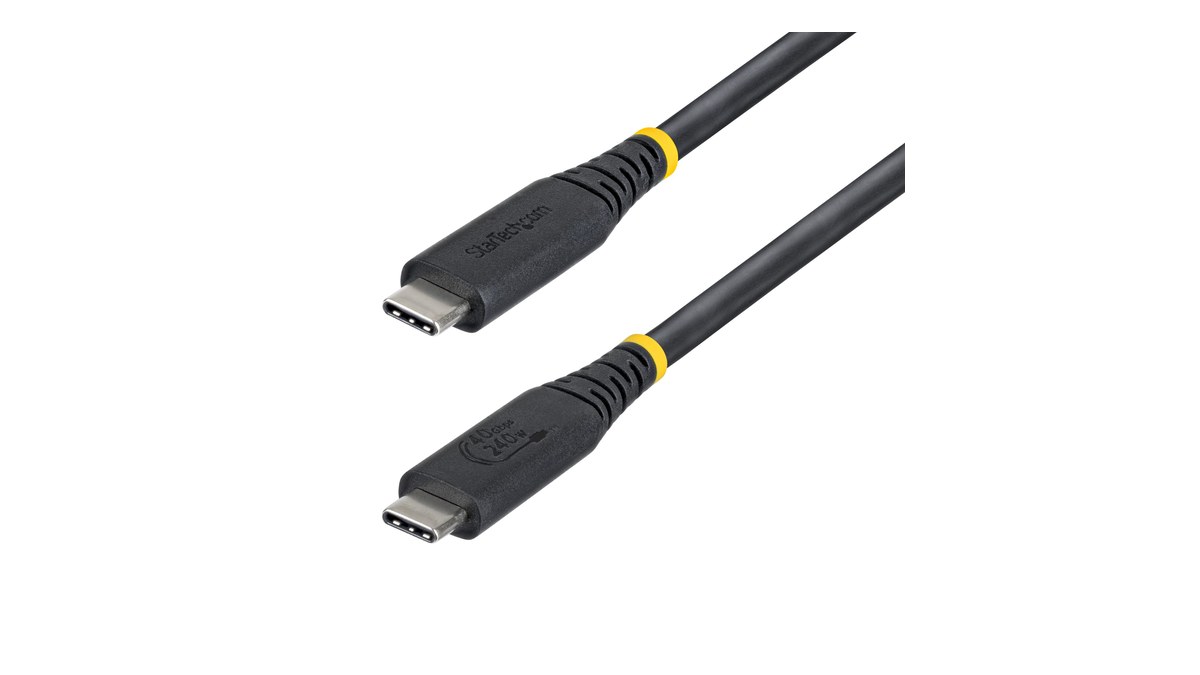
TVG Take
USB4 Version 2 is promising because it gives the Type-C ecosystem more headroom. The practical TVG rule is still conservative: prove the whole workflow. If a kit cannot survive sustained writes, cable swaps, power changes, and a verified restore, the speed rating is not yet a field-ready backup system.
Related TVG reading
- https://tvgreport.com/usb-c-pd-cable-marker-maker-lab-guide/
- https://tvgreport.com/nas-vs-external-ssd-creator-maker-backup-workflow/
Field checklist
Before a USB4 Version 2 storage kit is trusted, run the boring test: copy a known folder, hash or verify the copy, unplug and reconnect the same chain, then repeat with the spare cable. A high-speed rating is only useful if the operator can identify which cable, dock, and port produced the result. This is especially important when a maker lab shares equipment across cameras, robot loggers, single-board computers, and portable monitors.
The practical fallback plan should be written down. If the fast dock fails, can the team still offload footage at a slower speed? If the main SSD gets hot, is there a second enclosure? If the laptop battery drops, does the dock negotiate power differently? These questions sound minor, but they decide whether field data survives a long day away from the bench.
TVG would also separate the “fast path” from the “safe path.” The fast path is the best-case chain: newest host, best cable, direct SSD connection, and cool ambient temperature. The safe path is what happens when a borrowed laptop, a mixed cable bag, or a low-power hub enters the workflow. Both should be documented because real field kits rarely stay pristine.
For creators, the risk is losing media. For robot teams, the risk is losing logs that explain why a field test failed. In both cases, a slightly slower but verified copy beats an impressive transfer-speed screenshot that nobody can reproduce the next day.
Related TVG reading
- https://tvgreport.com/usb-c-pd-cable-marker-maker-lab-guide/
- https://tvgreport.com/nas-vs-external-ssd-creator-maker-backup-workflow/