Disclosure and scope
TVG has not received, handled, or tested a Petoi Bittle X V2. This is a source-based specification analysis and buyer-readiness check, not a hands-on review. Performance, durability, voice accuracy, runtime, payload, and ease of use remain unverified by TVG.
Choose the exact SKU
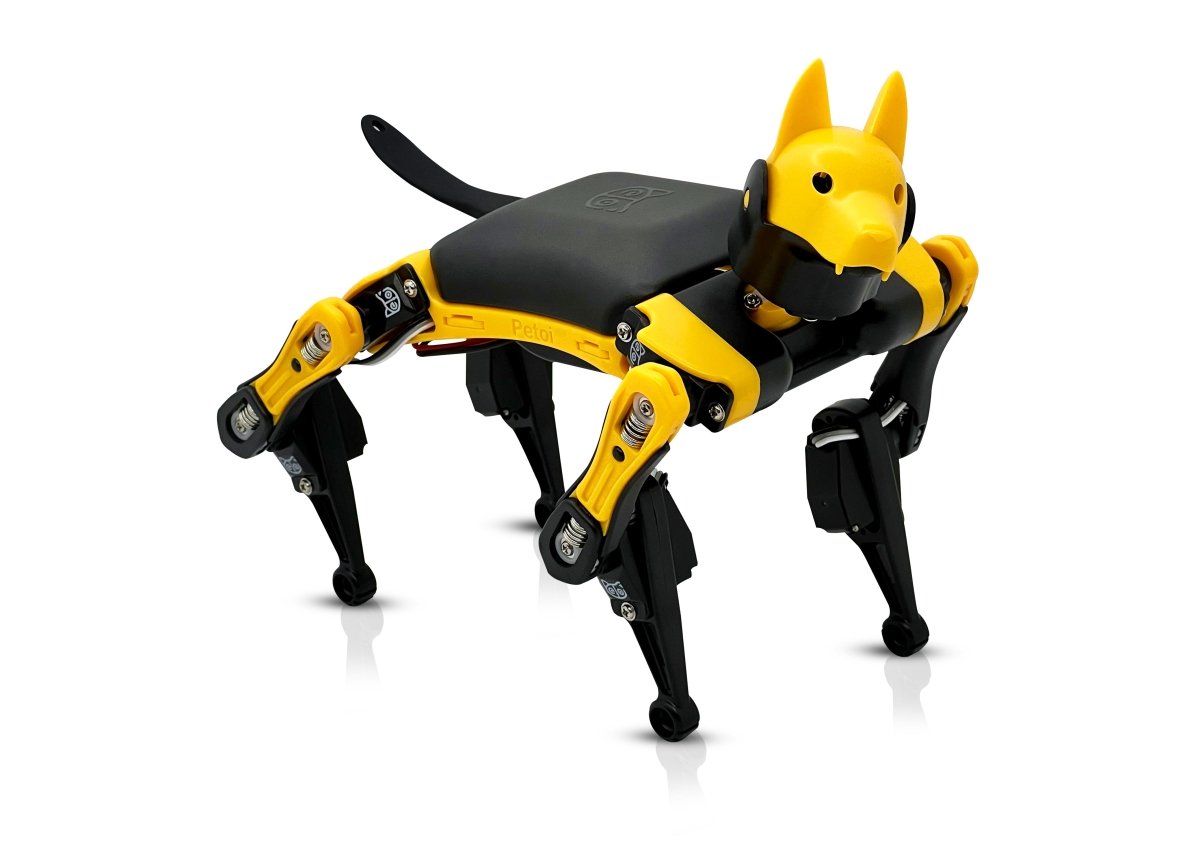
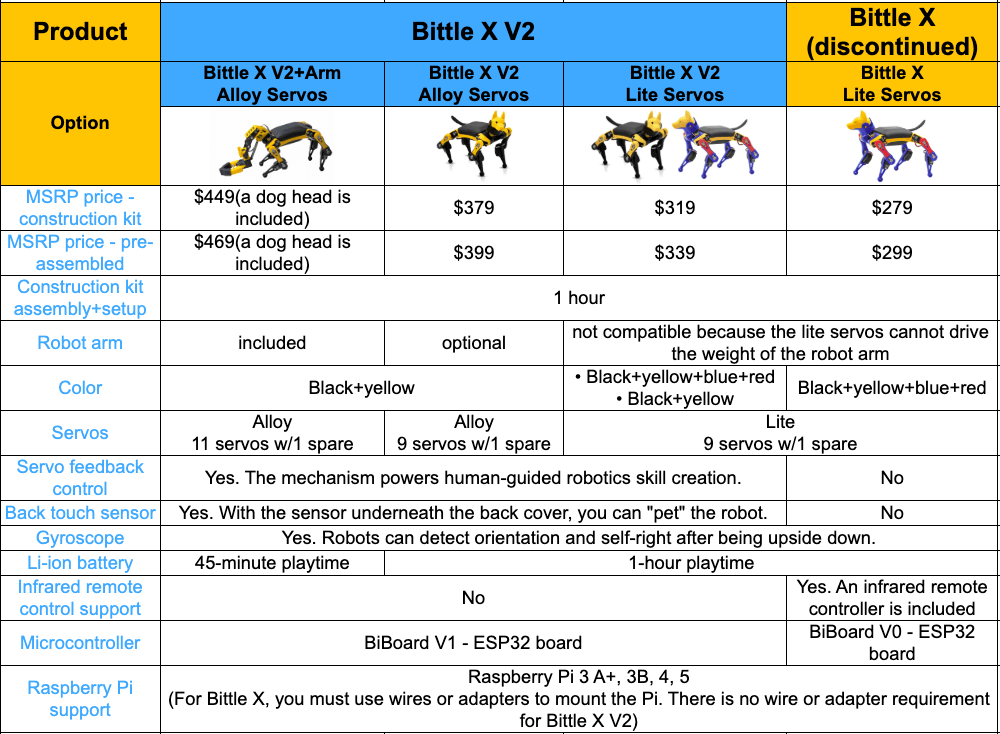
The current listing covers a Bittle X V2 family. Standard V2 packages come in construction or pre-assembled form with Lite or alloy servos; V2+Arm is a separate alloy-servo package. Petoi says Lite servos cannot support the arm, and a later upgrade requires the arm kit plus ten alloy servos. Buyers who need gripping should compare the full V2+Arm price and confirm the exact package at checkout rather than assume a base model is arm-ready.
Core hardware and official-page conflicts
- Controller: The V2 guide identifies BiBoard V1. Its board guide specifies an ESP32-U4WDH/ESP32 MINI 1, 520KB SRAM, 448KB ROM, 4MB flash, 2.4GHz 802.11b/g/n Wi-Fi, and Bluetooth 4.2 with BLE. A broader Petoi specification page still says 16MB, apparently mixing older details with current material; use 4MB for the documented V1 board and verify the shipped revision.
- Motion and expansion: Petoi lists nine powered joints, feedback servos, a back touch sensor, and an onboard motion sensor. The IMU may be MPU6050 or ICM42670, depending on availability. BiBoard V1 documents 12 PWM servo sockets, four Grove sockets for UART2, I2C, and analog input, USB serial, and a Raspberry Pi port.
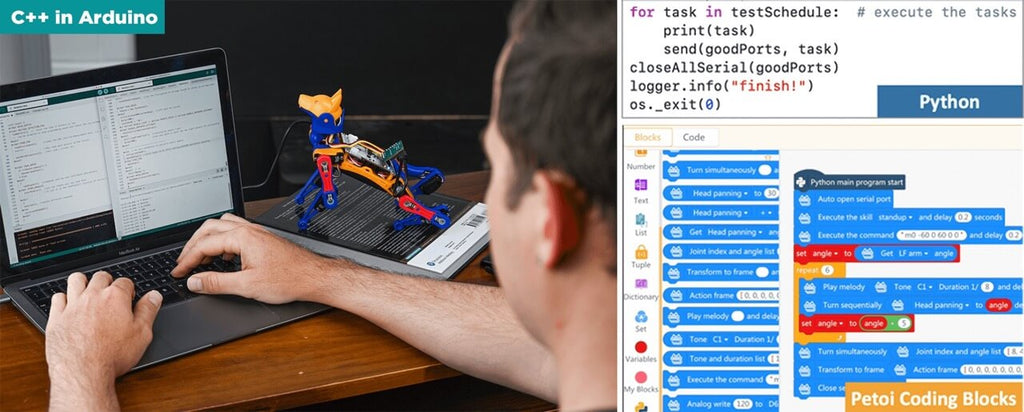
- Software: Listed routes include mobile and desktop apps, block coding, Python serial control, Arduino C++, and OpenCat ESP32.
Physical figures also differ. One Petoi page gives 190 × 153 × 107mm and 269–353g; the model comparison gives 200 × 110 × 110mm and 265–290g. Pose, servo package, or generation may explain the gap, but Petoi does not clearly reconcile it. Confirm exact-SKU dimensions and mass for constrained builds.
Voice, battery, and Raspberry Pi
The V2 guide advertises 35+ predefined actions and ten customizable commands, English and Chinese support, and local operation without a network. General voice-module documentation says 40 fixed commands, so the lower product-specific figure is safer. TVG has not measured recognition, false triggers, latency, range, or noisy-room performance.
The battery is rated at 7.4V, 1000mAh (7.4Wh). Petoi suggests roughly one hour of walking, but its battery documentation ranges from hours for coding or postures to under 30 minutes while running. These are workload-dependent manufacturer estimates, not TVG results. Accessory wording also conflicts: one page mentions a 5V/1A charger, while the current FAQ says only a charging cable is included.
Petoi’s comparison page names Raspberry Pi 3A+, 3B, 4, and 5 support; the BiBoard guide names 3A+, 4, and 5 and says a five-pin socket must be installed. This shows an intended serial-UART expansion path, not that every Pi mounts directly or that power, cabling, support hardware, and software images ship with every package.
Before you buy
Choose the exact package first: construction kit or pre-assembled, Lite or alloy servos, and arm or no arm. If Raspberry Pi support matters, confirm the required socket, adapter, and mounting parts with Petoi before ordering. Runtime and voice-control figures remain manufacturer estimates because TVG has not tested the robot.
Bottom line
Bittle X V2 has a well-documented open-source development stack, but package choices and conflicting official details matter. BiBoard V1, multiple coding paths, local bilingual voice control, and exposed interfaces are the clearest strengths on paper. Runtime, dimensions, charger contents, Pi fit, and some components require confirmation. Until TVG tests a retail unit, use this as a purchasing checklist, not a performance verdict.
Related TVG reading
- E-Bike Torque Sensors vs Cadence Sensors: A Maker’s Diagnostic Guide
- Gemma Translator on Raspberry Pi 5 Shows the Real Test for Local AI Appliances
- Wi-Fi 7 Mesh Backhaul for Home Labs Still Needs Ethernet Discipline