Choosing RTK GNSS is only the first step in a small robot navigation project. The base station can decide whether the field test produces useful data or a long afternoon of confusing centimeter claims.
TVG’s recent guide to RTK GNSS for small field robots focused on validation before trusting precision. This support article narrows the question: where should the base station go, and what should a maker team record?
Quick answer
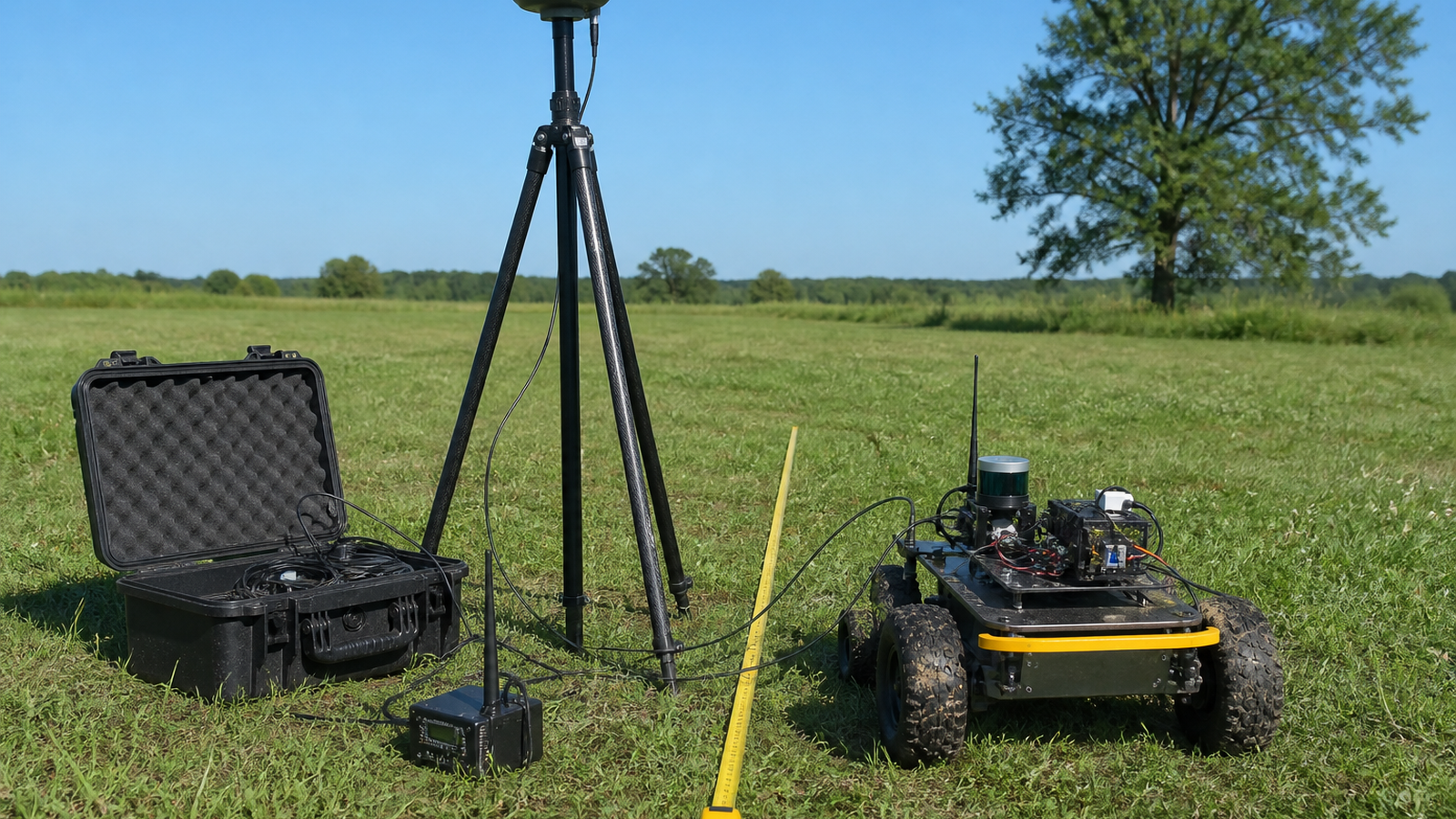
Place the RTK base station where it has a clear sky view, stable mounting, known coordinates or a documented survey-in process, clean power, and minimal nearby metal or reflective structures. Then log the setup so the next test can be repeated.
RTK works by using correction information from a reference receiver to improve the rover’s position solution. If the reference setup is poor, the rover can look precise on paper while the real path still drifts or jumps.
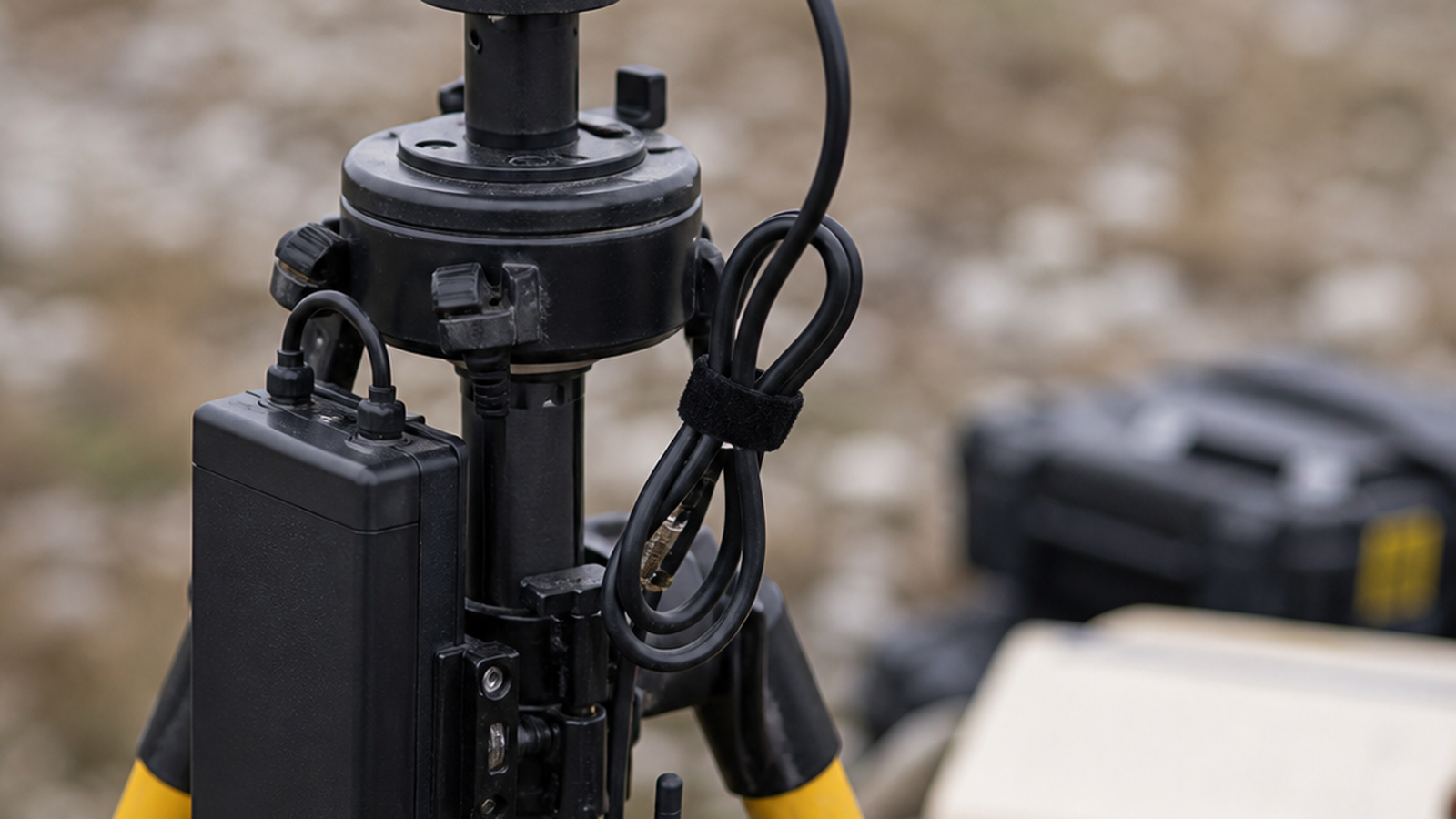
Placement rules that matter
Start with sky view. Trees, buildings, roof edges, parked vehicles, and fences can create blocked or reflected signals. Multipath is especially frustrating because the system may still report a solution while the position quality is degraded.
Next, treat the antenna like a measurement instrument. A tripod kicked a few centimeters sideways during a test can change the reference geometry. A loose cable can add intermittent behavior that looks like software trouble. A battery that sags during a long run can corrupt the day’s data.
For school and maker teams, the best habit is a base-station card: date, location, antenna height, mount type, power source, correction link, survey-in notes, weather, and any nearby obstructions.
Correction link discipline
The correction path is part of the system. Whether the team uses a radio link, network connection, or local setup, it should log outages and latency instead of treating corrections as a background detail. A robot that loses corrections should have an explicit behavior: continue at reduced confidence, slow down, pause, or return to a known mode.
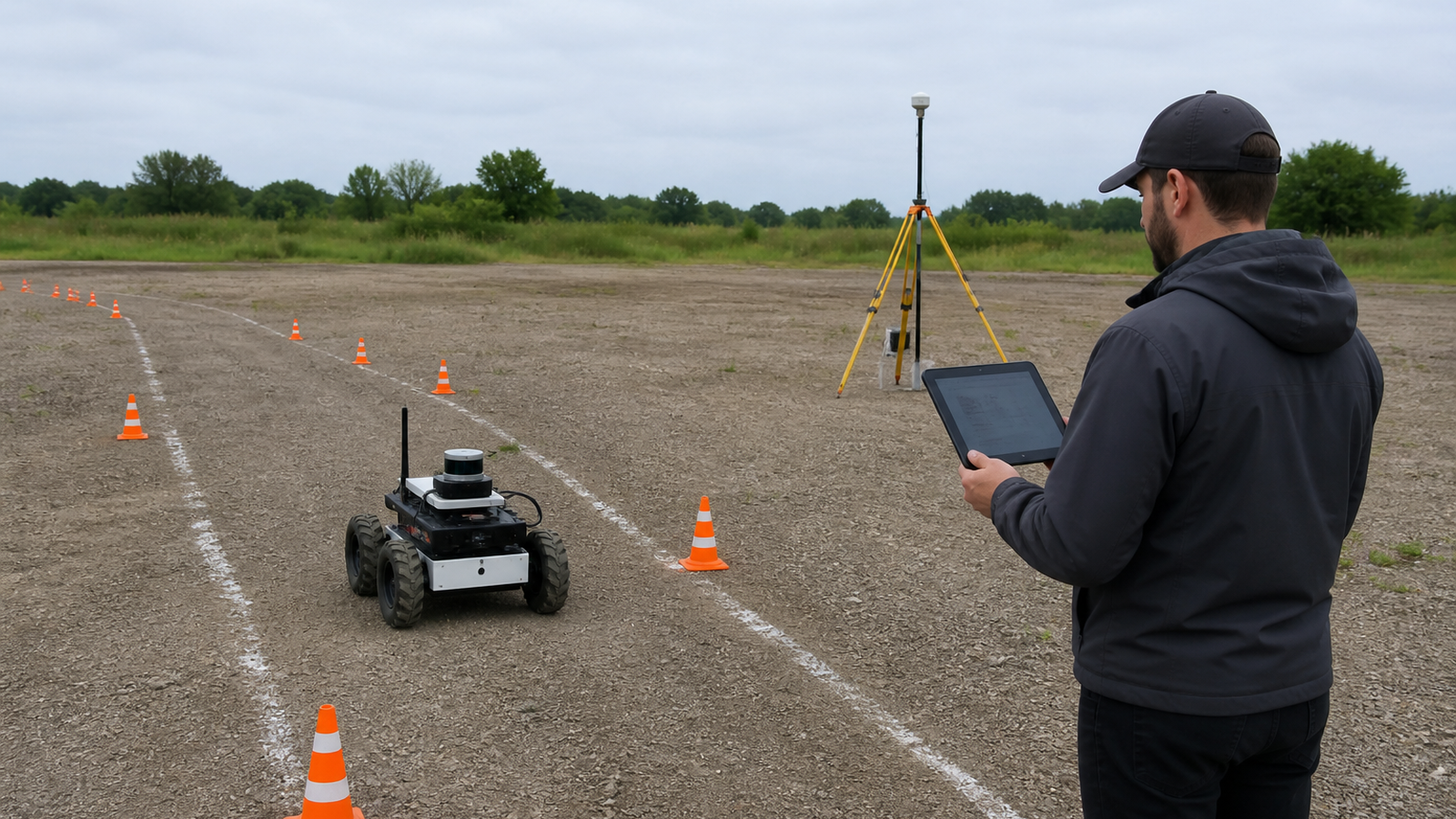
Field-test checklist
- Photograph the base-station position before the run.
- Measure antenna height and record tripod settings.
- Keep the antenna away from metal fences, vehicles, walls, and roof edges.
- Log rover fix type and correction age during motion.
- Repeat a known path in both directions to reveal systematic error.
The same mindset applies to other robot perception setup tasks, including camera field-of-view calibration. The measurement chain is only as good as the setup details the team can reproduce.
TVG Take
RTK is powerful, but it should not be treated as magic. For small robots, base-station placement is a field-engineering task. The team that records antenna height, sky view, correction quality, and repeat paths will learn faster than the team that only screenshots a centimeter readout.
What to log when results look too good
RTK errors can be subtle because the system may display a confident-looking state even when the field setup is weak. If results look too good, repeat the path, change direction, and compare the robot’s track against a physical reference such as cones or a measured lane. A single clean plot is not enough evidence.
Teams should also keep raw logs when possible. Post-run analysis can reveal correction dropouts, time alignment problems, or moments when the robot appeared stable only because the path was short. For a student team, learning to question the measurement is as valuable as getting the robot to drive straight.
Finally, resist changing too many variables at once. Move the base station, change the antenna, update firmware, or adjust the path one step at a time. Otherwise a good run may be impossible to explain and a bad run may produce the wrong fix.