CFexpress Type B and SD Express both promise faster removable storage, but the right choice for a field media kit depends less on headline speed and more on the failure model around the card.
A creator shooting high-bitrate video, a robotics team logging camera data, and a maker documenting outdoor tests may all need fast removable media. They do not necessarily need the same format. The better question is: what happens when the card gets hot, the reader is missing, the cable is marginal, or the backup station has to ingest footage in a parking lot?
Quick answer
Choose CFexpress Type B when the camera or recorder already requires it, sustained write performance is critical, and the field kit includes reliable readers, cooling awareness, and backup storage. Consider SD Express only when device support is explicit and the workflow benefits from the SD form factor. Do not buy either format based only on peak theoretical speed.
What the formats are trying to solve
CFexpress was developed around PCIe and NVMe-style storage behavior for cameras and professional media equipment. CFexpress Type B is common in many higher-end cameras and recorders because it can support sustained high data rates in a compact removable card.
SD Express also brings PCIe and NVMe ideas into the familiar SD card family. The pitch is attractive: keep the SD form factor while raising the performance ceiling. In practice, the value depends on host support, reader support, thermal design, and whether the device actually uses the faster mode.
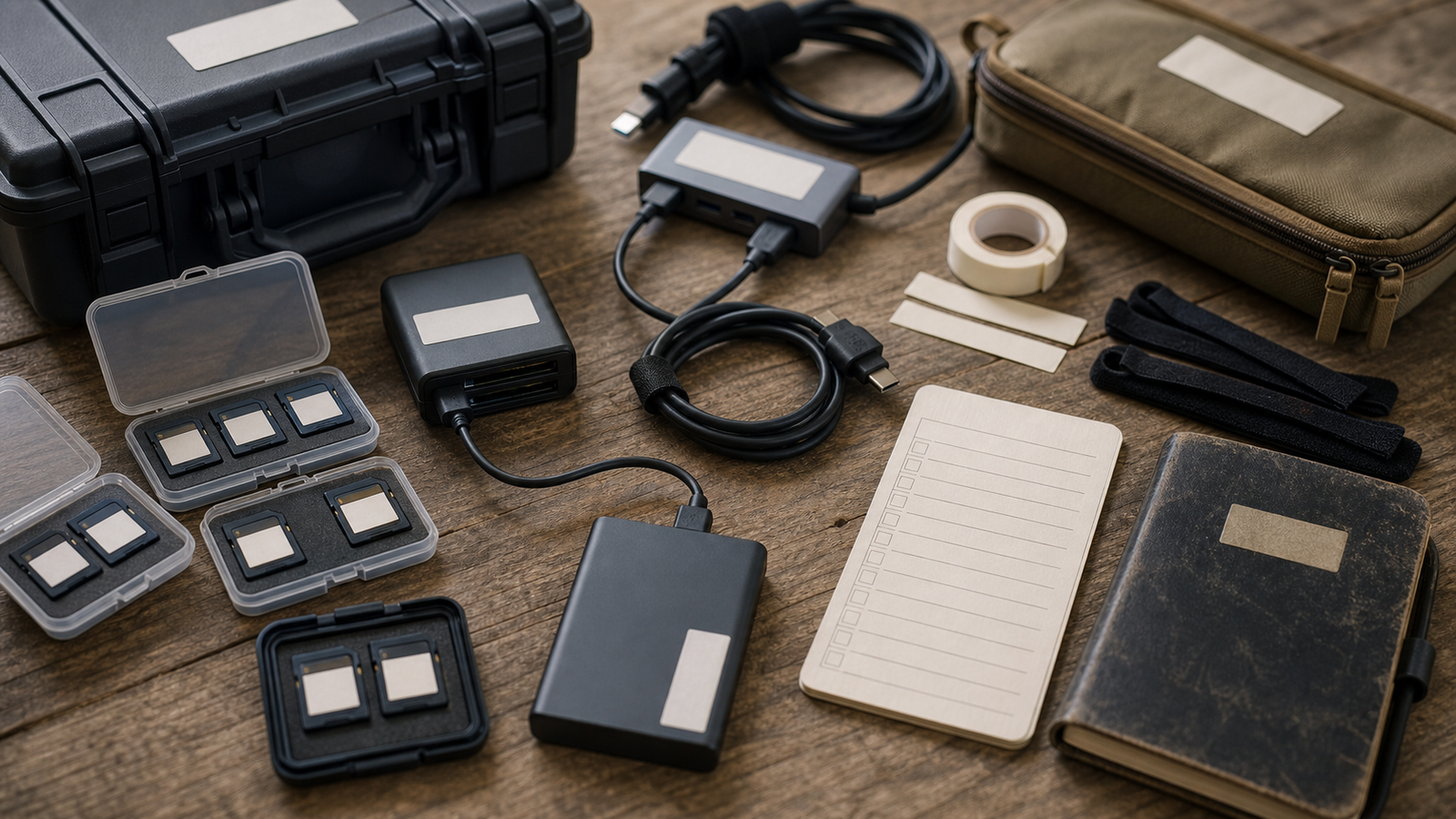
For TVG’s field-media and robotics readers, the standards are less important than the system. This comparison pairs with TVG’s USB4 Version 2 field-kit cable guide and CMR-versus-SMR NAS drive checklist. A card is only one piece of a chain that includes camera firmware, file system behavior, reader chipset, USB or Thunderbolt path, cables, backup drive, laptop power, and human labeling discipline.
Failure model 1: sustained writes
Peak speed is easy to market. Sustained write behavior is what decides whether a long recording or robot log survives. A card may perform well for a burst and then slow as cache, temperature, or controller limits appear.
For cameras, the practical test is the actual codec and frame rate you plan to use. For robots, it is the real logging load: multiple cameras, sensor messages, timestamps, and metadata. If the system drops frames or creates uneven logs, the card speed number did not solve the problem.
Failure model 2: heat
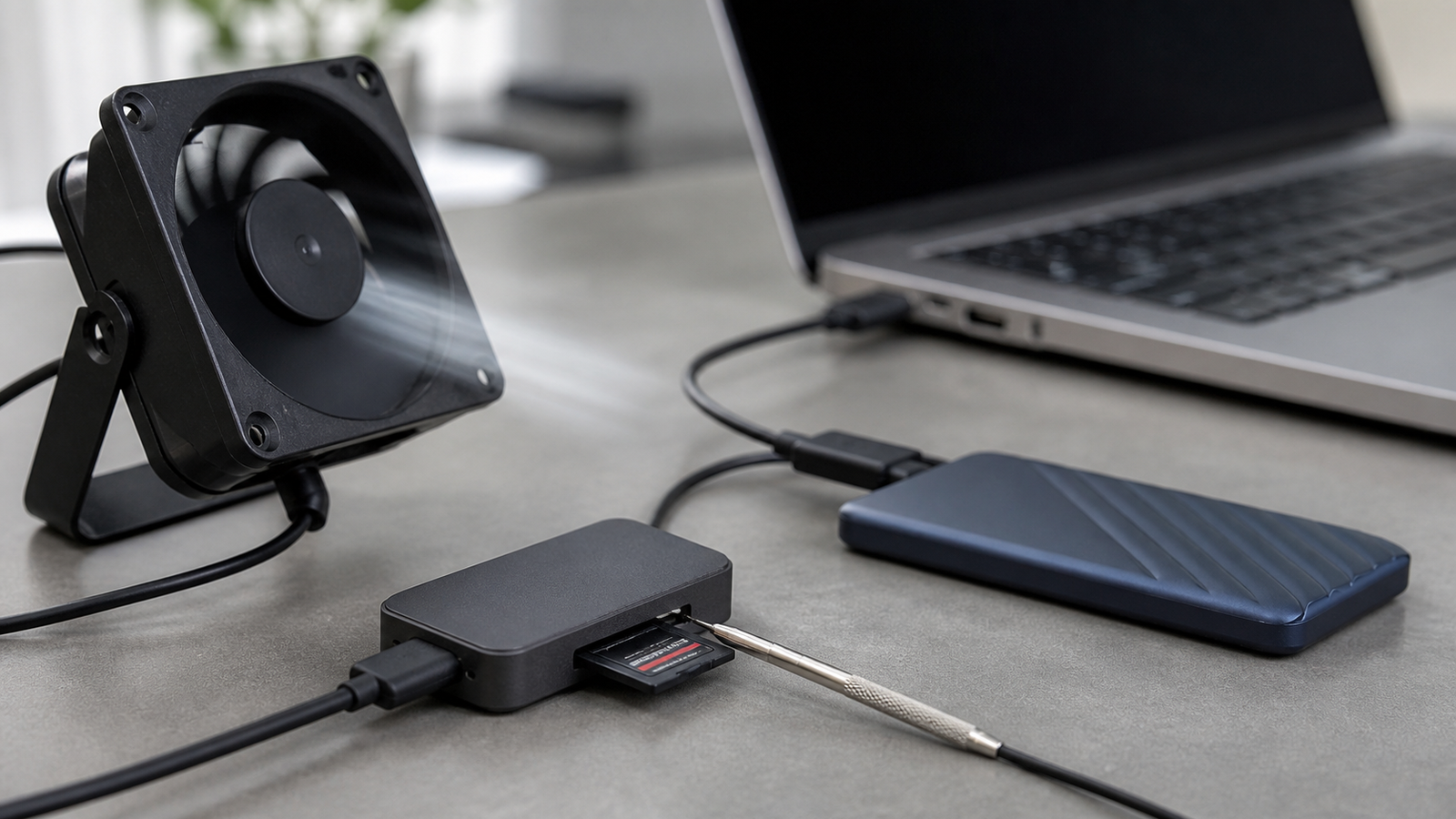
Fast removable storage can run hot. A reader sitting in direct sun, a card inside a sealed camera body, or a backup station with poor airflow can turn a storage decision into a thermal decision.
That does not mean every high-speed card is unreliable. It means field kits should treat heat as a normal variable. Keep readers off hot vehicle dashboards, avoid burying them under other gear, and test long transfers before a job or robotics demo.
Failure model 3: readers and cables
CFexpress Type B often requires a dedicated reader. SD Express may physically resemble cards a team already uses, but faster operation still depends on host and reader support. A slow reader can make an expensive card behave like an ordinary one.
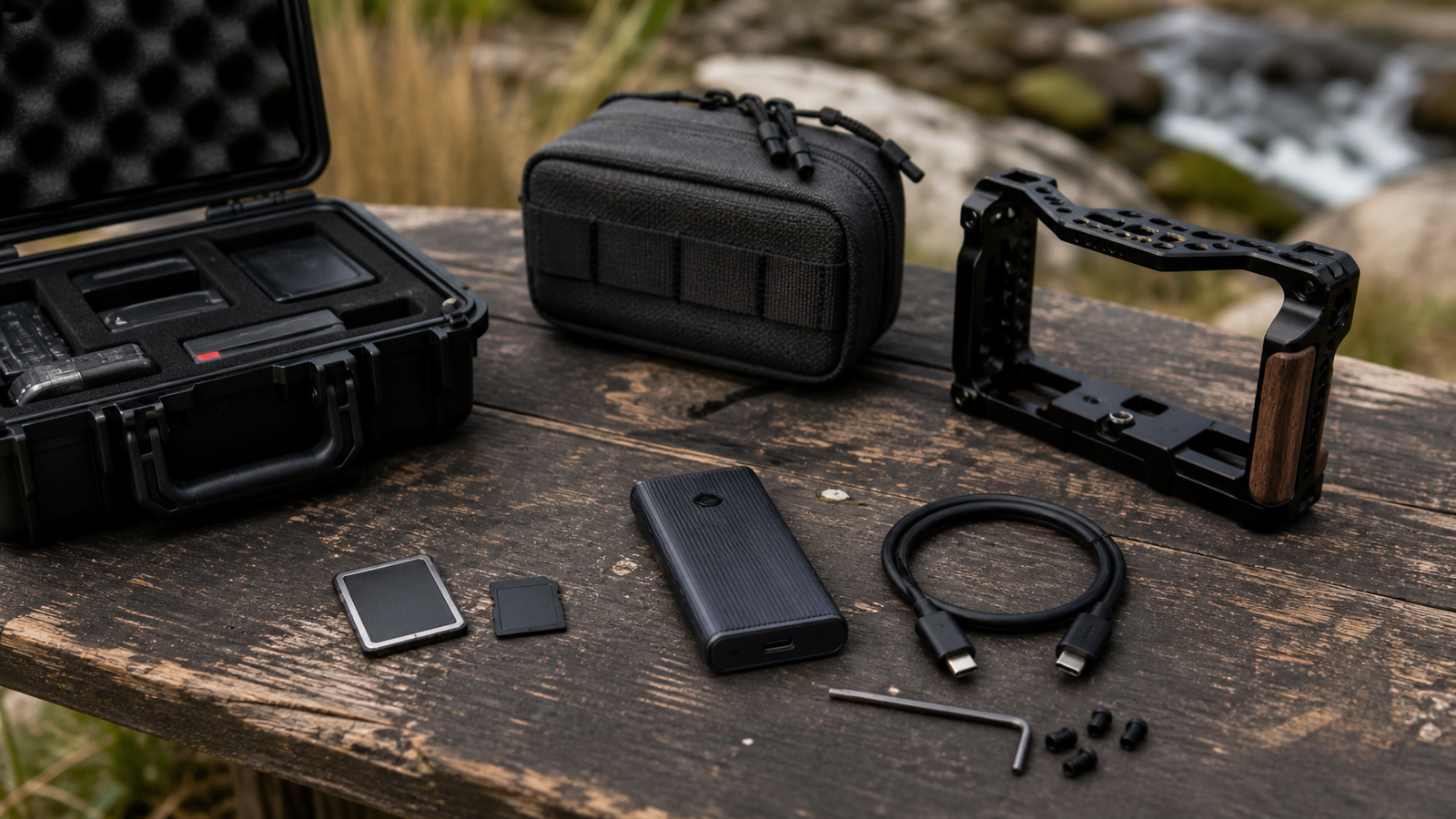
For field teams, the reader should be treated as critical equipment. Carry the correct reader, the correct cable, a spare cable, and a known-good backup target. Label cards by role and rotate them deliberately so a bad ingest does not erase the only copy of a test.
Which should a field kit choose?
- High-bitrate camera work: Use the format required by the camera’s approved media list. If that is CFexpress Type B, budget for readers and cooling discipline.
- Mixed maker documentation: SD cards remain convenient, but SD Express value depends on real device support. Check compatibility before paying a premium.
- Robot logging: Prioritize sustained write tests, timestamps, and automated backup over removable-card marketing claims.
- School teams: Simpler media with repeatable backup habits may beat a faster format that only one laptop can read.
TVG Take
CFexpress Type B and SD Express are both responses to the same pressure: cameras and field systems are producing more data than older removable media workflows were designed to handle. But faster cards do not remove the need for a field workflow.
The safest kit is the one a tired team can operate correctly after a long test day: known-compatible cards, correct readers, redundant backups, clear labels, and a short transfer log. Choose the format that makes that behavior easier, not just the one with the bigger number.