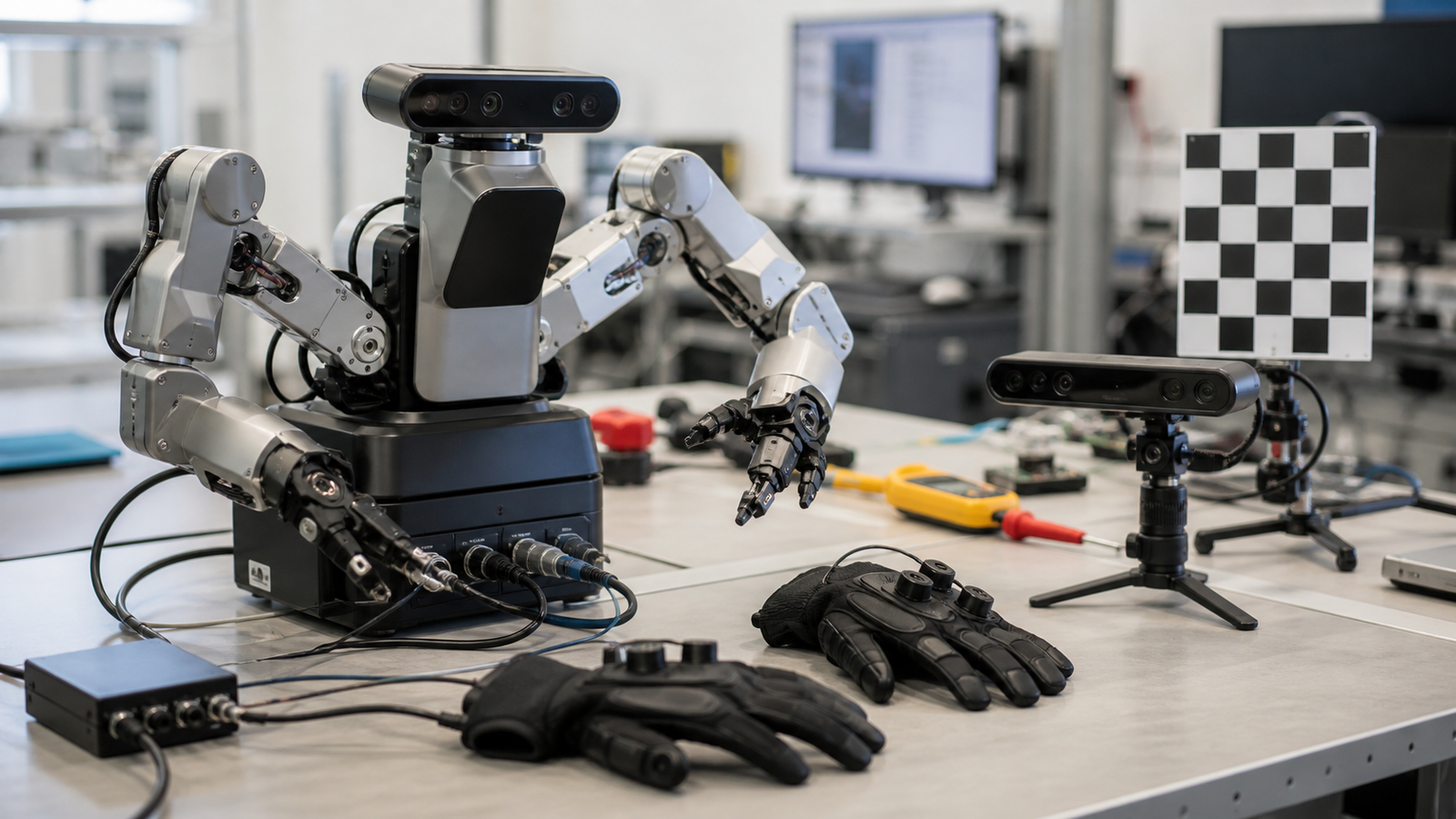
NVIDIA and Hugging Face are moving a larger piece of the humanoid-robot learning stack into the open-source workflow used by LeRobot developers.
In a post published by NVIDIA, the companies said Isaac GR00T 1.7 and Isaac Teleop are being made available through Hugging Face’s LeRobot ecosystem, alongside models, datasets, and workflows intended to help robotics teams collect demonstrations, train policies, and evaluate robot behavior. Hugging Face described the release as a way to connect teleoperation, open robot datasets, and model training in one developer-facing pipeline.
Why it matters
Robot learning has been held back less by a single missing model than by the awkward handoff between hardware bring-up, demonstration capture, data cleaning, policy training, and deployment checks. A team can have a capable arm or humanoid platform and still spend most of its time stitching together camera feeds, operator controls, logs, and evaluation scripts.
The LeRobot integration is notable because it targets that glue layer. Isaac Teleop is meant to help capture human demonstrations. GR00T 1.7 is positioned as an open vision-language-action model for robot behavior. LeRobot supplies the community-facing framework where datasets and training recipes can be shared.
What NVIDIA and Hugging Face are actually connecting
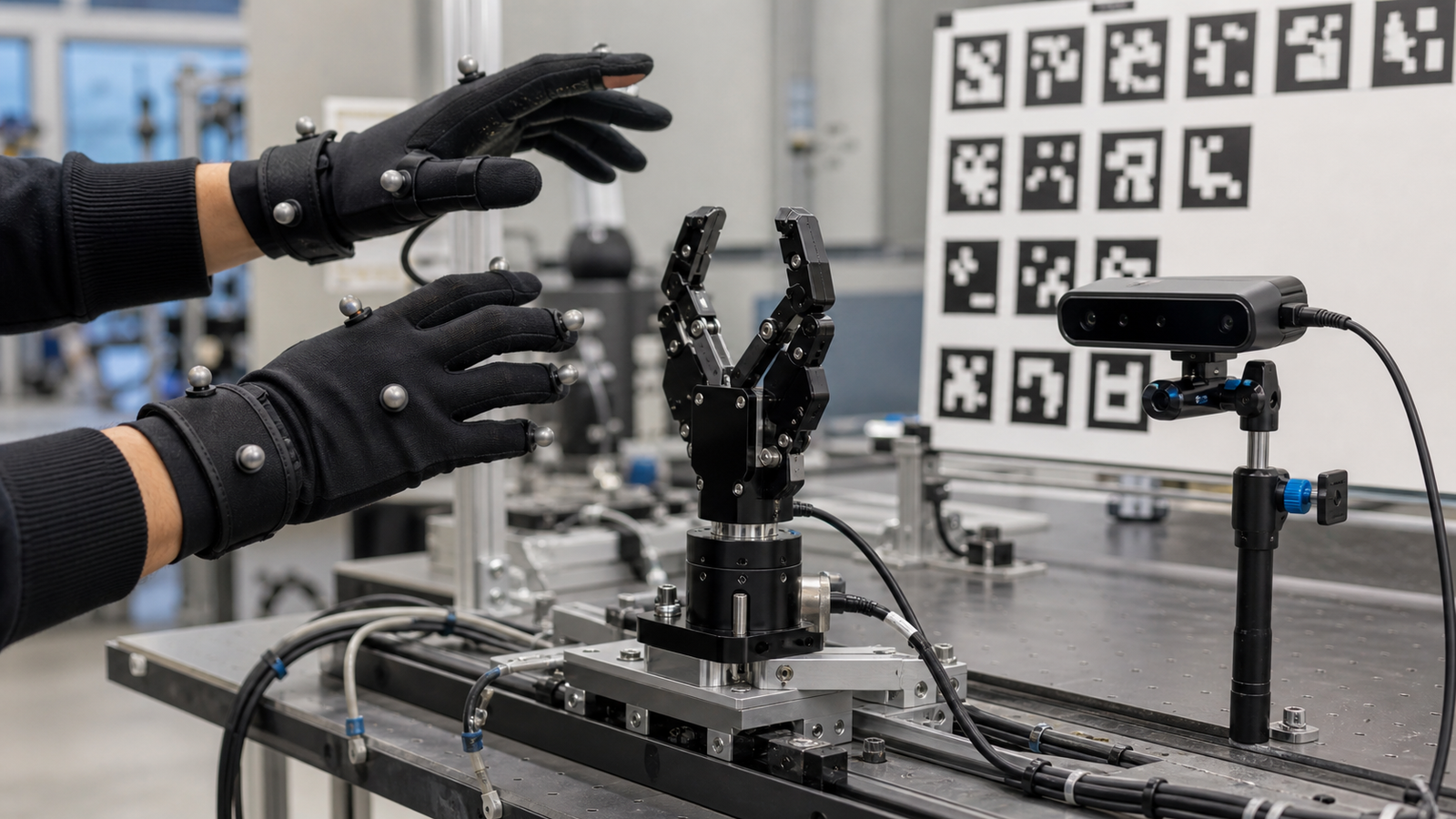
According to NVIDIA, the release brings Isaac GR00T 1.7 and Isaac Teleop into LeRobot so developers can work with shared models, data, and workflows for robot training and evaluation. Hugging Face’s companion post frames the combination around open robot learning: collect demonstrations, convert them into usable datasets, train or adapt policies, and test them against real robot tasks.
That does not make humanoid deployment simple. It does make the development loop easier to discuss and reproduce. Instead of treating teleoperation files, model checkpoints, and evaluation runs as one-off lab artifacts, the workflow pushes them toward a format that more teams can inspect.
Technical breakdown
For builders, the useful part is the boundary between three layers: the operator interface, the robot dataset, and the model policy. If those layers are clean, a lab can swap hardware, compare demonstrations, and rerun evaluations without rebuilding the entire pipeline every time.
Isaac Teleop sits at the capture end of that loop. It matters because robot demonstrations are only as good as the timing, viewpoint, control signal, and task labeling behind them. A beautiful demo video is not enough. A training run needs synchronized observations and actions that can survive replay and inspection.
GR00T 1.7 sits closer to the policy side. NVIDIA describes the GR00T family as part of its humanoid foundation-model work, while the Hugging Face integration gives developers a route to experiment with that model family inside an open framework. The practical question is how well the resulting policies transfer from clean examples to messy benches, variable lighting, cheap fixtures, and imperfect calibration.
STEM and smaller-lab impact
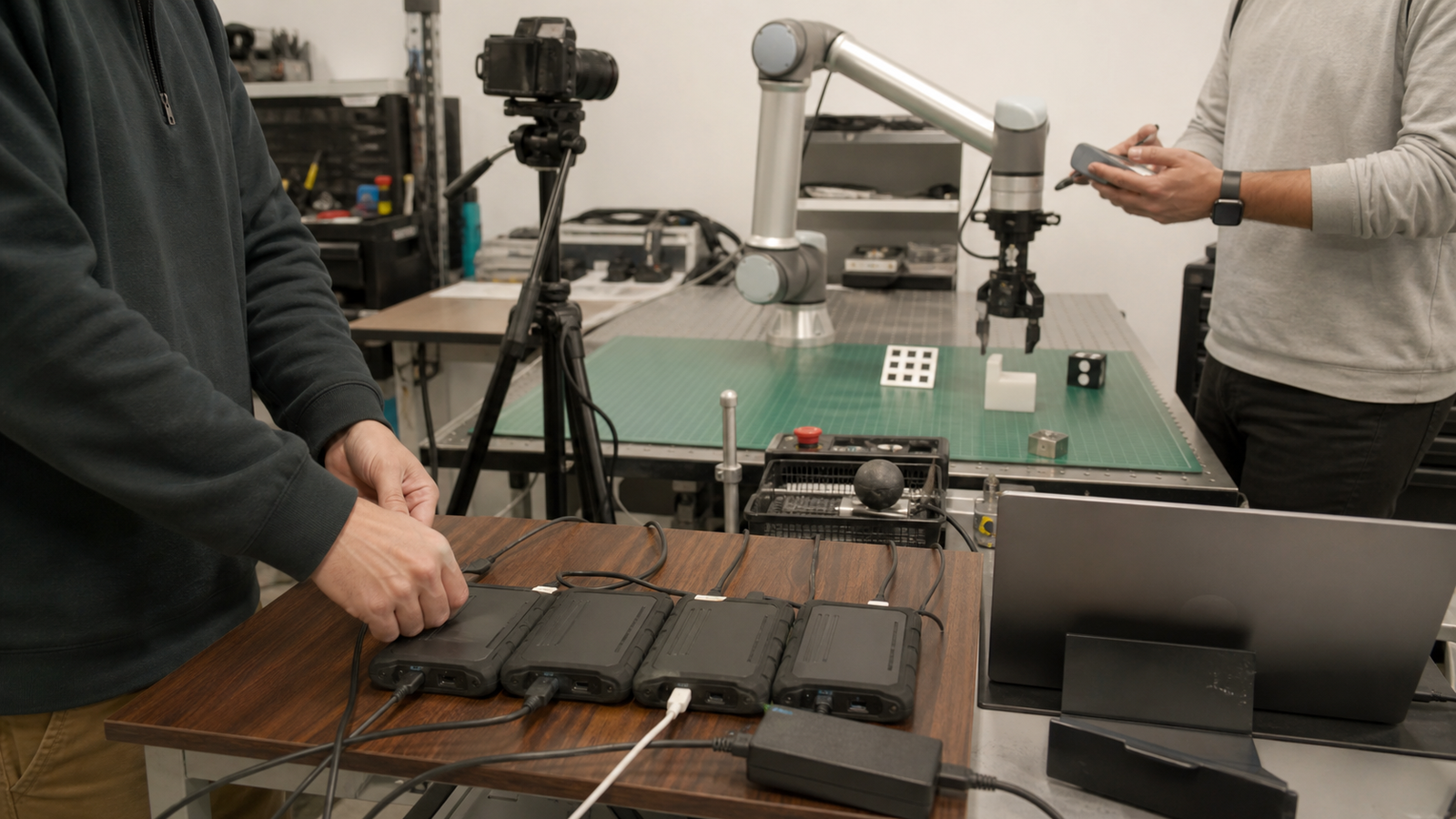
The release could be especially useful for university labs, advanced STEM programs, and small robotics companies that want to learn from current humanoid workflows without building a private data stack from scratch. A shared framework does not remove the need for careful hardware work, but it can lower the friction of comparing approaches.
It also makes failure reporting more important. If a policy succeeds only when the camera is placed at one angle, the gripper has one pad material, or the lighting is controlled, the dataset should make that visible. Open workflows help only when they expose limits as well as wins.
TVG Analysis
TVG’s read is that this is less about declaring humanoid robots ready and more about making the robot-learning loop less bespoke. The valuable signal is the attempt to connect teleoperation, datasets, and policy training in a way that outside teams can inspect.
The unknowns are still large: real-world robustness, safety validation, hardware compatibility, dataset bias, and how much compute a smaller team needs to get useful results. Watch for independent labs publishing repeatable results, not just polished demo clips.
Related TVG reading
- NVIDIA’s Agent Skills Push Physical AI Research Toward Reusable Robot Workflows
- MIPI CSI Camera Ribbon Cable Strain Relief Can Save a Robot Vision Debug Session
- PoE Camera Cable Strain Relief Is a Robot Vision Reliability Fix Hiding in Plain Sight